
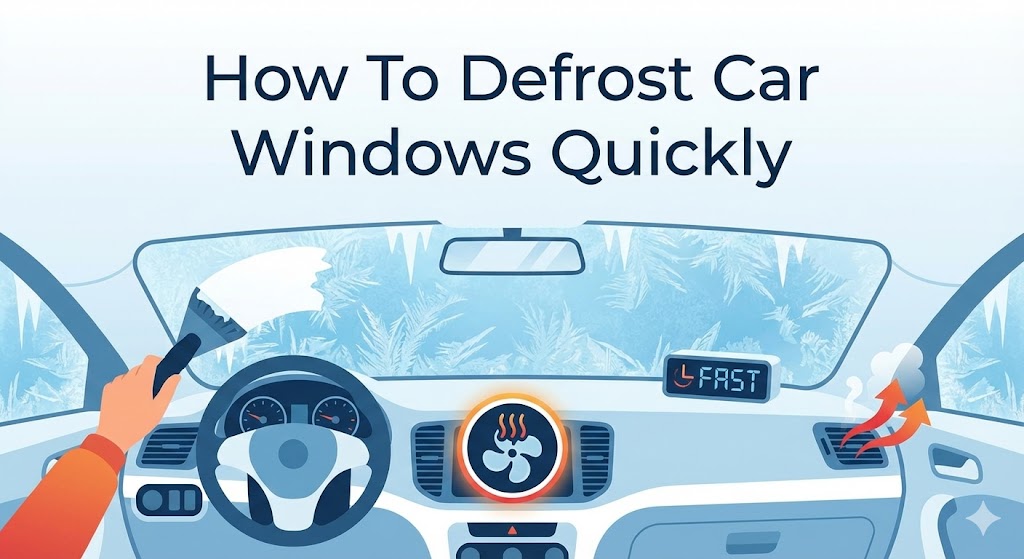
The fastest way to defrost car windows is to start the engine and use the car’s heating system on defrost mode while removing ice with a scraper if needed. This method warms up the glass safely and clears frost without damaging the windows. Understanding how to do this quickly can save time and improve safety during cold mornings.
Frosted windows block visibility and must be fully cleared before driving. Using the right techniques helps avoid common mistakes like pouring hot water on glass, which can cause cracks. This guide answers all the usual questions about defrosting car windows and shows both traditional and alternative methods to keep windows clear.
Knowing how to prepare your car and use household hacks can also reduce frost buildup. The best approaches combine practical steps with easy-to-follow tips, so drivers don’t waste time or struggle in freezing weather.
Key Takeways
- Warm the car and use the defrost setting for quick window clearing.
- Use a plastic scraper or de-icer spray to remove stubborn ice safely.
- Avoid damaging practices and learn easy hacks to prevent frost build-up.
Why Car Windows Frost
Frost forms on car windows when certain conditions cause moisture to freeze on the glass surface. Understanding the causes and the role of weather can help drivers better manage frost. Frost also affects visibility, making it a safety concern.
Causes of Frost Accumulation
Frost develops when moisture in the air or on the window surface cools below freezing. Inside the car, warmer air meets the cold glass, causing water vapor to condense. If the temperature is low enough, this moisture freezes, forming frost.
Humidity levels inside and outside the car play a major role. Damp clothes, wet floor mats, or breathing inside a closed car add moisture, increasing frost chances. Outdoor moisture settles on cold windows overnight or during cold mornings, leading to frost buildup.
Weather and Temperature Factors
Frost forms most often in clear, calm weather when temperatures drop below 32°F (0°C). Clear skies let heat escape from the car glass quickly, cooling it down faster than the surrounding air.
Wind can reduce frost by mixing air and preventing moisture build-up. On very cold nights, frost can form thick layers. Rain followed by a freeze can worsen frost problems, as wet windows freeze faster.
Impact on Driving Safety
Frost on car windows blocks the driver’s view, increasing risk on the road. Even thin frost layers can distort vision or cause glare. Drivers must fully clear all windows before driving to ensure safe visibility.
Frost also delays morning routines, causing extra wait time to defrost. Not clearing frost properly can lead to fines in some areas due to unsafe driving conditions. Proper frost removal is critical to maintain control and avoid accidents.
Preparing to Defrost Your Car Windows
Before starting to defrost, it is important to have the right tools, ensure the vehicle’s heating system works well, and protect yourself for safety. These steps help speed up the process and reduce risk while making the job easier.
Gathering Essential Tools
Having the correct tools ready is key to efficient defrosting. An ice scraper with a sturdy handle and sharp blade is the main tool. Some prefer scrapers with built-in brushes to remove loose snow.
A spray bottle filled with a mix of two-thirds rubbing alcohol and one-third water can help melt ice fast. Avoid pouring hot water on windows because it can crack the glass.
Also, keep a soft cloth nearby for wiping excess moisture and a pair of gloves to protect hands from cold and sharp ice. Keeping everything within reach reduces delays once defrosting begins.
Checking Your Vehicle’s Heating System
The car’s heating and defrosting system must be in good working order to quickly clear ice. Before winter, testing the fan, heater, and defrost button is important.
The defrost setting directs warm air to the windshield and front windows. Starting the engine and letting the heater warm up for a few minutes increases inside temperature, helping ice melt.
If the heater or defroster doesn’t work well, professional repair should be considered. A functional system lowers the time spent scraping and prevents fog build-up while driving.
Using Protective Gear
Protective gear keeps the person safe and comfortable during defrosting. Thick gloves protect hands from cold surfaces and sharp edges while scraping ice.
Wearing warm, waterproof clothing helps prevent cold-related discomfort. Eye protection is useful if using sprays or if ice chips might fly during scraping.
Also, rubber-soled shoes can prevent slipping on icy ground near the car. Safety gear ensures the task can be done without injury or discomfort in cold conditions.
Best Methods to Defrost Car Windows
There are several practical ways to remove frost and ice from car windows quickly and safely. Using the car’s built-in defroster, scraping tools, and special de-icing liquids can make the process faster and prevent damage to the glass.
Turning On the Defroster
Starting the car and turning on the defroster is one of the easiest ways to begin thawing ice from windows. The defroster blows warm air directly onto the windshield and rear window, loosening frost over several minutes.
Steps for best results:
| Step | Details |
|---|---|
| Start the engine | Allows the heater to warm up. |
| Set defroster to high | Use the highest heat setting. |
| Turn on AC if needed | Removes moisture inside the car quickly. |
| Wait 5-10 minutes | Gives heat time to melt ice gradually. |
This method reduces the need for scraping by softening ice first. It also helps clear fog on the windows for better visibility inside the car.
Using a Scraper Effectively
An ice scraper is a necessary tool to remove frost that the defroster cannot melt immediately. Scraping should be done carefully to avoid scratching the glass.
Tips for proper use:
- Wait until the defroster loosens the ice slightly, especially if it is thick or hard.
- Use firm but gentle pressure with the flat edge of a plastic scraper.
- Move the scraper in straight lines, not circular motions, to prevent streaks or damage.
- Keep the scraper clean and free of debris that might cause scratches.
Using a scraper works best when combined with heat from the defroster, letting the driver clear the windshield faster and safer.
Applying De-Icing Solutions
De-icing sprays or homemade solutions can speed up the melting of frost on car windows. These liquids break down the ice and make it easier to remove.
Common mixtures:
| Ingredients | Ratio | Purpose |
|---|---|---|
| Rubbing alcohol + water | 2 parts alcohol, 1 part water | Quickly melts frost and ice |
| Commercial de-icer spray | As directed on product | Specifically designed for ice removal |
| Vinegar + water (less common) | 3 parts vinegar, 1 part water | Alternative, but may smell and is less effective |
To use, spray the liquid evenly over the frozen glass. Let it sit for 30 seconds to 1 minute before scraping or wiping it off. Avoid using hot water as it can crack cold glass.
These solutions can be prepared at home or bought ready-made, offering convenience during cold mornings.
Alternative Ways to Defrost Car Windows
Several practical methods can help clear frost without relying solely on car heaters. These include simple sprays made at home, common household items, and hands-on warming techniques. Each offers a different approach depending on what materials and time are available.
Homemade De-Icer Sprays
Homemade de-icer sprays often combine common ingredients to quickly melt ice. A popular mix is rubbing alcohol and water in a 2:1 ratio. This solution lowers the freezing point of water, helping to dissolve frost.
To use, spray directly on the frozen windows and wait a few minutes before wiping with a cloth or scraper. Vinegar mixed with water (one part vinegar to three parts water) also works but can leave a smell that some may dislike.
These sprays are easy to prepare and store in a spray bottle for quick access during cold mornings. They also avoid harsh chemicals found in some commercial de-icers.
Using Household Items
Household items provide fast, cost-effective ways to defrost windows. For example, placing a damp cloth soaked in warm water over the glass can soften ice. This method works best for light frost rather than thick layers.
Another hack involves filling a plastic bag with warm water and rubbing it on the windshield. The heat transfers through the plastic, melting the frost without scratching the glass.
However, avoid using boiling water directly on windows since it can crack the glass due to temperature shock. Plastic spatulas or credit cards may also help scrape ice gently if a proper scraper is not available.
Manual Warming Techniques
Manual warming relies on using heat without running the car engine or defroster. One option is to start the vehicle and let it idle for a few minutes while pointing a portable heater or hairdryer at the windshield. Caution is needed to avoid overheating or damaging parts.
Another approach is to step inside and warm up with gloves before carefully scraping the ice by hand. This reduces frost buildup over time because removing the first thin layer is easier than thick ice.
This method takes more time but uses no chemicals and requires no special tools. It also avoids rapid temperature changes that can harm car glass.
Preventing Window Frost in the Future
Stopping frost from forming on car windows saves time and effort on cold mornings. Using covers, choosing where to park, and applying special products can reduce or stop frost buildup.
Covering Windows Overnight
Covering the windshield and windows overnight blocks moisture from settling on the glass. People can use windshield covers, tarps, or even towels. These items create a barrier that stops frost from forming.
A good cover should be:
| Feature | Benefit |
|---|---|
| Water-resistant | Keeps moisture away from the glass |
| Easy to secure | Stays in place during wind or snow |
| Sized correctly | Covers all glass without gaps |
Using a cover prevents frost buildup completely or makes it easier to remove if small amounts form. It is important to remove the cover before driving to avoid damage or limited visibility.
Parking Strategies
Where a car is parked affects frost buildup a lot. Parking facing the east helps because the morning sun naturally melts frost faster. Avoid parking near trees or bushes where moisture lingers.
Indoor parking, like in a garage or covered area, greatly reduces frost. The temperature inside stays above freezing more often, stopping frost from forming.
Key parking tips:
- Park facing east to catch morning sun.
- Avoid damp, shaded spots.
- Use garages or carports when possible.
These strategies help lower the chances of frost and reduce the time needed to prepare the car in the morning.
Using Anti-Fog and Anti-Frost Products
Anti-fog and anti-frost sprays form a thin, invisible layer on windows. This layer stops moisture from freezing on the glass. Applying these products regularly keeps windows clearer in cold weather.
Most products are easy to use:
- Clean windows first.
- Spray or wipe evenly.
- Let dry before parking the car.
There are also homemade mixes with rubbing alcohol and water that work as quick de-icers. These can be sprayed on frozen windows to help melt ice fast.
Using these products alongside covers and good parking set-ups reduces frost chances and makes winter mornings smoother.
What Not to Do When Defrosting
Some common mistakes can damage the glass or reduce how well the defrosting works. It is important to avoid quick fixes that seem easy but cause problems or slow down the process.
Avoiding Hot Water
Pouring hot water on frozen windows is unsafe. The sudden temperature change can cause the glass to crack or even shatter. Even warm water is risky if it is too hot compared to the ice cold glass.
Instead, it’s better to use the car’s defroster and heater settings to warm the glass gradually. This helps ice melt evenly and keeps the windshield intact. Using a spray made of water and rubbing alcohol can speed up defrosting without heat shock.
Hot water also refreezes quickly in cold weather, which might create more ice and make the situation worse.
Risks of Damaging Glass
The windshield and side windows can be damaged by sharp tools or sudden heat. Scraping too hard with metal or glass scrapers may scratch or weaken the glass surface.
Using a plastic ice scraper is safer. Also, avoid using flames, such as torches or lighters, to melt ice. This can cause hot spots and cracks.
Rapid temperature changes, like from heating one spot too much, increase the chance of damage. Gradual warming by the car’s defroster is the safest way.
Mistakes That Reduce Effectiveness
Turning on the defroster only after trying to scrape ice can make defrosting take longer. The best approach is to start the car and switch on the defroster early. Warm air helps loosen ice and fog on all windows, making scraping easier.
Blocking air vents or covering windows slows heating. Make sure vents are clear and fans are on high speed for fastest results. Avoid using cold air or just the fan without heat, as this will not melt ice.
Using sharp objects on the glass without warming can waste time and damage the car. Patience and proper use of heat will clear windows more quickly and safely.
Seasonal Maintenance Tips
Regular seasonal maintenance helps prevent frost buildup and makes defrosting easier. Using a windshield cover overnight is a simple way to stop ice from forming. This saves time on cold mornings and protects glass from damage.
Checking windshield wipers before winter is important. Old or cracked wipers can leave streaks that reduce visibility. Replacing them ensures a clear view and helps remove moisture faster.
Adding a good quality anti-freeze windshield washer fluid is essential. It prevents the liquid from freezing and helps clear ice and grime during winter drives.
Keeping the car’s heating and defrost systems in good working order is crucial. Testing these systems early in the season allows for repairs before frost becomes a problem.
A few household items can also help in seasonal maintenance:
- Silica gel packets or moisture absorbers inside the car reduce interior fogging.
- Vinegar and water mix on windows can slow ice from sticking.
They should avoid using hot water to melt ice. Sudden temperature changes may crack glass.
Basic maintenance helps keep windows clear and drives safer during frosty months. Proper care reduces the need for harsh scraping and improves visibility.
FAQs
What is the fastest way to defrost car windows?
Starting the car and turning on the defroster to its highest setting is the quickest method. Using an ice scraper at the same time helps remove thin frost layers faster.
Should hot or cold air be used on icy windows?
Hot air is best for defrosting. It melts frost and ice much better than cold air, which can make the problem worse.
Can homemade solutions help defrost windows?
Yes, some people use mixtures like water and rubbing alcohol or vinegar to spray onto windows. These liquids lower the freezing point and help melt ice quickly.
Is it safe to scrape ice off the windshield?
Yes, but scraping should be done gently to avoid scratching the glass. Using a quality ice scraper is recommended for safe removal.
How long does defrosting usually take?
It depends on the temperature and thickness of the ice. Typically, running the heater and defroster for 5-10 minutes combined with scraping works well.
Can running the engine without turning on heat help?
No. Using the engine’s heating system is needed to melt ice efficiently. Just idling the car without heat won’t defrost windows properly.
Conclusion
Defrosting car windows effectively depends on using the right methods and tools. Starting the engine and turning on the heater or defroster is the safest and most reliable way to clear frost. This warms the glass gradually and helps melt the ice without causing damage.
Using an ice scraper alongside the defroster speed ups the process. It removes thin layers of frost quickly without harming the windshield. Avoid using hot water, as this can crack cold glass due to sudden temperature changes.
There are useful household solutions, such as de-icer sprays, which save time and work well when applied correctly. These products can prevent ice buildup when used before frost forms or aid in faster removal once ice has formed.
Parking the car wisely also helps. Parking in a garage or facing the windshield away from the cold wind reduces frost buildup overnight. If that’s not possible, placing a cover or towel over the windshield can be an easy way to prevent heavy ice formation.
Key tips to remember:
- Always allow the engine to warm up before driving
- Use the vehicle’s heating system, not hot water
- Combine defrosters with an ice scraper for quick results
- Consider using de-icer products or household alternatives
- Protect the windshield by parking smart or using a cover
Following these steps helps maintain clear windows, improving safety and making winter mornings less stressful.