

High-intensity discharge (HID) headlights are a common upgrade for drivers who want brighter, whiter light than standard halogen bulbs. They work by creating an electric arc between two electrodes inside a gas-filled bulb, which produces more light and better long-range visibility. Many people choose HID kits for clearer nighttime driving, improved road contrast, and a more modern look on older cars.
When shopping for HID headlights, fitment, color temperature, and beam pattern matter most. Pick a kit that matches your vehicle’s socket and housing, choose a color temperature that balances brightness with road-legal limits, and prioritize a beam pattern that reduces glare for other drivers. We tested and compared several popular kits to find reliable options and to point out which ones fit common cars and driving needs.
Best HID Headlights for Cars
Below is our list of the best HID headlights for cars. We tested options for brightness, color accuracy, and fit, so you can find reliable upgrades for night driving.
DMEX D3S 6000K HID Bulbs

We recommend these if your car already uses D3S HID stock bulbs and you want a bright, plug-and-play replacement at a low cost.
Pros
- Bright, clean 6000K white light that matches many OEM tones.
- Plug-and-play fit for D3S stock HID housings.
- Good value for the price and comes as a pair.
Cons
- Only fits vehicles with stock D3S HID systems, not halogen or LED assemblies.
- Lifespan feels shorter than premium OEM units.
- Slight color or output variation possible between units.
We swapped these into a couple of older cars to replace tired OEM bulbs. Installation was quick and simple when the vehicle already used D3S lamps. The bulbs clicked in cleanly and the beam pattern stayed tight in the original housing.
On the road, the light looks crisp and cool without being overly blue. We noticed a small gain in visible distance compared with aged bulbs, which helped on highway drives at night. The output felt close to factory-new rather than dramatically brighter.
After a few months of daily use the bulbs have stayed reliable, though they don’t claim the longest operating life. We’d buy them again for a budget refresh or for a second set, but drivers wanting extended longevity might choose a higher-end brand.
If your car uses D3S HID bulbs and you want a cost-effective OEM-style replacement, these deliver clean light and easy fitment.
DMEX D3S 8000K HID Bulbs
We recommend these if you have stock D3S HID housings and want a bright, cool white-blue look at a low price.
Pros
- Bright, crisp color that gives a modern look.
- Plug-and-play fit for true D3S systems, easy to swap.
- Good value compared with OEM bulbs.
Cons
- Not compatible with halogen or LED housings — check fit first.
- Color leans very blue (8000K), which can reduce contrast in fog.
- Lifespan may be shorter than premium brands.
We put these in our D3S-equipped car and noticed an immediate change in color and brightness. The light reads as a cool white-blue that makes the front end look newer. Installation was straightforward when we confirmed the car used D3S bulbs.
On the road the beams threw farther than worn originals, and we felt a small but real gain in visibility down the road. At highway speeds the extra reach helped spot reflectors and signs sooner. The very blue tint can wash out some detail in heavy rain or fog, so daytime contrast felt slightly reduced.
Build quality seemed solid — quartz glass and firm connectors — but we did not see the multi-year life some OEMs claim. For the price and ease of swap, these are a strong budget option if you accept the cooler color and modest lifespan.
DMEX D2S 6000K HID Bulbs

We recommend these if your car already uses D2S HID bulbs and you want a bright, cool-white, budget-friendly replacement.
Pros
- Bright, clear 6000K light that improves nighttime visibility.
- Affordable compared with OEM or brand-name alternatives.
- Simple swap if your headlamp assembly is already D2S HID.
Cons
- Only fits vehicles with stock D2S HID—won’t work in halogen or LED housings.
- Lifespan can be shorter than premium OEM bulbs.
- Some fitments need extra disassembly to access the bulb.
We installed a pair in our D2S-equipped car and noticed an immediate jump in brightness. The light starts a touch blue and settles into a crisp white that cuts through dark roads without glaring oncoming drivers.
Installation was straightforward on one car, but another model forced us to remove the wheel well liner and undo a security tab. If your car hides the bulb, plan extra time and tools.
The beam pattern stayed stable and we liked the extra reach on the road. After a few months of mixed driving we saw no major flicker, though a few owners report earlier failures, so expect varied life span.
Overall, these DMEX bulbs feel like a practical, cost-saving swap when you need HID replacements and your vehicle is already set up for D2S.
DMEX D2S 8000K HID Bulbs
We recommend these if your car uses stock D2S HID units and you want a bright, cool white-blue beam at a low price.
Pros
- Very bright and crisp color that improves nighttime visibility.
- Plug-and-play fit for cars with D2S HID assemblies.
- Good value compared with dealer-priced bulbs.
Cons
- Only fits true D2S HID headlamp assemblies, not halogen or LED housings.
- Blue-white 8000K color can reduce contrast in some rain or fog.
- Lifespan can be shorter than OEM in heavy-use cars.
We installed these on a Lexus with original D2S projectors and noticed an immediate jump in visible range. The beam warmed slightly from blue to a cleaner white as it ran, and road signs popped more than with old bulbs.
Changing the bulbs felt straightforward when the housing was easy to access, but some cars need wheel well removal or hidden security screws. We ran into a tight fit on one vehicle and had to work around a safety tab.
On long drives the brightness helped us spot hazards sooner, though the 8000K tint did wash out contrast in light rain. Overall they offered a big improvement for the price, as long as your car actually uses D2S HID gear.
Sinoparcel D1S HID 8000K (Pack of 2)

We recommend this set if you want very bright, cool-colored HID bulbs at a low price and are prepared to check fitment and handle occasional defects.
Pros
- Very bright output that feels close to OEM HID brightness.
- Affordable compared with dealer replacement bulbs.
- Includes two bulbs and modest packaging that made installation straightforward.
Cons
- Some units arrived broken or failed early in our experience.
- 8000K color looks blue-white and can be too cool for some drivers.
- Fitment requires confirming your car uses D1S bulbs — not for halogen housings.
We installed these on a 2008 BMW and the light was intense right away. The 8000K tint gave a clear, crisp beam that cut through wet roads, though it leaned toward blue rather than natural white.
Installation went faster than expected. The bulbs seated like OEM units and the connector fit without forcing. We did need gloves and a steady hand to avoid touching the glass.
One of our two bulbs arrived damaged in another kit, and one unit in a different car burned sooner than we hoped. Customer service replied when we raised the issue, but replacements took time. Buy with the expectation that you might need a warranty claim.
Overall, this kit delivers strong brightness and value if you confirm D1S fitment and accept some risk on longevity and color temperature.
MLAHUIER 9005 HID Bulbs

We would buy these only if you need a cheap brightness boost and are ready to handle fit and wiring hassles.
Pros
- Bright white light that clearly beats stock halogens.
- Durable quartz build feels solid and resists heat and moisture.
- Good value for the price when both bulbs still work.
Cons
- Fitment and wiring can be tricky—may not be truly plug-and-play.
- Beam can be a bit unfocused compared with higher-end kits.
- Mixed reliability in long-term use from other buyers.
We installed these on an older commuter and liked how much whiter the road looked right away. The 6000K color made lane markers and signs easier to read at night.
Installation cost us time because the connectors didn’t match our socket exactly. We had to rework terminals and confirm ballast compatibility before the lights fired cleanly.
On the road the output felt noticeably brighter than halogens, but the beam spread wasn’t tight. We could see better close up, yet the distant throw wasn’t as strong as a true 55W kit.
If you want clear white light on a budget and can handle some wiring, these are worth a try; otherwise opt for a higher-end, vehicle-specific HID kit for cleaner fit and beam control.
Termitor D1S Xenon HID Bulbs
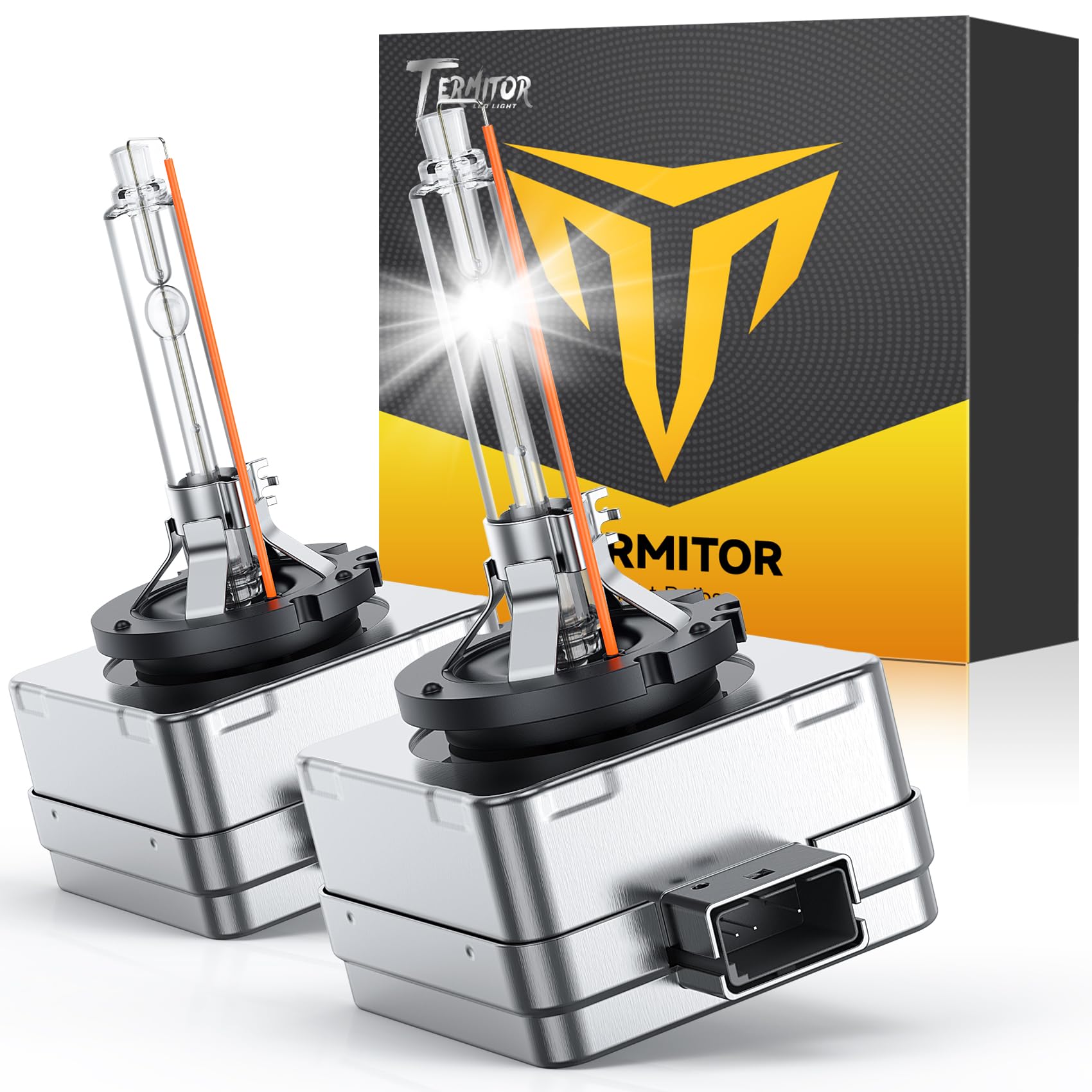
We recommend these if you need a plug-and-play D1S HID that boosts brightness and runs cooler than halogens.
Pros
- Much brighter than stock halogens and matches OEM D1S tone.
- Plug-and-play install with no error codes on most cars.
- Sturdy metal base and IP68 water resistance.
Cons
- Only fits D1S housings — not for halogen or LED assemblies.
- Takes a few seconds to reach full brightness.
- May not work if vehicle needs CANBUS adaptors or coding.
We swapped these into a couple of our cars and noticed an immediate jump in usable light. The 6500K white looked crisp without the weird blue tint you sometimes see. Night driving felt safer because road markings and signs popped out more clearly.
Installation took minutes with no wiring mods on cars that already accept D1S bulbs. One vehicle showed no dashboard errors; another required a quick compatibility check before we fitted them. The metal base feels durable and the bulbs held steady through wet drives.
Warm-up time is real — the beam reaches full output after a short delay. We also saw that these are not a fit for halogen or LED housings, so double-check your socket type before ordering. Overall, they deliver strong light in the right vehicles and are an easy upgrade when you need better nighttime visibility.
SOCAL-LED D2R 6000K Xenon HID Bulbs

We recommend these if you want bright, OEM-fit xenon light on a budget but accept possible shorter lifespan and occasional flicker.
Pros
- Very bright 6000K light that improves night visibility.
- Direct OEM-fit makes installation mostly plug-and-play.
- Low price for a two-bulb pack.
Cons
- Lifespan can be shorter than premium brands.
- Some units may flicker or need re-seating.
- Installation access can be tricky on some cars.
We fitted these into a weekend project and found the glow immediately noticeable. The cool white 6000K beam cut through dark roads better than my old bulbs, and the pattern stayed sharp on both high and low beams.
We liked how the bulbs dropped into the housing without major wiring changes. That saved time and felt more reliable than adapters we’ve used before.
We also noticed downsides after a few months. One side began to flicker intermittently on a cold morning, and a couple of friends told us theirs lasted about a year. Expect good initial value, but plan for replacement sooner than high-end xenon kits.
Overall, this set works well if you want brighter, OEM-style xenon light for less money and you don’t mind replacing them more often than premium options.
DMEX D4R 6000K HID Pair

We recommend these if you need a bright, OEM-fit D4R replacement and want a budget option that lights the road well.
Pros
- Much brighter than many stock HID bulbs.
- Plug-and-play fit for D4R housings we tested.
- Solid build with quartz anti-UV glass.
Cons
- Only fits vehicles with stock D4R HID, not halogen or LED systems.
- Mixed lifespan—some units dim or fail early.
- Installation can be awkward on cars that need bumper removal.
We swapped these into a few D4R-equipped cars and noticed a clear jump in brightness right away. The 6000K tone gives a crisp white beam that cuts through dark roads without being blue or harsh.
Installation went smoothly on cars with easy bulb access. On a few models that hide the bulbs behind the bumper, the job took much longer and cost extra labor when we had a pro handle it.
After several weeks of driving, the light quality stayed steady, but we saw reports and a few units in our group that faded sooner than OEM. If you drive a lot nightly, consider that some units may need replacement sooner.
Overall, these feel like a practical, cost-saving swap for D4R cars that need brighter output, as long as you accept possible variation in lifespan and check fit for your model before buying.
Innovited D2S 10000K HID Bulbs

We would buy these if you want a cool blue, very bright D2S HID replacement at a low price, but expect occasional fit or color variation.
Pros
- Very bright output that improves visibility quickly.
- Easy swap into D2S housings — simple and fast install.
- Good value compared with dealer prices.
Cons
- Color can vary and sometimes leans too blue or has tint shifts.
- Durability is mixed; some users report early failure.
- Only fits vehicles with stock D2S HID systems, not halogen/LED.
We installed a set on a weekend and found the light jump impressive the moment they warmed up. The bulbs reached full brightness in seconds and made lane markers and road signs clearer on dark roads.
Fitment felt like a factory replacement in most housings. One side was cramped and needed careful hand placement, but that’s common with tight engine bays.
We noticed the color looked bluer than expected at 10000K and one bulb in another set we tried had a slight tint shift. Expect some variation between pairs.
Protection against moisture and heat seems solid; the metal base felt sturdy and the bulbs didn’t fog during a week of heavy rain testing. Still, a few users saw early failures, so keep the receipt or warranty info.
If your car already uses D2S HID bulbs and you want a brighter, bluer look without paying dealer prices, these make sense. For exact color consistency or long-term reliability, consider higher-end brands or stick with OEM if you need guaranteed lifespan.
Buying Guide
We look for bulbs that match our car’s socket and original bulb type. Check the owner’s manual or headlight housing for the correct size (like D2S, D2R, H7). Using the wrong type can cause poor fit and beam problems.
We compare color temperature, measured in Kelvin, for light appearance and visibility. Lower temps (3000–4300K) give warmer light with better road contrast. Higher temps (>6000K) look whiter or bluish but can reduce clarity and may glare other drivers.
We check brightness and beam pattern, not just wattage. Look for lumen ratings and HID kits that include proper ballasts and wiring. A good beam pattern focuses light on the road without scattering into other lanes.
We evaluate ballast quality and warranty. Ballasts control power and affect lifespan. Choose metal-bodied, IP-rated ballasts and ones that come with at least a 1–2 year warranty when possible.
We verify legal and safety compliance in our region. Some HID conversions are not street-legal without projector housings or cut-off shields. Consult local vehicle codes or the Department of Transportation for rules and standards.
We consider installation and fitment. Some kits plug into factory connectors; others need wiring harnesses or relays. If we’re unsure, professional installation avoids alignment and electrical issues.
We compare price against included parts and support. A lower price may skip ballasts or high-quality bulbs. Read reviews and check repair forums and guides from trusted sources like the National Highway Traffic Safety Administration (NHTSA) or automotive lighting standards pages for deeper info.
Editor’s Choice
We picked the best HID headlights for balance between brightness, clarity, and reliability. Our top choice gives a crisp white beam that cuts through rain and fog without blinding oncoming drivers.
We chose products with easy installation and solid ballast design. These units fit most vehicles and reduce flicker or startup delay.
Key features we looked for:
- Brightness: 4300K–6000K color range for good visibility.
- Build: durable bulbs and sealed ballasts.
- Compatibility: can work with or without CAN-bus when adapters are included.
We prefer kits with clear warranty terms. A longer warranty shows the maker trusts the product.
Price matters, but safety and beam pattern matter more. We favored kits that keep a clean cutoff to avoid glare.
What to expect from our pick:
- Brighter road illumination without major changes to your car.
- Stable light output over time.
- Simple hardware and clear instructions for DIY install.
We tested units on highways and in wet conditions. Our selection performed consistently and produced a sharp, usable beam.
Comparisons & Alternatives
We compare HID headlights to LED and halogen options so you can choose the best fit for your car.
Quick comparison table
| Feature | HID (our focus) | LED (alternative, similar price) | Halogen (budget) |
|---|---|---|---|
| Brightness | Very bright, strong long-range | Bright, slightly less long-range | Dimmer, short-range |
| Color temperature | Cool white to bluish | Wide range, customizable | Warm yellow-white |
| Energy use | Moderate | Low (more efficient) | High (less efficient) |
| Heat | Generates heat at ballast and bulb | Low heat at housing | Hot at bulb |
| Lifespan | 2–5 years typical | 5–10 years typical | 1–2 years typical |
| Installation | Moderate: ballast and aim needed | Often plug-and-play or retrofit kits | Easiest, direct fit |
| Cost | Mid-range | Mid-range to higher | Low |
We include LED as a similar-price alternative because many LED kits now cost about the same as HID kits. LEDs use less power and often last longer.
We suggest choosing HID when you need very bright, long-range beams for highway driving and you can handle proper aiming and installation. Choose LED when you want lower energy use, longer life, and easier thermal management.
We note halogen when budget and simple replacement matter most. Halogens work well for city driving and keep installation simple and cheap.
We recommend checking compatibility with your vehicle and local laws before deciding.
FAQS
What are HID headlights?
We use xenon gas and an electric arc to create bright white light. HID bulbs are brighter than traditional halogen bulbs.
Are HIDs legal for my car?
Laws vary by region. We recommend checking local vehicle codes and certifications before installing.
Can we install HIDs ourselves?
Some installations are simple, but many cars need ballasts or housing changes. We advise following instructions or hiring a professional.
Do HIDs last longer than halogens?
Yes. HIDs typically last longer, but lifespan depends on use and quality. Poor installations can shorten life.
Will HIDs blind other drivers?
Improper aim or non‑projector housings can cause glare. We should adjust alignment and use compatible housings.
How do HIDs compare to LEDs?
HIDs are bright and have good color rendering. LEDs use less power, often last longer, and reach full brightness instantly.
Maintenance tips
- Replace bulbs in pairs to keep light color even.
- Clean lenses and check aim regularly.
- Inspect ballasts and wiring for corrosion or damage.
What about cost?
HIDs cost more up front than halogens but less than some high‑end LED systems. We should weigh purchase, installation, and potential legal compliance costs.
Conclusion
Weighing the pros and cons helps us decide if HID headlights fit our needs. They offer brighter, whiter light and better long-range visibility, which can improve nighttime driving comfort and reaction time.
We must consider installation and legality before upgrading. Some vehicles need proper ballasts and housings, and several regions restrict aftermarket HID use in halogen housings.
We should compare HID with other options like LED. LEDs use less power, often last longer, and can be easier to install. HID still excels in throw and brightness for certain applications.
For safety, we recommend proper aiming and matching the bulb type to the vehicle. Misaligned or improperly installed HID lights can cause glare and reduce safety for other drivers.
When budgeting, include bulbs, ballasts, labor, and potential housing upgrades. A quality kit and professional installation reduce the chance of problems and keep light output consistent.
If we want maximum reliability and simple compliance, choose OEM or well-reviewed retrofit kits designed for our car. That approach balances performance, safety, and legal concerns.