
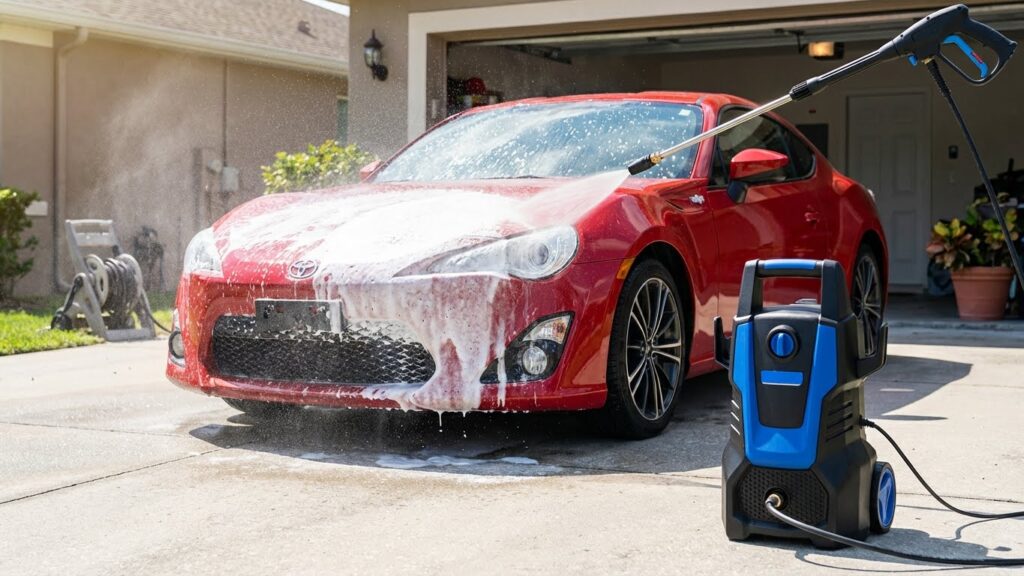
Pressure washers make car cleaning faster and more thorough than hand washing alone. They blast away dirt, brake dust, and road grime without scrubbing, and can reach wheel wells and undercarriage areas that are hard to clean by hand. For car detailing, we focus on light to medium-duty electric or gas-powered models that deliver steady pressure, a gentle spray option, and accessories like foam cannons and adjustable nozzles that help protect paint and trim.
The key things to check when choosing a car power washer are pressure (PSI), flow rate (GPM), nozzle options, portability, and whether the unit supports a foam cannon or detergents—too much pressure can damage paint, while too little won’t remove stubborn grime. We tested and compared models with a range of PSI and GPM, foam capability, and real-world ease of use to find the units that make car detailing safe, fast, and effective. These results guide our Best Of list, buying guide, and final recommendations.
Best Power Washers for Car Detailing
Below is our list of the best power washers for car detailing. We tested units for pressure, hose reach, nozzle options, and ease of use to help you pick the right one for washing, rinsing, and light paint prep.
Westinghouse ePX3100v

We recommend this if you want a light, easy-to-move electric washer that cleans cars well without the noise or fuss of gas models.
Pros
- Very portable and light to carry around the car.
- Strong spray for removing road grime and brake dust.
- Foam cannon and quick-change tips make rinsing and soaping fast.
Cons
- Not ideal for very large jobs or heavy commercial use.
- Lacks wheels, so you carry it rather than roll it.
- May need adapters for non-US plugs or some garden faucets.
We used this washer on several cars and a few small outdoor jobs. The unit felt surprisingly solid for its size and the built-in handle made moving it between vehicles quick. The trigger gun felt like a pro-style tool, which made spot-cleaning tight areas easier.
Soaping with the detachable foam cannon sped up our prep and reduced scrubbing. The spray tips let us switch from gentle rinse to focused blast quickly. At around 1800–2100 PSI it lifted stubborn grime off wheels and lower panels without us having to push hard.
We noticed limits on long sessions: the compact package runs better for regular car washing and light decking than whole-house or heavy concrete work. Also, lacking wheels means we carried it across the driveway, which was fine for short jobs but less convenient for long jobs. Overall, this is a strong choice for hobbyists and mobile detailers who want a quiet, effective electric washer.
Westinghouse ePX3500
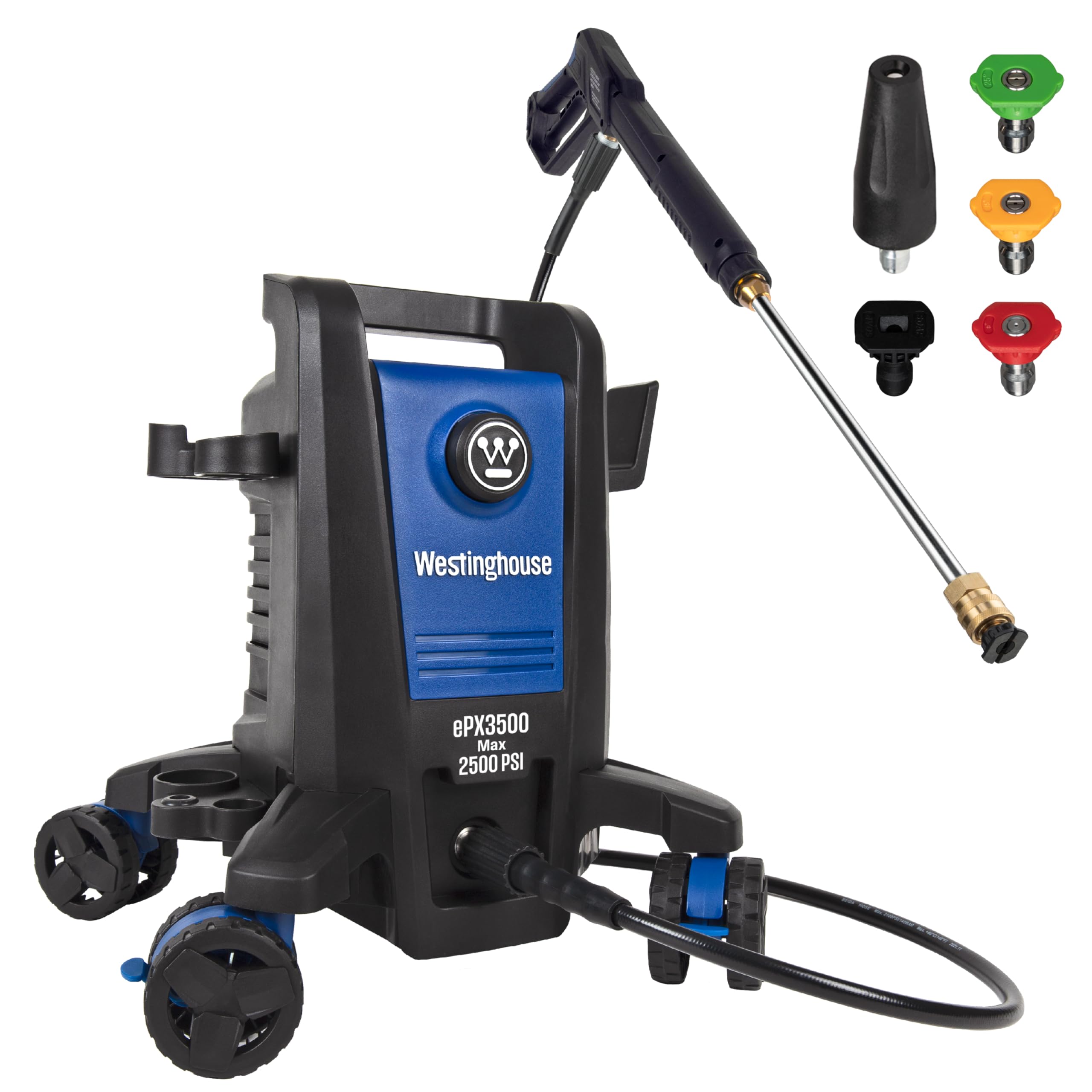
We recommend this if you want a compact, easy-to-move electric washer that cleans cars well without the noise and fuss of a gas unit.
Pros
- Feels surprisingly powerful for its size and clears road grime fast.
- Four-wheel, low-center design made it easy to steer around the car.
- Onboard soap tank and quick-connect tips cut setup and switching time.
Cons
- Pressure can be a bit much for delicate trim unless you back off the nozzle.
- Hose reach required careful positioning on longer driveways.
- Unit is light but still needs a stable place to park during use.
We rolled this out for a full car detail and found the spray handled dried bugs, brake dust, and road salt without fading paint or trim when we used the softer nozzles. The steel wand felt solid and the quick-change tips saved us time when moving from soap to rinse.
Moving the washer across grass and gravel was effortless thanks to the 360° wheel design; it followed us with one hand while we focused on the pressure gun. The automatic stop when the trigger is released helped avoid overheating during breaks and kept the pump quiet.
We had to watch pressure on plastic trim and decals, so we used the 25° and soap nozzles more than the narrower tips. Storage was simple — it’s compact enough to tuck on a shelf and the hose coils tidily for the garage. Overall, this model strikes a good balance for car detailers who want portability and solid cleaning power without gas-engine upkeep.
LWQ Green Pressure Washer
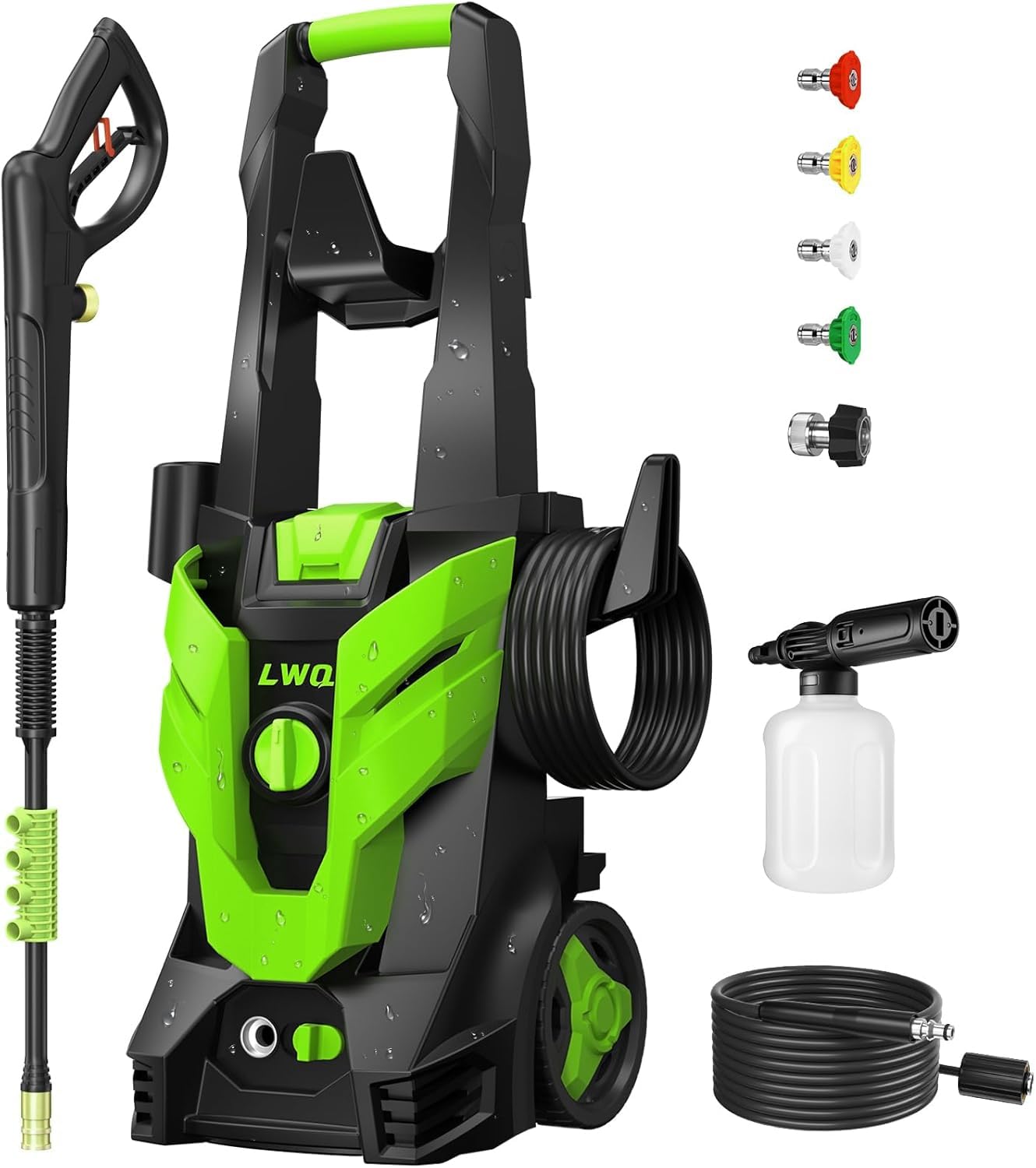
We recommend this unit if you want a lightweight, easy-to-move washer that cleans cars well and also handles driveways and patios.
Pros
- Strong cleaning power for cars and concrete.
- Foam cannon makes soap application quick and even.
- Easy to roll and store in a garage.
Cons
- Plastic parts feel a bit flimsy.
- Shorter hose than some heavier models.
- Not ideal for very large jobs or commercial use.
We used this LWQ washer on the car and around the driveway. It reached dirt on wheels and lower panels without fuss and the foam cannon spread soap smoothly, so rinsing took less time.
Moving it around felt simple. The dual rollers and anti-tip base made it stable while we wheeled it, and hook storage kept nozzles tidy after use.
A few small parts seemed light compared with pricier machines. For regular home detailing and occasional yard work, it worked well, though we would choose a heavier-duty unit for constant heavy use.
Craftsman 1700 Electric Washer

We recommend this if you want a compact, easy-to-use electric washer that handles car detailing without heavy equipment.
Pros
- Lightweight and easy to move around.
- Soap bottle makes quick foam application simple.
- Onboard storage keeps everything tidy.
Cons
- Not as powerful as gas units for deep grime.
- Hose and cord limit reach in large yards.
- Turbo nozzle can be aggressive near paint if used too close.
We used this washer on several cars and a few patio jobs. It felt light to carry and assembled fast. The trigger wand has a comfy grip that made long sessions less tiring.
Applying soap was straightforward—just fill the bottle and switch nozzles. Rinsing at close range cleared soap and road grime quickly, but we stayed careful with the turbo tip on painted surfaces.
Storage proved handy. The hose and cord wrap up neatly, so it fit in a small garage shelf. For routine car detailing and light outdoor cleaning, it saved time and effort without the noise or fuss of gas models.
LawnMaster LT506-2000A

We recommend this model for basic car detailing when you want good cleaning power without gas noise or fuss.
Pros
- Strong spray for its size and removes road grime.
- Foam bottle and brushes included make washing easier.
- Long hose and cord reach around a car and driveway.
Cons
- Connector is proprietary and may not fit other hoses.
- Stated “2300 PSI max” reads higher than working pressure.
- Power cord management feels clunky on larger jobs.
We used this washer on sedans and an SUV and found it handled bug guts and brake dust well. The foam bottle made soap application quick, and the wheel hub brush helped get into tight spokes.
Setup was fast and the unit stayed fairly quiet. Pressure did drop under heavy use, so we moved a bit slower than with a gas unit, but surfaces still came clean without damage.
The hose length and included attachments saved us a trip to the store, though the quick-connect only mated to the supplied pieces. For routine car detailing on a budget, this is a solid, practical pick.
YKYI Cordless Washer
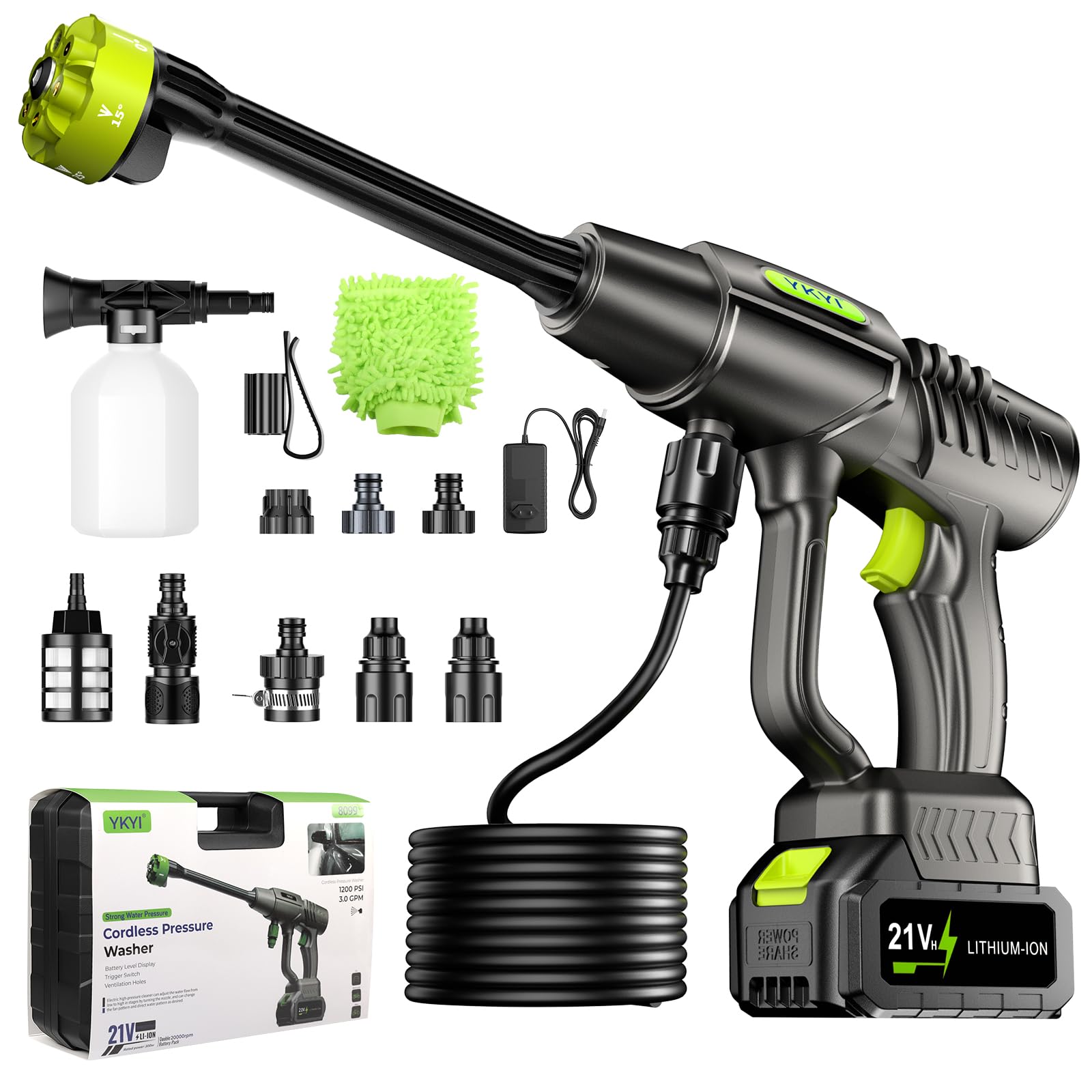
We recommend this if you want a truly cordless washer that balances power and portability for regular car detailing.
Pros
- Portable and easy to carry for driveway or travel use.
- Strong spray options from gentle to focused for paint-safe rinsing or deep cleaning.
- Long battery life that can finish a full SUV on one charge.
Cons
- Variable pressure feels lower than advertised on the highest setting at times.
- A learning curve to find the right nozzle and speed for paint-safe cleaning.
- Hose and fittings need careful handling to avoid leaks.
We used this on a few cars and found it surprised us with how much grime it moved without a cord. Switching between the gentle and concentrated spray kept paint and trim safe while blasting mud from wheel wells.
Battery runtime let us finish a midsize SUV plus a couple of garden chairs without hunting for an outlet. The foam sprayer made soap work well and reduced scrubbing, which saved time and effort.
On tougher stains the motor sometimes felt strained and we had to bump settings to get the rinse we wanted. Connecting the hose to buckets or a garden tap worked fine, but we treated the plastic fittings gently to avoid leaks.
Overall, this unit works best for regular car washes and light duty outdoor cleaning when you want cordless convenience and reasonable cleaning power.
Active 2.0

We recommend this if you want a compact, car-friendly washer that cleans fast without risking paint damage.
Pros
- Strong flow that rinses quickly
- Lightweight and easy to move
- Built to be serviceable and upgradeable
Cons
- Not as powerful as heavy-duty pro units
- Shorter hose means less reach out of the box
- Some users report occasional part issues
We used the Active 2.0 on sedans and an SUV and found its 2.0 GPM flow strips grime and foam fast. It felt gentle on paint with the included nozzles, so we could rinse panels without worrying about swirl marks.
Moving it around was easy because it’s light and compact. Setup and storage were simple, and swapping accessories felt straightforward thanks to the common threads.
We did notice limits when tackling thick mud or tall trucks — higher-end machines handled those faster. A longer hose or upgraded gun helps a lot if you plan to detail larger vehicles.
FOTING 5000PSI Touchscreen Washer
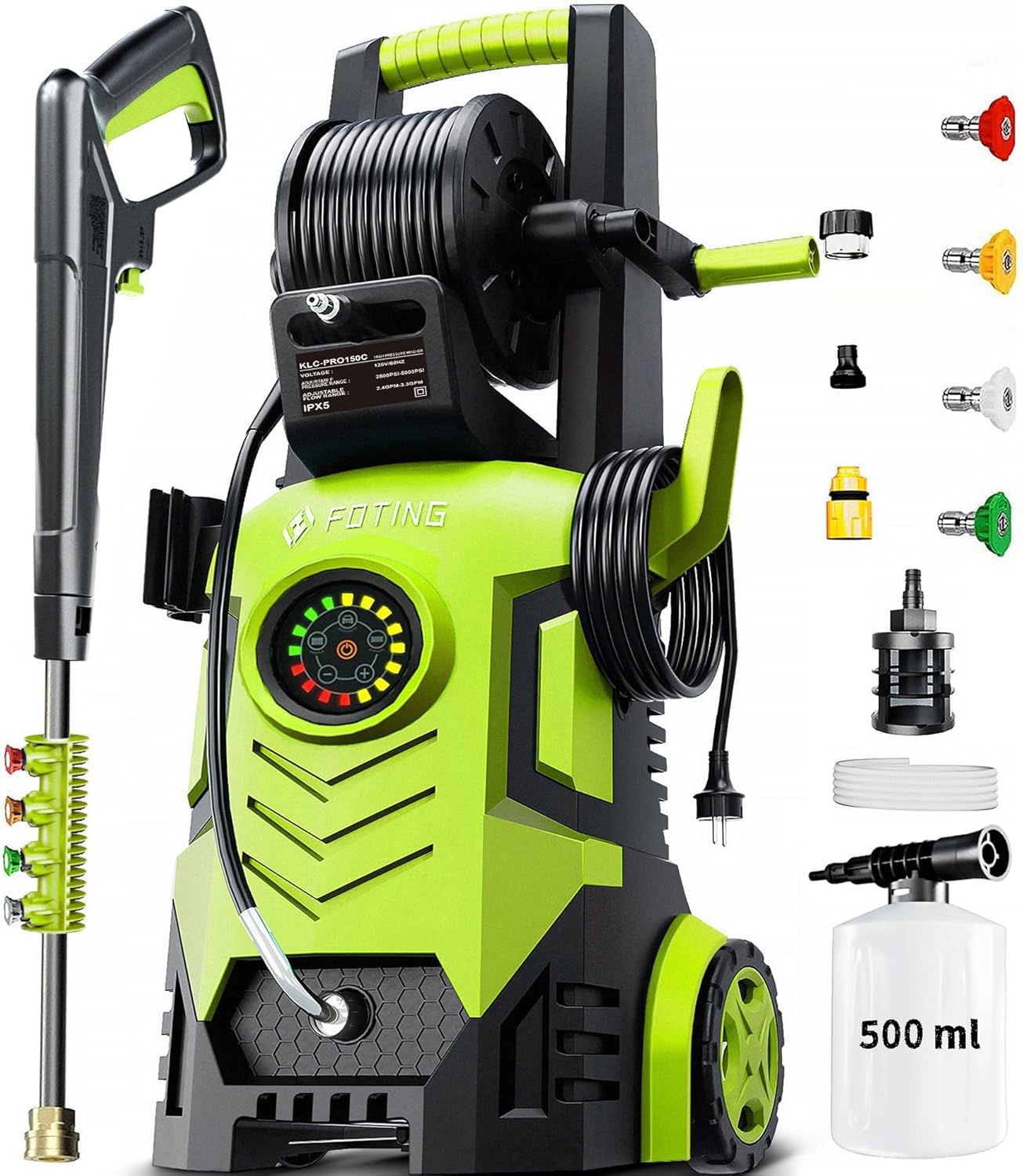
We recommend this if you want a powerful electric washer for heavy-duty jobs and don’t mind checking claims about peak PSI.
Pros
- Strong feel on tough grime and versatile nozzle options.
- Touchscreen makes pressure changes quick and clear.
- Wheeled base and storage keep the unit easy to move and tidy.
Cons
- Real output may not match the 5000 PSI claim.
- Short wand can force you to bend for low spots.
- Hose rating and build quality feel mixed for long-term heavy use.
We ran the unit on our driveway and car and it pushed off stubborn dirt faster than smaller electric models. The foam cannon added good suds for safe car washing, and swapping the nozzles let us dial in spray patterns without stopping.
Changing pressure on the touchscreen felt modern and convenient, though the screen needed steady hands when wet. Moving the machine was easy thanks to the trolley wheels, but the wand length made low-angle cleaning awkward for taller users.
We noticed the power felt lower than the printed 5000 PSI during some chores, which aligns with other owners’ experiences. For most home detailing and outdoor cleanup, it worked well, but we’d want stronger hose ratings and a longer wand if we planned daily heavy use.
Chemical Guys PM2000 PRO
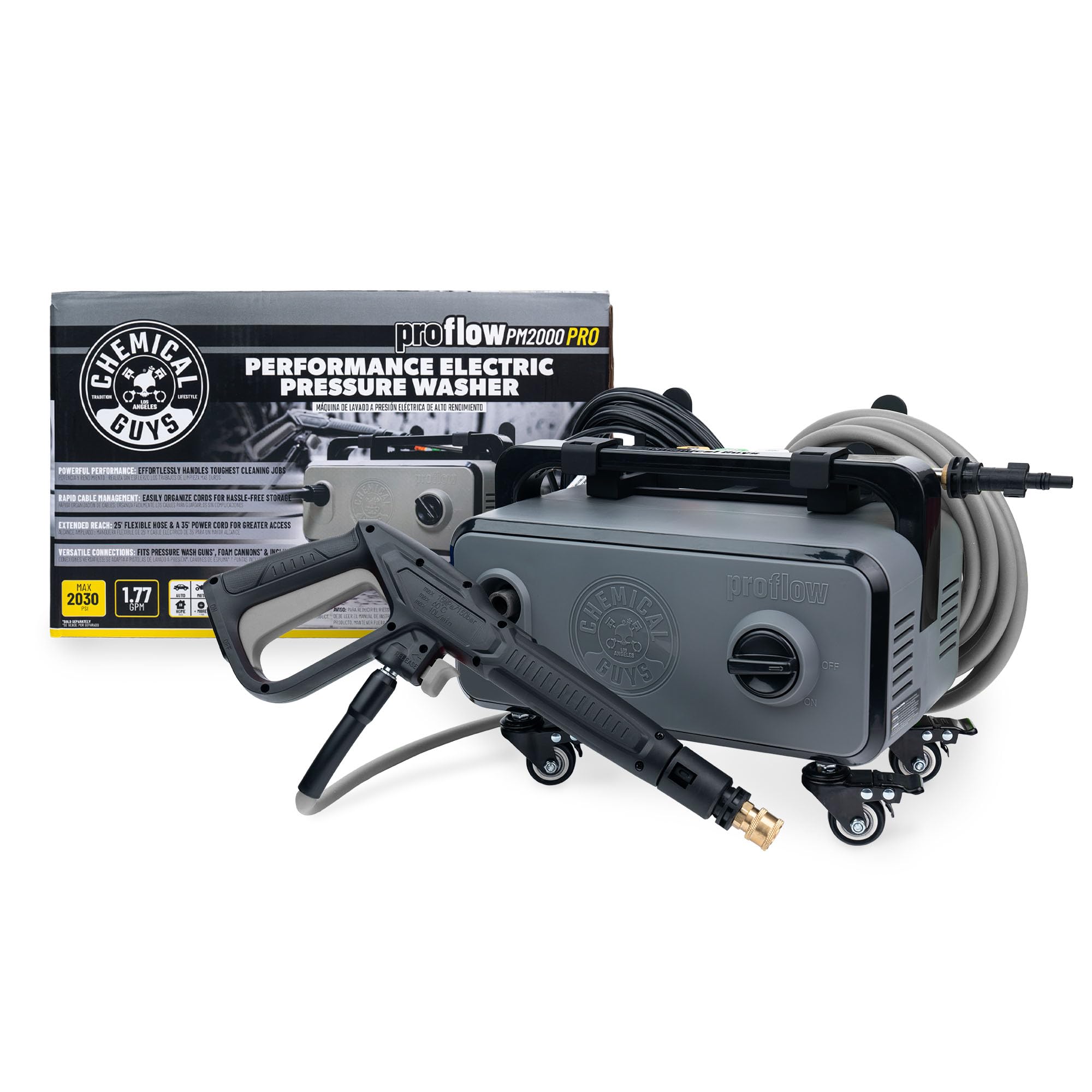
We recommend this if you want a compact, easy-to-roll washer for regular car detailing and light outdoor jobs.
Pros
- Compact and easy to move with 360° casters.
- Long hose and cord let us reach all sides of a vehicle.
- Simple hookup and standard fittings work with foam cannons.
Cons
- Some users report leaks or loss of pressure.
- Build feels lightweight; plastic parts can break under stress.
- Motor is good for cars but not heavy-duty jobs.
We pushed this unit through a few full-detail sessions and liked how fast it made rinsing and foam work. The spray felt steady for rims and lower panels, and the foam cannon attached without fuss.
Moving it around the garage felt effortless because the casters glide; that saved our backs compared to lifting. The cable and hose storage kept things neat after each use.
We noticed weak points after repeated use. A few joints started to weep and one handle felt flimsy—fine for occasional car care but concerning for rough daily work.
Overall, this is a practical choice for hobbyists who want a portable washer that performs well on cars and light outdoor cleaning, as long as you handle it gently and check fittings regularly.
Hiclean 2100 PSI Portable Washer
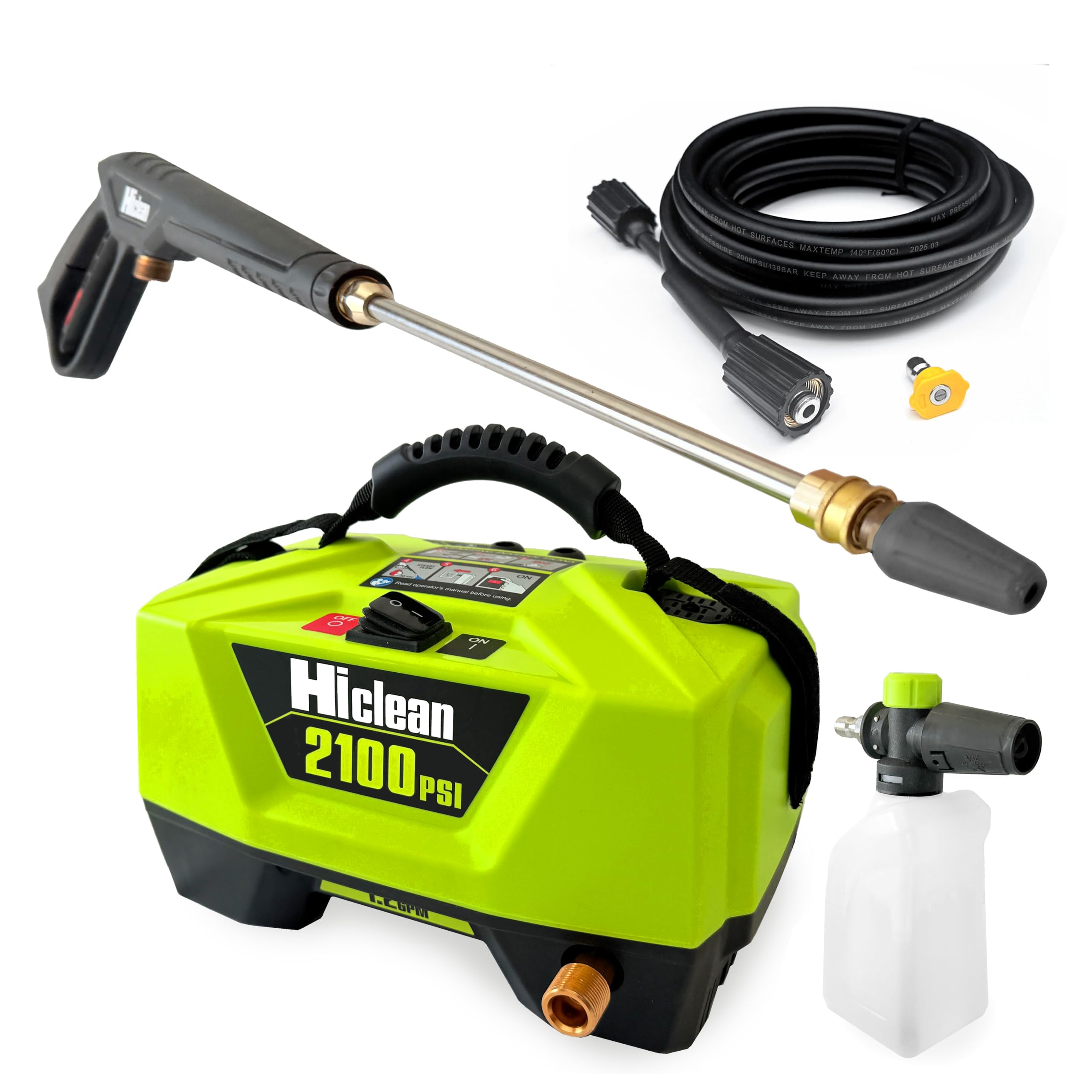
We recommend this for car detailing if you want a compact, easy-to-move unit that still gives solid cleaning power.
Pros
- Good pressure for cars in a small package.
- Lightweight and easy to carry to the driveway or garage.
- Foam cannon and multiple nozzles make detailing faster.
Cons
- Short duty cycles reported by some users.
- Not as durable as higher-end brands over years of heavy use.
- Plastic build feels less rugged on rough jobs.
We took this washer out to our cars and the deck. It rinsed off road grime fast and the foam cannon made soap coverage even and easy to rinse. The 17.5-inch wand hits the right distance for fenders without awkward bending.
Moving the unit around felt simple. The kayak-style handle and small footprint let us carry it up steps and tuck it into a garage shelf. The 25-foot hose reached across a driveway without stretching.
We pushed the washer through a couple of longer jobs and noticed it can warm up under continuous use. Short breaks solved that, but it’s not built for all-day commercial work. For home detailing and seasonal cleaning, it performs well and saves storage space.
Buying Guide
We focus on the features that matter for car detailing: pressure, flow rate, and nozzle options. Pressure (PSI) affects how well dirt lifts. Flow rate (GPM) determines how quickly you rinse soap and grime.
We look for adjustable pressure controls so we can go gentle on paint and strong on wheels. A variable nozzle or a set of nozzles helps us switch spray patterns fast. A foam cannon or soap tank gives better cleaning with less scrubbing.
We check build quality and hose length for ease of use. A durable pump and rust-resistant fittings last longer. Longer hoses and a swivel wand make detailing a full vehicle easier.
We value portability and storage if we detail at different locations. Electric models tend to be lighter and quieter than gas. However, we confirm the power source fits our workspace and local regulations.
We verify safety features and accessories before buying. Thermal protection and an automatic shutoff protect the motor. We also inspect included fittings, brushes, and a lance to avoid extra purchases.
We compare performance specs and read trusted sources like the Consumer Reports pressure washer guide and EPA water use guidance for proper water use. Those resources help us match specs to our detailing needs.
Editor’s Choice
We picked a power washer that balances pressure, flow, and control for car detailing. It works well on paint, wheels, and undercarriage without risking damage.
Model: Sun Joe SPX3000 (example)
Why we chose it: It offers adjustable pressure, a steady flow rate, and multiple nozzles for different jobs. The spray settings let us switch from gentle rinses to tougher grime removal.
We liked the built-in detergent tank because it saves time during pre-wash. That feature helps loosen dirt and grime without extra gear.
The unit is lightweight and easy to move around the driveway or garage. Hose length and cord reach are generous, so we can reach most parts of a car without unplugging.
Maintenance is simple: flush the system and store indoors. Replacement parts and common accessories are widely available, which reduces downtime.
Key specs at a glance:
- Pressure: 1,450–2,000 PSI (adjustable)
- Flow: ~1.5 GPM
- Nozzles: Multiple quick-connect tips
- Weight: Lightweight for portability
We recommend this model for hobbyists and detailers who need reliable performance and gentle control.
Comparisons & Alternatives
We compare our top pick with a similar-priced alternative and a budget option to help you decide. The table below shows key features, pros, cons, and when to choose each.
| Model | Price range | Pressure (PSI) | Flow (GPM) | Best for | Pros | Cons | When to choose |
|---|---|---|---|---|---|---|---|
| Our Pick | $150–$250 | 1,900–2,200 | 1.2–1.4 | Car detailing, gentle paint care | Lightweight, good nozzle selection, soap tank | Not for heavy grime or large jobs | Choose ours when you need safe, efficient car washing and easy use |
| Similar Alternative | $140–$260 | 2,000–2,300 | 1.1–1.5 | Detailing with slightly higher pressure | Slightly higher PSI, durable pump | A bit louder, heavier | Choose alternative if you want a touch more pressure for stubborn dirt |
| Budget Option | $70–$130 | 1,200–1,600 | 1.0–1.2 | Occasional, light cleaning | Very affordable, compact | Lower pressure, shorter hose and life | Choose budget when you wash rarely and want low cost |
We note pump type and warranty matter. Electric motor models are simpler to maintain, while battery units add portability.
We recommend testing spray pattern and using a foam cannon for better coverage. That choice affects cleanup time more than small PSI differences.
FAQS
What pressure should we use for car detailing?
We recommend 1200–1900 PSI for most cars. This range cleans well without harming paint or trim.
Can we use soap with a power washer?
Yes. Use a detergent designed for pressure washers and a low-pressure soap nozzle. Rinse with a higher-pressure, wide spray afterward.
Will a power washer strip wax or sealant?
High pressure or a narrow spray can strip wax. Stay in the recommended PSI range and use a wider nozzle to protect coatings.
Are electric or gas models better for car use?
Electric models are quieter, lighter, and require less maintenance. Gas models offer more power for tough dirt. Choose based on how often we detail and the cleaning jobs we do.
What nozzle should we use for detailing?
Use a 25° or 40° nozzle for general washing. Save the 0° or 15° nozzles for power tasks far from the car’s surface and only when necessary.
How do we avoid damage to trim and lights?
Keep the nozzle at least 12–18 inches from the surface. Test on a small area first and use lower pressure near delicate parts.
Can we use a power washer indoors or in a garage?
Avoid using gas models indoors because of fumes. Even with electric models, watch for water runoff and electrical hazards.
How often should we pressure wash our car?
We suggest washing with a pressure washer when regular washing can’t remove grime—typically every few months. Frequent gentle cleaning is better than occasional harsh cleaning.
Conclusion
We picked models that balance cleaning power, safety, and value for car detailing. Our choices suit different needs: gentle flow for delicate finishes, stronger jets for heavy grime, and foam systems for better coverage.
We recommend matching pressure and nozzle type to the paint and trim. Too much pressure can damage surfaces, so we favor adjustable settings and low-pressure foam options.
We value ease of use and durability. A lightweight unit with good hose length and quality accessories saves time and reduces strain.
We suggest checking warranty and parts availability before buying. That helps keep the washer working well for years.
Quick buying checklist:
- Pressure range suited to cars (around 1200–1900 PSI)
- Adjustable nozzles and foam cannon compatibility
- Good hose length and durable fittings
- Clear warranty and customer support
We encourage testing settings on a small area first. That prevents accidental damage and lets us find the best spray pattern and distance for each vehicle.