

CB radios are legal to use in most countries, including the US, as long as users follow specific rules and regulations set by authorities. Understanding these guidelines ensures you stay compliant and enjoy hassle-free communication.
Contents
- 1 Key Takeaways
- 2 Quick Answers to Common Questions
- 3 📑 Table of Contents
- 4 Introduction
- 5 What Are CB Radios?
- 6 Are CB Radios Legal to Use?
- 7 Common Misconceptions About CB Radio Legality
- 8 Practical Tips for Using CB Radios Legally
- 9 CB Radios in Vehicles: What You Need to Know
- 10 Conclusion
- 11 Frequently Asked Questions
- 12 Author
Key Takeaways
- CB radios are generally legal: Most countries allow Citizens Band radios for personal and business use.
- FCC regulations in the US: The Federal Communications Commission sets the rules for power limits and frequency use.
- No license needed in many places: Many countries, including the US, do not require a license for CB radio operation.
- Power and antenna restrictions: Users must comply with maximum power limits and antenna height rules.
- Prohibited activities: Illegal uses include transmitting obscene content or using radios to interfere with emergency communications.
- Vehicle use considerations: CB radios are popular among truckers and drivers, but there are rules on how and when they can be used while driving.
- International differences: Rules vary by country, so check local regulations before using a CB radio abroad.
Quick Answers to Common Questions
Are CB radios legal without a license?
Yes, in the US and many other countries, CB radios can be used without a license as long as you follow the regulations set by authorities.
What is the maximum power allowed for CB radios?
The FCC limits CB radio power to 4 watts for AM and 12 watts for SSB transmissions.
Can I use a CB radio amplifier to boost my signal?
No, using external amplifiers with CB radios is illegal because it exceeds power limits and can cause interference.
Are all CB channels available for any type of communication?
No, some channels are reserved for specific uses, such as emergency communication on channel 9.
Is it legal to use a CB radio while driving?
Yes, but you must use it responsibly and avoid distracted driving. Laws about distracted driving still apply.
📑 Table of Contents
Introduction
If you’ve ever seen a trucker chatting away on a small radio, you’ve likely encountered CB radios in action. These handy devices have been around for decades, offering a simple way to communicate over short distances. But you might wonder, are CB radios legal to use? The answer isn’t just a simple yes or no. It depends on where you are and how you use them.
In this article, we’ll break down the rules and regulations surrounding CB radio use, especially focusing on the United States. Whether you’re a hobbyist, a driver, or just curious, understanding the legal landscape helps you avoid fines and enjoy clear, reliable communication.
What Are CB Radios?
The Basics of CB Radios
Citizens Band (CB) radios are short-distance communication devices that operate on 40 channels within the 27 MHz (11-meter) band. They allow users to chat without a license, making them popular for personal, recreational, and business communication—especially among truck drivers and off-road enthusiasts.
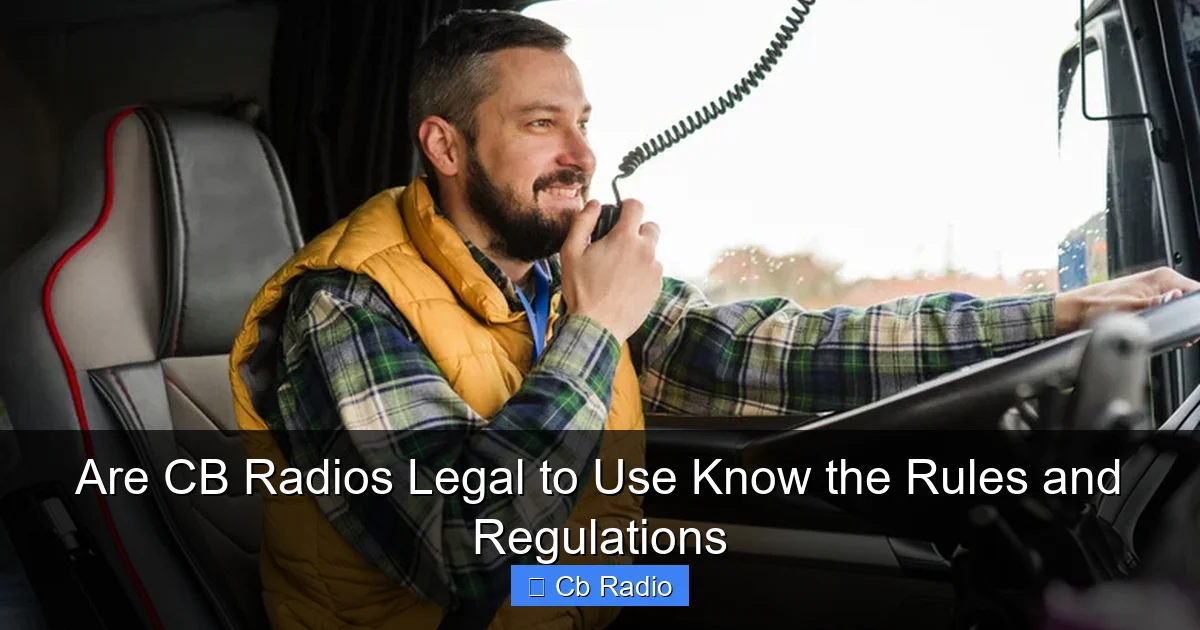
Visual guide about Are CB Radios Legal to Use Know the Rules and Regulations
Image source: slashgear.com
How CB Radios Work
CB radios use radio waves to transmit voice signals. They’re limited in range—typically up to a few miles depending on terrain, antenna setup, and power. This makes them ideal for local communication, such as coordinating with fellow drivers or emergency communication in remote areas.
Are CB Radios Legal to Use?
Legal Status in the United States
In the US, CB radios are legal to use and regulated by the Federal Communications Commission (FCC). The FCC allows operation of CB radios without a license, provided users comply with rules on power output, channel use, and interference prevention.
Key FCC Regulations
- Power Limit: CB radios must not exceed 4 watts on AM and 12 watts on SSB (single sideband).
- Channel Use: Users must stick to the designated 40 CB channels.
- Antenna Restrictions: Antennas should not be excessively tall or mounted in a way that causes interference.
- Prohibited Content: No obscene or threatening transmissions.
International Legal Perspectives
While CB radios are legal in many countries, each has its own set of rules. For example, in Canada, CB radio use is also license-free but must comply with Industry Canada standards. In the UK and Australia, certain channels and power limits apply, and some countries require licenses or prohibit CB use entirely.
Common Misconceptions About CB Radio Legality
Do You Need a License to Operate a CB Radio?
One common myth is that you need a license to use a CB radio. In the US and many other countries, this is false. The FCC permits license-free use, making CB radios accessible to almost anyone. However, operating outside the rules can lead to fines or equipment confiscation.
Is Using Amplifiers Legal?
Some users try to boost their signal with external amplifiers to increase range. This is illegal for CB radios in the US because it exceeds power limits and can cause interference with other radio services.
Are All CB Channels Open for Use?
Not quite. Some channels are reserved for specific purposes—like channel 9 for emergency communication. Using these channels improperly can be against regulations.
Practical Tips for Using CB Radios Legally
Choose the Right Equipment
Make sure your CB radio meets FCC standards. Many models come pre-approved. Avoid unauthorized modifications that increase power output.
Follow Power and Channel Rules
Stick to the 4-watt AM and 12-watt SSB power limits. Use only the authorized 40 channels, and keep emergency channels clear unless necessary.
Be Mindful of Your Antenna Setup
Install antennas according to manufacturer guidelines and local laws. Keep antenna height within legal limits to avoid interference and possible fines.
Use CB Radios Responsibly
Avoid transmitting offensive language or interfering with emergency services. Respect other users on the channel to maintain a friendly communication environment.
CB Radios in Vehicles: What You Need to Know
Popular Use Among Truckers and Drivers
CB radios are widely used by truckers for traffic updates, road conditions, and safety alerts. They’re also popular in off-road vehicles for group coordination.
Legal Considerations While Driving
While CB radios are legal, it’s important to use them safely while driving. Distracted driving laws apply, so avoid extensive use that takes your attention away from the road.
Installation Tips for Vehicles
Mount your CB radio securely and choose antennas that don’t obstruct your vehicle’s structure or safety features. Professional installation is recommended for optimal performance and compliance.
Conclusion
So, are CB radios legal to use? The short answer is yes—provided you follow the rules. In the US, the FCC allows license-free operation with clear guidelines on power, channels, and content. Understanding these regulations ensures you can enjoy CB communication safely and legally.
Whether you’re a trucker, hobbyist, or emergency preparedness enthusiast, knowing the legal landscape helps you avoid trouble and make the most of your CB radio. Always check local laws if you’re using CB radios outside your home country. With the right knowledge and equipment, CB radios remain a useful and legal communication tool.
Frequently Asked Questions
Do I need a license to operate a CB radio in the US?
No, the FCC permits license-free operation of CB radios in the US, as long as you follow power and channel regulations.
What happens if I use a CB radio illegally?
Violating CB radio regulations can result in fines, equipment confiscation, and interference with other radio services.
Can I use a CB radio outside the US?
Yes, but rules vary by country. It’s important to check local regulations before using a CB radio abroad.
What is the typical range of a CB radio?
CB radios typically have a range of 1 to 5 miles, depending on terrain, antenna quality, and power output.
Are CB radios still relevant with smartphones and other technology?
Yes, CB radios offer reliable, license-free communication without relying on cell networks, making them valuable for emergencies and remote areas.
Can I modify my CB radio for better performance?
Modifications that increase power or change frequency are illegal. Use factory-approved equipment to stay compliant.