

Are OBD2 scanners any good? Yes. This guide shows which models work and why. You’ll learn how to pick, use, and troubleshoot an OBD2 scanner with clear steps and practical tips. Save time and money by scanning your car like a pro.
Contents
- 1 Key Takeaways
- 2 Introduction: What you will learn
- 3 Step 1: Understand what an OBD2 scanner does
- 4 Step 2: Decide what you need
- 5 Step 3: Compare scanner types
- 6 Step 4: Check compatibility and protocols
- 7 Step 5: Key features to look for
- 8 Step 6: How to buy the right scanner
- 9 Step 7: How to use an OBD2 scanner — step-by-step
- 10 Practical tips and examples
- 11 Troubleshooting common issues
- 12 Limitations: When an OBD2 scanner is not enough
- 13 How much can you save with a scanner?
- 14 Make the most of your OBD2 scanner
- 15 Conclusion: Final verdict
- 16 Author
Key Takeaways
- Point 1: Are OBD2 scanners any good: Most OBD2 scanners are good for basic diagnostics and code reads.
- Point 2: Higher-end scanners add live data, mode 6, and advanced testing.
- Point 3: A Bluetooth adapter plus a phone app can be a cheap, effective setup.
- Point 4: Compatibility matters: check protocols and vehicle year before buying.
- Point 5: Use scanners to save on diagnostics and to understand what mechanics tell you.
- Point 6: Troubleshooting steps can help when a scanner shows ambiguous or no codes.
Introduction: What you will learn
This guide answers the core question: are obd2 scanners any good? You will learn what OBD2 scanners do. You will learn how to choose one. You will get step-by-step instructions to set up and use a scanner. You will get practical tips and troubleshooting help. By the end, you will know how to read codes, clear codes, and decide which scanner fits your needs.
Step 1: Understand what an OBD2 scanner does
Before you buy, know what the tool does. The term OBD2 stands for On-Board Diagnostics, second generation. The scanner reads trouble codes from the car’s computer. It shows engine data and emissions information. It may show live data, freeze frame, and readiness monitors.
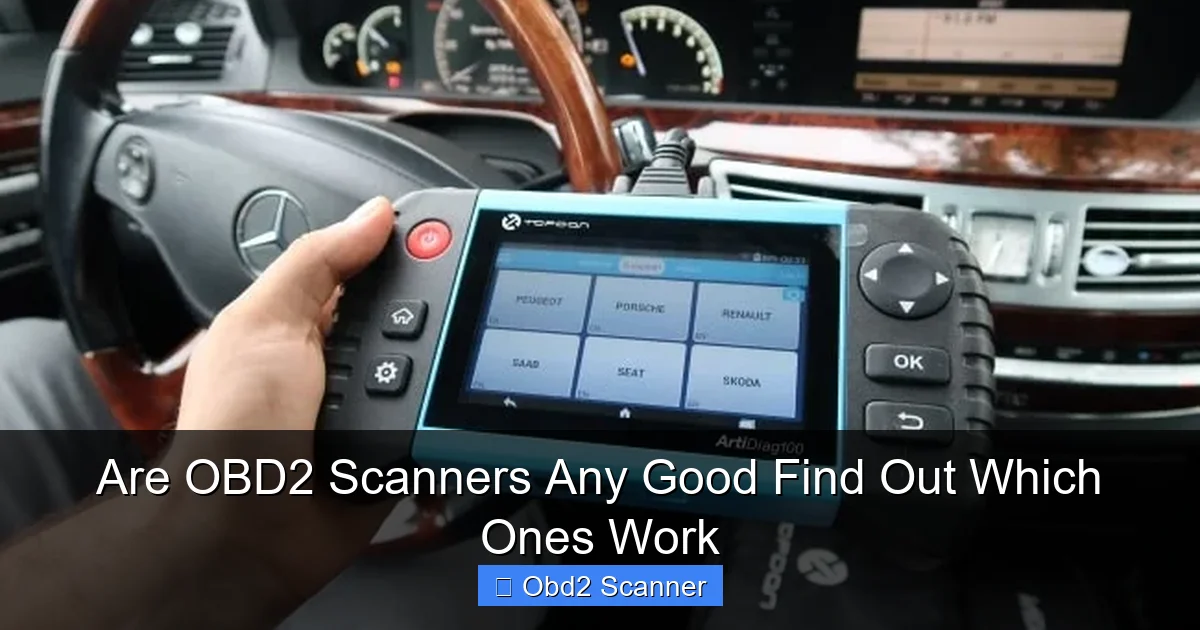
Visual guide about Are OBD2 Scanners Any Good Find Out Which Ones Work
Image source: budgetreport.com
What basic scanners do
- Read and clear codes.
- Show a simple description of the code.
- Turn off the check engine light in many cases.
What advanced scanners do
- Live data: RPM, speed, temperatures, fuel trims.
- Graphing and logging data over time.
- ABS and SRS code reading on some models.
- Advanced modes: mode 6, mode 8, and bi-directional control on costly units.
So, when you ask are obd2 scanners any good, the short answer depends on how deep you need to go. For basic needs, they are very good. For shop-level tasks, you may need a pro tool.
Step 2: Decide what you need
Think about what you want to do. Do you want to read a code and clear a check engine light? Or do you plan to tune, log live data, and test actuators? Your choice changes the answer to are obd2 scanners any good for your case.
Visual guide about Are OBD2 Scanners Any Good Find Out Which Ones Work
Image source: budgetreport.com
Basic user
- Read and clear codes.
- Get a code reader or small handheld scanner.
- Cost is low. Ease of use is high.
Enthusiast / DIY mechanic
- Want live data and logging.
- Prefer Bluetooth adapter + app or mid-range handheld.
- Good balance of price and features.
Professional or advanced DIY
- Need advanced diagnostics and manufacturer-level coding.
- Buy higher-end scan tool with bi-directional controls.
- Higher cost, more training needed.
Step 3: Compare scanner types
There are three main types. Each answers the question are obd2 scanners any good in a different way.
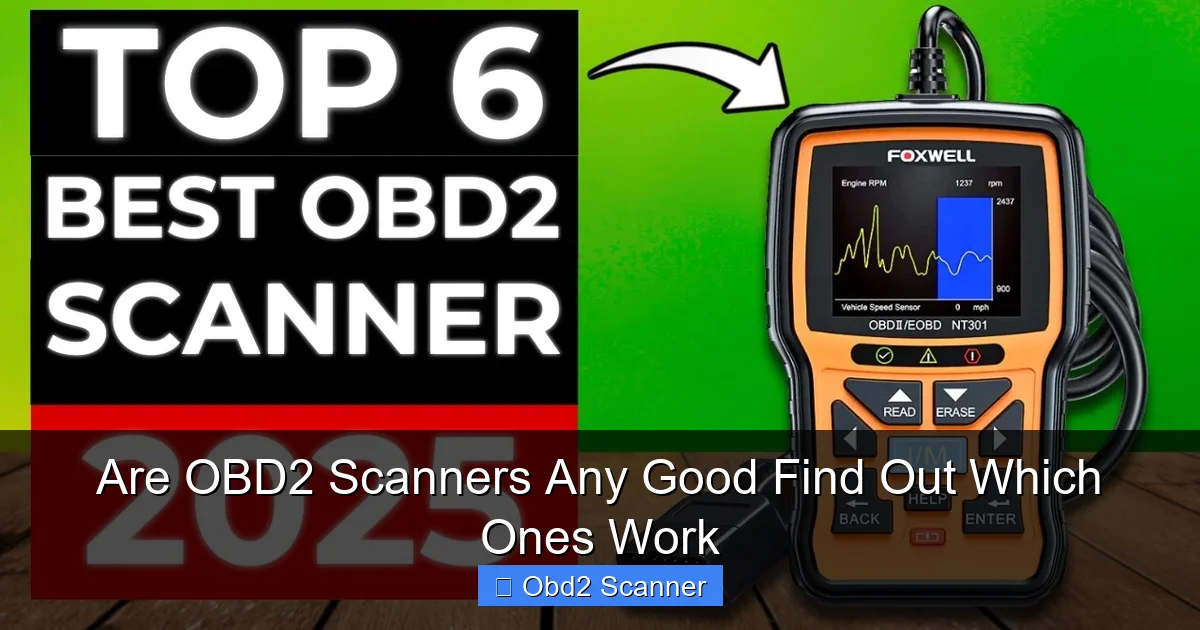
Visual guide about Are OBD2 Scanners Any Good Find Out Which Ones Work
Image source: i.ytimg.com
Handheld standalone scanners
- Plug into the OBD2 port. No phone required.
- Simple menus. Good for basic users.
- Examples: Autel, Innova budget models.
Bluetooth/Wi-Fi adapters + smartphone apps
- Small dongle plugs into the port.
- Use your phone for the interface. Many free apps exist.
- Great value and feature set for enthusiasts.
Professional scan tools
- Large screens, more vehicle coverage, advanced functions.
- Used in shops and advanced diagnostics.
- Best for mechanics and power users.
Step 4: Check compatibility and protocols
Before buying, check your car’s year, make, and model. Most cars sold in the U.S. since 1996 are OBD2-compliant. Still, protocols vary: ISO9141, KWP2000, CAN, etc. A good scanner lists supported protocols and vehicle coverage.
Important compatibility checks
- Year of the car (1996+ is typical in US).
- Manufacturer and model coverage for advanced features.
- Check for support of ABS/SRS if you need it.
As you weigh options, keep asking: are obd2 scanners any good for my car? If a scanner supports your vehicle, it is likely to be useful.
Step 5: Key features to look for
Not all scanners are equal. Here are the features that make them better.
Code reading and clearing
At a minimum, make sure the scanner reads and clears generic and pending codes. This is the core function.
Live data and graphing
Live data helps diagnose intermittent problems. Graphing makes trends easy to spot. If you plan to troubleshoot sensors, get this feature.
Freeze frame and readiness monitors
Freeze frame records the conditions when a code set. Readiness monitors tell you if emissions tests will pass. Both are helpful.
Manufacturer-specific codes
Some problems use maker-specific codes. Mid-range and high-end scanners read these. If you have a European or Asian car, check for specific support.
Software updates and app support
Scanners that update easily stay useful. For Bluetooth dongles, the mobile app should be updated and well-reviewed.
Step 6: How to buy the right scanner
Follow these steps to pick a reliable tool. This will directly answer are obd2 scanners any good for your situation.
Step-by-step buying guide
- List your needs: read/clear, data logging, ABS, SRS, coding.
- Set your budget: under $50 basic, $50–$200 mid-range, $200+ advanced.
- Check compatibility with your vehicle and desired features.
- Read user reviews and look for recent software updates.
- Buy from a reputable seller with a return policy.
Tip: A Bluetooth OBD2 adapter and a paid app often beat cheap handhelds. They give more features at a lower price.
Step 7: How to use an OBD2 scanner — step-by-step
Now we will walk through real use. This helps you decide if are obd2 scanners any good applies to your hands-on needs.
Step 1: Locate the OBD2 port
The port is under the dash, on the driver’s side. It is a 16-pin trapezoid connector. Some models hide it behind covers. Look beside the steering column or near the fuse box.
Step 2: Plug in the scanner or adapter
Turn the car key to the ON position, but do not start the engine. Plug the scanner into the port until it seats snugly. If using Bluetooth, plug in and pair with your phone app.
Step 3: Power on and connect
Handheld units power from the port. Bluetooth devices use the app to connect. Follow on-screen prompts. If the scanner needs ignition on, the app or unit will tell you.
Step 4: Read codes
Choose “Read Codes” from the scanner menu. The tool will list generic and pending codes. Write them down or use the app to save them. Look up plain English descriptions for each code. Many apps and devices provide descriptions.
Step 5: Check live data
Open the live data screen. Watch common sensors: RPM, coolant temp, O2 sensors, fuel trims. Compare values to normal ranges. Use graphing for better insight.
Step 6: Clear codes (with caution)
Use “Erase Codes” to clear the code and the light. Clearing does not fix the cause. If the problem is unresolved, the light will return. Clearing can help if you fixed the issue and want to retest.
Step 7: Save or export reports
Save logs or export them if the tool allows. This helps if you take the car to a mechanic. A saved report reduces guesswork and saves money.
Practical tips and examples
Here are real tips from users. They show when are obd2 scanners any good becomes very clear.
Example 1: Check engine light for loose gas cap
- Scanner shows code P0456 (small EVAP leak).
- Tip: Check fuel cap, tighten, and clear codes.
- Result: Light stayed off after a drive. Scanner solved it fast.
Example 2: Intermittent stalling
- Live data shows erratic idle and high short-term fuel trims.
- Tip: Look for vacuum leaks or faulty MAF sensor.
- Result: Replacing MAF fixed the issue. Codes and live data confirmed it.
Example 3: Pre-purchase car check
- Plug in a scanner and read codes on a used car.
- Tip: Look for pending codes or readiness monitors failing.
- Result: You may avoid buying a car with hidden issues.
Troubleshooting common issues
If you are still asking, are obd2 scanners any good, troubleshooting will show their limits and strengths. Here are common problems and fixes.
Scanner won’t connect
- Check ignition: it must be ON or engine running depending on device.
- Try a different app or update firmware.
- Inspect port pins for damage or dirt.
No codes but the light is on
- Some manufacturers hide codes or use non-standard protocols.
- Try a different scanner or a manufacturer-specific tool.
- Check for pending codes or freeze frame data.
Codes are vague or confusing
- Look up the code online with the car make for context.
- Check live data to find the root cause.
- Use forums or repair guides for step-by-step fixes.
Scanner shows lots of codes
- Prioritize codes: focus on powertrain and safety systems first.
- Clear and retest after fixing a component to see what remains.
- Use live data to narrow down true causes.
Limitations: When an OBD2 scanner is not enough
OBD2 scanners are powerful. But they are not magic. Here are limitations to watch for as you ask are obd2 scanners any good for your work.
- They cannot always pinpoint mechanical failures like a noisy bearing or worn timing chain.
- Some manufacturer-specific functions need dealer tools.
- Advanced calibration, programming, and module coding need pro equipment.
If you suspect such issues, use the scanner to gather data first. Then consult a trained technician with the report. That saves time and money.
How much can you save with a scanner?
Many users save on simple fixes. A basic diagnostic fee at a shop can be $80–$150. A $30–$200 scanner can pay for itself after one use. For complex problems, a scanner helps you show a mechanic the issue. That may lower labor time.
Make the most of your OBD2 scanner
Follow these tips for the best experience. They will help answer are obd2 scanners any good for years to come.
- Keep software updated.
- Store logs and notes for recurring problems.
- Invest in a quality Bluetooth adapter and paid app for advanced features.
- Learn basic code meanings so you don’t panic at the first readout.
Conclusion: Final verdict
So, are obd2 scanners any good? Yes. They are very good for basic diagnostics. They are excellent for saving money and learning about your car. For advanced repairs and programming, you may need pro tools. Most drivers will find a mid-range scanner or a Bluetooth adapter with a solid app to be the best value. Use this guide to pick the right tool for your needs. Scan, learn, and fix with confidence.
🎥 Related Video: TOP 5 Best OBD2 Scanners 2025
📺 Product Guide
Best OBD2 Scanner 2025 | Links To Products ⤵️ 1. Innova 5610 ✓ ✓ Check Prices – https://geni.us/AHLI4Y 2. BlueDriver …
