

Air compressors are useful tools for many tasks around the home and garage. They power devices like nail guns, spray paint equipment, and air ratchets. For automotive work, an air compressor helps with tasks like inflating tires, cleaning parts, and running air tools efficiently.
Choosing the right air compressor for home automotive use means looking at size, power, and noise level. A tank that holds enough air and a motor that can deliver sufficient pressure (measured in PSI and CFM) are important. Portability can also matter if you need to move the compressor around your workspace.
We focused on air compressors that offer enough power for vehicle maintenance without taking up too much space or being too loud. We spent time researching and testing models to find the best options for home automotive projects.
Contents
Best Air Compressors for Home Automotive Work
We have tested and reviewed several air compressors to find the best options for home automotive use. Our list includes reliable and easy-to-use models that fit different needs and budgets. These compressors will help you complete tasks like inflating tires and running air tools efficiently.
DEWALT 20V MAX Tire Inflator

This air compressor is a solid choice for home automotive work, thanks to its versatile power options and easy-to-use features.
Pros
- Works on battery, 12V DC, or 110V AC power sources
- Auto-shutoff ensures accurate tire pressure every time
- Built-in LED light and accessory storage add convenience
Cons
- Battery and charger are not included
- Can be a bit heavy to carry around
- Needs engine running to use 12V DC power effectively
We found this model very practical for home use and on the go. Switching between battery power and corded options is a big plus when working outdoors or in the garage. The digital pressure gauge lets us set the exact tire pressure, and the compressor stops automatically once it reaches that level, so there’s no guesswork.
The rubber hose feels sturdy, and the threaded chuck fits tightly onto valves, so air doesn’t leak during inflation. We also appreciate the high-volume mode that quickly inflates larger gear like air mattresses. The LED light helped a lot during low light situations, making it easier to use at night or in a dim garage.
One drawback is that since the battery and charger aren’t included, you need to invest separately if you don’t already own compatible DEWALT 20V tools. It’s a bit heavy compared to some smaller inflators, but the solid build gives us confidence that it will last. Overall, this is a reliable tool for anyone who does regular tire maintenance or needs an air compressor for inflatables.
Nessxa 14 Gallon Ultra Quiet Air Compressor

We think this air compressor is a solid choice for light to medium automotive work at home when you need something quiet and portable.
Pros
- Runs noticeably quieter than many compressors we’ve used
- Easy to move around with built-in handle and wheels
- Oil-free motor means less maintenance effort
Cons
- Adjusting pressure requires a screwdriver, not a simple dial
- Pressure gauge can be fragile and has a history of damage during shipping
- Tank size and power may be limited for heavy or long jobs
Using it for car repairs and some spray painting, we liked how quiet it was compared to older compressors. It’s far less distracting, which helps if you’re working indoors or near others. The wheels and handle made it simple to shift around the garage.
We noticed it fills the tank fairly fast but found the pressure control a bit tricky since you can’t easily change it by hand. The need for a screwdriver to adjust may slow you down if you switch tasks often.
While the compressor is lightweight for its size, the tank’s 14 gallons and 2HP motor mean it’s best suited for occasional use or smaller automotive projects. For bigger jobs, we’d look for more power or a larger tank.
Overall, this Nessxa model covers basic home-and-auto tasks quietly and with ease, if you don’t mind a few small quirks in controls and handling.
CRAFTSMAN 2-Gallon Portable Air Compressor

This compressor works well for light home automotive jobs thanks to its portability and decent power for the size.
Pros
- Easy to carry with a rubber handle
- Fast inflation for a small tank
- Comes with many useful accessories
Cons
- Noisy during use
- Air coupler feels weak and flimsy
- Takes time to reach full pressure
We found this CRAFTSMAN air compressor easy to move around with its small size and handle. It’s light enough for quick trips between the garage and driveway, which is handy when inflating tires or using air tools in different spots.
The 2-gallon tank fills quickly, so you don’t wait long before you start working. It provides steady airflow for small tasks like tire inflation and nailing. The included accessories cover most jobs you’d want to do with it right away.
On the downside, it runs louder than we expected. Also, the air coupler could be more durable; it felt a bit flimsy when attaching hoses. The pressure build-up is steady but not very fast because it’s a smaller motor. Overall, it suits light automotive work but isn’t meant for heavy or continuous use.
Klutch 20-Gallon Air Compressor

This Klutch air compressor is a solid choice for anyone who needs reliable power for home automotive projects without too much fuss.
Pros
- Easy to move with large wheels and handle
- Quiet operation with low vibration
- Oil-free pump means less maintenance
Cons
- Heavier than some portable models
- Can be noisy under heavy load
- Packaging may arrive damaged
We found this Klutch compressor very practical for tasks like tire inflation and air tool use. The 20-gallon tank fills up quickly and holds pressure well, so you don’t have to wait long between uses. The oil-free pump keeps maintenance simple, which is great if you want to spend more time working and less time on upkeep.
The large rubber wheels and ergonomic handle make it fairly easy to move around the garage, even though it weighs about 90 pounds. It runs quieter than many compressors we tried, and the rubber feet help cut down on vibration, making it more comfortable to use over longer periods.
One downside is the packaging. Our unit arrived with a bent wheel mount and some minor paint chips. Also, while it’s generally quiet, the compressor does get louder when under heavy use. Overall, it’s a solid machine for home automotive work that balances power and convenience well.
Bostitch Pancake Air Compressor

This air compressor is a solid choice for home automotive work because it delivers steady power and easy maintenance.
Pros
- Starts well in cold weather and handles long extension cords
- Maintenance-free, oil-free pump extends the life of the unit
- Two universal couplers allow using two tools at once
Cons
- We noticed it’s a bit noisy at full power
- The 6-gallon tank means it refills frequently during heavy use
- A few users mentioned package issues on delivery
We found the Bostitch compressor reliable when working on car tires and small repairs. It builds pressure quickly, which means less waiting. The oil-free pump is nice too — no mess and less upkeep.
Handling two air tools at once made tasks easier, like inflating tires while spray-painting parts. The high max PSI and air flow rate give it enough power for most home automotive jobs without feeling underpowered.
Noise can be a downside, especially in a small garage. The size is portable but not tiny, so it takes up some space. Overall, this is a practical option if you want a compressor that works well and lasts without a lot of fuss.
Limodot Quiet Air Compressor

This compressor is a solid option for home automotive and woodworking projects thanks to its quiet operation and quick recovery time.
Pros
- Very quiet with low noise output
- Quick refill and recovery speeds
- Includes a useful accessory kit
Cons
- Can get warm after extended use
- Some units may have early start-up issues
- 5-gallon tank limits continuous heavy use
We found the Limodot compressor impressively quiet, which makes it ideal for working indoors or in a shared space without disturbing others. The motor runs smoothly with low noise, around 68 decibels, so it’s less distracting than many similar compressors.
The quick recovery time really stood out when we used it for nailing and small pneumatic tools. It refills fast enough to handle most home garage tasks without long wait times. The included air hose and 13-piece accessory kit cover many basic needs, making it ready to go right out of the box.
One downside is the tank size, which limits how long you can run tools without a short break to refill. Also, the compressor may heat up if used nonstop for a long time. A few users had issues with the first unit not starting properly, so checking warranty support might be wise. Overall, it’s a convenient and quiet choice for typical home automotive work.
DEWALT 6 Gallon Pancake Air Compressor

This DEWALT compressor is a solid choice for home automotive work thanks to its strong performance and easy portability.
Pros
- Quick startup even in colder conditions
- Quiet for its power level
- Durable and low maintenance with oil-free pump
Cons
- Heavier than smaller compressors
- Limited tank size for very large jobs
- Cord length can restrict placement
We found this compressor to be reliable for everyday garage tasks. It starts quickly every time, which is handy when you’re moving between jobs.
The noise level was lower than expected, which made it easier to work in the garage or driveway without bothering the whole house. The 6-gallon tank fills fast and keeps pressure steady for tools like impact wrenches and nailers.
Portability was nice, too. It’s not the lightest at 30 pounds, but handles well enough to carry from the truck to the workspace. The built-in cord wrap keeps things neat and ready for storage. For most home auto projects, this DEWALT hits the right balance of power and convenience.
Baotree 4 Gallon Portable Air Compressor
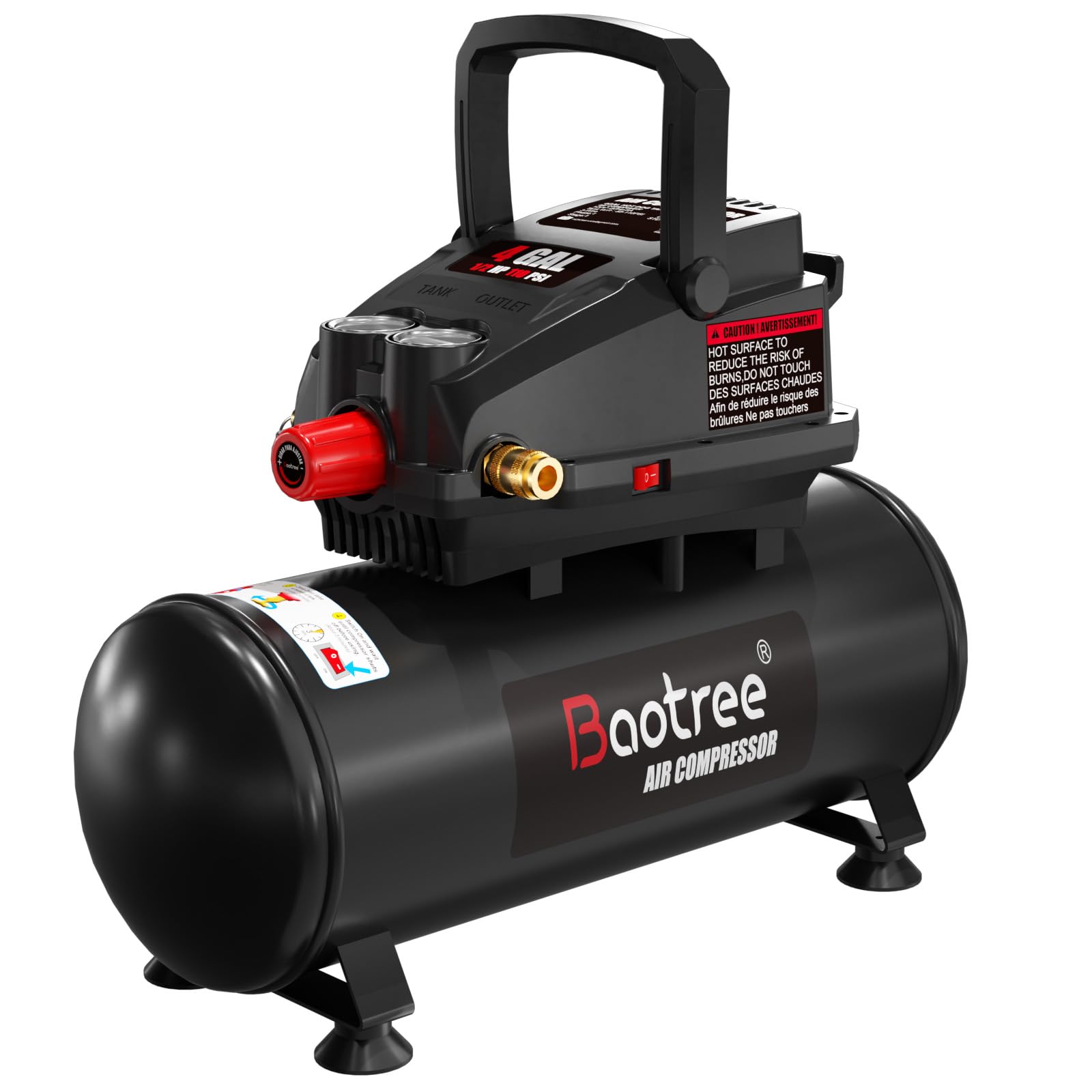
This air compressor is a solid pick for home auto work because it delivers steady power and stays easy to move around.
Pros
- Quiet motor compared to others in its class
- Lightweight and portable for easy handling
- Safe design with built-in overpressure protection
Cons
- Pressure builds up slower than expected
- Tank size limits continuous heavy use
- Noise level can still be loud in small spaces
Using this Baotree compressor, we noticed it handles small tasks like inflating tires, spray painting, and nailing with ease. It doesn’t rattle the whole garage, which is a plus when working at home.
The 4-gallon tank keeps air flowing steadily but doesn’t last long under heavy work. It refills quickly, so it works well for short bursts instead of long jobs.
We liked how it stays steady during use thanks to the solid base. Operating it was simple with an easy-to-read pressure gauge. Still, if you plan heavy duty or long sessions, you might find the pressure drops faster than you want.
HPDMC Ultra Quiet Air Compressor
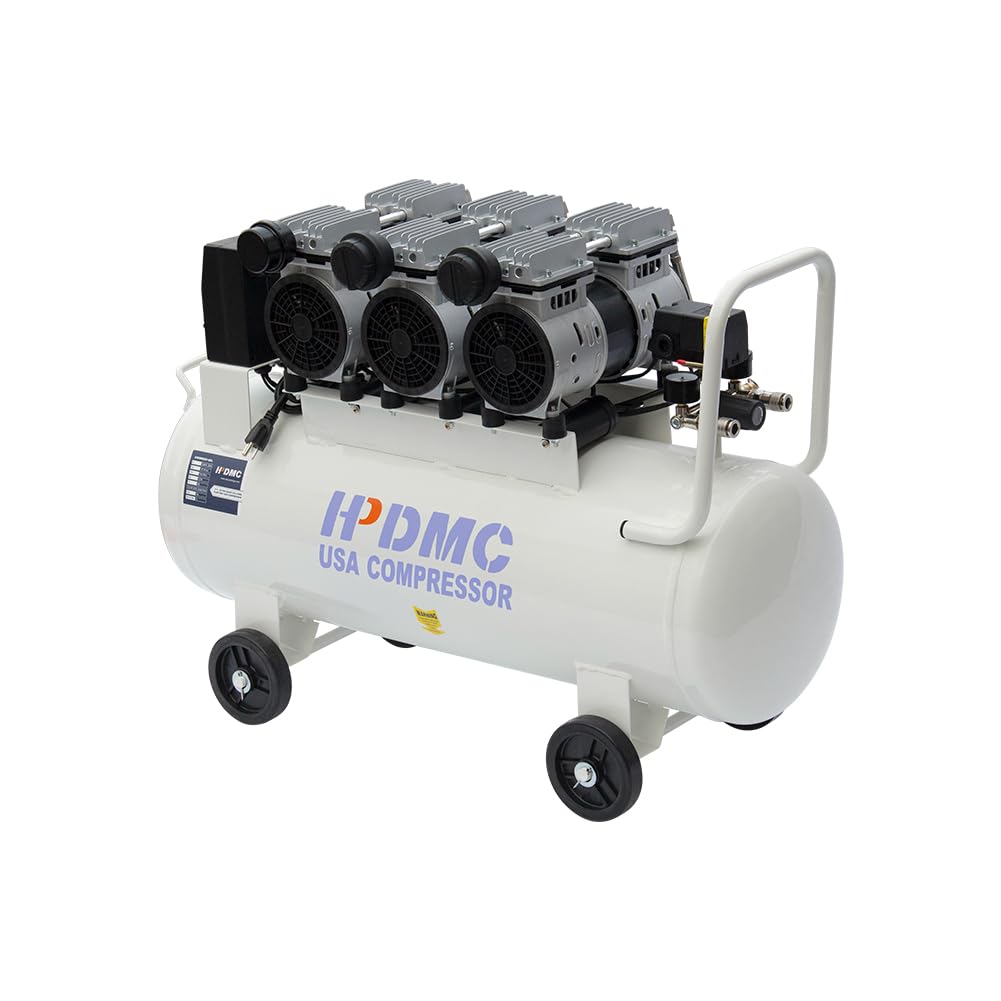
This air compressor works well for quiet, smaller automotive and home projects but has some issues with durability and parts.
Pros
- Runs quietly with low noise at 71 decibels
- Oil-free design means less maintenance and easy use
- Fast recovery time keeps air pressure steady for continuous work
Cons
- Some packaging and part breakage issues reported during delivery
- Not very high pressure compared to bigger compressors
- Customer support responsiveness can be slow
The HPDMC Ultra Quiet caught our attention because it really is much quieter than others in its class. That low noise level helped when we used it in a garage that is close to living spaces. It made the work less distracting but still supplied enough air for nail guns and inflating tires.
Handling this compressor felt easier than we expected due to its oil-free motor. We liked not having to worry about oil changes. It started smoothly even in colder conditions, making it useful year-round for small home repairs and some automotive tools.
On the downside, we noticed some issues with the parts and overall build quality could be better. Some users mentioned broken fittings out of the box, and it doesn’t cut out automatically before pressure relief valves trigger. That might mean extra attention during use to avoid any damages or safety concerns.
Overall, this unit fits smaller jobs with less noise but may not satisfy those needing heavy-duty, high-pressure work. You can view it and check current details on Amazon here.
CRAFTSMAN 33 Gallon Air Compressor

We recommend this compressor for heavy-duty home automotive work because it offers strong power with low maintenance in a compact design.
Pros
- Large 33-gallon tank holds air long enough for most projects
- Oil-free pump means less upkeep and less mess
- Wheels and vertical shape make it easy to move and store
Cons
- Weighs 154 pounds, so it’s heavy despite wheels
- Can be loud during extended use
- Takes up more vertical space, which might be an issue in cramped garages
This CRAFTSMAN model feels solid and reliable while working on tires, air tools, or inflating. The oil-free pump lives up to its promise by running smoothly without having to check oil levels or do extra cleaning.
The air flow is steady and powerful enough to handle wrenches, nail guns, and grinding tools without lag. The 175 max psi gives us confidence even on tough jobs that demand more force.
Though it’s heavy, the built-in handle and wheels make it manageable to move around. Storing it vertically helps save floor space, which is useful in smaller home workshops or garages. We found it to be a good balance of power, size, and convenience for most home automotive needs.
Buying Guide
When choosing an air compressor for home automotive work, we need to focus on several important features. The right compressor should match the tasks we plan to do and fit our workspace.
First, tank size matters. A bigger tank holds more air and lets us work longer without the motor running constantly. For small jobs like inflating tires, a smaller tank is fine. For tools like impact wrenches, a larger tank is better.
Next, look at the PSI (pounds per square inch) and CFM (cubic feet per minute) ratings. PSI shows the pressure power, while CFM tells us how much air it can supply. We should choose a compressor with PSI and CFM that meet or exceed the needs of our tools.
Portability can be key. If we need to move the compressor around, a lightweight or wheeled model helps. Noise level is also important. Quieter compressors make working more comfortable, especially indoors.
Check the power source. Most home compressors use electricity, so make sure our electrical setup matches the compressor’s requirements.
| Feature | What to look for | Why it matters |
|---|---|---|
| Tank Size | 6-20 gallons for home use | Longer use without stopping |
| PSI | 90-150 PSI for automotive tasks | Enough pressure for tools |
| CFM | Check tool requirements, usually 2-5 | Matches air flow needs |
| Portability | Wheels or handles | Easy to move around |
| Noise Level | Lower than 80 decibels preferred | More comfortable during use |
Editor’s Choice
We chose the California Air Tools 10020C Ultra Quiet Air Compressor as our top pick for home automotive work. It strikes a good balance between power, noise level, and portability. This model is quiet enough to use indoors without disturbing others.
The compressor has a 2.0 horsepower motor and a 10-gallon tank. This size lets us work on tires, air tools, and small paint jobs without losing pressure. It also recovers air quickly, saving us time between tasks.
Key features:
- Ultra quiet operation: 70 decibels, much quieter than most compressors
- Lightweight: Only 82 pounds, easy to move around the garage
- Oil-free pump: Less maintenance and no oil spills
- High air output: 6.4 CFM at 40 PSI, suitable for various tools
We value the durability of this compressor. The steel tank is built to last, and the solid wheels make it easy to transport. It’s a reliable choice when you want steady air pressure with minimal hassle.
This model fits well for both beginners and experienced users. It gives enough power for automotive projects without being too bulky or noisy. We think it’s a smart investment for a home garage setup.
Where to Buy – Best Amazon Deals
We find Amazon to be one of the best places to buy air compressors for home automotive work. It offers a wide range of products from trusted brands all in one place. Plus, you can often spot special deals and discounts that save us money.
When shopping on Amazon, look for options with high ratings and many reviews. This helps us choose reliable compressors. Pay attention to Prime shipping for faster delivery if you’re in a hurry to get started on your projects.
Here are some tips for finding good deals on Amazon:
- Check the Today’s Deals page for discounts on tools and equipment.
- Use filters to narrow down by price, brand, and customer rating.
- Watch for bundled offers that include extra accessories or warranties.
| Brand | Price Range | Notable Features |
|---|---|---|
| DEWALT | $150 – $300 | Durable, good air flow |
| Porter-Cable | $120 – $250 | Quiet operation, lightweight |
| California Air Tools | $180 – $350 | Ultra quiet and oil-free |
We also recommend reading recent customer feedback. It can reveal real-world pros and cons that specs alone don’t show. This helps us make a solid choice without wasting money.
Amazon’s return policy is helpful too if the compressor doesn’t meet our needs. We can send it back with little hassle, giving us peace of mind when buying online.
FAQS
What size air compressor do we need for home automotive work?
For most tasks like inflating tires or running air tools, a 20- to 30-gallon tank with around 150 PSI is enough. Smaller compressors may work for light jobs, but larger tanks give more constant air flow.
Should we choose oil-lubricated or oil-free compressors?
Oil-lubricated compressors last longer and run quieter. But they need more maintenance. Oil-free models are lighter and easier to use, but may wear out faster. It depends on how often we plan to use it.
How loud will the air compressor be?
Noise levels usually range from 60 to 90 decibels. If we work in a quiet neighborhood or closed garage, a quieter model under 70 decibels is better.
Can we use the compressor for painting?
Yes, but we need a compressor with steady air pressure and a moisture trap. This helps avoid paint defects caused by water droplets or uneven airflow.
How do we maintain our air compressor?
We should drain moisture from the tank after each use to prevent rust. Checking air filters and belts regularly also helps. This keeps the compressor working well longer.
| Feature | Recommended for | Notes |
|---|---|---|
| 20-30 gallon tank | Most home automotive | Good air supply balance |
| Oil-lubricated | Frequent, heavy use | Longer life, more upkeep |
| Oil-free | Occasional use | Less maintenance, lighter |
| Quiet models (<70dB) | Residential areas | Better for noise-sensitive spaces |
Conclusion
Choosing the right air compressor for home automotive work depends on our specific needs. We should consider factors like tank size, power, and portability. Smaller compressors are easier to move, while larger ones hold more air for longer jobs.
We also need to think about noise levels. A quieter compressor is better if we work indoors or in a shared space. Some models come with extra features, such as multiple outlets, which can be very useful.
Here’s a quick summary to consider when picking a compressor:
| Factor | What to Look For |
|---|---|
| Tank Size | 6-20 gallons for home automotive |
| Power | 1.5 to 2.5 HP |
| Portability | Lightweight or with wheels |
| Noise Level | Below 70 dB for quiet operation |
| Additional Features | Multiple outlets, pressure gauges |
By focusing on these points, we ensure our air compressor fits our budget and tasks. This way, we get a tool that lasts and makes our work easier.
