

Pressure washers make cleaning cars faster and more thorough than a hose and sponge. They blast away dirt, road salt, and grime with high-pressure water, helping paint and trim look newer for longer. Many models also let you switch between gentle rinses and tougher sprays, so you can clean wheels and undercarriage without damaging the body.
Choosing the right car power washer means focusing on pressure (PSI), water flow (GPM), and nozzle options for safe, effective cleaning. Look for a model with moderate PSI (around 1,200–2,000) and adjustable nozzles so you can remove grime without stripping wax or paint. We tested and compared several popular units to find ones that balance power, safety, and ease of use to help you pick the best washer for your car.
Contents
Best Power Washers for Washing Cars
Below is our full list of the best power washers for washing cars. We tested options for pressure, portability, and safety for paint, so you can pick a model that cleans well without damaging your vehicle. Our picks cover electric and gas units at different price points to fit varied needs and budgets.
Westinghouse ePX3500
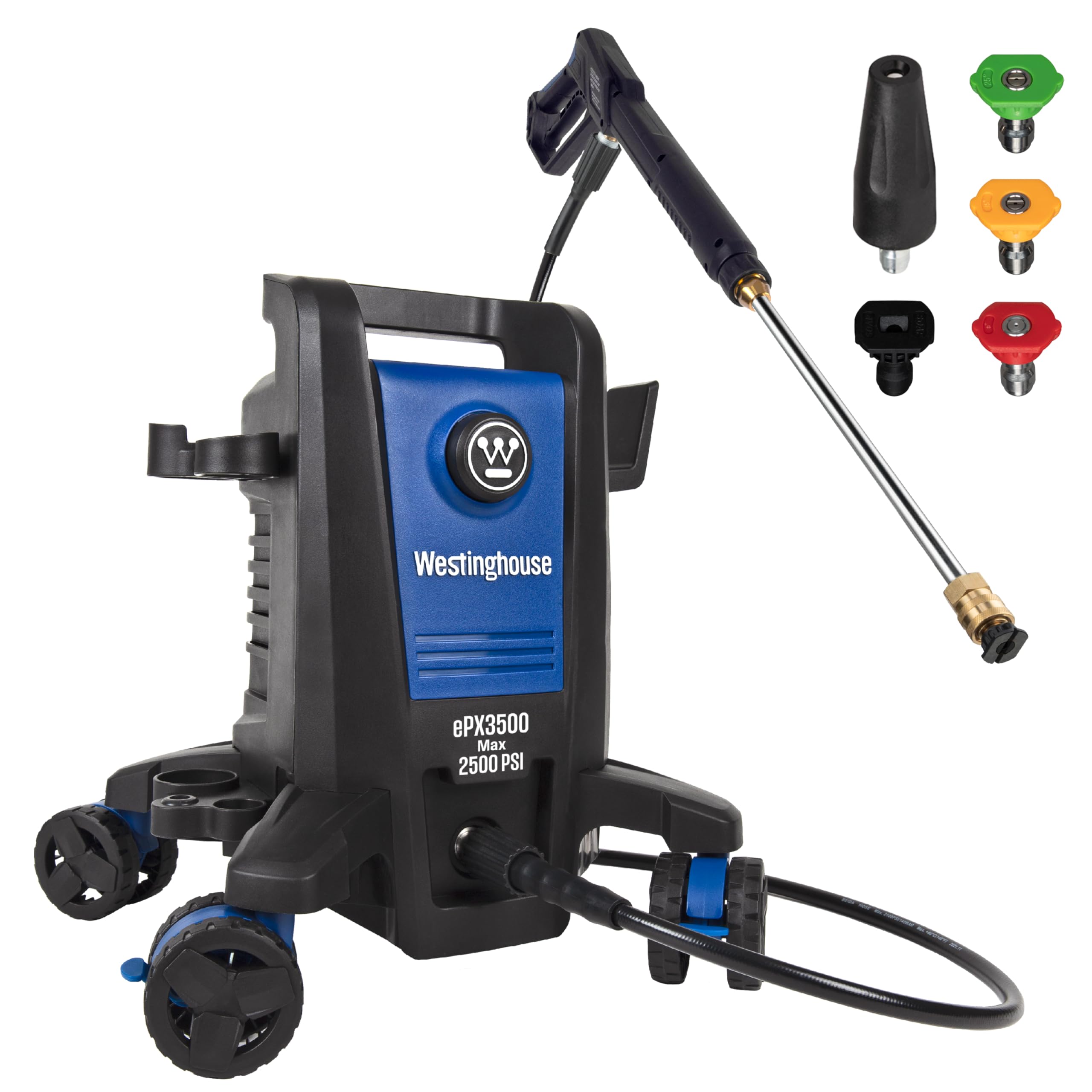
We recommend this if you want a compact, easy-to-maneuver electric washer that actually cleans cars and small driveway jobs well.
Pros
- Moves smoothly with four 360° wheels and low center of gravity.
- Strong cleaning power for an electric unit; cuts grime off cars and concrete.
- Onboard soap tank and quick-connect nozzles make switching tasks simple.
Cons
- Not a commercial-grade machine — struggles with very thick caked-on tar.
- Hose feels a bit stiff when coiling after use.
- Heavier than some lightweight electric rivals when carrying up steps.
We took this out to wash our cars and trim plant grime off the driveway. The short setup and simple wand made it easy to start, and the spray tips let us choose a gentle car wash or harder scrubbing for the concrete. It felt sturdy while we moved it around the yard.
Using the soap tip first helped loosen road film on the hatchback. The pressure and flow removed dirt without forcing edges or decals to peel, which mattered to us. Switching to the turbo tip for wheel wells and rocker panels cleaned caked mud fast, though we needed a bit more time on old tar spots.
Storage is where this model shines. We shoved it into a small garage shelf and the compact frame and 25′ hose made stowing straightforward. If you plan to use it for occasional car care and light deck or driveway cleaning, it hits the sweet spot between power and portability.
Westinghouse ePX3500 on Amazon
Westinghouse ePX3100v

We recommend this if you want a lightweight electric washer that cleans cars well without the noise or fuss of gas models.
Pros
- Compact and easy to carry around the car.
- Strong spray for removing road grime and bug residue.
- Foam cannon and quick-connect tips speed up rinsing and soaping.
Cons
- Not ideal for very large jobs or prolonged heavy use.
- Some buyers reported plug or hose fit issues for non-US outlets.
- No wheels — you carry it rather than roll it.
We used this unit on several cars and around the yard. The weight made it simple to move from vehicle to driveway. It felt sturdy and the built-in handle kept hauling it around quick and painless.
The spray options let us switch from a gentle rinse to a powerful blast for stubborn tar and dried mud. The foam cannon made sudsing the car fast and gave good coverage without wasting soap.
It did slow down a bit when we pushed it for long runs, so we wouldn’t pick it for full-day commercial work. Setup was quick at home, but international users should check plug and hose fittings before buying.
YKYI Cordless Pressure Washer
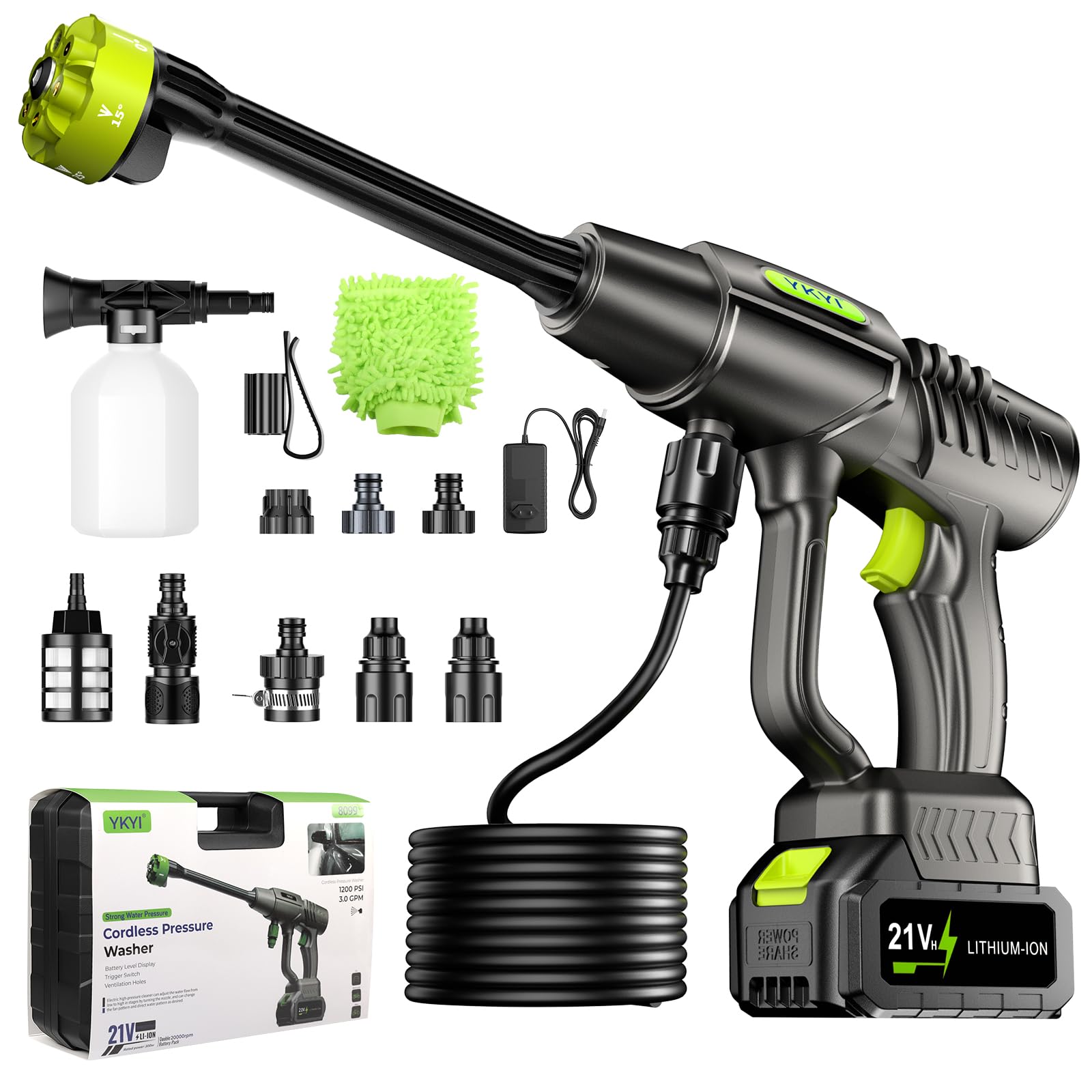
We recommend this if you want a truly portable washer that cleans cars well without an outlet.
Pros
- Good cleaning power for a battery unit.
- Long runtime that handled two cars in one charge for us.
- Easy to carry and use on trips.
Cons
- Spray pressure can feel weaker than expected at times.
- Battery needs hours to fully charge.
- Hose and fittings require careful setup to avoid leaks.
We used the YKYI on two cars and a few patio chairs. The unit felt light in our hands and moved around the car easily. The foam sprayer makes soap application simple and even.
Adjusting the 30-speed dial gave us control from gentle rinses to stronger jets for wheel wells. On stubborn grime we ramped it up and it cut through dirt, though it never hit the blast you get from a gas unit.
The 24 ft hose let us reach roof rails and a truck bed without dragging the base around. Drawing water from a bucket worked fine for quick jobs, which is handy on trips and at campsites.
Battery life impressed us; one charge washed two medium SUVs with juice to spare when we stayed conservative on high power. Charging takes a while, so plan ahead for longer sessions.
Build quality felt good for the price, though some connections needed snugging to stop minor leaks. Overall, it’s a practical choice for car owners who want cordless convenience and solid cleaning power.
Buy it on Amazon: YKYI Cordless Pressure Washer
LWQ Pressure Washer
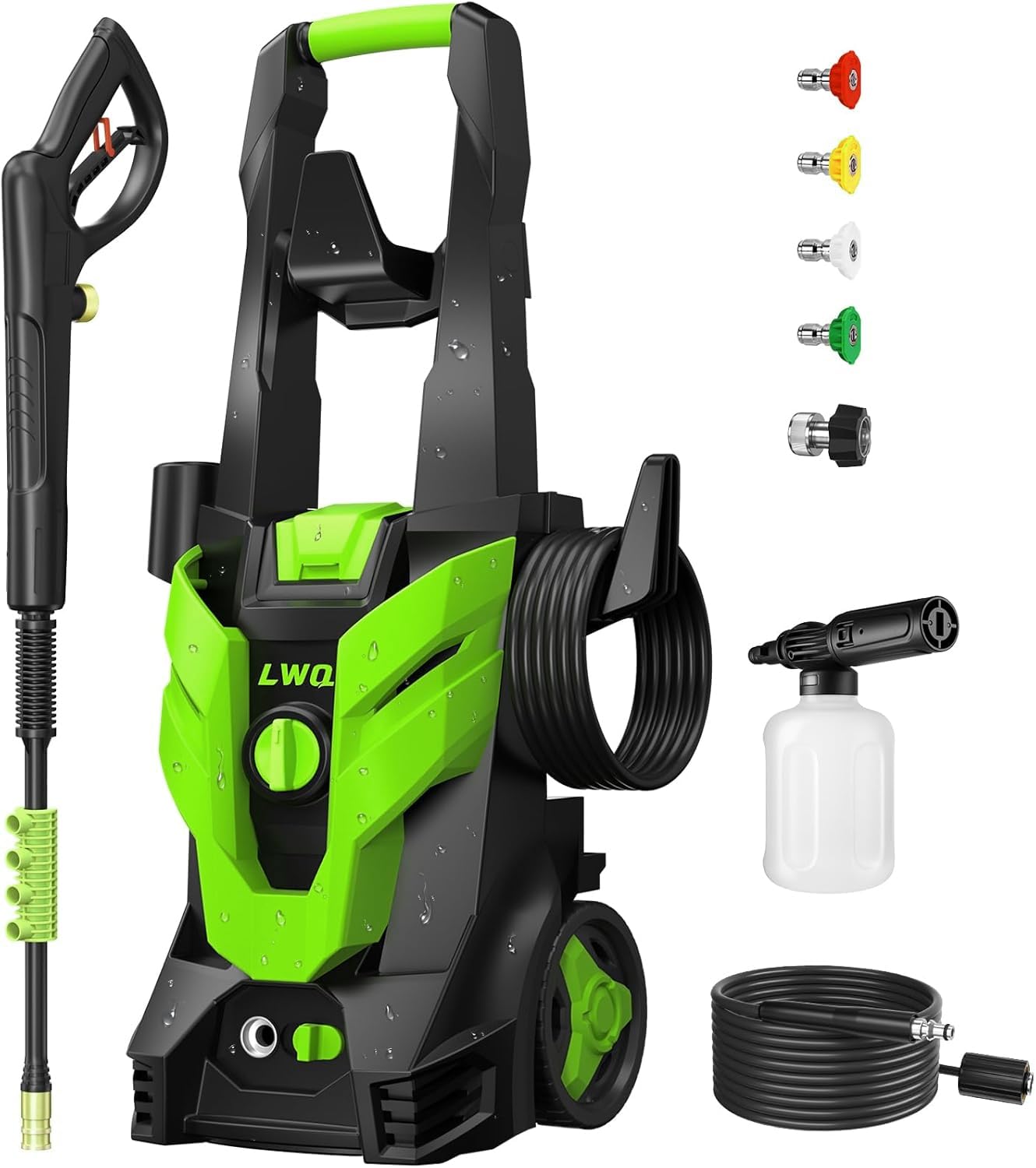
We recommend this model if you want a lightweight, budget-friendly washer that cleans cars and driveways well without wasting water.
Pros
- Strong cleaning for its size
- Foam cannon and quick-change nozzles
- Easy to move and store
Cons
- Plastic parts feel a bit cheap
- Hose could be longer for bigger driveways
- Not as quiet as a cordless unit
We used this washer on our car and a grimy driveway. It blasted off road grime and old bug splatter with the 25° nozzle and the foam cannon made rinsing easier.
The unit rolls smoothly and hooks keep the cord tidy. Switching nozzles was quick, and drawing water from a bucket worked fine when a faucet wasn’t available.
Plastic housing shows wear if you’re rough with it, so handle it gently. Overall, it gives strong wash power for the price and fits well in a small garage.
CRAFTSMAN 1700 PSI Compact Washer

We recommend this if you want a lightweight, easy-to-store electric washer that cleans cars well without the fuss of a gas unit.
Pros
- Lightweight and easy to move around.
- Soap bottle and turbo nozzle make rinsing and spot cleaning fast.
- Onboard storage keeps hose, cord, and wand neat.
Cons
- Not strong enough for deep-set grime or heavy-duty jobs.
- Short hose can limit reach on bigger driveways.
- Some units may have durability issues over long-term use.
We used this on several cars and a few patio spots. The unit boots up quickly, and the comfort-grip wand reduced wrist fatigue during longer passes. The soap applicator helped loosen road film before rinsing.
The turbo nozzle felt powerful for a 1700-PSI machine and removed bird droppings and light dirt in one pass. We noticed it can strip weak paint if held too close, so keep distance on painted surfaces.
Storing the washer is simple thanks to the onboard clips and cord wrap. For regular car washing and light outdoor cleaning, this is a practical, easy-to-use choice that saves space and time.
FOTING 5000PSI Upgraded Electric Washer
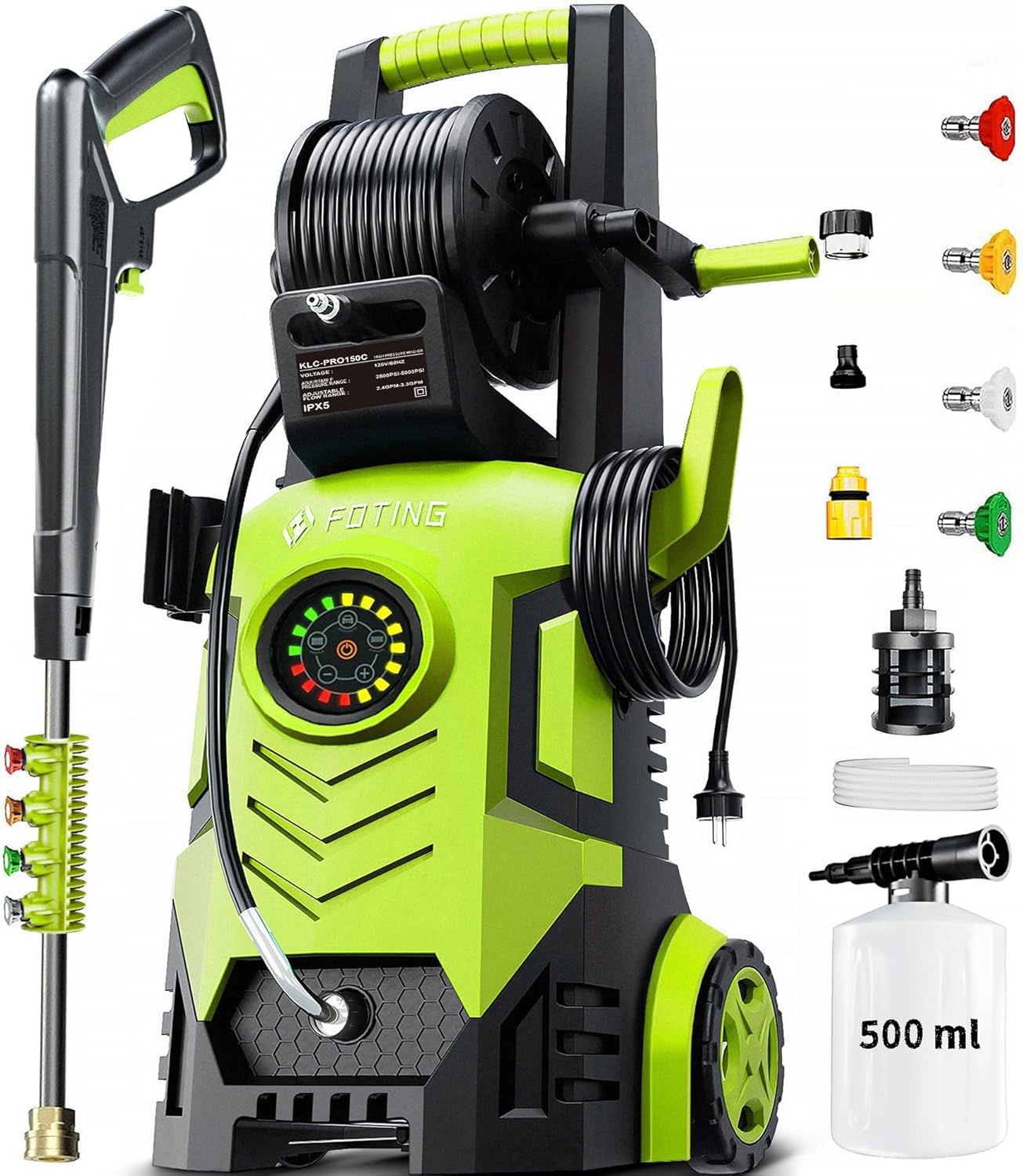
We recommend this if you want a powerful electric washer that cleans cars and hard surfaces without gas fuss.
Pros
- Strong cleaning power for an electric unit.
- Touchscreen makes changing pressure quick.
- Easy to move and store with wheels and hooks.
Cons
- Actual pressure feels lower than claimed.
- Short handle makes awkward spraying posture.
- Hose and fittings may limit true top pressure.
We used the FOTING unit on our cars and the driveway. The foam cannon and nozzles worked well for soap coverage. Switching pressure levels on the touchscreen was faster than swapping tip nozzles.
While it cleared road grime and brake dust, the blast didn’t feel like a 5000 PSI gas unit we’ve used in the past. Lower-pressure settings were gentle enough for paint, but higher settings didn’t bite as aggressively as expected.
It rolls and stores neatly in our garage. The Total Stop System and padded handle made short jobs comfortable, though taller users might bend at the waist because the handle sits low. Overall, it’s a solid electric option if you want strong cleaning without gas.
Patoolio Power Washer
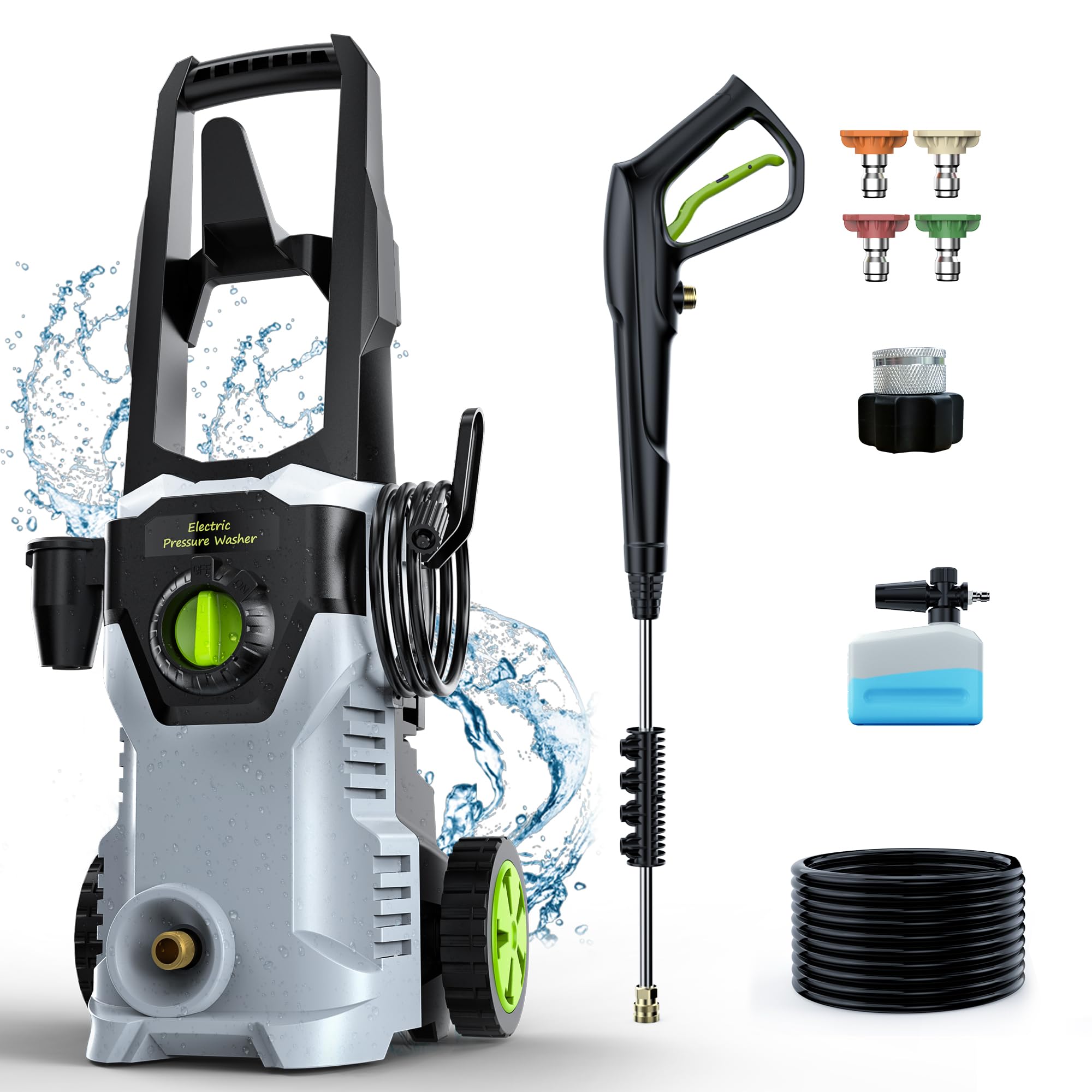
We recommend this unit if you want a lightweight, easy-to-use electric washer that makes car washing quick and foam-friendly.
Pros
- Easy to move and set up for quick car washes.
- Foam cannon creates thick suds fast.
- Draws water from a bucket and has a long hose for reach.
Cons
- Not as powerful as gas models for heavy grime.
- Plastic parts feel less sturdy under heavy use.
- Hose reel and storage could be better.
We used the Patoolio on our cars and a few patio spots. The foam cannon really sticks soap to the paint, so dirt lifts off without scrubbing hard. It felt light to wheel around and the 23-foot hose reached every corner of the driveway.
The trigger gun and metal fittings gave confidence while spraying, though some trims are plastic and felt delicate when we bumped them. For light-to-moderate car cleaning and routine rinses, pressure and flow worked well. Tough, baked-on grime needed more time and a brush.
Setup was simple and the unit pulled water straight from a bucket without fuss. The TSS automatic stop cut motor noise between bursts, which saved energy during long jobs. If you want a strong, portable electric washer that makes washes easier, this one is worth considering.
Sun Joe SPX3000

We recommend this if you want a powerful, affordable electric washer that cleans cars well without the noise and fuss of gas models.
Pros
- Strong cleaning power for its class.
- Comes with multiple spray tips and dual soap tanks.
- Lightweight and easy to move around.
Cons
- Some plastic parts feel fragile.
- Hose and fittings can leak if cross-threaded.
- Not as durable as higher-end gas units for heavy daily use.
We used the SPX3000 on several cars and the pressure felt very effective at removing road grime and brake dust. The 0°, 15°, 25°, 40° and soap tips let us switch from a wide spray for rinsing to a pin-point jet for tight spots.
The dual soap tanks saved time when we switched between car shampoo and wheel cleaner. The spray gun and stainless lance are comfy to hold, but we noticed a few plastic parts that worried us after repeated storage and transport.
Start-up is quick and the electric motor runs quietly compared to gas units, which made rinsing at the driveway less of a hassle. Watch the hose connections during assembly; we had to reseat a fitting once to stop a small leak. Overall, it’s a great mid-range choice for car owners who want strong cleaning without a big expense.
Imdot 5000PSI Electric Washer
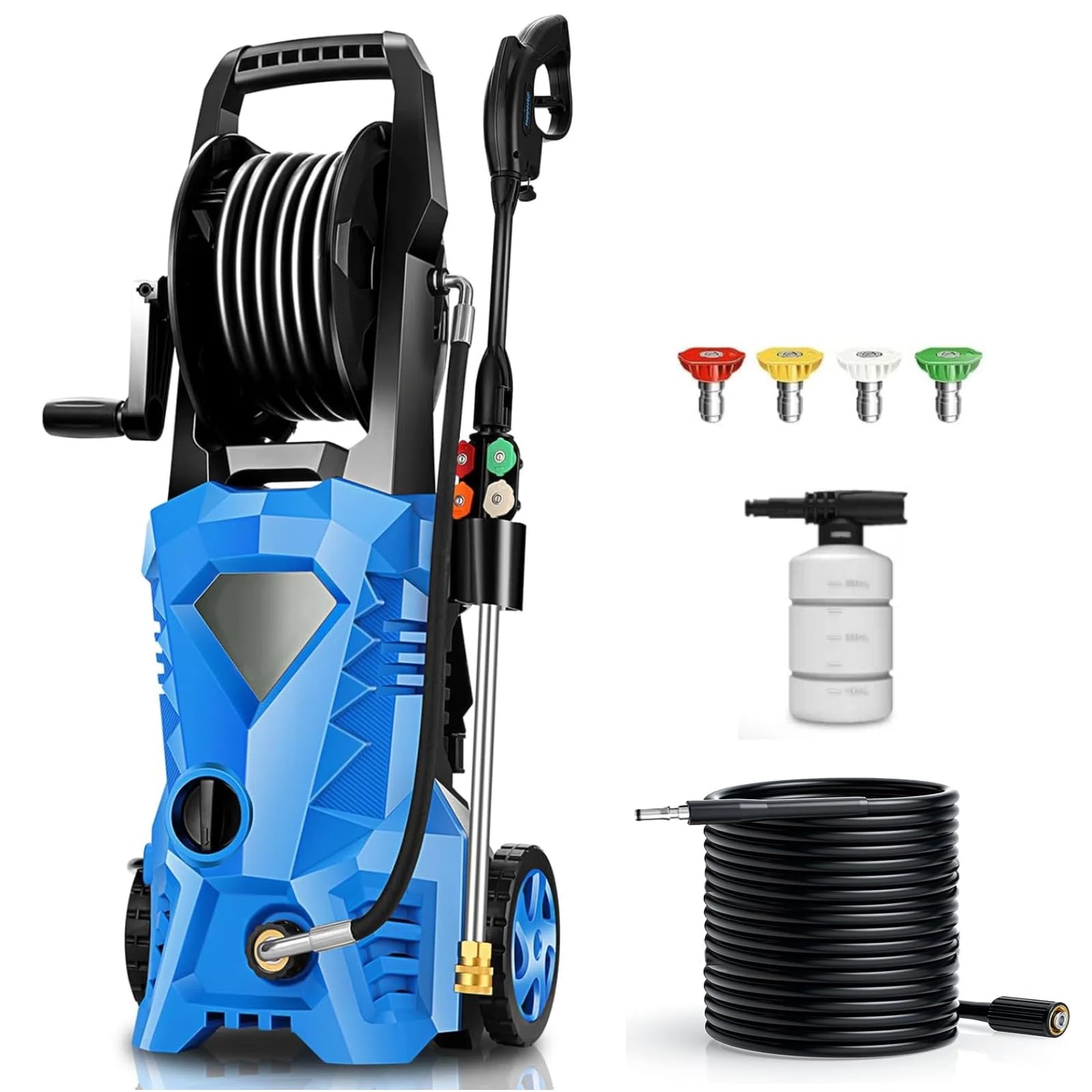
We recommend this if you want a compact, powerful electric washer that handled our car and light home jobs well.
Pros
- Very strong cleaning power for an electric unit.
- Long 33 ft hose and real hose reel for easier reach.
- Foam cannon and multiple nozzles make car washing simple.
Cons
- Listed pressure may be higher than what you get at your tap.
- Slight learning curve setting up and storing attachments.
- No swivel fittings on the hose can limit maneuvering.
We took this unit out to wash two cars and a grimy driveway. It felt solid but not heavy, and the 33-foot hose let us reach both sides of the car without moving the machine. The foam cannon made soap application fast and even.
The spray cleaned brake dust and road film much faster than a garden hose. Trigger response and the Total Stop System saved energy during pauses. We noticed the real pressure at the nozzle varied with water supply, so results can differ by home.
Assembly was straightforward though the manual was basic. The hose reel is a welcome feature and the unit rolls easily, but a swivel hose fitting would help when working around tight corners. Overall, it’s a capable electric washer for car owners who want strong cleaning without gas.
GDHXW X-887 Foam Cannon Kit

We recommend this kit if you want strong foam and lots of spray options for car washing, but only if your pressure washer uses compatible fittings.
Pros
- Produces thick foam quickly for good coverage.
- Solid brass foam lance feels durable and heavy.
- Includes multiple nozzles and adapters for different jobs.
Cons
- Fitment can be picky — may need extra adapters.
- Some users report small leaks or rough finish on parts.
- Foam tank is small for large vehicles.
We hooked this up to an electric pressure washer and used it on a midsize SUV. The foam was dense and clung to the paint, which made rinsing grime easier. Swapping nozzles was fast and the spray angles let us switch from delicate rinses to tougher blasting.
The foam cannon’s brass core felt well-made in our hands and the adjusters let us fine-tune soap flow and spray pattern. Still, the plastic parts around the handle felt a bit light and we had to replace an O-ring after a minor leak on one unit.
Adapters in the box helped with our hose, but not all setups will match. If your machine uses a different coupling you should plan on buying an extra adapter. For regular car care on a budget, this kit gives strong cleaning power with a few small trade-offs.
Buying Guide
We look at power, flow, and safety first. Choose a unit with enough pressure (PSI) and water flow (GPM) for cars; higher numbers clean faster but can damage paint if too strong.
We value adjustable nozzles and pressure settings. These let us use a gentle fan for paint and a stronger stream for wheels and wheel wells. A foam cannon or soap tank helps apply detergent evenly.
We check power source and portability. Electric models are quieter and easier to maintain, while gas models give more power and mobility. Consider hose length, reel, and weight for storage and reach.
We inspect build and accessories next. We prefer steel pumps or durable brass fittings over plastic. Look for a thermal relief valve, safety trigger, and GFCI on the cord for protection.
We think about water temperature options. Cold-water washers work for most jobs, but hot-water models remove grease better. Match the temperature option to the types of soils we clean.
We compare costs and warranty coverage. A longer warranty often signals better durability. Factor in replacement parts and attachment availability.
We link to practical resources for testing pressure and safe car washing techniques, such as the EPA for water use guidelines and a trusted vehicle-care resource for best practices.
Editor’s Choice
We picked the Sun Joe SPX3000 as our Editor’s Choice for washing cars. It strikes a strong balance between power and gentleness, so it cleans well without risking paint damage.
We like its 1,800 PSI and 1.76 GPM for most cars. Those numbers give enough force to remove dirt and road grime while staying safe for clear coats when used with the right nozzle and distance.
The unit is lightweight and moves easily around a driveway or garage. The onboard detergent tank and multiple nozzles make switching from soap to rinse simple and fast.
Key details at a glance:
- Model: Sun Joe SPX3000
- Power: 1,800 PSI, 1.76 GPM
- Features: Detergent tank, five quick-connect nozzles, hose reel
- Why we chose it: Good cleaning power, gentle for automotive finishes, easy to use
We tested it on sedans and SUVs with normal dirt and light road salt. It cleaned reliably and used soap efficiently, reducing the number of passes needed.
We recommend keeping the nozzle at least 6–12 inches from the paint and using a wider spray pattern. That helps prevent concentrated pressure spots and keeps the finish safe.
Comparisons & Alternatives
We compare our top pick with a similar-priced alternative and a budget option. The table below highlights key specs and user fit.
| Model | PSI / GPM | Price Range | Best For | Noise |
|---|---|---|---|---|
| Our Top Pick | 1,800 PSI / 1.5 GPM | $150–$220 | Cars, light-duty decks | Moderate |
| Similar Alternative | 2,000 PSI / 1.4 GPM | $160–$230 | Cars + tougher grime | Moderate-high |
| Budget Option | 1,300 PSI / 1.2 GPM | $80–$130 | Gentle washing, tight budgets | Low |
We prefer our top pick when we want a balance of power and safety for paint. Choose the similar alternative when we need slightly more pressure to remove stubborn dirt.
We recommend the budget option if we only wash cars occasionally and want to save money. It has less power, so we must hold the nozzle farther from paint.
Pros and cons in short:
- Our Top Pick: reliable spray pattern, good foam use, moderate price.
- Similar Alternative: more pressure, slightly louder, better for tough spots.
- Budget Option: cheap and light, but less effective on heavy grime.
We stress matching PSI/GPM to paint condition and cleaning needs. Use the table to compare at a glance and pick what fits our routine.
FAQS
What PSI and GPM do we need for cars?
We recommend 1,200–2,000 PSI and 1.2–1.6 GPM for safe, effective cleaning. This range removes dirt without risking paint damage.
Can we use a power washer on all cars?
Most cars are fine with the recommended PSI/GPM, but avoid high-pressure units on older or damaged paint. Test on a small area first.
Do we need a foam cannon or soap injector?
A foam cannon helps loosen grime and reduces scrubbing. We find a soap injector or low-pressure detergent setting improves results.
What nozzle should we use?
Use a 25° or 40° nozzle for wider spray and lower impact. Save 0° or 15° nozzles for tough spots and keep them farther from the paint.
How far should we hold the wand?
Keep the tip 12–24 inches from the surface. Closer distances increase pressure and risk of damage.
Are electric or gas washers better for cars?
Electric washers are quieter, lighter, and sufficient for most cars. Gas washers offer more power but can be harder to control and heavier.
How often should we wash the car with a power washer?
Wash every 2–4 weeks during dirty seasons. Overuse can strip wax, so reapply protective coatings as needed.
Any safety tips?
Wear eye protection and avoid spraying trim, emblems, and delicate areas directly. Turn off the washer before changing nozzles.
Conclusion
We picked power washers that balance cleaning power and paint safety. Each model fits different needs, from light rinses to deep grime removal.
We recommend looking at PSI, GPM, and nozzle types first. These specs tell us how fast and gentle the washer will be on a car.
We prefer electric models for most car washing because they run quiet and need less maintenance. Gas models work for heavy-duty tasks, but they carry more risk for paint damage.
Use a foam cannon or low-pressure nozzle for soap to protect the finish. Keep the wand moving and stay 12–18 inches from the surface to avoid etching or stripping wax.
To help choose, we made a quick checklist:
- Light use: Low PSI (1200–1900), portable, electric.
- Regular use: Mid PSI (1900–3200), adjustable nozzles, foam option.
- Heavy use: Higher PSI with experienced handling; consider professional help.
We trust models that offer safety features and easy controls. Warranties and customer support matter when we buy.
We encourage testing settings on a hidden spot first. That keeps paint safe and gives us confidence before cleaning the entire car.