

Pressure washers make cleaning cars faster and more thorough than a garden hose. They use high-pressure water to lift dirt, grime, and brake dust from paint, wheels, and undercarriages without heavy scrubbing. For car care, compact electric models and small gas units are the most common because they balance pressure, portability, and ease of use.
Choosing the right pressure washer for a car comes down to pressure (PSI), water flow (GPM), and nozzle control. Too much pressure can damage paint or trim, while too little won’t remove stubborn grime; adjustable nozzles, foam cannons, and flow rates help match cleaning power to delicate surfaces. We tested a range of compact and mid-power washers to find models that clean well without risking damage, and focused on units with good nozzle options, manageable pressure, and easy setup.
Contents
Best Pressure Washers for Cars
Below is our full list of the best pressure washers for cars. We picked models that balance power, gentle cleaning, and ease of use so you can wash your car without harming the paint. Our choices cover electric and gas options, different pressure levels, and practical accessories.
Westinghouse ePX3500
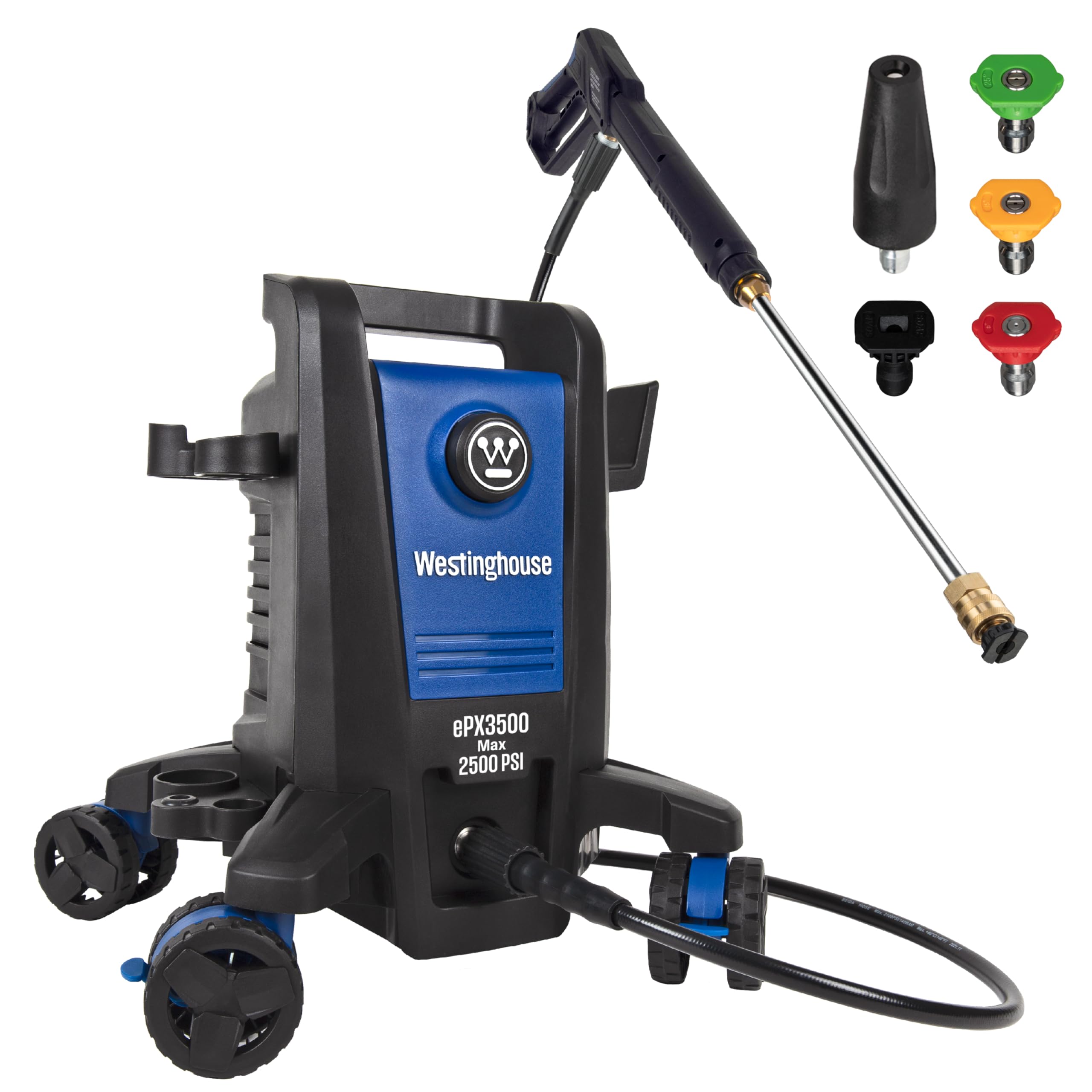
We recommend this if you want a compact, easy-to-move electric washer that cleans cars and light driveway grime well.
Pros
- Lightweight and easy to push around with 360° wheels.
- Strong spray for removing road grime and bird droppings.
- Built-in soap tank and five nozzles make rinsing and soaping simple.
Cons
- Takes time to learn nozzle choices for safe car use.
- Not as powerful as gas models for heavy-duty jobs.
- Hose length can limit reach on larger properties.
We used this on our cars and the pressure felt balanced and steady. The low center of gravity and four-wheel design really made it simple to roll around the driveway and garage without tipping.
Spray tips went from soft soap to tight turbo quickly. We liked how the onboard soap tank saved us from carrying extra bottles, and the wand felt solid during extended use.
When cleaning stubborn tar or old grime, we often switched nozzles and ran a few passes. It cleared most stains without scrubbing, but for very heavy buildup a gas unit would finish faster.
Overall, the ePX3500 is a strong choice for car owners who want an easy, portable washer with useful features and dependable cleaning power.
Westinghouse ePX3100

We recommend this model if you want a compact, easy-to-maneuver electric washer that cleans cars and small outdoor surfaces well.
Pros
- Lightweight and easy to move around when washing a car.
- Strong spray for removing road grime and bird droppings.
- Five quick-connect nozzles and onboard soap tank make rinsing and soaping simple.
Cons
- Not as powerful as a gas washer for heavy-duty jobs.
- Hose length can feel tight for large driveways.
- Plastic parts feel less rugged than metal on closer inspection.
We used the ePX3100 on a few cars and a small patio. The unit starts fast and the trigger gun feels solid in hand. Swapping nozzles was quick, and the soap tank saved time when pre-treating bug splatter.
Maneuverability stood out. The low center of gravity and four-wheel design let us glide around the car without tipping. The 25-foot hose reached most areas, though we wished for a bit more slack when moving far from the water source.
Cleaning performance impressed for an electric model. It removed road film and light tar without fuss, and the turbo nozzle helped on stubborn spots. For deep-seated grime or heavy off-road mud, a stronger gas model would work better, but for regular car care this felt like a practical, compact choice.
Westinghouse ePX3100v

We recommend this if you want a light, easy-to-move electric washer that cleans cars well without the fuss of gas power.
Pros
- Light and compact for carrying around the car
- Strong spray for road grime and soap foaming
- Easy setup with foam cannon and quick-change nozzles
Cons
- Not ideal for very large jobs or heavy-duty commercial use
- Some plug and hose fittings may not match non-US taps
- No wheels, so you carry it rather than roll it
We took this out for several car washes and liked how simple it is to use. The trigger gun felt solid and the three quick-connect tips made switching from rinse to a stronger spray fast. Carrying the unit from the garage to the driveway was easy thanks to the built-in handle and light weight.
The foam cannon made soap coverage quick and even. It held pressure well while we rinsed off road salt and stubborn bug splatter. For routine car care, it hit the sweet spot between power and convenience.
On the downside, we noticed it’s not built for full-day commercial work. If you tackle big driveways or heavy industrial grime, you’ll want a larger machine. Also, international buyers should check plug and tap compatibility before buying.
Overall, this Westinghouse felt like a reliable, user-friendly choice for home car washing and small outdoor cleaning tasks.
LWQ Power Washer (Light Green)

We recommend this if you want a solid, affordable home pressure washer that cleans cars and driveways well without being hard to move.
Pros
- Strong cleaning power for its size.
- Easy to move and store.
- Foam cannon and quick-change nozzles speed up washing.
Cons
- Plastic parts feel a bit lightweight.
- Not for very heavy commercial use.
- Hose length can limit reach on bigger jobs.
We used this LWQ unit on our cars and driveway and liked how it handled dirt and road grime. The spray felt firm and the foam cannon made soaping a car quick. Switching nozzles was fast and kept the job moving.
Maneuvering the machine around the driveway was simple. The two rollers and anti-tip base made it steady and the cord and nozzle holders kept things tidy. We did wish a few body pieces felt tougher, but it held up fine during normal home use.
For routine car washing and seasonal driveway cleaning, this model delivers good power without a big price or heavy weight. It won’t replace a pro-grade unit, but for most homeowners it gets the job done.
LWQ Car Pressure Washer
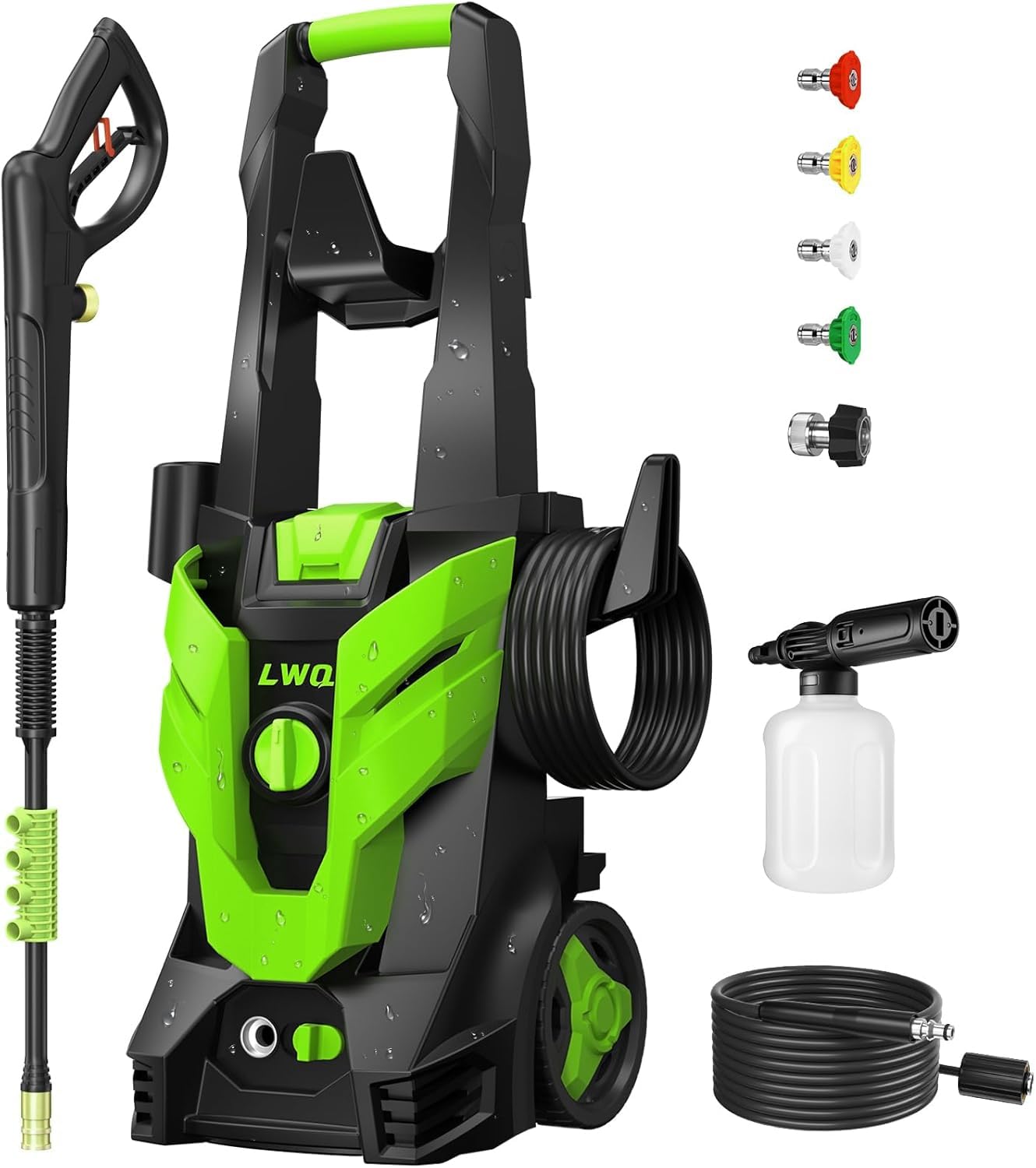
We recommend this unit if you want a lightweight, easy-to-move washer that cleans cars well without wasting water.
Pros
- Strong cleaning power for its size.
- Foam cannon and quick-connect nozzles make switching tasks fast.
- Wheels and compact body make it easy to move and store.
Cons
- Plastic parts feel a little cheap compared to metal models.
- Not as powerful for heavy-duty grime or large jobs.
- Hose length limits reach for bigger vehicles or yards.
We used this LWQ washer on our cars and a small driveway. It fired up quickly and the foam cannon laid down soap evenly. The 25° nozzle cleaned road grime without blasting paint or trim.
Moving it around felt effortless thanks to the rollers and low weight. We did notice the body plastic was light and the unit wobbled slightly on uneven ground. The quick-connect nozzles saved time when switching from rinsing to foaming.
For regular car washing and light outdoor jobs it worked very well. Bigger, tougher stains needed more passes or a stronger machine. If you want a budget-friendly washer that handles cars and patio jobs, this is a useful pick.
Westinghouse ePX3050

We recommend this if you want a light, easy electric washer for cars and small outdoor jobs because it balances good cleaning power with simple handling.
Pros
- Lightweight and easy to move.
- Strong enough to remove road grime and patio dirt.
- Simple setup and quick-connect nozzles.
Cons
- Some plastic parts feel cheap.
- Not as powerful as a gas unit for heavy jobs.
- Small soap bottle needs frequent refills.
We used this around our cars and on concrete. It started up fast and the wand felt comfortable for long runs. The 15° and 25° nozzles let us switch between focused spray and wider coverage without fuss.
Getting into tight spots was easy thanks to the compact body and long GFCI cord. The unit stayed stable while we worked, and the never-flat wheels made short moves painless. The axial cam pump with auto-stop kept it simple when we paused.
Cleaning a dirty SUV took less time than hand washing. The foam cannon helped cling soap to surfaces, but the small reservoir meant we refilled more than once. For regular car care and light outdoor cleaning, this felt like a practical, user-friendly choice.
FOTING 5000PSI Electric Washer
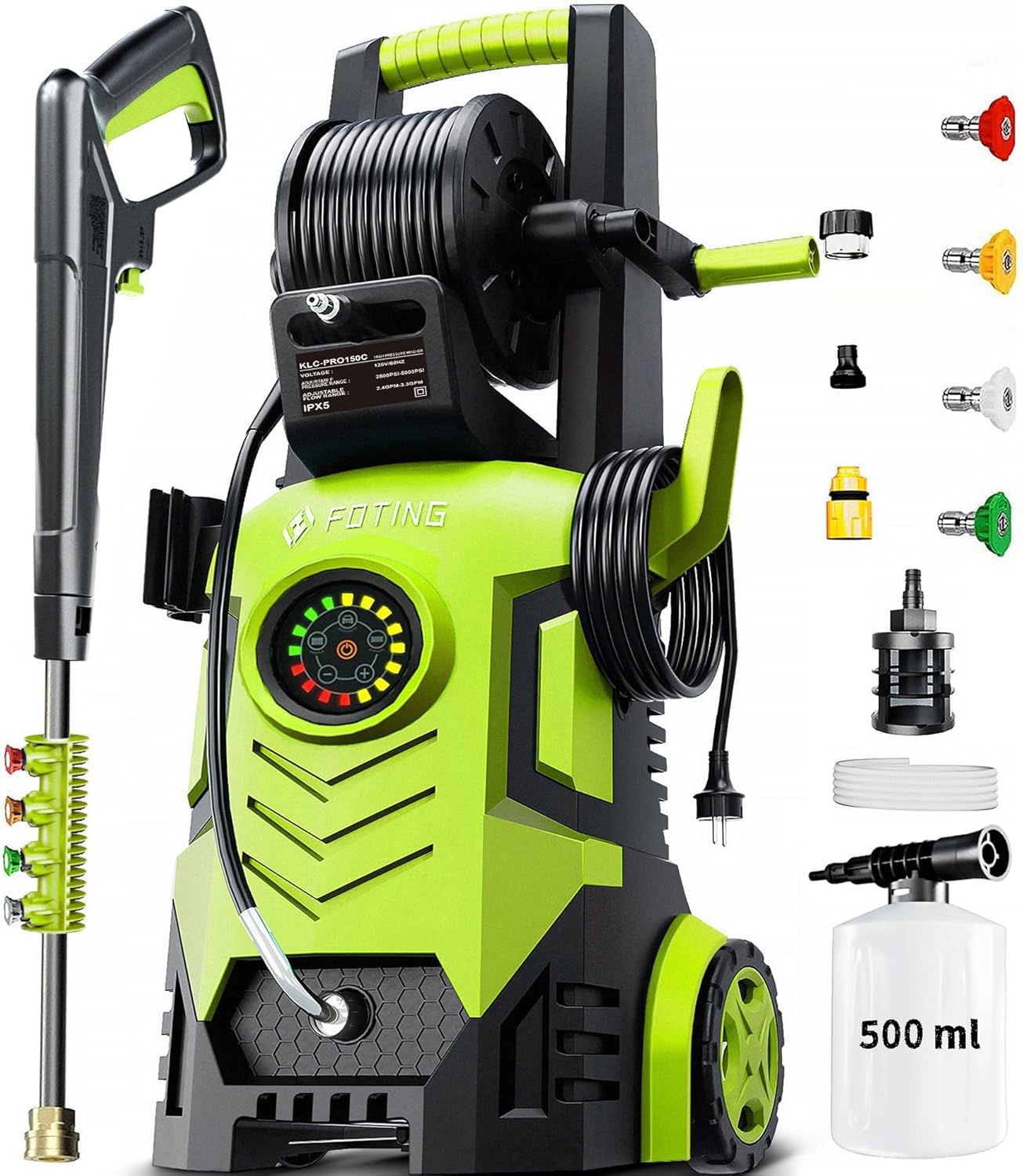
We recommend this if you want a compact electric unit with variable pressure for cars and light outdoor cleaning.
Pros
- Strong-feeling spray at higher settings for tough grime.
- Touchscreen makes switching pressures quick and easy.
- Wheeled trolley and storage keep hoses and nozzles tidy.
Cons
- We doubted the true 5000 PSI claim during use.
- Short wand made us bend down to reach some spots on cars.
- Loud and the high-pressure spray can sting if aimed too close.
We used this unit on our cars and driveway and liked the control from the eight pressure levels. The touch screen and foam cannon made rinsing and soaping straightforward. It felt powerful on stubborn road film, though it rarely felt like a gas washer we once owned.
Moving the washer around was simple thanks to the wheels and mesh storage. Hoses and nozzles stayed organized, which saved time between jobs. The build felt stable, and the wider base helped prevent tipping when we pulled the wand.
On the downside, the claimed 5000 PSI seemed optimistic compared with the hose ratings and our past gas models. The wand length forced us to crouch for low spots, which became uncomfortable during longer jobs. Still, for electric convenience and adjustable pressure, it handled cars well for regular washing.
Sun Joe SPX3000

We recommend this if you want a reliable electric washer that cleans cars well without the noise and fuss of gas models.
Pros
- Strong cleaning for an electric unit
- Multiple nozzles for different spray patterns
- Dual soap tanks for quick soap swaps
Cons
- Some plastic parts feel light
- Hose and fittings can leak if cross-threaded
- Not as powerful as gas washers for heavy jobs
We used the Sun Joe on our car and it stripped road grime and brake dust faster than a basic garden nozzle. The 25° and 40° tips worked great for rinsing without blasting paint, while the soap tip made foaming easy.
Hooking it up was simple, but we ran into a stiff fitting that leaked until we re-threaded it carefully. The 20-foot hose gave enough reach for most driveways, though handling felt a bit plastic-heavy compared to metal-bodied units.
For regular car washing and light detailing, it hits the sweet spot between power and convenience. We found it quieter and easier to store than our gas machines, and switching soaps between the two tanks saved time on different cleanup jobs.
BAQICK Power Pressure Cleaner
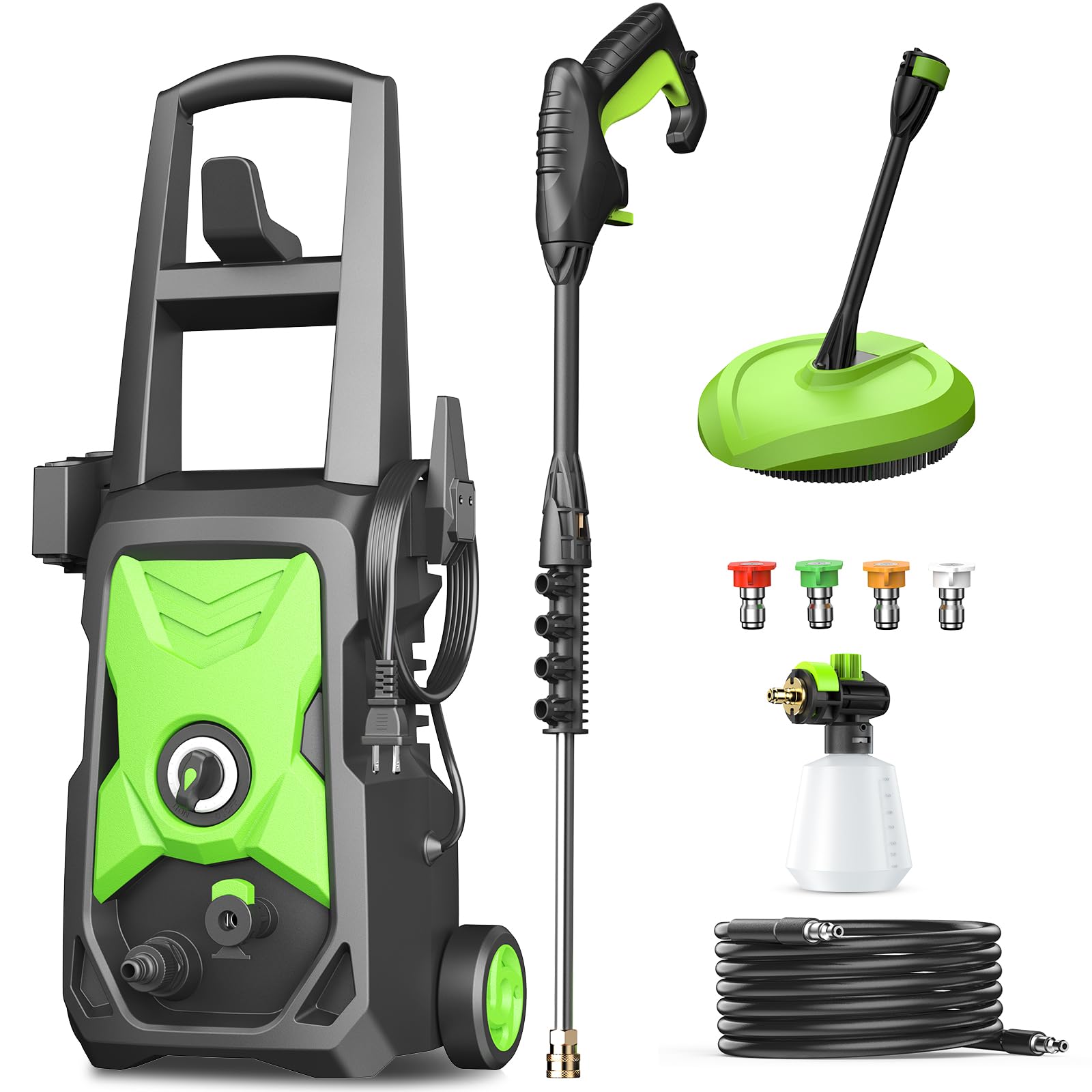
We recommend this if you want a powerful, easy-to-move electric washer that handles cars and driveways well.
Pros
- Strong spray and good flow for stubborn grime.
- Comes with multiple nozzles and a foam cannon for gentle or hard cleaning.
- Long cords and wheels make it easy to use around a car.
Cons
- Unit is a bit heavy to lift alone.
- Metal gun and fittings feel solid but can be stiff at first.
- Foam cannon and brush need careful rinsing to avoid clogging.
We used this BAQICK washer on our cars and the garage floor. The spray cut through road grime fast, and switching nozzles made it simple to go from a tough spot to a gentle rinse.
Rolling it around was easy because of the wheels and long cords. Drawing water from a bucket worked fine when a faucet wasn’t nearby, which saved us time.
The foam cannon made soap application even and reduced scrubbing. We did notice the brush and soap parts need a quick flush after use to keep them working smoothly.
Overall, the machine felt like a step up from basic electric washers. It handled large surfaces without bogging down, though lifting it into a car trunk alone took effort.
Craftsman 1700 PSI Electric Washer

We recommend this if you want a lightweight, easy-to-store electric washer that cleans cars well without the fuss of gas models.
Pros
- Light and easy to move around the driveway
- Soap applicator helps loosen grime on cars
- Onboard storage keeps parts tidy
Cons
- Not strong enough for heavy paint or deep stains
- Hose and cord limit reach compared to longer setups
- Turbo nozzle can be harsh if aimed too close
We used this unit on several cars and small patio jobs. It started quickly and felt comfortable in hand thanks to the wand grip. The soap bottle made the pre-wash simple and saved time on stubborn spots.
Pressure felt steady for routine car washes and light deck cleaning. We noticed the turbo nozzle cuts through grime fast, but you must keep it a bit further from painted surfaces to avoid stripping. The 20-foot hose and 35-foot cord handled most driveways without swapping outlets.
Storage wins here — the compact frame holds the wand, hose, and nozzles so the garage stays neater. If you need heavy-duty stripping or long-range work, a bigger gas model suits that better. For everyday car care, this Craftsman hits the sweet spot between power and convenience.
Buying Guide
We look at pressure, flow, and nozzle options first. Pressure (PSI) cleans tough grime, while flow (GPM) rinses faster. Match PSI and GPM to your car’s needs to avoid paint damage.
We check power source and portability next. Electric models are quieter and easier to maintain. Gas models offer more power but need more care.
We value adjustable nozzles and pressure regulators. A variable nozzle or adjustable wand helps switch from delicate rinsing to spot cleaning. A foam cannon or soap tank makes washing easier.
We consider hoses, attachments, and safety features. A longer hose and quality spray gun give better reach and control. Look for automatic shutoff and thermal protection for safer use.
We examine build quality and warranty terms. Metal pumps last longer than plastic ones in heavy use. A clear warranty helps if parts fail.
We compare maintenance and operating costs. Replaceable parts and easy access to filters save time. Check electrical requirements and fuel needs before buying.
We consult trusted sources for details and testing methods. The U.S. Environmental Protection Agency and Consumer Reports explain safety and performance testing. Use those resources to confirm specifications and safety tips.
Editor’s Choice
We chose a compact electric pressure washer as our top pick for washing cars. It balances cleaning power with gentle pressure that protects paint. The unit runs quietly and fits easily in a garage.
We liked models that offer adjustable pressure and a foam cannon attachment. Adjustable pressure lets us switch from rinsing wheels to gentle body washing. The foam cannon helps loosen dirt without scrubbing.
We prefer units with a built-in detergent tank and hose reel. The detergent tank saves time and the hose reel keeps storage tidy. Lightweight designs make the washer easy to move around the vehicle.
Key specs we recommend:
- Pressure: 1,200–1,800 PSI for most cars
- Flow rate: 1.2–1.6 GPM for efficient rinsing
- Attachments: foam cannon, adjustable nozzle, brush
We tested ease of setup, noise, and how well the spray removed road grime. The top model scored high for safety features like auto-shutoff and thermal protection. It gave strong cleaning without risking damage to clear coat.
Comparisons & Alternatives
We compare top picks to similar options so you can choose the best fit for washing cars.
| Model | Type | PSI / GPM | Price range | Best for |
|---|---|---|---|---|
| Our pick (electric) | Electric, lightweight | 1600–2000 PSI / 1.2–1.5 GPM | $100–$200 | Regular car washing, easy storage |
| Alternative (similar price) | Electric, compact | 1400–1800 PSI / 1.0–1.4 GPM | $90–$180 | Smaller cars, tight storage spaces |
| Higher power option | Gas or heavy electric | 2000–3000 PSI / 1.5–2.5 GPM | $250+ | Removing heavy dirt, SUVs, trucks |
| Foam cannon combo | Accessory kit | N/A | +$30–$80 | Better for gentle foam cleaning |
We recommend our pick when you want a balance of power and ease. Choose the alternative if you need a cheaper, more compact unit for small cars or tight storage.
We avoid gas models for regular car care because they are louder and heavier. Use a higher power machine only when you face stubborn grime or wash larger vehicles.
We suggest adding a foam cannon if you prefer a gentler, soap-heavy wash. That accessory works with most electric washers and improves cleaning without higher PSI.
FAQS
What pressure and flow do we need for cars?
We recommend 1200–1900 PSI and 1.2–1.6 GPM for most cars. This range cleans well without risking paint damage.
Can we use hot water?
Hot water helps remove grease and road grime. Electric consumer models usually use cold water, while some gas or professional units offer hot water options.
How close should we hold the nozzle?
Keep the nozzle 6–12 inches from the surface for a safe, even clean. Move the wand steadily to avoid concentrating pressure in one spot.
What nozzle tip should we use?
Use a 25° or 40° nozzle for general washing. A 0° or turbo tip is too strong and can harm paint.
Are foam cannons useful?
Yes. Foam cannons add soap and reduce scrubbing. They help lift dirt and protect the clear coat when used with a soft wash brush.
How do we avoid water getting into sensitive parts?
Avoid spraying directly at door seals, engine bays, and electronic connectors. We use gentle angles and lower pressure near those areas.
How often should we pressure wash our car?
Wash every 2–4 weeks, depending on weather and road conditions. Frequent gentle washes keep the paint in better condition than rare aggressive cleanings.
What safety gear should we wear?
We wear eye protection, gloves, and closed-toe shoes. This protects us from spray, soap, and debris.
Conclusion
We chose models that balance power, safety, and ease of use for car cleaning. Our focus was on units that remove dirt without harming paint or trim.
We recommend electric pressure washers for most car owners. They are quiet, light, and deliver enough pressure for regular washes.
Gas models suit those who need more power for heavy grime or frequent use. They are louder and heavier, so we suggest them only when necessary.
Look for adjustable pressure, a foam cannon, and a good warranty. These features make washing easier and protect your investment.
Keep safety in mind: maintain a safe distance, use the right nozzle, and avoid high pressure near delicate areas. Regular maintenance will extend the machine’s life.
If you want a quick choice, pick an electric model with 1,300–2,000 PSI and a foam cannon. For tougher jobs, choose a gas model above 2,000 PSI and use it carefully.
We tested durability, performance, and ease of use to guide our picks. Use our criteria to match a pressure washer to your needs and budget.