

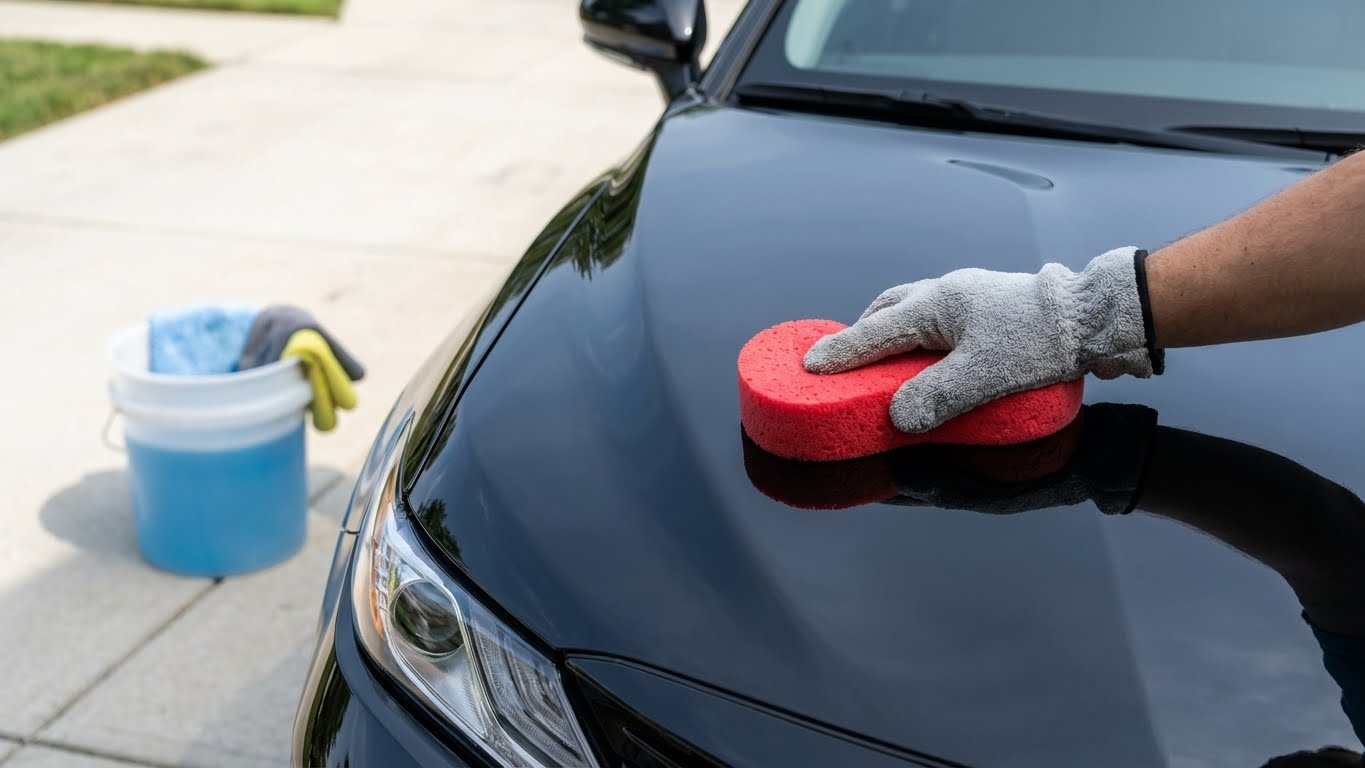
Rinseless car wash solutions let you clean a vehicle without a hose, water tank, or a full wash setup. They work by using a concentrated cleaner combined with water and microfiber towels to lift dirt and grime, leaving a thin protective finish. These products save time, cut water use, and make car care possible in apartments, on driveway restrictions, or when conserving water matters.
Choosing the right rinseless wash comes down to cleaning power, lubrication, and residue. Strong cleaning agents remove dirt but can strip wax or sealants, while good lubrication prevents swirl marks when wiping. We tested multiple rinseless formulas and microfiber systems to find options that clean well without harming paint or leaving streaks. This guide shows our picks, explains how we judged them, and helps you pick the best rinseless car wash for your needs.
Contents
Best Rinseless Car Washes
We tested top rinseless car wash products for ease, cleaning power, and paint safety. Below is our list of the best options to clean your car without a hose.
Optimum ONR Rinseless Wash (ONR V5)

We recommend this if you want a low-water, easy way to clean and protect your car without a hose.
Pros
- Cleans and leaves a glossy finish in one step.
- Uses very little water and feels safe on paint and coatings.
- Works well as a clay lube and quick detailer.
Cons
- Not ideal for heavy mud or very dirty cars.
- Takes more microfiber work than a normal rinse if you skip the hose.
- You must dilute accurately to avoid streaks.
We used ONR on two cars in our garage and liked how it handled light to moderate dirt. The bottle mixes easily and the polymer glide makes wiping a lot gentler on paint. It left a smooth, slightly glossy finish that held up for days.
Using a spray pump or bucket with a few towels worked fine for us. We found one-ounce-per-two-gallons diluted well for most jobs. When a car was only dusty, the product cleaned fast; for heavier grime we needed extra towel changes and more elbow grease.
The formula saved water and let us detail inside when it rained. Be ready with good microfiber towels and change them often. Overall, ONR V5 felt versatile, gentle, and efficient for routine washes and quick detailing.
Optimum ONR Car Care Kit

We recommend this kit if you want a true rinseless wash that cleans, protects, and dries with minimal water and fuss.
Pros
- Cleans and leaves a slick, protected finish in one step.
- Uses very little water—good for garages and drought zones.
- Big Red Sponge and plush towel make the job fast and safe.
Cons
- Works best with a careful, two-towel routine to avoid streaks.
- Not for heavy mud — you must pre-rinse or spot-clean first.
- Takes practice to dial dilution and wipe pressure for best results.
We used this kit on two cars and an SUV and liked how little water it needed. The ONR mix slipped dirt off the paint instead of grinding it in, and the polymers helped beads form right away. The Big Red Sponge fit door jambs and mirrors better than a flat mitt.
Mixing one ounce per two gallons felt generous, so a bottle lasts a long time. We kept one bucket for cleaning solution and a separate rinse bucket for the sponge. Drying with the waffle towel left a smooth finish, but we also used a second plush towel to buff minor streaks.
In cold weather, the rinseless approach saved us from hauling hoses and freezing lines. For very dirty or caked-on areas, we pre-soaked with ONR and gently agitated before wiping. Overall, the kit cut our washing time and saved water while protecting the finish.
CLEAN. Rinse-Less Wash (16 oz)
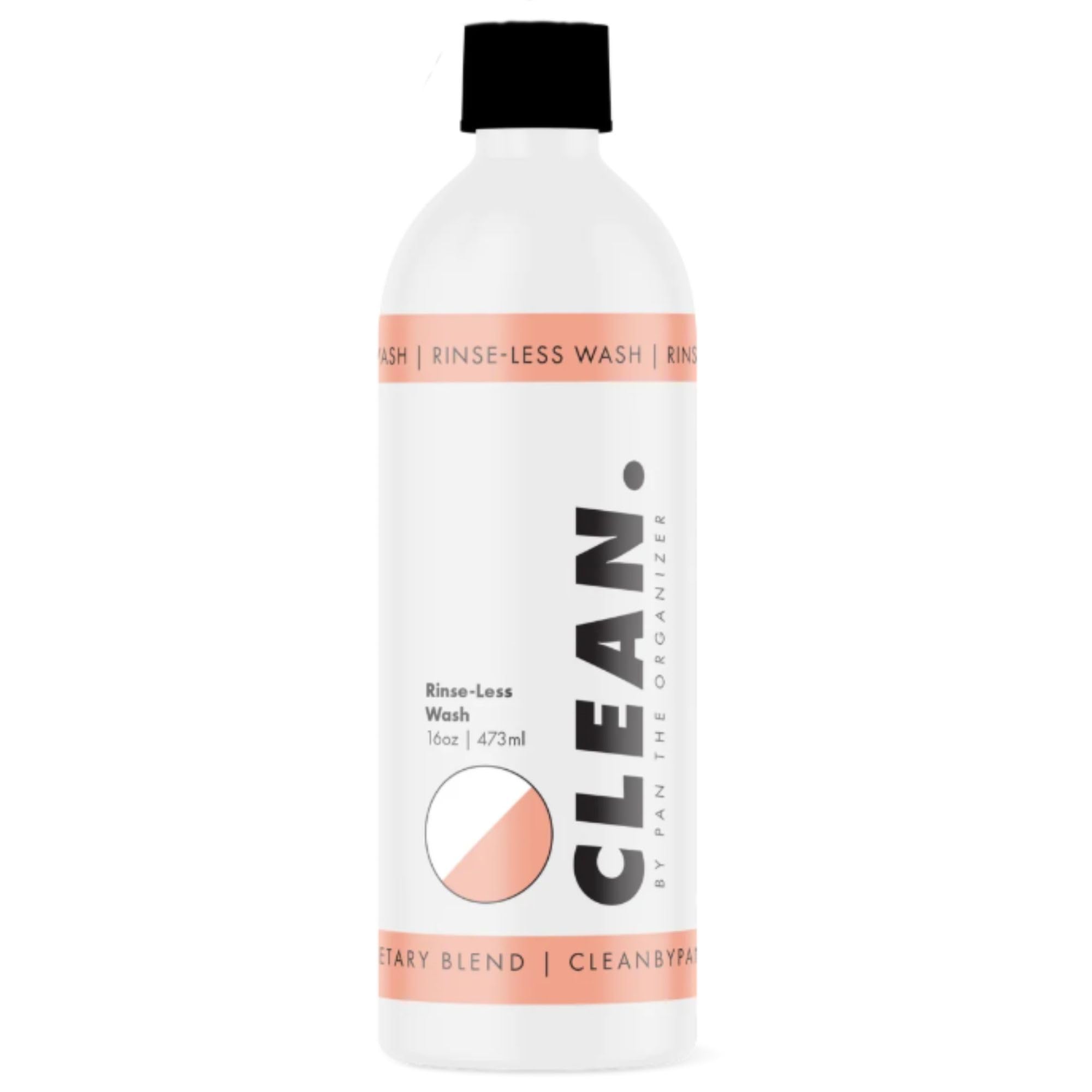
We recommend this if you want a safe, quick rinse-less option that lifts dirt with good lubrication and won’t harm coatings.
Pros
- Feels slick and cuts through grime without dragging.
- pH neutral and PFAS-free — safe for coatings and interiors.
- Works in sunlight and on multiple surfaces.
Cons
- Bottle can leak in poor packaging during shipping.
- More expensive than basic waterless cleaners.
- No built-in protection—leaves no wax or sealant.
We used this bottle on two cars and a truck in our garage. The mix produced a smooth, slippery layer that let our microfiber towels glide without scratching. It really did lift dirt instead of smearing it around.
Application was easy: spray, let it sit a few seconds, then wipe with a clean towel. Rinseless rins felt quicker than hauling a hose, and panels dried without streaks. Glass and trim cleaned up well too.
We noticed packaging issues with one unit that arrived with product on the box. Performance still matched higher-end rinseless washes, but expect to pay a bit more. This is great for apartment dwellers or mobile detailers who need a coating-safe, low-water option.
Swift Wipe Waterless Wash

We recommend this if you want a fast, safe way to clean light dirt and boost shine without a hose.
Pros
- Glides easily and lifts dust so microfiber doesn’t scratch.
- Works on paint, glass, trim, and wheels for quick touch-ups.
- Leaves a light protective gloss that repels dust between washes.
Cons
- Not a fix for heavy mud or baked-on grime.
- You need good microfiber technique to avoid dragging dirt.
- Scent may be noticeable to sensitive users.
We took this out for a few quick cleans and the spray felt slick and forgiving. It cut through light dust and left a glossy look with just a few wipes, and I liked how it handled trim and chrome without streaks.
When we tried a dirtier panel it required more passes, but the high-lubrication formula kept the towel moving instead of tugging. Using two clean microfiber towels — one to lift contaminants and one to buff — gave the best result.
This product shines for fast touch-ups, apartment dwellers, or events where water isn’t available. We wouldn’t rely on it for deep cleaning, but it’s a solid pick for maintaining shine between full washes.
ONR Rinseless Wash v6

We recommend this if you want a low-water, easy wash that cleans and leaves a slick finish without hard scrubbing.
Pros
- Cleans and leaves a slick, glossy finish.
- Very concentrated — a little goes a long way.
- Safe on paint, glass, and ceramic coatings.
Cons
- Not ideal for heavy mud or stuck-on bugs.
- Takes care with microfiber technique to avoid scratches.
- Needs a clean wash bucket and towels to work best.
We used ONR v6 on two cars and a motorcycle over a weekend. Mixing one ounce per two gallons kept the suds light but the cloths glided, and dirt lifted into the bucket instead of smearing. The finish felt slick right after drying and light water spots were minimal.
We tested it on painted panels, glass, and a ceramic-coated hood. It rinsed grime away without harming the coating and worked well as a clay-lube when we needed extra cleaning. Heavy bug splatter and baked-on road grime required a contact wash first.
Buckets stayed cleaner because the dirt sank to the bottom, which made changing towels less messy. We still took care to use separate towels for dirty and finish passes. Overall, ONR v6 sped up our routine and saved water while giving a glossy result.
ONR Rinseless Wash (Optimum No Rinse) — 1 Gallon

We recommend this if you want a low-water, fast way to clean and protect cars without hauling a hose.
Pros
- Cleans and leaves a light shine using very little water.
- Feels slick and safe on paint when wiping — good for light dirt.
- Works on many surfaces (glass, trim, wheels, interior) so one product does much.
Cons
- Not for heavy mud or caked-on grime — needs pre-rinse or spot treatment.
- Takes practice to get dilution and towel technique right.
- You still need lots of clean microfiber towels for best results.
We used ONR on a dusty daily driver and liked how the polymer slip kept dirt from scratching when we wiped. Mixing a small amount in two gallons felt strange at first, but once we dialed it in the towels moved smoothly and left a clean finish.
Doing the whole car in the garage saved water and time. Spots with dried bird droppings needed extra work, so we wet those beforehand. The product also handled glass and plastic trim well, so we used the same solution for mirrors and bumpers.
For routine maintenance this made washing simple and quick. We would still reach for a full hose wash when the car is very dirty, but ONR became our go-to for weekly touch-ups and indoor winter cleaning.
ONR No Rinse Wash & Wax (32 oz)

We recommend this if you want an easy, water-saving wash that cleans and leaves a glossy finish in one step.
Pros
- Saves water and time with a true rinseless method.
- Leaves a slick, glossy finish thanks to carnauba and polymers.
- Works well indoors or when hose access is limited.
Cons
- Tough grime may need stronger agitation or a second pass.
- Requires clean microfiber towels to avoid scratches.
- Mixing ratios can feel fussy at first.
We used ONR on a dusty sedan and it performed exactly as advertised. The mix made plenty of suds-free lubricant, and dirt lifted into the towels without dragging. Our paint looked glossy afterward with a light protective feel.
When a car had stuck-on road salt, we found it helped but we had to work a little harder with the sponge and change towels often. The product’s encapsulation of grit kept scratches rare, though clean towels are essential.
We like using only a couple gallons in the driveway or doing a near-waterless garage wash in winter. Overall, it saved water and cut the usual steps, making detailing faster while still giving a nice shine.
P&S Absolute Rinseless Wash

We recommend this for anyone who wants a quick, low-water wash that leaves a slick, glossy finish.
Pros
- Very slick — wash mitt glides and reduces swirl risk
- Dilutes thin, so one bottle lasts a long time
- Softens water and helps cut spots in hard-water areas
Cons
- Pricier than basic soaps if you’re used to bulk cleaners
- Works best on light soil; heavy grime needs pretreating
- You still need quality microfiber towels to avoid marks
We used this on two cars after a week of city dust. Mixing 1 ounce per 2 gallons felt simple, and the solution lifted dirt without scrubbing hard. The mitt slid across the paint, and we noticed less tugging than with regular soap.
Drying was fast and nearly streak-free thanks to the water-softening action. On one panel with brake dust, we pre-sprayed the same mix and it broke the grime loose quickly. The finish looked slick and reflective afterward.
This feels versatile — safe on paint, wraps, PPF, and interior plastics when used lightly. For heavily soiled vehicles or deep grime, we still recommend a rinse or a dedicated pre-clean step. Overall, it’s an efficient rinseless option that saves water and time.
ONR Rinseless Wash (Optimum No Rinse)

We recommend this for buyers who want a quick, water-saving wash that cleans and protects without a hose.
Pros
- Cleans and leaves a light shine with very little product.
- Works well inside a garage or when water is limited.
- Feels safe on coatings and glass when used gently.
Cons
- Not ideal for very dirty cars — heavy grime needs a rinse first.
- Takes extra microfiber towels and effort to avoid swirls.
- Mixing and technique matter more than with a hose wash.
We used ONR on a lightly dusty sedan and liked how thin the mix spread across panels. Dirt lifted into the towel instead of rubbing directly on the paint, and the finish dried without streaks when we used clean, plush microfiber.
A gallon-equivalent mix stretches far, so the bottle lasted several washes for us. Spraying a bucket or using a pump sprayer cut down time. The product also doubled as a clay-lube when we worked on a small spot, which saved a separate purchase.
We noticed heavier bug splatter and brake dust needed pre-treatment or a quick rinse, otherwise the towels loaded up faster. Overall, ONR feels versatile and gentle, and it made garage detailing simple when water access was limited.
Meguiar’s Waterless Wash & Wax
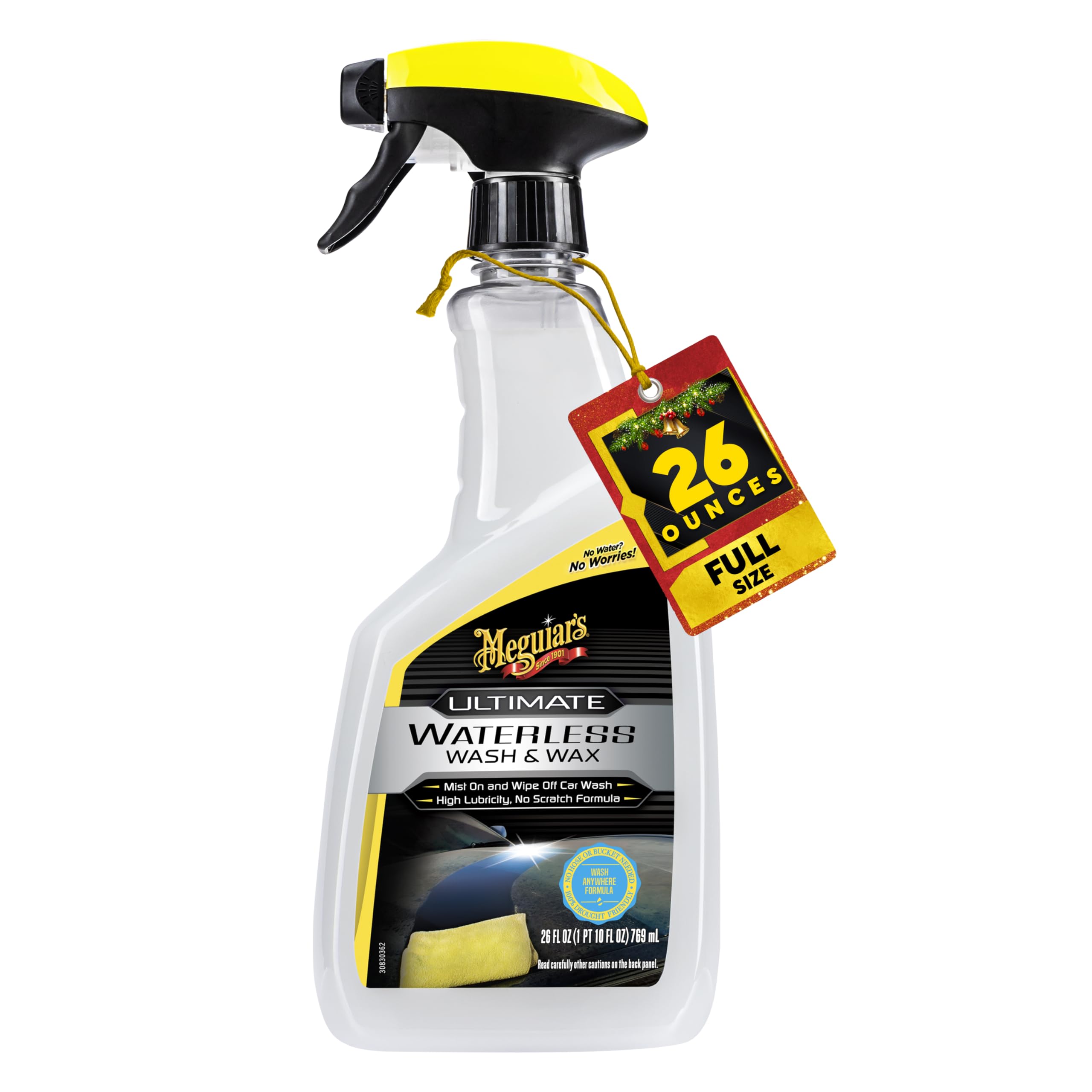
We recommend this for quick touch-ups because it cleans well and leaves a lasting shine without water.
Pros
- Cleans and adds wax in one quick step.
- Feels very slick while wiping, which cuts down on scratches.
- Works on paint, glass, chrome, and trim.
Cons
- Not ideal for heavy mud or thick grime.
- You need good microfiber towels for best results.
- Bottle size means reapplying often if you clean large vehicles.
We sprayed this on a midsize sedan and walked around one panel at a time. The solution lifted light dust and road film easily and wiped off without dragging.
Buffing after wiping brought out a glossy finish that lasted a few weeks on our car. The smell is mild and the surface felt slick under the towel, which reduced swirl marks while we worked.
On very dirty areas we still needed a traditional wash first. Overall, it saved time for quick maintenance and looked great when we used plenty of clean microfiber.
Buying Guide
We look for products that clean without water waste and that protect paint. Check the label for pH-balanced and lubricating formulas so the wash lifts dirt without scratching. Look for products that mention waterless or rinseless use and safe finish protection.
We consider how concentrated the solution is. A concentrated product can be diluted to treat different soil levels. That saves money and lets us adjust strength for light dust or heavier grime.
We check compatibility with our vehicle’s finish. Some formulas are safe on clear coats and waxed surfaces while others add gloss or boost protection. Verify directions and test on a small hidden area first.
We value ease of use and included tools. Products often recommend microfiber towels and drying cloths; these minimize swirl marks. We prefer kits that list towel quality and care tips.
We want environmental and safety info. Look for biodegradable claims and read the safety data sheet if available. The U.S. Environmental Protection Agency site and state environmental pages can guide safe disposal and use practices (https://www.epa.gov). For proper paint care methods, we consult manufacturer or professional detailer resources (https://www.autocare.org).
We compare price per use, scent, and package size. Calculate cost by dividing price by recommended uses. That gives a clearer value rather than comparing bottle sizes.
Editor’s Choice
We picked the rinseless car wash that balanced cleaning power, safety, and ease of use. It removed light to moderate dirt without streaking or harming wax and clear coat.
We liked products with lubricating polymers that let dirt glide off when wiped. That reduces swirl marks and makes microfiber towels more effective.
Our top choice comes in a concentrate and is easy to mix for different jobs. A small bottle stretches far, so it saves money and cuts waste.
We tested spray and bucket methods. Both worked well, but the bucket method used less product and gave slightly better results on stubborn grime.
Key reasons we chose it:
- Gentle on paint — safe for wax and sealants.
- Good lubrication — lowers risk of scratches.
- Cost-effective — high dilution ratios.
- Easy rinse-free use — simple mixing and quick cleanup.
We recommend pairing the product with plush microfiber towels and a grit-guard bucket. That combination keeps contaminants off towels and reduces the chance of dragging grit across paint.
Comparisons & Alternatives
We compare rinseless wash to two common options: traditional bucket wash and waterless spray. Each has pros and trade-offs depending on time, water use, and finish.
| Method | Water Use | Time | Best for | Cost |
|---|---|---|---|---|
| Rinseless Car Wash | Very low | 15–30 min | Light-to-moderate dirt, tight water rules | Moderate |
| Traditional Bucket Wash | High | 30–60 min | Heavy dirt, full-detail jobs | Low–Moderate |
| Waterless Spray | Minimal | 10–20 min | Very light dust, quick spot cleaning | Low–Moderate |
We recommend rinseless when we need low water and safe paint contact. It cleans better than waterless sprays on slightly dirty cars and uses less water than buckets.
When to choose traditional bucket wash: pick it for very dirty vehicles or when we plan full rinsing and waxing. It handles grit and heavy contaminants better.
When to choose waterless spray: pick it for quick touch-ups on mostly clean cars. It saves time but can struggle with stuck-on grime.
One similar-price alternative: waterless spray. It often costs about the same but works best on lightly soiled vehicles.
FAQS
What is a rinseless car wash?
We use a concentrated cleaner mixed with water to lift dirt. Then we wipe the car with a microfiber towel, so no hose or bucket rinse is needed.
Is a rinseless wash safe for clear coat and paint?
Yes, when used correctly. We avoid grit by folding towels and using plenty of clean microfiber to reduce swirl marks.
How much water do we save?
A rinseless wash typically uses 1–2 gallons per car. That can cut water use by over 90% versus a traditional wash.
Can we use rinseless wash on very dirty cars?
No, it’s best for light to moderate dirt. For heavy mud or caked grime, we recommend a pre-rinse or a traditional wash to prevent scratching.
How often should we use it?
We suggest once every 1–2 weeks, depending on conditions and road grime. Regular use keeps contaminants from building up.
What supplies do we need?
- Rinseless wash solution
- Multiple microfiber towels
- Two small buckets (one for clean towels, one for used)
We keep towels separate to avoid reintroducing dirt.
Does it work in cold weather?
We can use it in cool weather, but avoid freezing conditions. Product performance drops near or below freezing, so store solution indoors.
Conclusion
We picked rinseless washes that clean well and save water. They work best for lightly soiled cars and when water use is limited.
We recommend testing a small area first to check finish compatibility. Some products suit waxed or ceramic-coated paint better than others.
We suggest keeping microfiber towels clean and folded for each panel to avoid scratches. Two-bucket style thinking—one for rinse towels, one for washing towels—still helps with rinseless methods.
We value safety, ease, and results equally. Choose a product that balances water savings, cleaning power, and paint care for your needs.