

Can a CB radio communicate with ham radio? The simple answer is no, because they operate on different frequencies and use different protocols. However, with specific equipment and knowledge, some limited interaction is possible. This article breaks down how these two popular radio systems work and whether you can bridge the gap between them.
Contents
- 1 Key Takeaways
- 2 Quick Answers to Common Questions
- 3 📑 Table of Contents
- 4 Introduction: The World of CB and Ham Radios
- 5 Understanding CB Radio
- 6 Understanding Ham Radio
- 7 Can a CB Radio Communicate with a Ham Radio?
- 8 Bridging the Gap: Is Indirect Communication Possible?
- 9 Tips for CB and Ham Radio Users
- 10 Conclusion: Clear Differences but Shared Passion
- 11 Frequently Asked Questions
- 12 Author
Key Takeaways
- Different frequency bands: CB radios and ham radios operate on distinct frequency bands, preventing direct communication.
- Licensing requirements: Ham radio requires a license, whereas CB radio does not, affecting legal operation and communication possibilities.
- Technical differences: Different modulation methods and power levels make cross-communication challenging.
- Use of repeaters and gateways: Some ham operators use repeaters or digital gateways to connect CB and ham radios indirectly.
- Practical communication tips: Adjusting equipment and understanding legal limits is essential for attempting any cross-communication.
- Legal considerations: Transmitting outside your authorized band can lead to penalties.
- Community and hobbyist perspectives: Many enjoy exploring both radios but keep them separate for best results.
Quick Answers to Common Questions
Can a CB radio directly communicate with a ham radio?
No, because they operate on different frequencies and use different modulation methods.
Do I need a license to use a CB radio?
No, CB radios generally do not require a license for operation in many countries.
Is a ham radio license required?
Yes, you must pass an exam and be licensed to operate a ham radio legally.
Can a ham radio transmit on CB frequencies?
No, transmitting outside your licensed ham bands is illegal and can cause interference.
Are there ways to link CB and ham radios indirectly?
Yes, using repeaters or digital gateways, but they require special equipment and knowledge.
📑 Table of Contents
Introduction: The World of CB and Ham Radios
You’ve probably heard of CB radios and ham radios, two popular ways people communicate over the airwaves without the internet or cell phones. Both have loyal followings and serve different purposes—from truckers chatting on the road to hobbyists experimenting with long-distance communication.
But one question often arises: Can a CB radio communicate with a ham radio? It’s a great question, especially for those new to radio and curious about how these systems interact. In this article, we’ll break down the technical and legal details to explain why these radios typically don’t talk directly to each other but also how, in some cases, limited communication might be possible.
Whether you’re a casual user or a budding radio enthusiast, understanding these differences will help you get the most out of your equipment and avoid any legal missteps.
Understanding CB Radio
What is CB Radio?
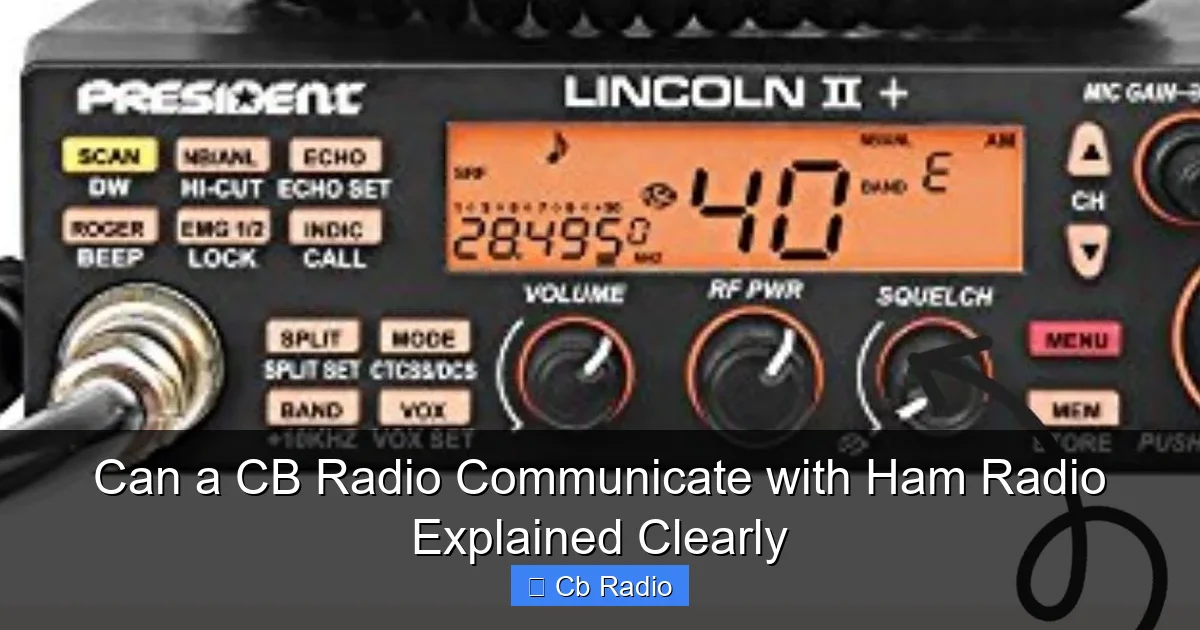
CB stands for Citizens Band radio. It’s a short-distance radio communication system that anyone can use without a license in most countries including the US. CB radios operate on 40 channels within the 27 MHz (megahertz) frequency band.
Visual guide about Can a CB Radio Communicate with Ham Radio Explained Clearly
Image source: i.pinimg.com
The main appeal of CB radios is their simplicity and accessibility. They’re popular with truck drivers, off-roaders, and hobbyists who want to chat within a few miles. The transmit power is limited, usually up to 4 watts for AM and 12 watts for SSB (Single Side Band) modes, which keeps the range relatively short.
How CB Radio Works
CB radios use amplitude modulation (AM) or single sideband (SSB) for their signals. Because they’re on a fixed set of channels, CB radios are designed for quick, direct communication without complex setup. However, this also means their frequencies and technical settings are fixed and distinct from other radio services.
Understanding Ham Radio
What is Ham Radio?
Ham radio, also called amateur radio, is a broad and versatile hobby that covers a wide range of frequencies, from HF (high frequency) to VHF (very high frequency) and UHF (ultra high frequency). Unlike CB, ham radio requires operators to pass an exam and obtain a license from their government agency.
Ham radios have more power—sometimes up to 1500 watts—and can use various modes such as AM, FM, SSB, digital, and even Morse code. This flexibility allows ham operators to communicate locally or across continents depending on the band and conditions.
Ham Radio Bands and Frequencies
Ham radio bands are divided into many segments across the radio spectrum. Common bands for voice communication include 2 meters (144-148 MHz), 70 centimeters (420-450 MHz), and HF bands like 20 meters (14 MHz). This wide range starkly contrasts with the narrow 27 MHz band used by CB radios.
Can a CB Radio Communicate with a Ham Radio?
Frequency Differences Make Direct Communication Impossible
The primary reason CB radios cannot communicate directly with ham radios is that they operate on completely different frequency bands. CB radios use the 27 MHz band, while ham radios operate on a variety of other bands far from 27 MHz.
Radios can only communicate if they transmit and receive on the same frequency with compatible modulation. Since CB and ham radios are designed for different frequencies and modes, they cannot simply tune into each other’s signals.
Technical Barriers Beyond Frequency
Even if you tried to tune a ham radio to 27 MHz, many ham radios do not cover the entire CB frequency range or lack the specific channel settings. Additionally, the modulation types and power restrictions differ. CB radios often use AM or SSB at low power, whereas ham radios might use FM, digital modes, or higher power levels.
Legal Restrictions Prevent Unauthorized Use
Using a ham radio to transmit on CB frequencies without proper certification and adherence to regulations is illegal. Likewise, CB radios cannot legally transmit on ham bands. These rules are enforced by agencies like the FCC in the US to prevent interference and maintain order on the airwaves.
Bridging the Gap: Is Indirect Communication Possible?
Using Repeaters and Cross-Band Repeaters
While direct communication is not possible, some advanced ham operators set up repeaters or cross-band repeaters that can receive on one band and retransmit on another. This means a CB signal could be picked up by a device and retransmitted on a ham band, allowing limited interaction.
However, this requires specialized equipment, technical know-how, and often permission from regulatory authorities.
Gateway Systems and Digital Links
Digital technologies and internet-linked repeaters can also create a bridge between CB and ham communities. For example, a ham operator might relay CB conversations through a digital network accessible on ham radios or via online platforms.
Practical Example: A Truckers’ Network
Imagine a group of truckers using CB radios on the road. A nearby ham operator could use a cross-band repeater or a gateway station to transmit messages from the ham network to the CB channel and vice versa. This setup can help extend communication reach but is rare and complex.
Tips for CB and Ham Radio Users
Stay Within Legal Limits
Always operate on your authorized frequencies. If you are a CB user, stick to the 27 MHz channels. If you are a ham operator, ensure you transmit only on licensed bands and follow power restrictions.
Use Proper Equipment
For those interested in both CB and ham radio, consider having separate radios tuned to their respective bands. Multi-band ham radios won’t generally cover CB, so dual setups might be necessary.
Learn the Basics of Each System
Understanding the technical and regulatory differences will help you avoid interference issues and improve your communication experience.
Join Local Clubs and Forums
Ham radio clubs and CB user groups can provide valuable advice and opportunities to learn about bridging technologies and best practices.
To sum up, a CB radio cannot directly communicate with a ham radio because of different frequencies, technical setups, and legal rules. However, with specialized equipment like repeaters and gateways, some indirect communication is possible but not common.
Both CB and ham radios offer exciting ways to connect with others, each serving unique communities and purposes. Knowing their differences helps you use each system effectively and legally. Whether you’re chatting on a CB channel or exploring ham bands, the world of radio communication is vast and full of possibilities.
Frequently Asked Questions
Why can’t CB and ham radios communicate directly?
They operate on different frequency bands and use different modulation types, making direct communication impossible without special equipment.
What frequency does CB radio use?
CB radios use 40 channels within the 27 MHz band, primarily between 26.965 MHz and 27.405 MHz.
What are the common ham radio frequency bands?
Ham radio bands include HF (3-30 MHz), VHF (30-300 MHz), and UHF (300 MHz-3 GHz), with popular voice bands like 2 meters (144-148 MHz) and 70 centimeters (420-450 MHz).
Is it legal to modify a CB radio to reach ham frequencies?
No, modifying radios to transmit outside their assigned bands is illegal and can result in fines or confiscation of equipment.
Can CB radios use digital modes like ham radios?
Typically no; CB radios mostly use AM or SSB modes and do not support digital modes common in ham radio.
What is the best way to communicate over longer distances with CB radio?
Using SSB mode on CB radios and good antennas can extend range, but it remains limited compared to ham radio capabilities.