

Can anyone own a CB radio? Absolutely! CB radios are accessible to most people without a license, making them a popular tool for communication. This article covers everything you need to know about owning and using a CB radio safely and legally.
Contents
- 1 Key Takeaways
- 2 Quick Answers to Common Questions
- 3 📑 Table of Contents
- 4 Introduction: What Is a CB Radio and Who Can Own One?
- 5 Can Anyone Own a CB Radio? The Legal Perspective
- 6 Why People Choose to Own a CB Radio
- 7 What Do You Need to Own a CB Radio?
- 8 How to Use a CB Radio Properly
- 9 Limitations and Challenges of Owning a CB Radio
- 10 Getting Started: Tips for New CB Radio Owners
- 11 Conclusion: Yes, Anyone Can Own a CB Radio—Here’s How to Make the Most of It
- 12 Frequently Asked Questions
- 13 Author
Key Takeaways
- Anyone Can Own One: CB radios are available to the public without a license in most countries.
- Legal Use Requirements: Users must follow FCC rules and avoid unauthorized channels and power levels.
- Great for Communication: CB radios offer instant, reliable contact for travelers, hobbyists, and emergency situations.
- Simple to Use: CB radios have straightforward controls suitable for beginners.
- Equipment and Setup: Choosing the right radio and antenna can improve your experience.
- Limitations Exist: Range and interference can affect performance.
- Community and Resources: Many groups and forums can help new owners learn and connect.
Quick Answers to Common Questions
Can anyone legally own a CB radio?
Yes, in most countries, including the U.S., anyone can own and use a CB radio without a license, as long as they follow the rules.
Do I need a license to operate a CB radio?
No, a license is generally not required for CB radio use in the U.S., but you must follow FCC regulations regarding power and channels.
What is the typical range of a CB radio?
CB radios usually have a range of 1-5 miles in cities and up to 20 miles in open areas, depending on antenna and terrain.
Can I use a CB radio in my car?
Yes, mobile CB radios are designed for vehicle use and are very popular among truckers and travelers.
Are there any restrictions on what I can say on a CB radio?
Yes, you should avoid profanity, offensive language, and emergency channel interference to comply with regulations and etiquette.
📑 Table of Contents
- Introduction: What Is a CB Radio and Who Can Own One?
- Can Anyone Own a CB Radio? The Legal Perspective
- Why People Choose to Own a CB Radio
- What Do You Need to Own a CB Radio?
- How to Use a CB Radio Properly
- Limitations and Challenges of Owning a CB Radio
- Getting Started: Tips for New CB Radio Owners
- Conclusion: Yes, Anyone Can Own a CB Radio—Here’s How to Make the Most of It
Introduction: What Is a CB Radio and Who Can Own One?
If you’ve ever wondered, “Can anyone own a CB radio?” you’re in the right place. Citizens Band (CB) radios have been a staple of personal communication for decades. Whether you’re a trucker, a hobbyist, or someone who likes to stay connected off the grid, CB radios offer a simple and effective way to chat with others.
The good news? Almost anyone can own and operate a CB radio. They are widely available, affordable, and don’t require a license in many countries, including the United States. But owning a CB radio comes with some rules and best practices to ensure you use it safely and legally.
In this article, we’ll explore what you need to know about owning a CB radio, from legal requirements to practical tips and equipment choices. Let’s dive in!
Can Anyone Own a CB Radio? The Legal Perspective
Licensing and Regulations
One of the biggest reasons CB radios remain popular is because they don’t require a license to operate in many places. In the United States, the Federal Communications Commission (FCC) governs CB radio use. According to FCC rules, anyone can own and use a CB radio without needing a license, as long as they follow certain guidelines.
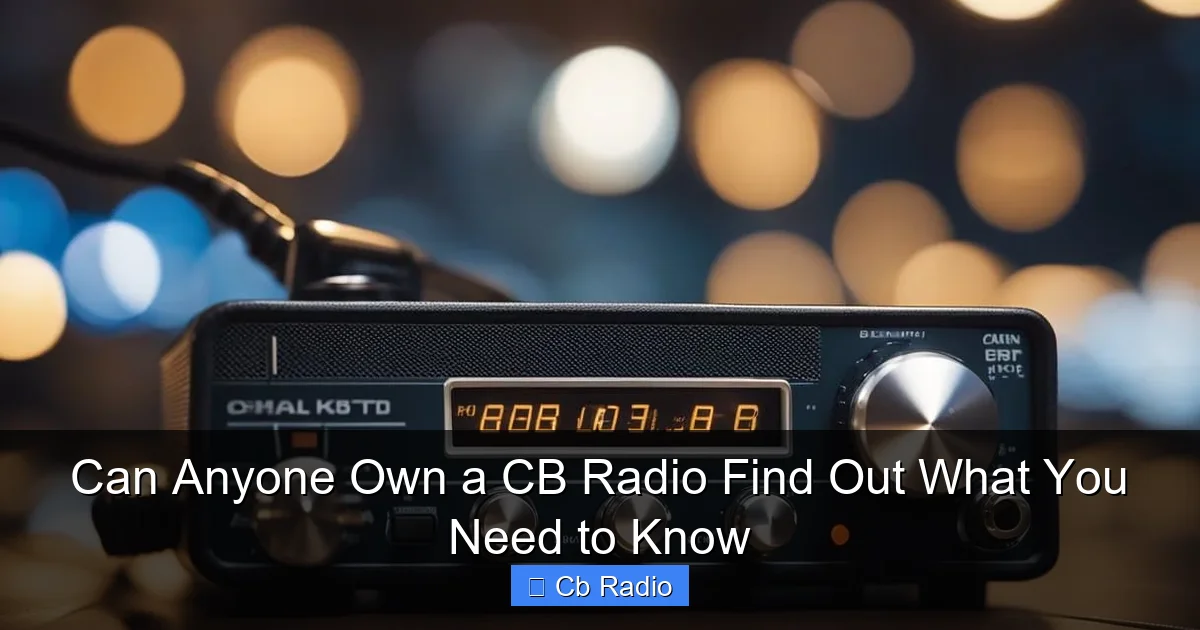
Visual guide about Can Anyone Own a CB Radio Find Out What You Need to Know
Image source: poweroutageready.com
These guidelines include restrictions on transmission power, the channels you can use, and the type of communication allowed. The maximum power output for CB radios is limited to 4 watts on AM mode and 12 watts on SSB (Single Side Band) mode. This helps keep the airwaves clear and prevents interference with other users.
International Rules
While the U.S. is quite relaxed, other countries may have different rules. Some require licenses, and others may restrict frequencies or power. If you live outside the U.S., check your local government’s communications authority for CB radio regulations before buying or using a CB radio.
Why People Choose to Own a CB Radio
Reliable Communication on the Road
CB radios are famously used by truck drivers. They provide a way to communicate about road conditions, hazards, or just chat with fellow drivers. Unlike cell phones, CB radios don’t rely on cellular networks, making them useful in remote areas where cell service is spotty or nonexistent.
Emergency Preparedness
Many people keep CB radios as part of their emergency kits. In natural disasters or power outages, CB radios can be a lifeline for communication when other systems fail. This makes owning a CB radio both practical and potentially lifesaving.
Hobby and Social Connections
For hobbyists, CB radios offer a fun way to connect with others who share similar interests. CB radio clubs and online forums provide a community where users share tips, organize events, and even compete in friendly contests.
What Do You Need to Own a CB Radio?
Choosing the Right CB Radio
CB radios come in many shapes and sizes—from handheld portable units to larger base stations and mobile radios designed for vehicles. When choosing a CB radio, consider your intended use:
- Handheld Radios: Great for casual conversations and portability.
- Mobile Radios: Designed for installation in cars or trucks, offering better power and range.
- Base Stations: Stationary radios for home use, often paired with larger antennas for extended range.
Antennas and Installation
Antenna choice and placement can dramatically affect your signal strength and range. For mobile radios, mounting an antenna on your vehicle’s roof or bumper is common. For base stations, a tall, outdoor antenna can improve reception and transmission.
Additional Accessories
Other accessories like microphones, external speakers, and power supplies can enhance your CB radio experience. Some users also invest in noise filters to reduce static and improve audio clarity.
How to Use a CB Radio Properly
Basic Operations
Using a CB radio is straightforward. Turn it on, select a channel (usually channel 19 is popular for highway communication), and press the push-to-talk (PTT) button to speak. Release the button to listen. Keep conversations brief and clear to allow others to use the channel.
Etiquette and Rules
Respectful communication is key. Avoid profanity, avoid monopolizing channels, and don’t interfere with emergency or official communications. It’s also important to stick to CB radio frequencies and not try to transmit on unauthorized channels.
Practical Tips for Better Use
- Use a good quality antenna and place it correctly for best range.
- Speak clearly and at a moderate pace.
- Listen before transmitting to avoid interrupting others.
- Keep your radio tuned and maintained to avoid technical issues.
Limitations and Challenges of Owning a CB Radio
Range Restrictions
CB radios typically have a limited range, usually between 1 to 5 miles in urban areas and up to 20 miles in open terrain. Buildings, hills, and weather conditions can affect this significantly.
Interference and Noise
You may encounter interference from other electronic devices, weather, or other CB users. Sometimes, channels are crowded, making communication difficult.
Legal and Safety Considerations
Always follow regulations to avoid fines or penalties. Never use your CB radio while driving if it distracts you. Safety first!
Getting Started: Tips for New CB Radio Owners
Learn the Basics
Start by reading your radio’s manual and familiarizing yourself with channel functions and controls. Online tutorials and videos can be very helpful for beginners.
Join a Community
Look for local CB radio clubs or online forums. These communities can provide support, advice, and even local frequency information.
Practice Responsible Use
Stick to the rules and etiquette. Practice your communication skills and enjoy the hobby responsibly.
Conclusion: Yes, Anyone Can Own a CB Radio—Here’s How to Make the Most of It
Owning a CB radio is easy, affordable, and open to almost anyone. Whether you want to stay connected on road trips, prepare for emergencies, or enjoy a hobby, CB radios offer a unique and dependable communication tool. Remember to follow local laws, use your radio respectfully, and invest in good equipment to get the best experience.
With a little knowledge and practice, you’ll find that owning a CB radio is not only possible but also rewarding. So go ahead, tune in, and start your CB radio adventure today!
Frequently Asked Questions
Is CB radio ownership limited by age?
There are no specific age restrictions for owning a CB radio. However, minors should use the radio under adult supervision to ensure proper use.
Can CB radios be used internationally?
CB radios can be used internationally, but rules and frequencies may vary. Always check local regulations before using a CB radio abroad.
What is the difference between CB radio and ham radio?
CB radios operate on specific frequencies with no license required, while ham radios cover a wider range and require licenses and training. Ham radios offer more power and capabilities.
Do CB radios work during power outages?
Yes, CB radios can operate on battery or vehicle power, making them useful during power outages and emergencies.
Can I install a CB radio myself?
Yes, many people install CB radios themselves. Basic installation involves mounting the radio and antenna and connecting power, which can be done with minimal tools and instructions.
How do I improve the range of my CB radio?
Improving range involves using a high-quality antenna, proper antenna placement, and sometimes adding accessories like antenna tuners. Terrain and weather also affect range.