
Yes — a portable fan can pose a fire risk if it is damaged, poorly made, or misused. This guide shows you how to check, install, maintain, and use a portable fan safely, with clear steps, tips, and what to do in an emergency. Follow these simple rules to lower the risk and keep your car and home safe.
Key Takeaways
- Point 1: A portable fan can catch fire, usually from electrical faults, battery failure, or blocked airflow.
- Point 2: Choose certified, well-built fans and quality batteries to cut risk.
- Point 3: Install a portable fan in a car with proper wiring and an inline fuse.
- Point 4: Clean and inspect your portable fan often to stop dust and debris from causing heat build-up.
- Point 5: Use correct chargers and avoid charging unattended or in hot cars to protect batteries.
- Point 6: If a portable fan smokes, act fast: unplug, move away, and extinguish small flames safely or call emergency services.
Introduction: What you will learn
This guide explains whether a portable fan can catch fire. You will learn how fires start, how to check a portable fan for risk, how to install one in a car, and how to keep it safe. You will get step-by-step care and use tips. You will know what to do if your portable fan smokes or sparks. The steps are simple. The language is plain. Follow them and lower your risk.
Can a portable fan catch fire? The quick answer
Yes, a portable fan can catch fire. It is rare when the fan is made well and used correctly. Fires happen mainly from bad wiring, short circuits, motor overheating, or battery problems. In cars, heat and vibration add risk. The good news: you can reduce risk a lot. Small checks and smart habits keep you safe.
Visual guide about Can Portable Fans Catch Fire and How to Prevent It
Image source: safetyrespect.co.uk
Step 1: Understand common causes of portable fan fires
Knowing causes helps you prevent fire. Check each cause. Use this to spot trouble early.
Visual guide about Can Portable Fans Catch Fire and How to Prevent It
Image source: valkyrie.cdn.ifixit.com
1.1 Electrical faults
Loose wires, poor solder joints, or damaged insulation can cause a short. A short can spark and start a fire. Cheap fans or old fans often have worn wiring. Always inspect the cord and plug of a portable fan.
1.2 Motor overheating
A motor can run hot if something blocks the blades or vents. Dust, hair, and debris can build up. Over time, heat can damage plastic and wiring. This can lead to smoke or flames.
1.3 Battery failures (for battery-powered portable fan)
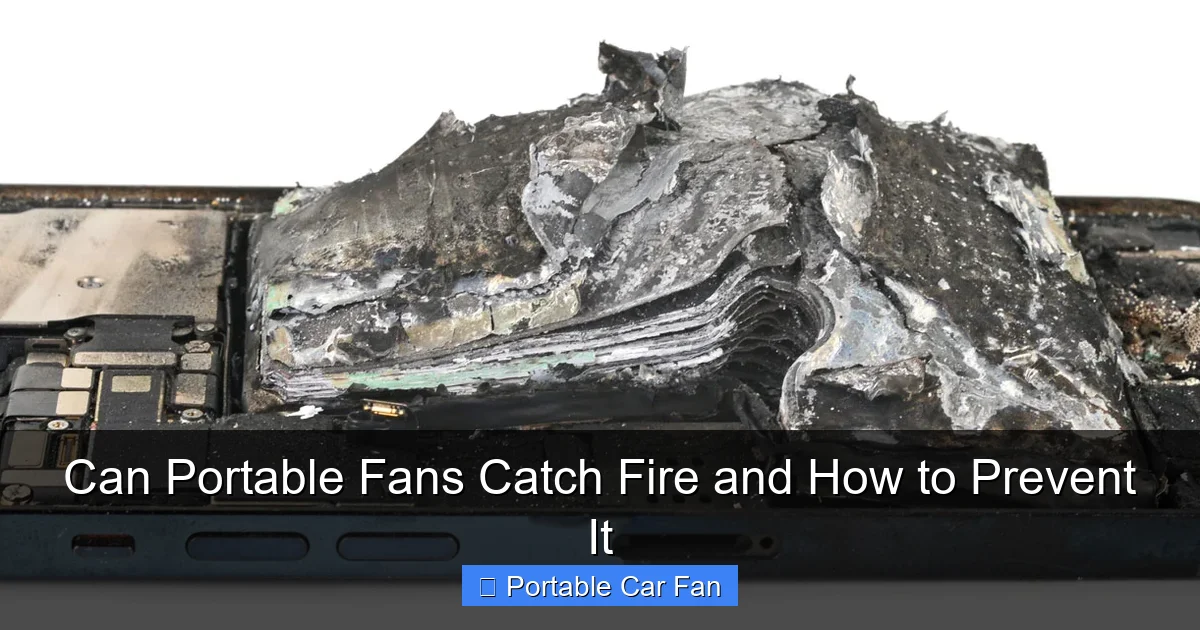
Many portable fans use lithium batteries. Damaged cells can overheat and catch fire. Overcharging, short circuits inside a battery pack, or using the wrong charger raises the risk. Cheap or counterfeit batteries are a big cause.
1.4 Charging and USB power problems
Using the wrong charger or a low-quality USB cable can overheat the circuit. Some car USB ports deliver poor or unstable power. That can stress a portable fan and its battery.
1.5 Physical damage and wear
Drops, cracks, and water damage weaken parts. A stuffed motor or exposed wiring can spark. Car use adds vibration. This can break parts inside a portable fan.
Step 2: Choose a safe portable fan
Start with a good product. You cannot fix a bad design with care alone.
Visual guide about Can Portable Fans Catch Fire and How to Prevent It
Image source: shutterstock.com
2.1 Look for safety certifications
Buy fans with UL, ETL, CE, or similar marks. These mean a lab tested the design. This lowers the chance of hidden faults.
2.2 Pick the right type for car use
For cars, get a 12V model or a USB model rated for car USB output. Some fans are labeled “portable car fan.” They are built for vibration and heat.
2.3 Check battery quality
If the fan uses a battery pack, choose one with high-quality cells. Prefer brands with safety circuits. Avoid very cheap, no-name battery packs.
2.4 Read reviews and warranty
Check real user reviews for heat, smoke, or battery problems. A decent warranty is a sign the maker trusts the product.
Step 3: How to inspect a portable fan before use
Do a quick check every time you use a fan in a car or at home. This helps catch issues early.
3.1 Visual check
Look for cracks, loose parts, or exposed wires. Check blades and guards. If anything is broken, do not use the portable fan until it is fixed.
3.2 Smell and sound check
Turn the fan on at low speed first. Listen for grinding or odd noises. Smell for burning or hot plastic. Stop if you notice any bad smell or sound.
3.3 Battery and charging check
Inspect battery packs for swelling, dents, or leaks. Use the correct charger. Do not use a portable fan with a swollen battery. Replace the pack or fan.
Step 4: How to install a portable fan safely in your car
Installation matters. A good install reduces stress on the fan and wiring.
4.1 Pick a safe spot
Mount the portable fan where air can flow freely. Avoid spots near flammable fabrics or loose paper. Keep it away from seat heaters and direct sun when possible.
4.2 Secure mounting
Use the proper clamps or mounts. Avoid temporary fixes like tape. A loose portable fan can bounce and break wiring. Secure it to a stable surface.
4.3 Wiring and power
For hardwired fans, use proper car wiring kit and a fuse. Match the wire gauge to the fan’s current draw. If you use a USB fan, use a known good USB adapter. Do not run wires where they can be pinched.
4.4 Use an inline fuse
Put a fuse in the positive feed. If wiring shorts, the fuse will blow and stop a fire. Choose the fuse size the fan maker recommends.
Step 5: Daily use tips for a portable fan
Good habits keep a fan safe. These are simple steps you can do every day.
5.1 Don’t block vents
Let the fan breathe. Keep the fan’s intake and outlet clear. Even in a small car, do not press the fan into a seat or cloth.
5.2 Avoid charging in hot cars
High heat increases battery stress. If you must charge a portable fan battery, do it in shade or when the car is cool. Do not leave charging fans in a hot car all day.
5.3 Unplug when not in use
Unplug a portable fan from USB or cigarette port when you leave the car. Many problems happen when items are left plugged in and unattended.
5.4 Use correct power settings
High speed draws more current and makes heat. Use the lowest speed that cools you. This saves battery too.
Step 6: Cleaning and maintenance for safety
Cleaning prevents dust buildup. Dust can insulate the motor and cause heat. Maintain your portable fan every month or as needed.
6.1 How to clean
Turn off and unplug the portable fan. Remove the guard if it comes off. Use a brush or compressed air to clear dust. Wipe surfaces with a dry cloth. If the fan is washable, follow the maker’s guide.
6.2 Lubrication and bearings
Some fans have sealed bearings. Others may need oil. Check the manual. Use only recommended oils. Do not over-lubricate, which can attract dust.
6.3 Check wiring and plugs
After cleaning, inspect the cord and plug again. Look for cracks or frayed wires. Replace damaged cables immediately.
Step 7: How to charge batteries safely
Charging is one of the highest risk moments. Follow these rules to lower the risk of a battery catching fire.
7.1 Use the right charger
Use the charger that came with the portable fan or a certified replacement. Do not use a random high-power charger.
7.2 Charge on a non-flammable surface
Put the fan on concrete, tile, or metal while charging. Avoid soft surfaces like seats or bedding. If a battery fails, hard surfaces reduce fire spread.
7.3 Avoid overnight or unattended charging
Do not charge a portable fan overnight or when you are away. Check it often while charging.
Step 8: What to do if your portable fan smokes or sparks
Act fast. Small fires can spread. Follow these steps to keep yourself safe.
8.1 Unplug right away, if safe
If the fan starts to smoke, unplug it from power. Do this only if you can reach it without putting yourself in danger. If the fan uses a battery, remove the battery if it is removable and you can do it safely.
8.2 Move the fan away from flammable items
Put the smoking fan on a non-flammable surface away from seats, curtains, and paper. Keep people and pets back.
8.3 Extinguish small flames safely
For a small battery fire, use a class D extinguisher if available, or a standard ABC extinguisher for other small fires. If the fire grows, evacuate the area and call emergency services.
8.4 When to call professionals
If you cannot control the fire quickly, get out and call 911 or local emergency services. Do not try to handle a large fire yourself.
Troubleshooting: Common problems and quick fixes
Here are issues you may see and how to fix them. Check simple causes first.
Trouble: Fan won’t start
Check power source. Try another USB port or cigarette adapter. If battery-powered, charge the battery fully. Look for a stuck blade. If none work, the motor may be dead. Replace the fan.
Trouble: Fan smells hot or plastic smell
Turn it off. Let it cool. Clean vents and blades. Run the fan again. If smell returns, stop using the fan. The motor or wiring may be damaged.
Trouble: Battery is swollen
Stop using the battery. Do not puncture a swollen battery. Place it in a non-flammable area and follow local battery disposal rules. Replace with a proper pack.
Trouble: Fan makes grinding noise
Unplug and open the guard if possible. Look for debris, bent blades, or worn bearings. Clean and realign blades. If noise persists, replace the fan.
Practical examples and real-world tips
These quick examples make the rules easier to use in daily life.
- Example 1: You buy a USB car fan for road trips. Use a high-quality USB adapter with a built-in fuse. Mount the fan to the headrest. Unplug it at the stop. Clean vents after each trip.
- Example 2: You have a battery portable fan for camping. Charge the battery at home on a tile floor. Don’t charge in direct sun. Use the fan on low for long run time.
- Example 3: You find smoke from a fan in your glove box. Remove the fan, open windows, and unplug it if possible. If there is flame, get out and call help.
When to replace your portable fan
Some signs mean it is time to get a new fan. Do not try to fix every old fan. Replace it if it shows these problems.
- Blades cracked or bent.
- Wiring is frayed or insulation melted.
- Battery swollen or leaking.
- Persistent burning smell after cleaning.
- Fan motor stalls or makes loud grinding noise.
Buying checklist for a safe portable fan
Use this short checklist when you shop for a fan.
- Has UL, ETL, or CE mark.
- Uses quality battery with safety circuit.
- Made for car use if you use it in a vehicle.
- Includes a fuse or the wiring is easy to fuse.
- Good user reviews and warranty.
Final safety tips
- Never store a damaged portable fan in your car.
- Do not modify wiring or batteries unless you are a pro.
- Keep spare fuses and a basic fire extinguisher in your car.
- Teach family members what to do if a fan smokes.
Conclusion
A portable fan can catch fire. But that risk is low when you pick a good product and use it right. Follow the steps in this guide to inspect, install, and care for a portable fan. Keep batteries and wiring in good shape. Avoid charging in hot cars and never leave a charging fan unattended. If a fan smokes, unplug and move it away from flammable items. If a fire grows, get out and call emergency services. Small steps protect you, your car, and your home. Stay safe and enjoy cool air without worry.
🎥 Related Video: 3 in 1 Air Humidifier Cooling USB Fan Fast Cooling, Colorful Lights, and Energy Saving
📺 Smile E Store
Introducing our 3-in-1 Air Humidifier Cooling USB Fan, the perfect companion for those hot summer days and nights. This portable …