

Can you clear codes with OBD2 scanner? Yes. This guide shows you how to read and clear fault codes. It explains what clearing does, when to do it, and when not to. You get step-by-step instructions, tips, troubleshooting, and safety notes. Clear codes safely and know what it means for your car.
Can You Clear Codes With OBD2 Scanner and What It Means
This guide teaches you how to use an OBD2 scanner to clear codes. You will learn what clearing codes means. You will learn the steps to read and erase codes. You will get tips and safety notes. You will also get troubleshooting help. By the end, you will know when to clear codes and when to fix first.
Contents
- 1 Key Takeaways
- 2 Introduction: What you will learn
- 3 What does “clearing codes” mean?
- 4 What you need before you start
- 5 Types of OBD2 scanners
- 6 Step-by-step: How to clear codes with an OBD2 scanner
- 7 Practical tips and examples
- 8 When you should NOT clear codes
- 9 How long before codes come back?
- 10 Clearing permanent codes
- 11 Troubleshooting: Common issues when clearing codes
- 12 Safety and legal considerations
- 13 Advanced uses of clearing codes
- 14 Example: A common do-it-yourself scenario
- 15 Final checklist before you clear codes
- 16 Conclusion
- 17 Author
Key Takeaways
- Point 1: Can you clear codes with OBD2 scanner? Yes. Most OBD2 scanners can clear stored fault codes and reset the check engine light.
- Point 2: Clearing codes erases stored faults but does not fix the root cause. Always diagnose first.
- Point 3: After you clear codes, the car may need a drive cycle to rebuild readiness monitors.
- Point 4: Some codes return quickly if the problem is active. Clearing only helps if you’ve fixed the issue.
- Point 5: Basic scanners clear codes easily. Advanced scanners show freeze frame data and live data for deep diagnosis.
- Point 6: Use caution: clearing pending codes can hide issues from inspections and emissions tests.
Introduction: What you will learn
Many car owners ask, can you clear codes with OBD2 scanner? This guide answers that. It explains the tools you need. It shows step-by-step how to clear codes. It explains the risks. It shows how to check that your car is really fixed. You will learn simple steps. You will also learn to avoid common mistakes.
What does “clearing codes” mean?
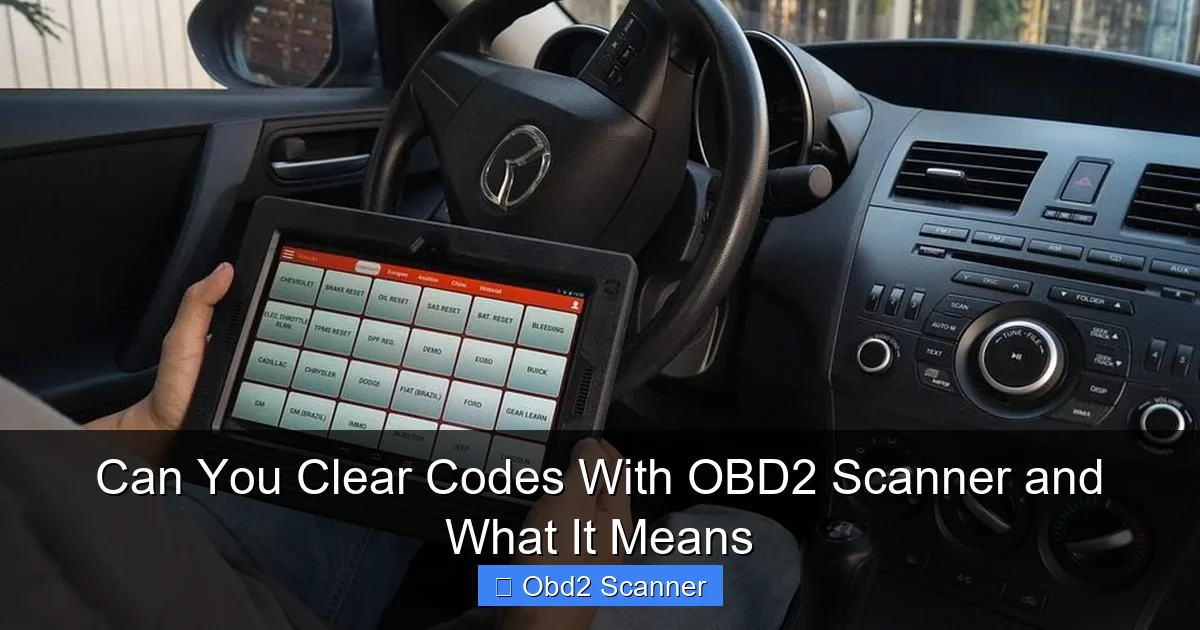
When your car detects a problem, it stores a Diagnostic Trouble Code (DTC). The engine control unit (ECU) keeps that code in memory. It may turn on the check engine light. Clearing codes removes those stored DTCs. It can also turn off the check engine light. But clearing codes does not fix the underlying problem. It only clears the record. If the problem remains, the code will return.
Visual guide about Can You Clear Codes With OBD2 Scanner and What It Means
Image source: procarreviews.com
What you need before you start
Before you ask can you clear codes with OBD2 scanner, get ready. Use this simple checklist.
Visual guide about Can You Clear Codes With OBD2 Scanner and What It Means
Image source: the-gadgeteer.com
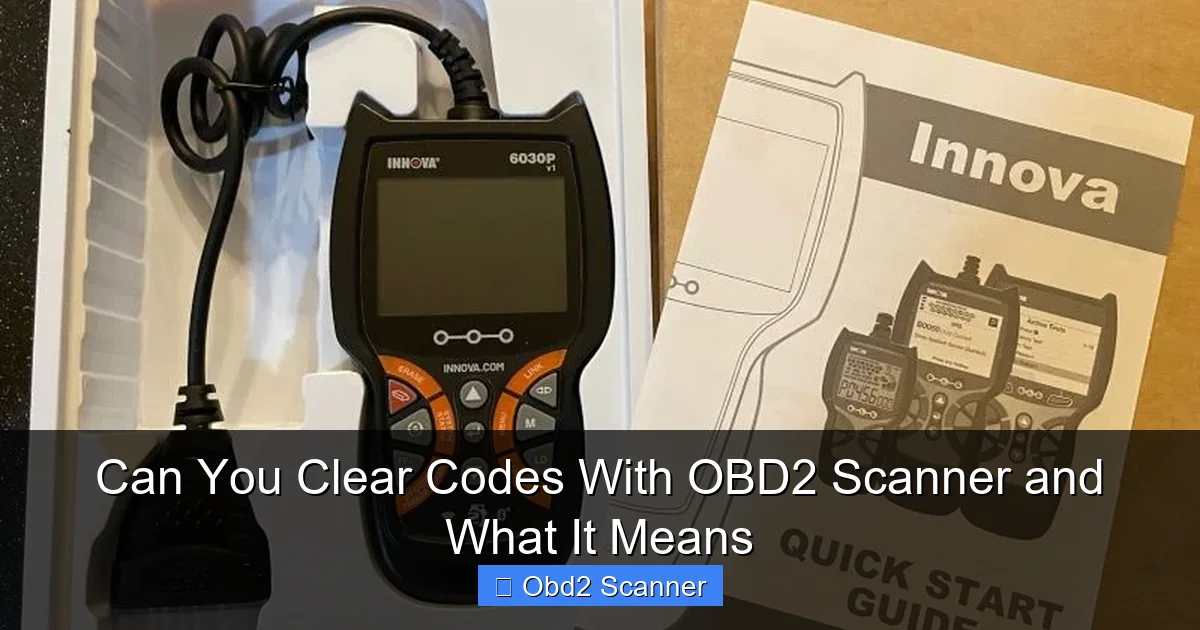
- OBD2 scanner (basic or advanced).
- Car owner’s manual or access to the internet for code lookup.
- Gloves and safety glasses if you will inspect parts.
- Phone or notepad to record codes and notes.
- Time to run a drive cycle if needed.
Types of OBD2 scanners
Not all scanners offer the same features. Know what your tool can do.
Visual guide about Can You Clear Codes With OBD2 Scanner and What It Means
Image source: i5.walmartimages.com
- Basic code readers: Read and clear codes. Good for simple jobs.
- Enhanced scanners: Show freeze frame and live data. Better for diagnosis.
- Bluetooth dongles + apps: Use a phone or tablet. Often cheaper and portable.
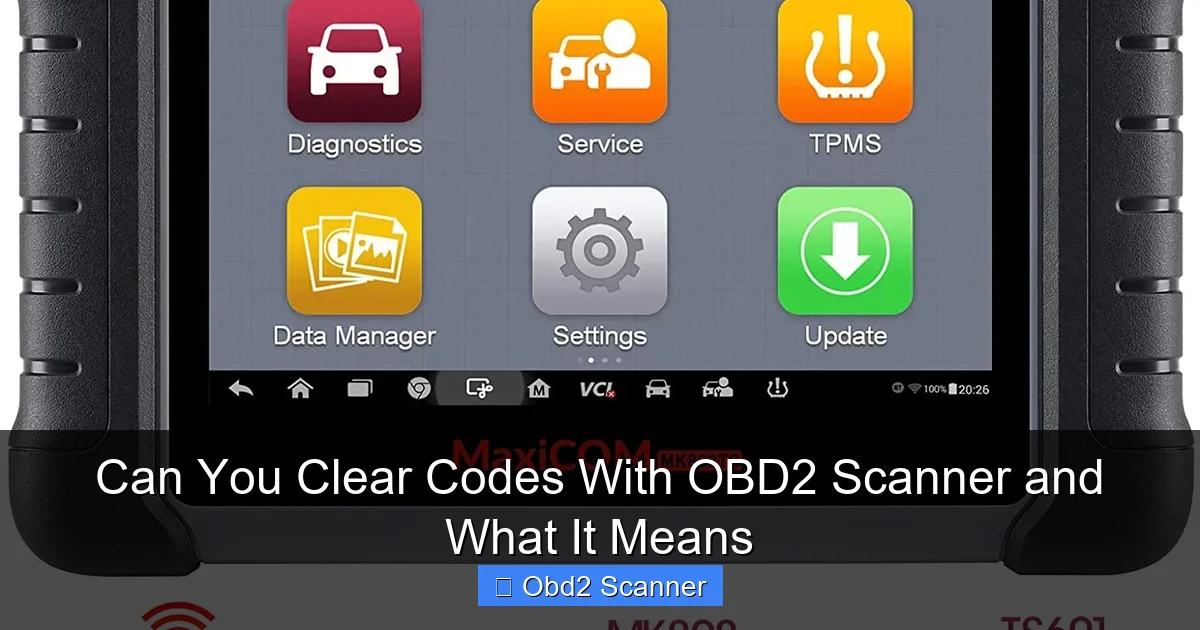
- Professional scanners: Full systems for shops. They read manufacturer codes and run tests.
Step-by-step: How to clear codes with an OBD2 scanner
Here is a clear step-by-step process. Each step is short and simple. Follow them in order. You will see how easy it is to answer can you clear codes with OBD2 scanner safely.
Step 1: Park safely and turn off the car
Park on level ground. Put the car in park or neutral. Set the parking brake. Turn off the engine. Remove keys if needed. Safety first.
Step 2: Locate the OBD2 port
The OBD2 port is under the dash. It is usually near the steering column. It can also be in the center console or under a panel. Plug your scanner in. Make sure the connector fits snugly.
Step 3: Turn the ignition to the ON position
Do not start the engine. Turn the key so the dash lights up. For push-button start, press the button without pressing the brake. The car’s electronics will power the scanner.
Step 4: Power on the scanner and read codes
Turn on your scanner. Choose “Read Codes” or similar. Wait for the scan to finish. The scanner shows stored, pending, and permanent codes. Write them down. Take a photo if that is easier.
Step 5: Research the codes
Look up the meaning of each code. Use the scanner’s library or an online database. Understand if the code is serious. Decide if you can fix it yourself. This step is key to answering whether clearing is a good idea.
Step 6: Fix the issue if needed
If a code shows a real fault, fix it. Tighten loose gas caps. Replace faulty sensors. Repair wiring if needed. If you clear codes without fixing, they often come back. Fixing first avoids repeat visits.
Step 7: Clear the codes
On the scanner, select “Clear Codes” or “Erase Codes.” Confirm when prompted. The scanner sends a command to the ECU. It erases the stored DTCs and resets the check engine light. This answers the question: can you clear codes with OBD2 scanner? Yes, and this is how.
Step 8: Turn off the scanner and ignition
Turn off the scanner. Unplug it from the OBD2 port. Turn the car to the OFF position. Start the car and check the dash. The light should be off if the issue is fixed.
Step 9: Drive cycle and readiness monitors
After clearing, the car may need a drive cycle. This means driving in varied conditions. The vehicle will run self-tests. These are readiness monitors. They must complete for emissions testing. If you cleared codes, know that monitors will be reset. The car needs time to rebuild them.
Practical tips and examples
Short tips make this task easier. These are real tips from users and mechanics.
- Tip: Always note codes before clearing. You may need them later.
- Tip: If a code returns immediately, the fault is active. Do not keep clearing it.
- Example: A loose gas cap may trigger P0455. Tighten the cap, then clear codes. The light should stay off.
- Tip: After major repairs, clear codes to remove old faults. Then run a drive cycle.
- Tip: For intermittent faults, clearing lets you test whether the repair fixed the problem.
When you should NOT clear codes
Sometimes you should not clear codes. Think before you erase. Here are the cases:
- If you need data for diagnosis. Clearing loses freeze frame data.
- If you face an inspection or emissions test soon. Clearing resets readiness monitors.
- If you are unsure of the repair. The code may help a mechanic diagnose later.
- When the code indicates a serious safety issue. Fix first, then clear.
How long before codes come back?
It varies. If the issue is fixed, some codes never return. If the fault is still active, a code can return in seconds or minutes. OBD2 systems can detect problems quickly. Some codes need a few drive cycles to reappear.
Clearing permanent codes
Modern cars store some codes as permanent. These cannot be cleared with a simple erase command. They remain until the vehicle completes specific tests. If you ask can you clear codes with OBD2 scanner and the code is permanent, you will need to fix the issue and run a set of readiness checks. Only then will the ECU remove the permanent flag automatically.
Troubleshooting: Common issues when clearing codes
Here are common problems you may see after clearing codes and how to fix them.
Problem: Code returns instantly
- Cause: Active fault still present.
- Fix: Inspect the related system. Check wiring, connectors, and sensors. Repair the root cause. Then clear codes and test.
Problem: Check engine light stays on after clearing
- Cause: The ECU detected the issue again on restart, or permanent codes remain.
- Fix: Re-scan to see which codes are present. Fix the items listed. For permanent codes, complete the drive cycle tests required by the vehicle.
Problem: Readiness monitors show “not ready”
- Cause: Clearing reset monitors. The vehicle needs a drive cycle.
- Fix: Follow the manufacturer’s drive cycle or do varied driving with city and highway speeds. Monitors will set when tests complete.
Problem: Scanner won’t connect
- Cause: Bad connection, blown fuse, or incompatible interface.
- Fix: Check the OBD2 port for damage. Try a different scanner. Check the vehicle fuse box for the OBD2 power fuse.
Safety and legal considerations
Clearing codes can affect inspections. In many places, mechanics or inspectors check readiness monitors. If you clear codes before an emissions test, your vehicle may fail. Also, hiding a real fault can be unsafe. Do not clear codes to cheat inspections. Use clearing as a diagnostic step after you fix the problem.
Advanced uses of clearing codes
Professional scanners do more than erase codes. They can:
- Run active tests to move parts on command.
- Reprogram modules and update firmware.
- View specific manufacturer codes and live data streams.
Even with advanced tools, the answer to can you clear codes with OBD2 scanner remains yes. But advanced tools give you more control and data to ensure the fix is real.
Example: A common do-it-yourself scenario
Scenario: Your check engine light is on. You buy a small OBD2 reader. You ask, can you clear codes with OBD2 scanner? Here’s what many DIYers do:
- Plug in the reader. Read codes. Find P0171 (system too lean).
- Check for vacuum leaks. Tighten clamp on intake hose.
- Clear codes with the reader. Start the car. Light stays off.
- Drive for a few miles. Scans show no code. Problem solved.
This is a common success story. It shows how clearing helps verify a repair.
Final checklist before you clear codes
- Have you recorded all codes and freeze-frame data?
- Have you diagnosed and fixed any active faults?
- Do you understand the effect on readiness monitors?
- Is the vehicle safe to drive after the repair?
Conclusion
So, can you clear codes with OBD2 scanner? Yes. You can read and erase stored fault codes. But clearing is only part of the job. Always diagnose first. Fix the cause. Use clearing to confirm the repair or to reset the ECU after a fix. Be aware of readiness monitors and inspection rules. Use the right tool for the job. With care, clearing codes is safe and useful.
Now you know the steps. You know the risks. You can clear codes and know what it means for your car. If a problem keeps coming back, get professional help. Safe driving and good diagnostics make your car reliable.
🎥 Related Video: Affordable OBD 2 scanner #foxwell link in bio #fyp #mechanic #autodiagnostico #obdscanner
📺 MeDoMechanic
My daily use tools …
