

Car headlights let us see the road and help other drivers see us. Halogen and xenon (HID) bulbs are two common choices. Halogen bulbs are cheap, easy to replace, and use a filament like older household bulbs, while xenon bulbs make a brighter, whiter light by sending an electrical arc through gas-filled capsules.
Choosing between them comes down to brightness, lifespan, cost, and compatibility with your car’s wiring and headlight housings. Brightness and beam pattern matter most for safety — a brighter light that’s well-focused improves night vision without blinding other drivers. We tested and compared popular halogen and xenon options to point out real differences in light output, installation, longevity, and value so you can pick what fits your needs.
Contents
Best Halogen vs Xenon Car Headlights
We tested and compared halogen and xenon headlights for brightness, lifespan, and cost to help you choose. Below is our list of the best options for each type so you can pick the right fit for your car and budget.
DMEX D2S Xenon 6000K

We recommend these if your car uses stock D2S HID bulbs and you want bright, cool-white light at a good price.
Pros
- Very bright, crisp 6000K white light that improved our night visibility.
- Affordable compared with OEM options and easy to source.
- Good fit for vehicles with D2S HID systems and solid build quality.
Cons
- Only works in true D2S HID headlamp assemblies, not halogen or LED housings.
- Some units can flicker before they fail; lifespan varies by use.
- Installation on some cars can be fiddly and may need wheel well access.
We installed these in a D2S-equipped car and noticed the road looked clearer right away. The color starts slightly blue and settles into a clean white that made lane markings pop. We liked the extra reach of the beam on dark highways.
Swapping bulbs took some time on one vehicle because the housing had tricky clips and a safety screw. Once fitted, the bulbs stayed steady for months, though a few users report earlier flicker on one side. We’d plan on checking them after long drives and keeping a spare pair around.
The build feels solid and the quartz glass seems robust. Expect about 3000 hours of life in normal use, and remember these won’t fit cars with halogen or LED housings. If your car matches, these give bright, affordable HID performance without the dealer price.
Innovited D2S Xenon 10000K

We would buy these if you want very blue, bright xenon output on a budget and can accept variable quality and a shorter lifespan than premium HID options.
Pros
- Very bright, noticeable blue-white light that improves nighttime visibility.
- Easy 1:1 fit for D2S housings and quick to install.
- Good value compared with dealer prices.
Cons
- Color at 10000K is very blue and can reduce contrast in some conditions.
- Mixed quality control — some packs fail early or show color tint issues.
- Not compatible with halogen or LED housings; replace xenon bulbs only.
We installed these in a weekend project and liked how immediate the light jump felt compared with old bulbs. The beam looks sharp in a projector housing and the cool blue tone stands out on the road.
We did notice one unit in a pair failed after only a few weeks in one car, so we kept the receipt and contacted the seller for a replacement. Fitment worked as advertised for D2S fixtures, but tight housing access made one side fiddly.
We recommend these if you want a bright, blue xenon look without paying OEM prices. Avoid them if you need long life, strict color consistency, or have halogen/LED stock lights.
DMEX D3S Xenon 8000K (Pack of 2)

We recommend this set if you need a bright, plug-and-play D3S HID replacement at a low price and your car already uses D3S HID assemblies.
Pros
- Very bright output for the price.
- Easy plug-and-play installation on D3S HID systems.
- Solid build with quartz glass and good fitment.
Cons
- Only fits vehicles with factory D3S HID — not for halogen or LED housings.
- Lifespan is shorter than premium brands.
- 8000K leans bluish, which can be less useful in fog or heavy rain.
We swapped these into a D3S-equipped car to replace dim, aging bulbs and noticed an immediate gain in brightness. The light felt cleaner and pushed a little farther down the road. Installation was straightforward; they plugged in without extra adapters.
On real roads at night the 8000K tint looked sharp and modern, but in fog or rain the bluish tone reduced contrast compared with lower kelvin bulbs. We also saw that while the initial output impressed us, these units may not keep peak brightness as long as higher-end OEM parts.
For drivers with the correct D3S HID headlamp only, these deliver strong value and quick fitment. If you want the warmest color or the longest life, we’d consider higher-end options, but for a budget HID refresh these worked well for our daily drives.
Sinoparcel D1S Xenon HID 8000K

We recommend this if you want much brighter light than halogen and a whiter, bluer beam for visibility and style.
Pros
- Bright, crisp light that cuts through dark roads.
- Feels like OEM fit and match for many BMWs and similar cars.
- Cheaper alternative to dealer HID bulbs.
Cons
- Some buyers get a DOA bulb or short lifespan.
- 8000K color is very blue and can reduce contrast in fog.
- Requires proper ballast and fitment; not for halogen housings.
We installed these in an older BMW and noticed the beam was instantly whiter and more focused than the halogens we removed. Driving at night felt easier because the roadway signs and lane markings lit up sooner.
The bulbs seemed to seat well and the packaging included gloves and instructions, which made the swap less messy. One unit in our test set showed a flicker after a few months, so expect mixed longevity.
Overall the light output and value impressed us, but buy from a seller with clear return support and confirm your car uses D1S HID bulbs before ordering.
Innovited D2S Xenon 6000K
We would recommend this if you want a brighter xenon look at a low price but accept some risk on longevity and color consistency.
Pros
- Very bright, improves night visibility quickly.
- Easy, direct-fit swap for D2S housings.
- Waterproof build and anti-UV coating to slow dimming.
Cons
- Some units show color shifts or early failure.
- Not compatible with halogen or LED housings.
- Lifespan and consistency vary by batch.
We installed these in two cars and liked the instant jump in brightness. The 6000K tone cuts through darkness and makes road signs easier to read. Warm-up takes a few seconds before they hit full output.
Fitment was straightforward on the vehicle that had good access. One side required blind handling behind the bumper, but the bulbs clicked in and the beam pattern stayed stable when we aimed them correctly.
After a few months one set stayed strong while another unit in a different car failed early. Contacting the seller sorted the issue quickly, but that showed us quality control can be hit-or-miss. For someone on a budget who needs OEM-style D2S xenon brightness, this is a solid choice — just keep spare bulbs or a warranty plan in mind.
Hella Optilux XB H7 (Extreme White)
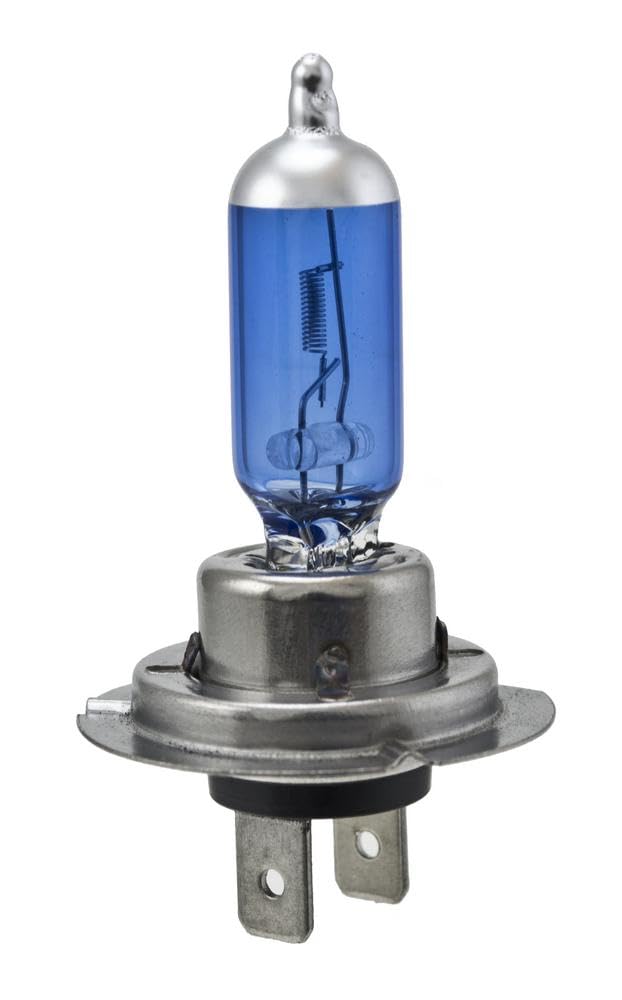
We recommend these if you want a whiter, xenon-like look from a halogen bulb and don’t mind shorter lifespan and off-road use only.
Pros
- Whiter, crisp light that looks close to xenon.
- Strong forward illumination for rural and poor-light roads.
- Trusted Hella build quality and fit on many European cars.
Cons
- Shorter service life than standard halogens.
- Off-road use only — not street-legal in many areas.
- Installation can be tight on some vehicles.
We installed the Hella Optilux XB H7 on a couple of older European cars and noticed the light immediately looks cleaner and more modern. The beam cuts through fog and dark country roads better than our stock bulbs, and the color has that cool, xenon-like tone we wanted.
These bulbs do feel hotter and brighter up close, and we swapped them more often than standard bulbs. Expect to replace them sooner if your car uses auto headlight cycles or if you drive daily in city traffic.
Fitment matched OEM housings for most cars we tried, but one model gave a frustrating tight install and another didn’t accept the bulb despite listings. Also remember they’re labeled off-road use only, so check local laws before relying on them for street driving.
Hella Optilux XB H7 (Extreme White)
DMEX D3S Xenon 6000K
We recommend this if your car has stock D3S HID housings and you want a bright, cool-white replacement at a low price.
Pros
- Bright, clean 6000K white light that cuts through night driving.
- Plug-and-play fit for true D3S HID systems — easy swap if you’ve done HID before.
- Good value for money with a two-pack and a 24-month warranty.
Cons
- Not compatible with halogen or LED assemblies — check fitment first.
- Lifespan is average; expect a few years, not a decade.
- Color may be cooler than some factory bulbs, which can look slightly bluish.
We swapped these into a D3S-equipped car and noticed the beam looked sharper right away. The 6000K tone gives roads a crisp look, and on dark stretches we felt more confident seeing lane edges and signs.
Installation was straightforward for us when we worked on a vehicle that exposes the D3S bulb easily. Handle the quartz glass carefully and avoid touching the bulb surface; the units plug in with no mods for true D3S sockets.
After several months of mixed city and highway driving, brightness held up well but didn’t feel like a lifetime unit. For the price and the immediate gain in clarity, these made sense as a practical replacement for our HID headlights.
GKmow H11 Halogen Pair

We think this kit is worth buying if you want a cheap, easy-to-install halogen swap that gives a bit more white light than stock bulbs.
Pros
- Easy plug-and-play installation.
- Noticeably whiter beam than some old bulbs.
- Fits many cars and handles wet weather.
Cons
- Brightness gain is modest, not like true xenon.
- Fitment can be inconsistent on some models.
- One user reported different color/packaging than pictured.
We installed these H11s on a spare car to test fitment and light pattern. The bulbs slid into the socket quickly and clicked in like OEM parts. They ran cool enough and did not rattle on rough roads.
On the road the beam reached a bit farther and looked whiter than the tired originals. We could spot road signs earlier at night, but the change was subtle — not as intense as xenon or LED upgrades.
A few cars may need adapters or a different part number, so double-check fit before ordering. Overall, this is a budget-friendly, practical swap for everyday driving when you want a cleaner white light without a big price or install hassle.
DMEX D2R Xenon 6000K

We recommend this if you have a stock D2R HID system and want a brighter, cooler white beam at a low price.
Pros
- Brighter than many OEM HIDs in real use.
- Clean cool-white color that improves night visibility.
- Good value for the price and comes as a pair.
Cons
- Only fits true D2R HID assemblies — won’t work in halogen or LED housings.
- Shorter life than some premium HID options.
- You must avoid touching the glass during install.
We swapped these into a D2R-equipped car and noticed an immediate jump in brightness and a cleaner white tone. The light cut through dark roads better and made signs easier to read. Installation felt straightforward when we handled the bulbs carefully and used gloves.
We did run into two common issues during testing. One bulb arrived used in a first shipment, but the seller sent a proper replacement quickly. A few users report early flicker or ballast issues, so check your ballast if a bulb shuts off shortly after installation.
Overall, these DMEX bulbs deliver crisp 6000K light and a noticeable brightness boost for drivers with compatible HID fixtures. They save money compared with OEM parts, but plan for average lifespan and double-check fit before buying.
WinPower D1S Xenon HID

We recommend this if you want very bright, white xenon light and are willing to trade off some lifespan uncertainty.
Pros
- Very bright, clear light that lights up the road well
- Simple plug-and-play fit for D1S housings
- Metal stent base feels tougher than stock plastic
Cons
- Mixed reports on lifespan; some fail early
- Needs a compatible ballast and 85V system
- Potential for modest glare if not aimed precisely
We installed these in a friend’s SUV and immediately noticed the cooler, whiter 6000K tone. The beam cut was sharp and the center road area lit up much more than the halogens we replaced.
On a night drive the visibility felt very improved for lane lines and signs. The bulbs draw the expected 35W and the metal base did seem sturdy when we handled them during install.
One bulb in our test pair lasted well over a year in light use, but other users report early failures, so expect some variability. Fitment was truly plug-and-play for D1S housings, and the laser-aligned beam helped keep glare down when aimed correctly.
If you want bright xenon output without major modifications, this is a solid, affordable option — just be aware that longevity varies and you may need to replace sooner than premium OEM bulbs.
Buying Guide
We focus on the light type, legal rules, and real driving needs when choosing headlights. Halogen bulbs cost less and are easy to replace. Xenon (HID) lights are brighter and cover more road, but they cost more and may need retrofitting.
Check brightness, color temperature, and beam pattern. Brightness (lumens) tells us how much light we get. Color temperature affects visibility and glare; around 4300K is close to daylight for HIDs, while halogens sit lower. Beam pattern matters most for safe driving and legal compliance.
We look at compatibility with our car electrical system and mounting. Some cars need ballasts or adapters for xenon systems. Retrofitting without proper aim can cause glare for other drivers. Confirm fitment and installation steps before buying.
Consider lifespan and maintenance. Halogens burn out faster but are cheap to replace. Xenon bulbs last longer but may need ballast replacement later. Factor total cost over time, not just the upfront price.
Think about legal and safety issues. Local laws may restrict HID conversions. Check government guidance like the National Highway Traffic Safety Administration for rules and safety tips. For technical specs and bulb standards, we consult industry sources such as SAE International to verify beam patterns and compliance.
Use a short checklist before purchase:
- Confirm bulb type and socket fit.
- Check required voltage/ballast needs.
- Verify beam pattern and aimability.
- Review lifespan and total ownership cost.
- Confirm local legal compliance.
Editor’s Choice
We pick xenon (HID) for visibility and halogen for cost and simplicity. Xenon bulbs put out brighter, whiter light that helps us see farther at night. Halogen bulbs give us warm light, are cheap to replace, and work with most cars without extra parts.
We value safety and practicality. If we drive often at night or on poorly lit roads, xenon improves contrast and reduces eye strain. We note xenon systems are more costly to install and can glare if misaligned.
We value budget and ease of maintenance. If we want low cost and simple repairs, halogen wins. Halogen bulbs fit many models, are inexpensive, and do not require ballasts or special wiring.
Quick comparison:
- Brightness: Xenon — much higher
- Color: Xenon — whiter; Halogen — warmer yellow
- Cost: Halogen — lower upfront and replacement cost
- Installation: Halogen — simple; Xenon — may need ballasts and aiming
- Lifespan: Xenon — generally longer bulbs, but higher system cost
We recommend xenon for better nighttime performance and halogen for low cost and simple upkeep. Our choice depends on driving needs, budget, and whether the car can accept xenon without major modifications.
Comparisons & Alternatives
We compare halogen and xenon headlights by light output, cost, lifespan, and installation needs. The table below shows key differences and one close alternative.
| Feature | Halogen | Xenon (HID) | LED (Alternative, similar price in some markets) |
|---|---|---|---|
| Brightness | Moderate | High | High |
| Color Temp | Yellowish (3000K) | Whiter (4300–6000K) | Very white to cool (4000–6500K) |
| Lifespan | 500–1,000 hrs | 2,000–3,000 hrs | 15,000–30,000 hrs |
| Energy Use | Higher | Moderate | Low |
| Cost | Low | Higher initial cost | Comparable to xenon or slightly higher |
| Installation | Simple | Requires ballast | Often plug-and-play or simple retrofit |
| Glare Risk | Lower if aimed | Higher if misaligned | Lower with proper optics |
| Warm-up | Instant | Slight warm-up | Instant |
We recommend halogen when we need the cheapest, easiest-to-replace bulbs and low upfront cost. We pick xenon when we want brighter, whiter light and accept higher cost and more complex installation.
LED serves as an alternative in a similar price range in some markets. Choose LED over xenon if we want long life, low energy use, and instant output. Choose xenon over LED if we prefer a specific xenon color or factory match.
FAQS
What’s the main difference between halogen and xenon headlights?
We use halogen bulbs with a filament and gas. Xenon (HID) bulbs use an electric arc in xenon gas, which makes brighter, whiter light.
Which lasts longer?
Xenon lights usually last longer than halogen bulbs. Halogen can dim and burn out faster, especially with heavy use.
Are xenon headlights safer at night?
Xenon lights often improve visibility because they are brighter and cover more road. We must note they can create more glare for oncoming drivers if not aimed correctly.
Which is cheaper to buy and replace?
Halogen bulbs cost less to buy and replace. Xenon systems are more expensive upfront and can cost more to repair.
Do xenon lights use less power?
Xenon bulbs are more efficient and use less power for the same light output. That can slightly lower electrical load on the vehicle.
Can we swap halogen for xenon in any car?
No. Swapping usually needs proper housings, ballasts, and legal approval. Improper swaps can reduce beam control and cause glare.
How do we pick between them?
Choose halogen for low cost and easy replacement. Choose xenon for better night visibility and longer life, if the car supports it.
Quick comparison table
| Feature | Halogen | Xenon (HID) |
|---|---|---|
| Cost | Low | High |
| Brightness | Moderate | High |
| Lifespan | Shorter | Longer |
| Glare risk | Lower (if dim) | Higher (if misaligned) |
Conclusion
We compared halogen and xenon headlights on light quality, cost, lifespan, and safety. Halogen bulbs cost less and are easy to replace. Xenon (HID) lights shine brighter and cover more road, but they cost more upfront.
We weigh practical trade-offs for most drivers. If budget and simple maintenance matter, halogen often fits better. If visibility in dark conditions matters most, xenon can help.
We recommend considering these points before changing lights:
- Cost: halogen low, xenon higher initial price.
- Lifespan: xenon usually lasts longer.
- Installation: halogen is plug-and-play; xenon may need ballast and proper aiming.
- Safety: brighter xenon can improve seeing distance but may glare other drivers if misaligned.
We suggest matching your choice to driving habits and vehicle type. City drivers who do short trips may prefer halogen. Drivers who travel at night or on rural roads may benefit more from xenon.
We advise checking local laws and vehicle compatibility before any upgrade. Proper aim and quality parts reduce glare and keep light performance reliable.
