

CB radios are simple communication devices that let you talk over short distances using radio waves. This guide explains how CB radios work, from sending signals to receiving messages, making it easy for anyone to understand and use them confidently.
Contents
- 1 Key Takeaways
- 2 Quick Answers to Common Questions
- 3 📑 Table of Contents
- 4 Introduction: The Simple Magic Behind CB Radios
- 5 What Is a CB Radio?
- 6 How CB Radios Transmit and Receive Signals
- 7 The Importance of Channels and Frequencies
- 8 Factors Affecting CB Radio Range
- 9 Practical Tips for Using CB Radios Effectively
- 10 Conclusion: Embrace the Power of CB Radios
- 11 Frequently Asked Questions
- 12 Author
Key Takeaways
- What is a CB Radio: A CB radio is a short-distance, two-way communication device operating on specific radio frequencies.
- How Signals Work: CB radios send and receive radio waves by converting voice into electrical signals.
- Channels and Frequencies: CB radios use 40 standard channels in the 27 MHz band to avoid interference and allow multiple conversations.
- Transmission and Reception: The microphone transmits voice signals, and the speaker receives signals from other radios.
- Range Limits: CB radios typically work up to a few miles, influenced by terrain, antenna quality, and weather.
- Practical Uses: Ideal for truckers, off-roaders, and hobbyists for easy, instant communication without cell service.
- Tips for Effective Use: Proper antenna setup and channel selection improve clarity and range.
Quick Answers to Common Questions
What frequency do CB radios use?
CB radios operate in the 27 MHz frequency band, specifically within 40 channels ranging from 26.965 MHz to 27.405 MHz.
Do I need a license to use a CB radio?
No license is required to use CB radios in most countries, including the United States, making them accessible for everyone.
How far can a CB radio transmit?
Typical CB radio range is 1 to 5 miles, but with good antennas and favorable conditions, it can sometimes reach up to 10-15 miles.
What is the best channel for emergencies?
Channel 9 is designated as the emergency channel for CB radios and should be used to call for help or report emergencies.
Can weather affect CB radio performance?
Yes, weather like rain, fog, or storms can affect CB radio signal quality and range, sometimes causing interference or reduced clarity.
📑 Table of Contents
Introduction: The Simple Magic Behind CB Radios
If you’ve ever wondered how truckers chat on the road or why off-roaders love their radios, you’ve likely encountered CB radios. These handy devices have been around for decades, offering a reliable way to communicate without relying on cell phones or the internet.
But how exactly do CB radios work? Despite sounding technical, the process is quite straightforward. This article breaks down the fundamentals of CB radios in a friendly way, so you can understand and use them with ease.
What Is a CB Radio?
Understanding CB Radio Basics
CB stands for Citizens Band, a portion of the radio spectrum reserved for public use. CB radios operate on 40 channels within the 27 MHz frequency range, allowing people to send and receive messages over short distances.
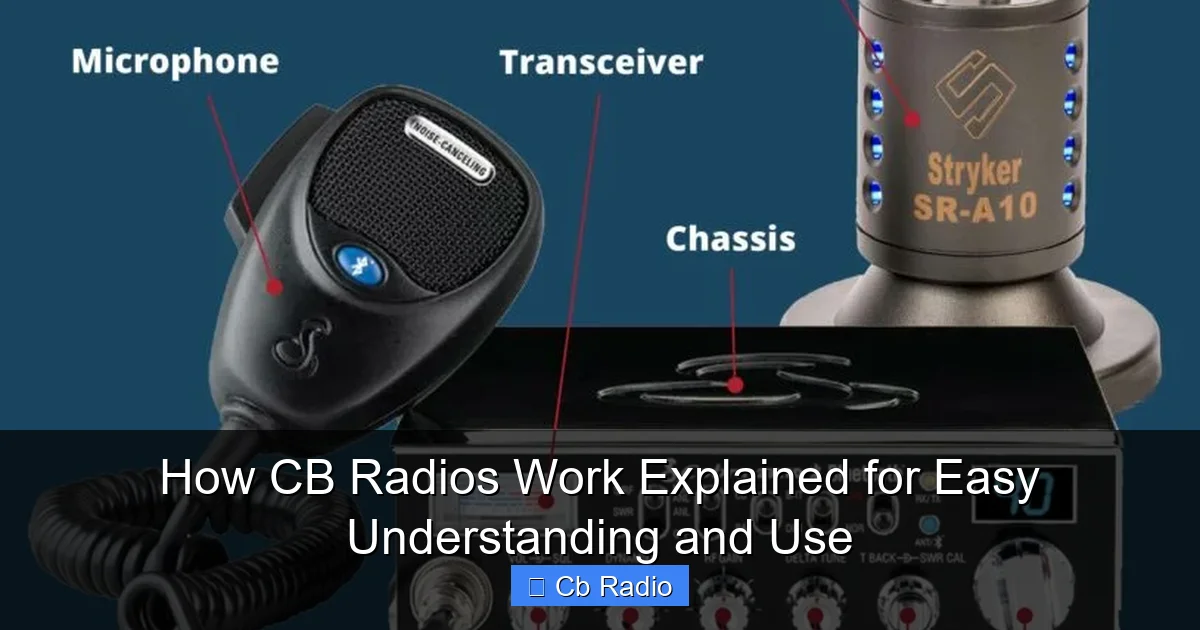
Visual guide about How CB Radios Work Explained for Easy Understanding and Use
Image source: strykerradios.com
Unlike ham radios, CB radios require no license, making them accessible for casual users, truckers, and hobbyists. They’re compact, easy to operate, and perfect for communicating in areas without cell coverage.
Why People Use CB Radios
CB radios are popular because they provide instant communication. Whether you’re coordinating a convoy, checking road conditions, or just chatting, CB radios let you connect quickly and easily. Plus, their simplicity means you don’t need technical skills to get started.
How CB Radios Transmit and Receive Signals
The Transmission Process
When you speak into the microphone, your voice creates sound waves. The radio converts these sound waves into electrical signals. These signals modulate a radio frequency carrier wave, which the radio’s transmitter sends out as radio waves through the antenna.
The Reception Process
On the receiving end, the antenna picks up radio waves sent by other CB radios. The radio converts the radio waves back into electrical signals, then into sound waves you hear through the speaker. This back-and-forth process happens almost instantly.
Understanding Modulation
CB radios use a method called amplitude modulation (AM), where the strength of the radio wave changes to carry the voice signal. Some newer models also use single sideband (SSB) technology for clearer, longer-range communication.
The Importance of Channels and Frequencies
The 40 Standard Channels
CB radios operate on 40 channels, each assigned a specific frequency between 26.965 MHz and 27.405 MHz. Each channel helps reduce interference by letting users switch to a clear frequency.
Choosing the Right Channel
Some channels have special uses. For instance, channel 9 is traditionally used for emergencies, while channel 19 is popular among truckers. Picking the right channel depends on your location and communication needs.
Legal Restrictions
CB radios have power limits (usually 4 watts for AM and 12 watts for SSB) to minimize interference with other services. Staying within these limits is important to comply with regulations and keep communications clear.
Factors Affecting CB Radio Range
Typical Communication Distance
CB radios generally work over distances of 1 to 5 miles under normal conditions. However, this range can increase or decrease based on several factors.
Terrain and Obstacles
Hills, buildings, and trees can block radio signals, reducing range. For example, a flat open road allows longer communication, while urban areas may limit it significantly.
Antenna Quality and Placement
A good antenna is key. Mounting it high and using a quality antenna can boost signal strength and extend your range. Many users invest in aftermarket antennas for better performance.
Weather Conditions
Weather can play a role too. Rain, fog, and atmospheric conditions sometimes affect how far your signal travels.
Practical Tips for Using CB Radios Effectively
Setting Up Your CB Radio
Place your radio in a spot where it’s easy to reach. Connect a quality antenna outside or on the roof for best results. Make sure your power source is stable to avoid interruptions.
Choosing Channels Wisely
Avoid crowded channels to reduce noise. Use channel 19 for highway communication or switch to less busy channels when off-road or in a group.
Speaking Clearly
Hold the microphone 1-2 inches from your mouth. Speak clearly and slowly to improve reception. Avoid shouting, which can distort the signal.
Respecting CB Etiquette
Keep your conversations short and respectful. Avoid profanity and personal attacks to maintain a friendly community on the airwaves.
Conclusion: Embrace the Power of CB Radios
CB radios are simple yet powerful tools for communication. Understanding how they work helps you get the most out of your radio, whether you’re a trucker, off-roader, or radio enthusiast. By knowing the basics of transmission, channels, and range, you can use your CB radio confidently and connect with others instantly.
So next time you tune in, remember the fascinating technology behind those simple conversations. With a bit of practice and the right setup, you’ll enjoy clear, reliable communication wherever you go.
Frequently Asked Questions
How do CB radios convert my voice into radio signals?
Your voice creates sound waves picked up by the microphone. The radio converts these sound waves into electrical signals, which modulate radio frequency waves sent out by the antenna.
Why are there 40 channels on a CB radio?
The 40 channels help users avoid interference by providing multiple frequencies to communicate on. Different channels can be used for different groups or purposes.
What is the difference between AM and SSB in CB radios?
AM (Amplitude Modulation) is the standard mode for most CB radios. SSB (Single Side Band) offers clearer audio and longer range but requires a more complex radio setup.
Can I use a CB radio inside my car?
Yes, most CB radios are designed for vehicle use. With the right antenna mounted on your vehicle, you can communicate effectively while driving.
What should I do if my CB radio has poor reception?
Check your antenna connections and placement first. Moving the antenna higher or upgrading to a better antenna often improves reception significantly.
Are there any rules for CB radio communication?
Yes, users should follow etiquette like avoiding profanity, not monopolizing channels, and respecting emergency channels to ensure smooth communication for everyone.