

Curious about how far a CB radio can transmit? The range varies widely depending on factors like terrain, antenna type, and power output. Understanding these elements can help you get the most out of your CB radio and communicate effectively over longer distances.
Contents
- 1 Key Takeaways
- 2 Quick Answers to Common Questions
- 3 📑 Table of Contents
- 4 Introduction: Understanding CB Radio Range
- 5 How CB Radio Works: A Quick Overview
- 6 Factors Affecting CB Radio Transmission Distance
- 7 Typical Range Expectations for CB Radio
- 8 Tips to Maximize Your CB Radio Range
- 9 Common Misconceptions About CB Radio Range
- 10 Conclusion: Realistic Expectations and Enjoying Your CB Radio
- 11 Frequently Asked Questions
- 12 Author
Key Takeaways
- Range varies greatly: CB radio transmission can range from a few miles to over 20 miles depending on conditions.
- Terrain influences range: Hills, buildings, and trees can block or weaken signals.
- Antenna quality matters: A good antenna setup significantly increases transmission distance.
- Power output is limited: CB radios are legally capped at 4 watts, affecting how far signals travel.
- Atmospheric conditions help: Certain weather phenomena can boost CB radio range temporarily.
- Line of sight is key: Clear, unobstructed paths between radios maximize communication distance.
- Proper setup improves performance: Positioning and tuning your equipment can extend your CB radio’s reach.
Quick Answers to Common Questions
How far can a CB radio transmit on average?
Typically, CB radios transmit between 1 to 20 miles depending on terrain, antenna, and conditions.
Does the antenna affect CB radio range?
Yes, a good antenna and proper placement can significantly extend your CB radio’s transmission distance.
Can weather affect CB radio transmission?
Yes, certain atmospheric conditions like temperature inversion can temporarily increase CB radio range.
What is the maximum legal power output for CB radios?
The maximum legal power is 4 watts for AM and 12 watts for SSB transmissions.
Is SSB better for longer range on CB radios?
Yes, Single Side Band (SSB) is more efficient and can increase your effective communication distance.
📑 Table of Contents
- Introduction: Understanding CB Radio Range
- How CB Radio Works: A Quick Overview
- Factors Affecting CB Radio Transmission Distance
- Typical Range Expectations for CB Radio
- Tips to Maximize Your CB Radio Range
- Common Misconceptions About CB Radio Range
- Conclusion: Realistic Expectations and Enjoying Your CB Radio
Introduction: Understanding CB Radio Range
CB radio, or Citizens Band radio, is a beloved communication tool for truckers, hobbyists, and emergency responders. But one common question many ask is, how far can CB radio transmit? The answer isn’t simple because the transmission range depends on many factors. It’s not just about how powerful your radio is but also about your antenna, environment, and even the weather.
In this article, we’ll explore the real range limits of CB radio. Whether you’re a beginner wondering if your radio can reach the next town or a seasoned user aiming to optimize your setup, this guide will give you clear, practical insights. Let’s dive into what affects CB radio distance and how you can maximize your communication reach.
How CB Radio Works: A Quick Overview
What Is CB Radio?
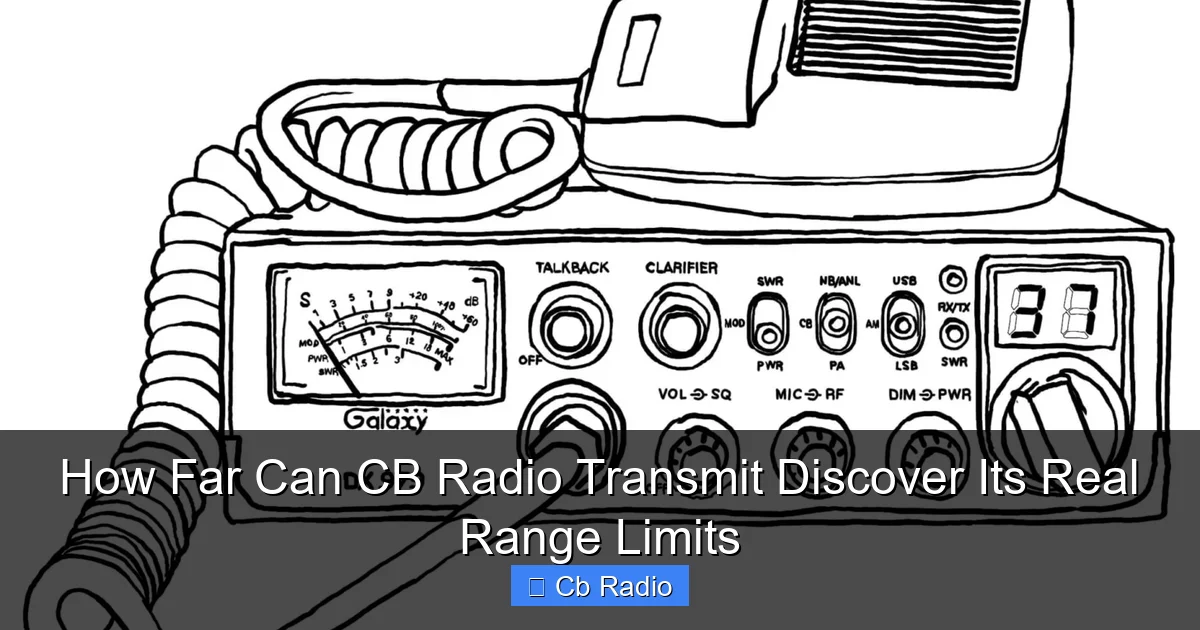
CB radio operates on 40 shared channels in the 27 MHz (11-meter) band. It allows short-distance person-to-person voice communication without a license in many countries. Because of its ease of use and legal status, CB radios are popular for personal and commercial use.
Visual guide about How Far Can CB Radio Transmit Discover Its Real Range Limits
Image source: radiopicker.com
Power and Frequency Limits
Legally, CB radios are limited to a maximum of 4 watts of power for AM transmission and 12 watts for SSB (Single Side Band). This power cap is important because it limits how far your signal can travel. Unlike ham radios, CB radios do not require licensing but have these restrictions to minimize interference.
Factors Affecting CB Radio Transmission Distance
Terrain and Physical Obstacles
CB radio waves travel primarily by line of sight. Hills, buildings, trees, and mountains can block or reflect signals. In flat, open areas like deserts or plains, CB radios can transmit much farther than in urban or mountainous environments.
Antenna Type and Placement
The antenna is often the most critical factor in determining range. A well-installed, high-quality antenna mounted as high as possible can dramatically increase your CB radio’s reach. For example, a 4-foot whip antenna on a truck roof usually outperforms a small handheld antenna.
Power Output and Modulation
While power is limited, using Single Side Band (SSB) mode can effectively increase your transmission range because it uses power more efficiently than standard AM. Many users find that switching to SSB can double or triple their communication distance.
Atmospheric and Environmental Conditions
Weather phenomena like temperature inversions or solar activity can enhance CB radio range temporarily. This effect, called “skip,” allows signals to bounce off the ionosphere and travel hundreds of miles under the right conditions.
Typical Range Expectations for CB Radio
Short Range: 1-5 Miles
In urban or heavily wooded areas, expect a range of 1 to 5 miles. Buildings, trees, and other obstacles absorb and scatter radio waves, limiting effective communication.
Medium Range: 5-15 Miles
On highways, rural roads, or flat terrains, you can typically achieve 5 to 15 miles of clear communication, especially with a good antenna and SSB mode.
Long Range: 15-20+ Miles
With optimal conditions, including high antenna placement, SSB use, and open terrain, ranges of 20 miles or more are possible. Some users report even farther distances during skip conditions, but that’s not reliable for everyday use.
Tips to Maximize Your CB Radio Range
Invest in a Quality Antenna
Choose a well-made antenna designed for CB frequencies. Consider a longer whip or a base station antenna for the best results.
Elevate Your Antenna
Mount your antenna as high as you can. On vehicles, the roof or a tall mast is ideal. For home stations, place antennas on rooftops or towers.
Use SSB Mode
If your CB radio supports SSB, use it. It’s more power-efficient and can boost your effective range.
Minimize Interference
Avoid placing your radio near other electronics that can cause noise. Also, use quality coax cables and maintain good connections.
Check Weather and Time
Try operating during times when atmospheric conditions favor longer-distance communications, such as early morning or late afternoon.
Common Misconceptions About CB Radio Range
“CB Radios Can Talk Across States”
While skip conditions can allow this occasionally, typical CB radio range is much shorter. Don’t expect reliable statewide communication with standard setups.
“More Power Means More Range”
Legal restrictions limit power output, and simply increasing power beyond legal limits can cause interference and is illegal. Instead, focus on antenna and setup improvements.
Conclusion: Realistic Expectations and Enjoying Your CB Radio
Understanding how far can CB radio transmit helps set realistic expectations. Most users achieve between 1 and 20 miles depending on their environment and equipment. By optimizing your antenna, choosing the right mode, and considering terrain and weather, you can maximize your communication range effectively.
Remember, CB radio is a fun, reliable way to stay connected locally. Whether you’re on the road, at a job site, or enjoying a hobby, knowing your radio’s range limits helps you communicate smarter and enjoy the CB experience fully.
Frequently Asked Questions
Why does terrain impact CB radio range?
CB radio waves travel mostly by line of sight. Hills, buildings, and trees can block or weaken signals, reducing range.
Can I increase my CB radio power beyond legal limits for better range?
No, exceeding legal power limits is illegal and can cause interference. Instead, improve your antenna and setup.
How high should I mount my CB antenna?
The higher, the better. Mounting your antenna on your vehicle’s roof or a tall mast at home maximizes line of sight and range.
What is “skip” and how does it affect CB range?
Skip is when radio waves bounce off the ionosphere, extending range hundreds of miles. It’s rare and unpredictable for CB radios.
Does using a mobile CB radio affect range compared to a base station?
Base stations usually have better antennas and power supplies, giving them longer range than mobile units.
Are CB radios good for emergency communication over long distances?
CB radios are useful locally, but their limited range means they’re not reliable for long-distance emergency communication.