

CB radios typically have 40 channels available for communication, each serving different purposes and regulations. Understanding these channels helps users communicate clearly and legally. This article explains the number of channels, their uses, and tips to get started with CB radios.
Contents
- 1 Key Takeaways
- 2 Quick Answers to Common Questions
- 3 📑 Table of Contents
- 4 Introduction
- 5 How Many Channels Does a CB Radio Have?
- 6 Understanding CB Radio Channels and Frequencies
- 7 Popular CB Radio Channels and Their Uses
- 8 How to Choose the Right Channel for Your CB Radio
- 9 Tips for Using CB Radio Channels Effectively
- 10 Conclusion
- 11 Frequently Asked Questions
- 12 Author
Key Takeaways
- Standard CB radios have 40 channels: These channels are designated for specific uses and follow FCC regulations.
- Channels cover different frequencies: Each channel is assigned a unique frequency in the 27 MHz band.
- Channel 9 is reserved for emergencies: It is monitored by emergency services and should only be used in urgent situations.
- Channel 19 is popular with truckers: It’s commonly used for general communication on highways.
- Some radios offer additional channels: Multi-mode or licensed radios may have more than 40 channels.
- Understanding channel use improves communication: Knowing which channels to use avoids interference and keeps conversations clear.
- Proper antenna setup enhances channel performance: A good antenna ensures better range and signal quality across channels.
Quick Answers to Common Questions
How many channels does a standard CB radio have?
Standard CB radios have 40 channels available for communication.
What is Channel 9 used for on a CB radio?
Channel 9 is reserved for emergency communication and should only be used in urgent situations.
Why is Channel 19 popular among truckers?
Channel 19 is commonly used on highways for general communication and traffic updates among truck drivers.
Can CB radios have more than 40 channels?
Some specialized or licensed radios may have more channels, but standard CB radios typically have only 40.
How can I avoid interference when using CB radio channels?
Listen before speaking, choose less busy channels, and respect channel etiquette to avoid interference.
📑 Table of Contents
Introduction
If you’ve ever wondered, “how many channels does a CB radio have?” you’re not alone. CB radios are a popular way for people to communicate over short distances, especially among truckers, hobbyists, and off-roaders. But understanding how many channels are available and what each channel is used for can be confusing at first.
In this article, we’ll break down the number of channels on a CB radio, explain what each channel is for, and share tips on how to use your CB radio effectively. Whether you’re new to CB radios or just curious, this guide will clear things up for you.
How Many Channels Does a CB Radio Have?
The Standard 40 Channels
Most CB radios sold today come equipped with 40 channels. These channels are part of the Citizens Band Radio Service (CBRS) regulated by the Federal Communications Commission (FCC) in the United States. Each channel corresponds to a specific frequency within the 27 MHz band.
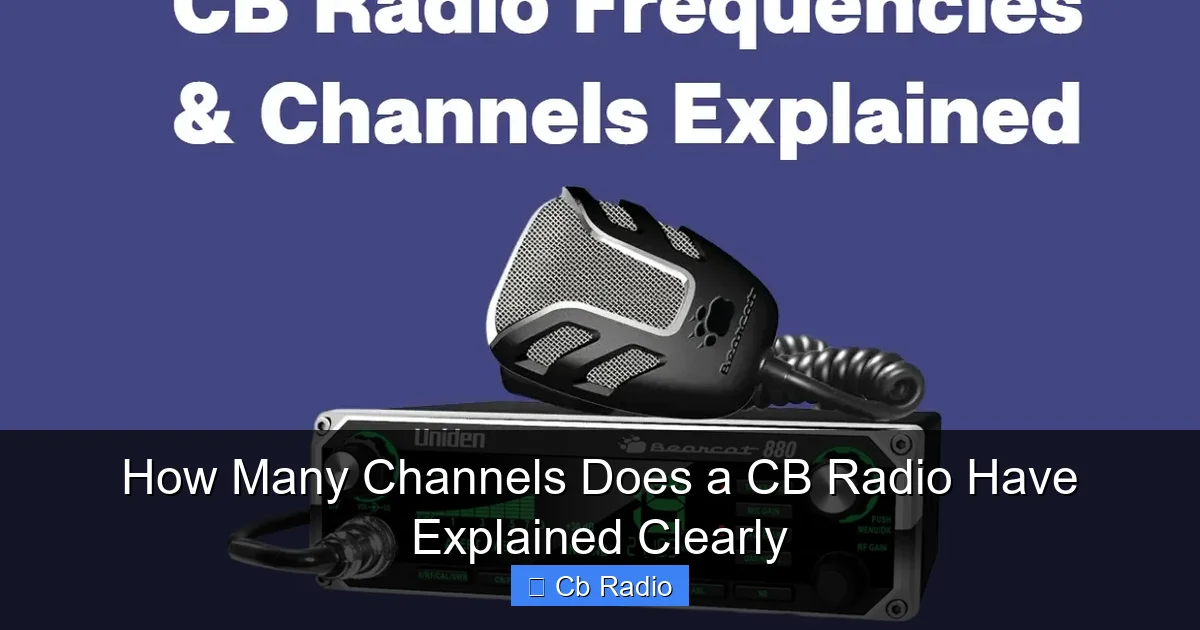
Visual guide about How Many Channels Does a CB Radio Have Explained Clearly
Image source: savenetradio.org
The 40-channel setup has been the industry standard since the early 1970s. Before that, CB radios had fewer channels, but the increase to 40 gave users more options to communicate without interference.
Additional Channels and Modes
While 40 channels are standard, some CB radios can have more channels—up to 80 or more—if they include additional modes like SSB (Single Side Band) or if they’re designed for licensed services. However, these additional channels are less common and often require special licenses or equipment.
Understanding CB Radio Channels and Frequencies
Frequency Range of CB Channels
CB radio channels operate between 26.965 MHz and 27.405 MHz. Each channel is spaced 10 kHz apart. For example, Channel 1 is at 26.965 MHz, Channel 2 is at 26.975 MHz, and so on, up to Channel 40 at 27.405 MHz.
Channel Purposes and Designations
Not all channels are used the same way. Some channels are reserved for specific uses:
- Channel 9: Reserved for emergency communication.
- Channel 19: Popular for highway and trucking communication.
- Channels 1-8 and 10-40: Used for general communication and personal use.
Popular CB Radio Channels and Their Uses
Channel 9: The Emergency Channel
Channel 9 is designated as an emergency channel. It is monitored by emergency services, and users are encouraged to only use this channel for urgent situations. This helps ensure that emergency messages get through without interference.
Channel 19: The Trucker’s Channel
Channel 19 is widely used by truck drivers and road travelers. It’s a go-to channel for highway conditions, traffic updates, and casual chat among drivers. If you’re driving on the road and want to listen in or talk, Channel 19 is a great choice.
Other Common Channels
Channels 1 through 8 and 10 through 40 are often used for local communication. Hikers, off-roaders, and CB hobbyists use these channels to avoid busy frequencies like 19. Sometimes, local groups agree on a channel to keep communication organized.
How to Choose the Right Channel for Your CB Radio
Consider Your Location and Purpose
Choosing the right channel depends on where you are and why you’re using the CB radio. If you’re on a highway, Channel 19 is best. For emergencies, Channel 9 is the one to know. For local or private communication, try other channels to avoid interference.
Check Local Regulations
Some regions may have specific guidelines about channel use. It’s important to check local laws to ensure you’re using your CB radio legally and ethically.
Experiment and Listen First
Before starting a conversation, listen to see which channels are busy. If a channel is crowded, try switching to a quieter one. This helps keep communication clear and prevents disturbing ongoing conversations.
Tips for Using CB Radio Channels Effectively
Use Clear Language and Keep It Brief
When talking on a CB radio, speak clearly and keep your messages short. This helps others understand you and keeps the channel free for more users.
Respect Channel Etiquette
Avoid monopolizing a channel. If the channel is busy, wait your turn or switch to another channel. Also, avoid using Channel 9 unless it’s an emergency.
Invest in a Good Antenna
A quality antenna can make a big difference in how well your CB radio performs across all channels. Proper antenna placement and tuning can increase your range and signal clarity.
Conclusion
So, how many channels does a CB radio have? The straightforward answer is 40 channels on a standard CB radio. These channels offer a range of frequencies for various uses, from emergency communication to casual chatting on the highway. Knowing which channels to use and how to use them can make your CB radio experience much more enjoyable and effective.
Whether you’re a trucker, a hobbyist, or just curious, understanding CB channels helps you communicate clearly and responsibly. Remember to listen first, use the right channel for your needs, and always respect CB radio etiquette. With these tips, you’ll get the most out of your CB radio and its 40 channels.
Frequently Asked Questions
Are all CB radio channels legal to use?
Yes, all 40 channels on a standard CB radio are legal to use within FCC guidelines, except Channel 9 which is reserved for emergencies.
What frequency band do CB radios operate on?
CB radios operate on the 27 MHz band, with channels spaced 10 kHz apart between 26.965 MHz and 27.405 MHz.
Do I need a license to use a CB radio?
No license is required to operate a standard CB radio in the United States, as long as you follow FCC rules.
Can I communicate with anyone on any channel?
You can communicate with anyone tuned to the same channel, but it’s best to use channels appropriate for your location and purpose.
What is SSB on some CB radios?
SSB stands for Single Side Band, a mode that allows longer range communication by using a different type of signal modulation.
How can I improve my CB radio signal on all channels?
Using a good-quality antenna, placing it properly, and tuning it to the correct frequency improves signal strength and clarity across all channels.