

CB radio operates within a specific frequency range measured in MHz, typically around 27 MHz. Understanding how many MHz CB radio uses helps users optimize communication and comply with regulations. This guide breaks down CB radio frequencies and offers practical tips for effective use.
Contents
- 1 Key Takeaways
- 2 Quick Answers to Common Questions
- 3 📑 Table of Contents
- 4 Introduction to CB Radio Frequency
- 5 What Is the Frequency Range of CB Radio?
- 6 How Many MHz Does CB Radio Use in Practice?
- 7 Factors Affecting CB Radio Frequency and Range
- 8 Practical Tips for Optimizing CB Radio Use
- 9 The Future of CB Radio Frequencies
- 10 Conclusion
- 11 Frequently Asked Questions
- 12 Author
Key Takeaways
- CB radio frequency: CB radios operate primarily in the 27 MHz band.
- Channel allocation: CB radios use 40 channels within this frequency range.
- Range impact: Frequency affects signal range and clarity.
- Legal limits: Regulations restrict power and frequency usage to prevent interference.
- Practical use: CB radios are popular for personal and professional short-distance communication.
- Interference factors: Terrain, weather, and equipment quality influence CB radio performance.
- Frequency knowledge: Knowing the MHz range helps users troubleshoot and optimize their radios.
Quick Answers to Common Questions
How many MHz is a CB radio?
CB radio operates around 27 MHz, specifically between 26.965 MHz and 27.405 MHz.
How many channels does a CB radio have?
CB radios typically have 40 channels within the 27 MHz frequency band.
Can CB radio frequencies be changed beyond 27 MHz?
No, CB radios are designed to operate only within the 27 MHz frequency range set by regulations.
Does the MHz frequency affect CB radio range?
Yes, the 27 MHz frequency band allows for moderate range, but terrain and power also impact signal distance.
Are there any legal power limits for CB radios on 27 MHz?
Yes, in the U.S., CB radios are limited to 4 watts AM and 12 watts SSB power output within the 27 MHz band.
📑 Table of Contents
Introduction to CB Radio Frequency
Have you ever wondered, how many MHz is CB radio? If you’re new to CB radios or just curious, understanding the frequency range is key. CB radio, or Citizens Band radio, is a popular communication tool used by truckers, hobbyists, and emergency responders. It operates on a specific set of frequencies measured in megahertz (MHz), allowing users to talk over short distances without the need for a license.
In this article, we’ll explore the exact frequency range of CB radio, why it matters, and how it influences your communication experience. Whether you’re thinking about buying a CB radio or just want to get the most out of your current setup, this guide will help you understand the MHz behind CB radio.
What Is the Frequency Range of CB Radio?
The Standard CB Radio Frequency Band
CB radio operates within the 27 MHz frequency range, specifically from 26.965 MHz to 27.405 MHz. This range is divided into 40 channels, each spaced 10 kHz apart. For example, Channel 1 is at 26.965 MHz, Channel 2 at 26.975 MHz, and so on, up to Channel 40 at 27.405 MHz.
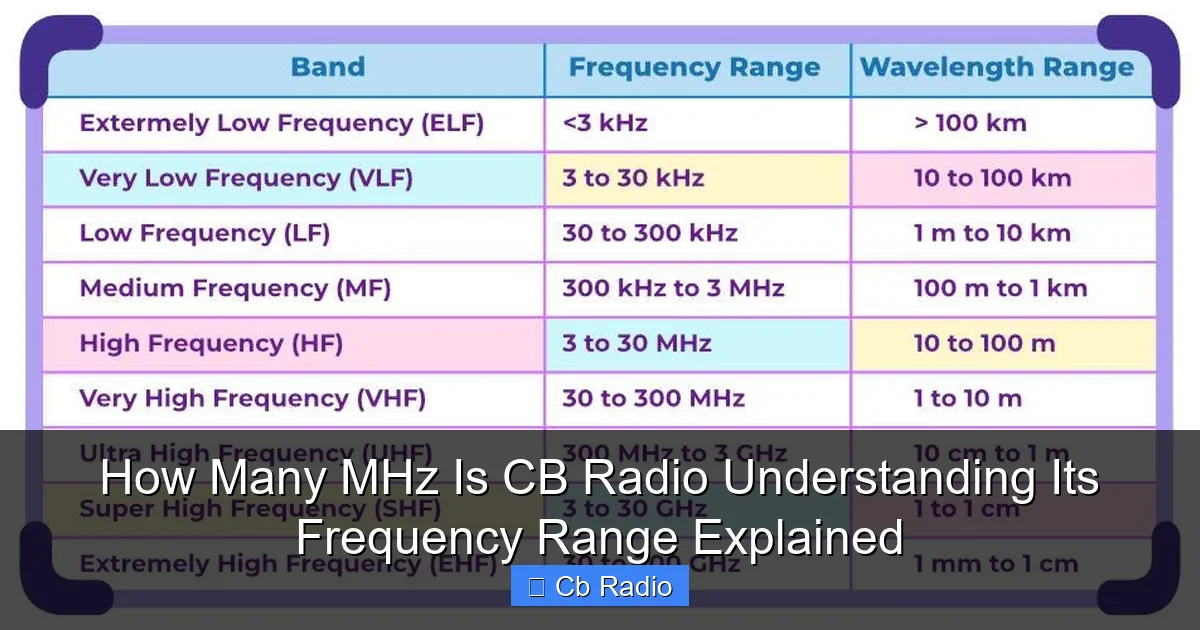
Visual guide about How Many MHz Is CB Radio Understanding Its Frequency Range Explained
Image source: media.geeksforgeeks.org
This frequency band is part of the High Frequency (HF) spectrum, which allows radio waves to travel longer distances than VHF or UHF frequencies, especially under favorable conditions.
Why 27 MHz?
The choice of 27 MHz for CB radio dates back to the 1940s and 1950s when the FCC allocated this frequency band for personal use. The 27 MHz band provides a good balance between range, antenna size, and equipment cost. Lower frequencies would require larger antennas, while higher frequencies would reduce range and penetration.
How Many MHz Does CB Radio Use in Practice?
Channel Frequencies Explained
While CB radios operate within a 440 kHz range (26.965 MHz to 27.405 MHz), the effective use breaks down into 40 discrete channels. Each channel represents a specific frequency within this band. So, when you tune your CB radio to Channel 19, for example, you’re operating at 27.185 MHz.
Continuous vs. Discrete Frequencies
CB radios use discrete channels rather than continuous frequency tuning. This means users select predefined frequencies spaced evenly across the 27 MHz band, which simplifies communication and reduces interference.
Factors Affecting CB Radio Frequency and Range
Power Limitations and Legal Restrictions
The FCC limits CB radios to 4 watts of power for AM (Amplitude Modulation) and 12 watts for SSB (Single Side Band) transmissions. This power cap ensures that CB radio signals stay within the intended 27 MHz range and do not interfere with other radio services.
Environmental Influences on Frequency Performance
Even though CB radios operate at fixed frequencies in the 27 MHz range, the actual communication range can vary greatly. Terrain, atmospheric conditions, and obstacles like buildings or hills can affect how far the signal travels.
- Flat open areas: Can allow CB radio signals to travel up to 20 miles or more.
- Urban environments: Signal range is often reduced due to interference and obstructions.
- Weather conditions: Certain atmospheric layers can reflect or absorb radio waves, affecting range.
Practical Tips for Optimizing CB Radio Use
Using the Right Channel
Knowing the MHz behind your CB radio channels can help you pick the best one for your needs. For example, Channel 19 (27.185 MHz) is commonly used by truckers for highway communication. Using popular channels can help you connect with more users but may also lead to congestion.
Improving Signal Quality
To maximize your CB radio’s effectiveness within the 27 MHz frequency band, consider the following tips:
- Use a quality external antenna tuned to 27 MHz for better signal strength.
- Place your antenna as high and clear of obstructions as possible.
- Ensure your radio is properly grounded to reduce noise.
- Use the SSB mode when possible for longer range at the same power level.
Understanding Interference and Frequency Overlap
CB radio frequencies sometimes overlap with other radio services or experience interference from electronic devices. Being aware of this can help you troubleshoot issues and select the clearest channel in the 27 MHz range.
The Future of CB Radio Frequencies
Technological Advances
While the 27 MHz frequency range remains standard, advances in digital modulation and improved radio designs are enhancing CB radio performance. Modern radios may offer clearer sound, better noise reduction, and extended features while still operating within the same MHz band.
Regulatory Considerations
CB radio frequency allocations are governed by national and international regulations. As communication technology evolves, these rules may change, but the 27 MHz band has remained a constant for decades due to its effectiveness for short-range communication.
Conclusion
In summary, CB radio operates within the 27 MHz frequency range, specifically from 26.965 MHz to 27.405 MHz, divided into 40 channels. Understanding how many MHz CB radio uses helps you choose the right channel, optimize your equipment, and improve communication. Despite some limitations, CB radios remain a valuable and accessible communication tool for many users.
By keeping these frequency details in mind, you can get the most out of your CB radio experience, whether you’re on the road, at an event, or just chatting with friends.
Frequently Asked Questions
What does MHz mean in CB radio?
MHz stands for megahertz, a unit that measures frequency. In CB radio, it indicates the radio waves’ frequency used for communication, typically around 27 MHz.
Why is CB radio limited to the 27 MHz frequency range?
The 27 MHz band was allocated by regulatory bodies like the FCC to provide a standardized frequency range for personal and business communication without interference from other radio services.
Can I use any antenna for a CB radio at 27 MHz?
It’s best to use an antenna designed for 27 MHz to ensure proper tuning and effective signal transmission. Using the wrong antenna can reduce range and clarity.
What factors affect CB radio performance besides MHz frequency?
Power output, antenna quality, terrain, weather, and interference from other electronic devices all impact CB radio performance.
Is CB radio still relevant with modern communication methods?
Yes, CB radio remains popular for short-range communication, especially in trucking, off-roading, and emergency situations where cell service may be unreliable.
Can I legally modify my CB radio to operate outside 27 MHz?
No, modifying a CB radio to operate outside the 27 MHz range is illegal and can cause interference with other critical communication services.