

Wondering how much power a CB radio uses? A typical CB radio consumes between 4 to 15 watts of power during transmission and much less when receiving. Understanding power use helps you manage battery life and choose the right setup for your needs. This guide breaks down the power requirements, factors affecting usage, and practical tips for efficient operation.
Contents
- 1 Key Takeaways
- 2 Quick Answers to Common Questions
- 3 📑 Table of Contents
- 4 How Much Power Does a CB Radio Use? Find Out the Facts
- 5 Understanding CB Radio Power Consumption
- 6 Typical Power Ratings of CB Radios
- 7 Factors Affecting CB Radio Power Usage
- 8 Practical Tips to Manage CB Radio Power Usage
- 9 How to Calculate Battery Life for Your CB Radio
- 10 Choosing the Right Power Setup for Your CB Radio
- 11 Conclusion
- 12 Frequently Asked Questions
- 13 Author
Key Takeaways
- Power Consumption Varies: CB radios use more power when transmitting (up to 15 watts) and less when receiving (around 0.5 to 1 watt).
- Typical Voltage: Most CB radios operate on 12 volts DC, common in vehicles and portable setups.
- Battery Life Impact: Knowing power use helps you estimate how long your battery will last during operation.
- Transmission vs Reception: Transmitting consumes significantly more power than listening or standby mode.
- Power Saving Tips: Using lower power settings and limiting transmit time can extend battery life.
- External Power Sources: Many CB radios can connect to vehicle batteries or external power packs for longer use.
- Installation Matters: Proper wiring and quality power supplies ensure efficient power use and reliable operation.
Quick Answers to Common Questions
How much power does a CB radio use while transmitting?
Typically, a CB radio uses between 4 to 15 watts of power when transmitting, depending on the mode and power setting.
What is the power consumption of a CB radio when receiving?
Receiving mode uses much less power, usually under 1 watt, often around 0.5 watts or less.
Can I run a CB radio on a 12V battery?
Yes, most CB radios operate on 12 volts DC, making a 12V battery an ideal power source.
How does lowering the power output affect battery life?
Lowering power output reduces power consumption, which extends battery life but may reduce transmission range.
Is it better to use a vehicle battery or a portable battery for a CB radio?
Vehicle batteries are convenient for mobile use, while portable batteries offer flexibility for off-grid or stationary operation.
📑 Table of Contents
- How Much Power Does a CB Radio Use? Find Out the Facts
- Understanding CB Radio Power Consumption
- Typical Power Ratings of CB Radios
- Factors Affecting CB Radio Power Usage
- Practical Tips to Manage CB Radio Power Usage
- How to Calculate Battery Life for Your CB Radio
- Choosing the Right Power Setup for Your CB Radio
- Conclusion
How Much Power Does a CB Radio Use? Find Out the Facts
If you’ve ever wondered about the power consumption of a CB radio, you’re not alone. Whether you’re a trucker, a hobbyist, or simply someone interested in two-way communication, understanding how much power a CB radio uses is essential. It affects battery life, setup choices, and overall efficiency. In this article, we’ll break down everything you need to know about CB radio power usage in a simple, friendly way.
CB radios are popular because they provide reliable communication without a lot of fuss. But power consumption varies depending on how you use the radio, the model, and the power settings. Let’s dive into the details to help you manage your radio’s power wisely.
Understanding CB Radio Power Consumption
What Is Power Consumption in CB Radios?
Power consumption refers to the amount of electrical energy a CB radio uses to operate. It’s usually measured in watts (W) or amperes (A) at a certain voltage, typically 12 volts DC, which is common in vehicles.
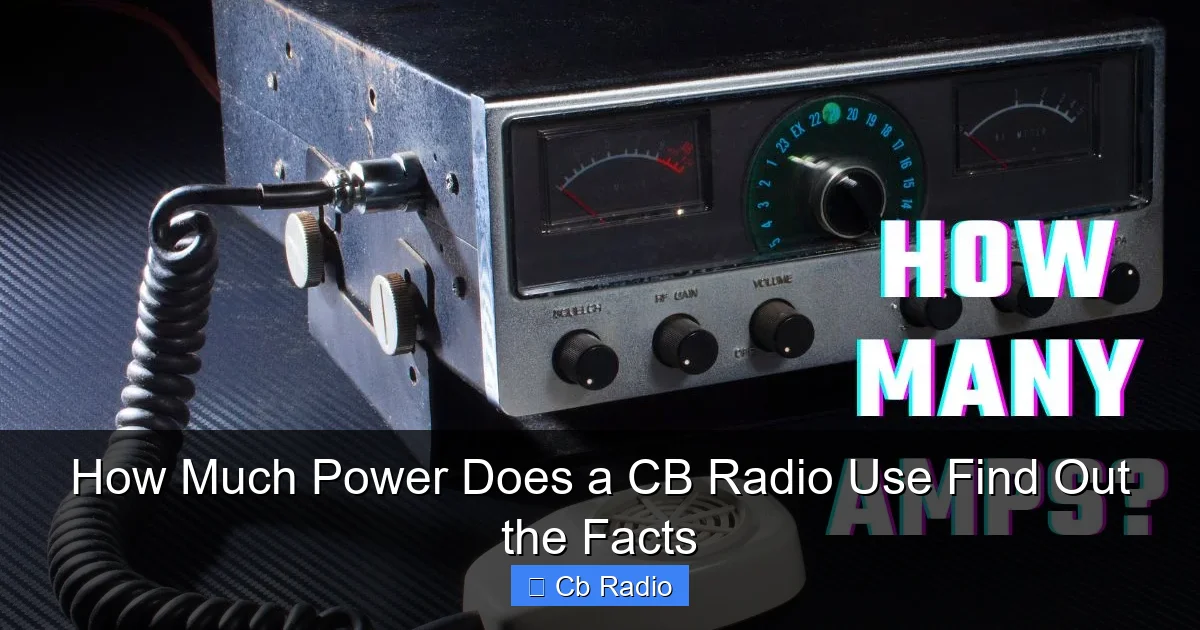
Visual guide about How Much Power Does a CB Radio Use Find Out the Facts
Image source: radiofidelity.com
Transmit vs Receive Power Usage
The biggest difference in power usage comes from whether the radio is transmitting or just receiving. When you talk (transmit), the radio uses significantly more power than when it’s just listening.
- Transmit mode: Can draw anywhere from 4 to 15 watts, depending on the radio’s power setting and output.
- Receive mode: Typically uses less than 1 watt, often around 0.5 watts or less.
Why Does Transmitting Use More Power?
When you transmit, the radio sends out radio frequency (RF) signals generated by the power amplifier inside the unit. This amplifier requires much more energy compared to the basic circuitry used for receiving.
Typical Power Ratings of CB Radios
Standard Power Output
Most CB radios have a maximum output power of 4 watts for AM and up to 12–15 watts for SSB (Single Side Band) mode. The FCC limits AM transmissions to 4 watts, but SSB can legally use more power.
Power Draw from the Vehicle Battery
Since CB radios often run on 12V DC, they usually draw around 1 to 5 amps while transmitting depending on output power. For example:
- At 4 watts output, a radio might draw about 1.5 to 2 amps.
- At 12-15 watts output (SSB mode), it could draw between 4 to 5 amps.
When receiving or idle, the current draw drops significantly — often below 0.5 amps.
Example: Power Use in a Typical Setup
Imagine you use a 12V CB radio transmitting at full output (4 watts AM) drawing 2 amps. Power in watts is voltage × current, so 12V × 2A = 24 watts of power consumption from the battery during transmission.
Factors Affecting CB Radio Power Usage
Power Settings and Output Levels
Many CB radios let you adjust power output. Lowering power reduces consumption and extends battery life but decreases transmission range.
Mode of Operation
- AM Mode: Limited to 4 watts output, moderate power use.
- SSB Mode: Higher power output, more power consumption, but better range.
- PA Mode: Some CB radios have a public address feature, which also uses power.
Usage Patterns
How often and how long you transmit affects overall power consumption. Continuous transmitting drains power faster than mainly listening or standby mode.
Additional Features
Backlit displays, external speakers, and other accessories add to overall power draw.
Practical Tips to Manage CB Radio Power Usage
Use Lower Power Settings When Possible
When communicating over short distances, lower your power output to save energy.
Limit Transmission Time
Try to keep transmissions brief and avoid unnecessary chatter to conserve battery power.
Turn Off When Not in Use
Switch off your radio when you don’t need it to prevent battery drain.
Use External Power Sources for Longer Use
If you’re on the road or in remote areas, consider connecting your CB radio to your vehicle’s battery or a portable power pack.
Check Your Wiring and Connections
Good-quality wiring reduces power loss and ensures your radio operates efficiently.
How to Calculate Battery Life for Your CB Radio
Basic Formula
You can estimate battery life using this formula:
Battery Life (hours) = Battery Capacity (Ah) ÷ Current Draw (A)
Example Calculation
If you have a 50Ah battery and your CB radio draws 2 amps when transmitting, battery life would be approximately 25 hours if transmitting continuously:
50Ah ÷ 2A = 25 hours
However, since actual use involves receiving and standby modes with lower current draw, your real battery life will be longer.
Consider Battery Type and Condition
Battery age, temperature, and type (lead-acid, lithium, etc.) affect actual performance.
Choosing the Right Power Setup for Your CB Radio
Vehicle Installation
If you use your CB radio in a vehicle, tapping into the 12V battery is the most common and convenient option.
Portable and Off-Grid Use
For portable use, good-quality rechargeable batteries or power banks designed for 12V devices work well.
Solar and Alternative Power Sources
For extended off-grid operation, solar panels combined with battery storage can keep your CB radio powered.
Use Voltage Regulators and Fuses
Protect your radio and power source from fluctuations and short circuits by using the correct protective gear.
Conclusion
Understanding how much power a CB radio uses is key to setting up your system efficiently and ensuring you stay connected when it matters most. CB radios generally consume between 4 to 15 watts during transmission and far less when receiving. By managing power settings, using quality batteries, and following practical tips, you can extend your radio’s operation time and enjoy reliable communication wherever you go.
Remember, the power your CB radio uses depends on how you use it. So, think about your needs, choose the right power source, and manage your transmission time. With these facts, you’re ready to get the most out of your CB radio without wasting energy.
Frequently Asked Questions
Why does transmitting use more power than receiving on a CB radio?
Transmitting requires the radio to generate and amplify radio frequency signals, which demands more energy than simply receiving and decoding signals.
Can using SSB mode increase CB radio power consumption?
Yes, SSB mode can use higher power output (up to 15 watts), which results in increased power consumption compared to AM mode.
How can I extend the battery life of my CB radio?
Use lower power settings, limit transmission time, turn off the radio when not in use, and ensure you have a good quality battery or power source.
Does the type of battery affect CB radio power usage?
The battery type doesn’t affect the radio’s power usage but influences how long your radio can operate based on battery capacity and efficiency.
Are additional accessories on a CB radio significant power consumers?
Yes, features like backlit displays, external speakers, and lighting can add to the total power consumption of your CB radio.
Is it safe to run a CB radio continuously on a car battery?
It’s generally safe while the engine is running, as the alternator keeps the battery charged. However, running it continuously with the engine off may drain the battery.