

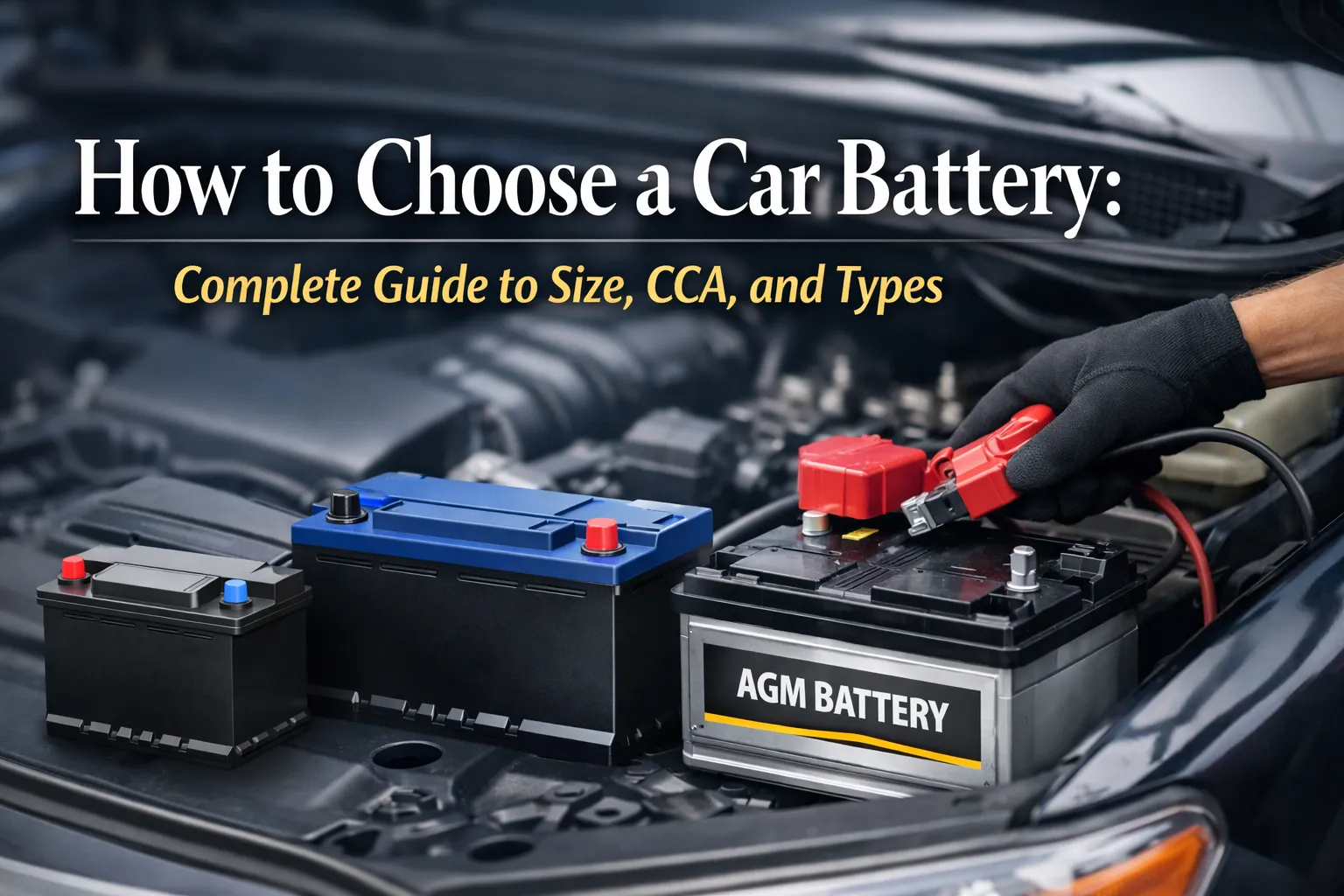
Choosing the right car battery means matching the correct size, Cold Cranking Amps (CCA), and battery type recommended for your vehicle. Check your owner’s manual, confirm the battery group size, and choose a reliable brand with enough power for your climate and driving needs. This ensures easy starts, better performance, and longer battery life.
A car battery may seem small, but it plays a big role in how your vehicle runs. The wrong battery can cause slow starts, weak electronics, or even leave you stranded.
Many drivers feel confused when buying a battery. There are many sizes, types, and power ratings. It can be hard to know which one is right for your car.
The good news is that choosing the right battery is easier than it looks. When you know a few key factors, you can pick the best option with confidence.
In this guide, you’ll learn the important things to check before buying a battery, the different types available, and simple tips to help you choose the best car battery for your vehicle.
Why Choosing the Right Car Battery Is Important
The right car battery helps your car start fast and run well. The wrong one can cause hard starts, weak power, and short battery life. A good match keeps your car battery working the way your vehicle maker planned. Battery fit, power, and design all matter. Consumer Reports says drivers should match the battery to the vehicle and pay close attention to battery type and specs. (Consumer Reports)
A battery that fits your car the right way supports the starter, lights, screen, and other parts that use power. It also helps lower stress on the charging system. This matters even more in newer cars with more tech and more stop-start use. Clarios explains that modern vehicles place higher electrical demands on batteries, which is one reason many cars now use AGM designs. (Default)
If you pick the wrong size or the wrong power level, the battery may not fit well, may not hold securely, or may not give enough starting power in cold weather. That can leave you with slow cranks or a car that will not start at all. A battery with the right group size, Cold Cranking Amps, and build type gives better results over time. Interstate Batteries lists group size, CCA, and reserve capacity as core battery specs for vehicle fit and performance. (Interstate Batteries)
The right choice can also save money. A battery that matches your car often lasts longer and works better with your daily driving needs. That means fewer problems, fewer jump-starts, and less risk of early failure. This is one reason many buyers use a trusted battery finder tool or the owner’s manual before they buy. (Energizer Automotive Batteries)
Types of Car Batteries Explained
Not all car batteries are the same. Some are made for basic daily driving. Others are built for cars with more electronics, heavy accessory use, or start-stop systems. Knowing the main types of car batteries makes it much easier to choose the best one for your vehicle.
Lead-Acid Batteries
Lead-acid batteries are the most common type in many older and basic vehicles. They cost less than newer battery types and work well for normal driving when the car does not have high power needs. These are often called flooded batteries because they use liquid electrolyte inside the case. They have been used for many years and are still a common choice for many drivers. Consumer Reports includes flooded lead-acid batteries as a standard option for many vehicles. (Consumer Reports)
A flooded lead-acid battery can be a good fit when your car came with that same type from the factory. In many cases, it gives enough starting power for daily use at a lower price. Still, it is usually not the best pick for cars with heavy electrical loads or advanced start-stop features. For those cars, a stronger battery design may work better. (Consumer Reports)
AGM (Absorbent Glass Mat) Batteries
AGM stands for Absorbent Glass Mat. This type of battery is sealed and built to handle more demand. AGM batteries are often used in newer cars, luxury cars, SUVs, and vehicles with many electronics. They are also common in cars with start-stop systems. Clarios says AGM batteries were introduced to the automotive market to support growing power needs and advanced vehicle features. (Default)
AGM batteries usually offer strong starting power and better resistance to vibration. They can also support accessories better than many standard flooded batteries. For example, Interstate lists AGM models with clear specs for CCA, reserve capacity, and spill-proof design, which shows why many drivers choose them for higher-demand use. (Interstate Batteries)
If your car came with an AGM battery, it is usually best to replace it with another AGM battery. Switching down to a cheaper flooded battery may hurt performance or battery life in some vehicles. That is why checking the owner’s manual matters so much. (Consumer Reports)
Gel Batteries
Gel batteries use a gel-like form of electrolyte instead of free-flowing liquid. They are sealed and can handle deep discharge better than many standard flooded batteries. Because of that, people often connect them with deep-cycle use rather than normal engine starting. They are more common in special applications than in regular passenger cars. General battery references such as the Energizer handbook explain that battery chemistry and design affect how a battery performs in different uses. (Energizer Technical Information)
For most drivers, a gel battery is not the first choice for a normal gas car unless the vehicle maker or battery expert recommends it. They can work well in certain use cases, but they are not the usual answer for most everyday car battery replacement jobs. That is why many buyers focus first on flooded or AGM options. (Consumer Reports)
Lithium-Ion Car Batteries
Lithium-ion car batteries are much lighter than standard lead-acid batteries. They are more common in electric vehicles, hybrids, and some high-performance uses than in typical daily gas cars. Their low weight and strong energy performance can be a big benefit in those settings. Still, they are not the normal replacement choice for most standard passenger vehicles looking for a simple 12-volt starter battery. General battery makers and car battery guides continue to center most mainstream replacement advice on lead-acid and AGM products. (Consumer Reports)
For most readers searching how to choose a car battery, the main choice will usually come down to flooded lead-acid or AGM. That is where fit, price, weather, and vehicle features matter most. Once you know your battery type, it becomes much easier to compare the next key specs and find the best car battery for your needs.
Frequently Asked Questions (FAQs)
What size battery does my car need?
The correct car battery size depends on your vehicle’s battery group size. This number shows the battery’s physical size, terminal layout, and fit in the battery tray. You can find the right group size in your car’s owner’s manual or by using a battery finder tool like the one from Interstate Batteries.
https://www.interstatebatteries.com/resources/battery-finder
Using the correct battery group size is important. A battery that is too large may not fit in the tray. A battery that is too small may move while driving and damage the terminals.
Can I use a higher CCA battery?
Yes, you can usually use a battery with higher Cold Cranking Amps (CCA) than the minimum required for your vehicle. A higher CCA rating means the battery can deliver more power to start the engine in cold weather.
However, the battery must still match the correct group size and voltage for your vehicle. A higher CCA rating can improve starting performance in colder climates, which is why many drivers choose slightly higher CCA when replacing a battery. The U.S. Department of Energy explains that cold weather can reduce battery performance, making strong starting power important.
https://www.energy.gov/energysaver/maintaining-your-vehicle
Is AGM better than lead-acid?
In many modern vehicles, AGM batteries are better than traditional flooded lead-acid batteries. AGM batteries handle higher electrical demand, resist vibration, and often last longer in vehicles with many electronic systems.
They are commonly used in cars with start-stop systems, advanced safety features, and multiple power accessories. According to battery manufacturer Clarios, AGM batteries were developed to support the growing power needs of modern vehicles.
https://www.clarios.com/products-and-services/agm
However, AGM batteries are usually more expensive. If your car originally used a standard flooded battery and has lower electrical demand, a quality lead-acid battery may still be a good and affordable option.
How much does a car battery cost?
The price of a car battery replacement depends on battery type, brand, and size. In general, drivers can expect these price ranges:
- Standard lead-acid battery: about $80 to $150
- AGM battery: about $150 to $300
- Premium or specialty batteries: higher depending on the vehicle
Consumer Reports notes that higher-quality batteries often include longer warranties and stronger performance ratings.
https://www.consumerreports.org/cars/car-batteries/buying-guide/
Choosing a reliable brand with the correct specifications is often more important than choosing the cheapest battery available.
Conclusion
Choosing the right car battery does not have to be difficult. When you focus on the key factors like battery group size, Cold Cranking Amps (CCA), battery type, and brand quality, the decision becomes much easier.
Start by checking your owner’s manual or using a trusted battery finder tool to confirm the correct battery specifications for your vehicle. Then compare reliable brands and choose a battery that fits your climate and driving needs.
A properly matched battery will start your engine reliably, support your vehicle’s electronics, and last longer. Taking a few minutes to choose the right battery can help you avoid breakdowns, save money, and keep your car running smoothly for years.