

Increasing your CB radio range can make a huge difference in communication clarity and distance. By optimizing your antenna, using quality equipment, and following simple techniques, you can enjoy clearer and farther CB radio communication with ease.
Contents
- 1 Key Takeaways
- 2 Quick Answers to Common Questions
- 3 📑 Table of Contents
- 4 How to Increase CB Radio Range for Clearer and Farther Communication
- 5 1. Optimize Your Antenna for Maximum Range
- 6 2. Tune Your Antenna with an SWR Meter
- 7 3. Improve Your Grounding and Mounting Setup
- 8 4. Use Quality Equipment and Accessories
- 9 5. Choose the Right Channel and Time for Communication
- 10 6. Understand Legal Limits and Safety
- 11 Conclusion
- 12 Frequently Asked Questions
- 13 Author
Key Takeaways
- Proper Antenna Placement: Positioning your antenna higher and clear of obstructions greatly improves range.
- Quality Antennas Matter: Upgrading to a longer or more efficient antenna boosts signal strength.
- Use a Good Ground Plane: A solid grounding system enhances transmission and reception.
- Adjust SWR Correctly: Lowering Standing Wave Ratio ensures maximum power output and reduces signal loss.
- Power Output Limits: Operating within legal power limits but ensuring your radio is running at optimum power enhances range.
- Minimize Interference: Using noise filters and choosing less congested channels improves clarity.
- Environmental Awareness: Understanding terrain and weather can help you position and tune your setup better.
Quick Answers to Common Questions
How high should I mount my CB antenna?
The higher, the better! Ideally, mount it on your vehicle’s roof or a tall mast with clear surroundings to maximize range.
What is SWR and why is it important?
SWR stands for Standing Wave Ratio. It measures how well your antenna matches your radio’s output. A low SWR means better power transfer and longer range.
Can I use an amplifier to increase my CB radio range?
Amplifiers are generally illegal for CB radios and can cause interference. It’s better to optimize your antenna and setup within legal power limits.
Does weather affect CB radio range?
Yes, weather like rain and fog can reduce range, while certain atmospheric conditions at night can improve it.
Which CB channel is best for long-distance communication?
Channel 19 is popular for trucking but often crowded. Trying less busy channels may provide clearer and farther communication.
📑 Table of Contents
- How to Increase CB Radio Range for Clearer and Farther Communication
- 1. Optimize Your Antenna for Maximum Range
- 2. Tune Your Antenna with an SWR Meter
- 3. Improve Your Grounding and Mounting Setup
- 4. Use Quality Equipment and Accessories
- 5. Choose the Right Channel and Time for Communication
- 6. Understand Legal Limits and Safety
- Conclusion
How to Increase CB Radio Range for Clearer and Farther Communication
If you’re passionate about CB radios, you know how frustrating it can be when your conversations cut out or you just can’t reach as far as you’d like. Whether you’re a trucker, hobbyist, or just someone who loves chatting on the CB, increasing your radio’s range can make a big difference in your experience.
Luckily, boosting your CB radio range isn’t about buying the most expensive gear or breaking the law. It’s about smart adjustments, using the right equipment, and understanding how CB radios work. In this article, I’ll walk you through proven tips and tricks to help you communicate clearer and farther with your CB radio.
1. Optimize Your Antenna for Maximum Range
Choose the Right Antenna Length
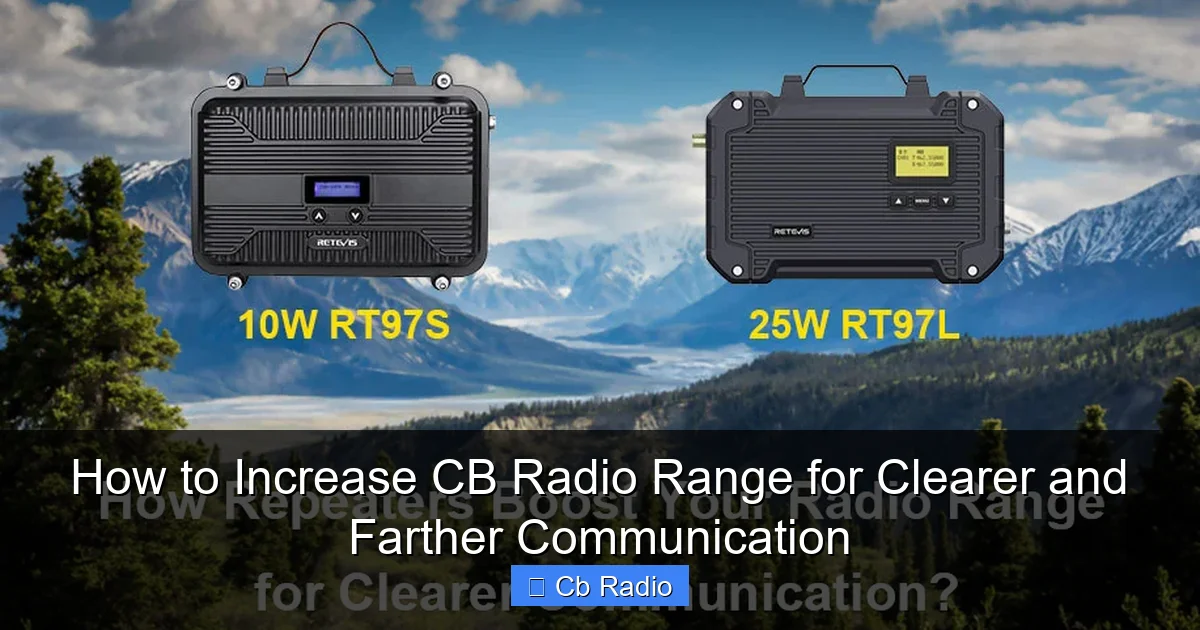
The antenna is the heart of your CB radio setup when it comes to range. The standard CB antenna length is around 102 inches, which is a quarter-wave antenna for the 27 MHz frequency. Using a properly sized antenna ensures your signal transmits efficiently. Sometimes, upgrading to a longer antenna, like a 5/8-wave antenna, can give you better range and signal strength.
Visual guide about How to Increase CB Radio Range for Clearer and Farther Communication
Image source: res.retevis.com
Place the Antenna High and Clear
Where you mount your antenna matters a lot. Higher placement means fewer obstructions like buildings, trees, or metal surfaces that block or reflect signals. If you’re in a vehicle, mounting the antenna on the roof or the center of the vehicle helps. For base stations, place the antenna on a rooftop or a tall mast away from other antennas or metal objects.
Keep Antenna Cables Short and High Quality
Long, cheap coax cables can reduce your signal strength due to loss. Use good-quality RG-58 or RG-8X coax cables and keep the length as short as possible. This helps maintain signal integrity and improves both transmission and reception.
2. Tune Your Antenna with an SWR Meter
Understand Standing Wave Ratio (SWR)
SWR measures how well your antenna is matched to your radio’s output. A low SWR means your antenna is efficiently transmitting energy, while a high SWR can cause signal loss and even damage your radio. Ideally, you want an SWR below 1.5:1.
How to Tune Your Antenna
Use an SWR meter to test your antenna on different channels. If the SWR is high, adjust the antenna length by trimming or extending it slightly. This process helps you find the sweet spot where your antenna performs best, increasing your range and clarity.
3. Improve Your Grounding and Mounting Setup
The Role of a Good Ground Plane
CB radios need a good ground plane to work properly. A ground plane acts like a mirror for radio waves, reflecting and enhancing your antenna’s signal. For mobile setups, the metal body of your vehicle usually acts as the ground plane. For base stations, use a metal sheet or radials under your antenna mast to create a good ground plane.
Secure and Stable Mounting
Make sure your antenna mount is solid and stable. A loose mount can change the antenna’s position and affect performance. Also, avoid mounting antennas near other electronics or metal parts that can cause interference.
4. Use Quality Equipment and Accessories
Upgrade Your Radio and Microphone
While antenna upgrades have the most impact, your radio and microphone also matter. Radios with higher certified power output (up to 4 watts legal limit) and clear microphones improve communication. Noise-cancelling microphones and external speakers can also enhance audio clarity.
Install Noise Filters and Ground Loops
Electrical noise from your vehicle or nearby electronics can interfere with your signal. Installing noise filters or ferrite beads on your power cables reduces unwanted static. Also, grounding your radio chassis properly helps minimize interference.
5. Choose the Right Channel and Time for Communication
Channel Selection
CB radio has 40 channels, and some are more crowded than others. Avoid busy channels like channel 19 if you want clearer communication. Instead, try less-used channels or scan to find one with less interference.
Consider Time and Weather
Radio wave propagation can change based on the time of day and atmospheric conditions. Early mornings and late evenings often provide better range due to favorable ionospheric conditions. Weather like rain or fog can reduce range, so plan accordingly.
6. Understand Legal Limits and Safety
Stay Within Power Limits
In most countries, CB radios are limited to 4 watts of power output. Using amplifiers or exceeding this limit is illegal and can cause interference with other services. Always operate within legal limits to avoid penalties and ensure fair use.
Practice Safe and Responsible Usage
Use your CB radio responsibly, keeping conversations appropriate and avoiding channel hogging. Clear communication benefits everyone and maintains the community spirit of CB radio enthusiasts.
Conclusion
Increasing your CB radio range for clearer and farther communication is easier than you might think. By optimizing your antenna setup, tuning with an SWR meter, improving grounding, using quality equipment, and being mindful of channel and environmental factors, you can significantly boost your CB radio’s performance.
Remember, it’s not just about power—it’s about the whole system working harmoniously. Follow these tips, and soon you’ll enjoy longer conversations and clearer signals on your CB radio. Happy communicating!
Frequently Asked Questions
What type of antenna is best for increasing CB radio range?
A 5/8-wave antenna generally offers better range than a standard quarter-wave antenna. However, the best choice depends on your specific setup and vehicle.
How do I check if my antenna is properly tuned?
Use an SWR meter to measure your antenna’s Standing Wave Ratio. Adjust the antenna length until the SWR reading is as low as possible, ideally below 1.5:1.
Can antenna height really affect CB radio performance?
Absolutely. The higher your antenna is mounted, the fewer obstacles your signal encounters, which improves both range and clarity.
Is it important to use quality coax cables for CB radios?
Yes, high-quality coax cables with low signal loss help maintain signal strength over distance. Avoid long runs of cheap cables for best performance.
Are there any legal restrictions on modifying my CB radio setup?
Yes, most countries limit CB radio power output to 4 watts and prohibit the use of external amplifiers. Always check local regulations before modifying your setup.
How can I reduce electrical noise interference on my CB radio?
Install noise filters or ferrite beads on power cables and ensure proper grounding. This helps minimize static and improves audio clarity.