

You can usually tell a car battery is dead if the engine won’t crank, electrical accessories are weak or won’t power on, or you hear rapid clicking when you turn the key. If your car won’t start and lights are dim or click sounds come from the dash, the battery is likely dead and needs testing or replacement.
You’ll learn simple checks you can do now—like watching dashboard lights, trying a jump, and testing voltage—to confirm the battery versus other issues. Follow practical steps so you can avoid being stuck and decide quickly whether to jumpstart, replace the battery, or get professional help.
Key Takeaways
- Know the main signs: no crank, dim lights, or clicking sounds.
- Try quick tests like a jumpstart and voltage check to confirm the problem.
- Replace or test the battery and check the charging system to prevent repeat failures.
Contents
Understanding Car Battery Failure
You need to know what causes failure, how long a battery usually lasts, and the signs that it’s wearing out. These points help you diagnose problems and decide when to test, charge, or replace the battery.
Common Causes of Dead Car Batteries
Cold weather, repeated short trips, and leaving lights or accessories on drain the battery fastest. Cold reduces the battery’s chemical reaction, so engines need more power to turn over. Short trips don’t let the alternator fully recharge the battery between starts.
Parasitic drains from alarms, infotainment, or poor wiring can slowly kill a battery while the car is off. Corroded or loose battery terminals increase resistance and reduce charging efficiency. A failing alternator or voltage regulator can leave the battery undercharged even if the alternator seems to run.
Manufacturing defects and age-related plate sulfation also cause sudden failure. If you jump-start frequently or notice weak starts, address these causes: test the battery voltage, inspect connections, and check the charging system.
Typical Lifespan of a Car Battery
Most lead-acid car batteries last about 3 to 5 years under normal conditions. Climate matters: hot climates often reduce life toward the lower end, while moderate climates help batteries last longer. Heavy stop-and-go driving or many short trips can cut life significantly.
High-quality batteries and proper maintenance—clean terminals, secure hold-downs, and ensuring a full charge—extend lifespan. Deep discharges and letting a battery sit uncharged for long periods cause sulfation and permanent capacity loss. Replace a battery sooner if it struggles to hold voltage below 12.4 volts at rest or drops below 10.5 volts under load.
Warning Signs of Battery Wear
Slow engine cranking, dim headlights at idle, and dashboard warning lights are early signs of a weak battery. If electronics reset, or you need frequent jump-starts, your battery may be failing. Measure resting voltage: healthy batteries read about 12.6 volts; below 12.4 volts suggests reduced charge capacity.
Also watch for a swollen or leaking battery case and strong sulfur smells—these indicate internal damage and risk. Get a professional load test or use a multimeter to check voltage under load. If voltage falls sharply during cranking or the alternator doesn’t maintain 13.7–14.7 volts with the engine running, replace the battery or repair the charging system.
Immediate Indicators Your Car Battery Is Dead

You’ll usually see clear signs when the battery can’t provide power. These include a car that won’t crank, no lights or sound when you turn the key, and dim or flickering electrical accessories.
Engine Fails to Start
If you turn the key and the engine does not crank at all, the battery is often the cause. Listen for a single click or no sound; a single rapid click usually means the starter isn’t getting enough current. A grinding or slow cranking noise also points to low battery voltage rather than the starter itself.
Try turning on the headlights for a quick test. If they go out or get much dimmer when you attempt to start, the battery voltage is likely too low. If the car is older than three to five years, age is a strong clue the battery may be failing. For more on safe jump-start steps, refer to an official guide like AAA’s jump-start advice.
No Electrical Response When Turning the Key
When you turn the key and nothing happens — no dash lights, no radio, no click — that’s a clear immediate indicator of a dead battery. This differs from a bad starter because even a failed starter usually leaves dash lights on. No electrical response means the battery can’t supply any circuit power.
Check battery terminals for heavy corrosion or loose clamps; poor connections can cause the same symptoms. If you have a multimeter, a resting voltage below about 12.0 volts usually shows a deeply discharged battery. If you cannot access tools, try jump-starting from another vehicle or calling roadside assistance.
Dim Lights or Accessories Not Working
Dim interior or exterior lights while the engine is off show the battery is weak. If headlights seem noticeably yellow or dim, or the dome light fades when you try to start, the battery can’t hold normal voltage. Accessories such as power windows, radio, or seat heaters that operate slowly or stop working also point to low battery charge.
Note the difference between dim lights with the engine off and flickering while running. Dim lights when off suggest the battery; flickering while the engine runs might indicate an alternator issue. For guidance on testing charging systems, the Department of Energy and battery manufacturers offer useful testing tips and maintenance steps.
Diagnostic Steps to Confirm a Dead Battery
Start by looking for clear electrical signs and then move to quick tests that measure voltage and load. These steps show whether the battery or another part of the charging system causes the problem.
Checking Dashboard Warning Lights
Look for the battery-shaped warning light on your dash when you turn the key to the ON position. If the light stays on after the engine starts, the alternator or charging circuit may be faulty, but a dead or weak battery often triggers the light before or during start attempts.
Also watch for dim instrument lights, a check-engine light, or warning messages on modern infotainment screens. These can mean low system voltage. If the car won’t start and the dash lights are weak or flicker, that strongly suggests the battery lacks charge.
If possible, scan trouble codes with an OBD-II tool. Codes tied to charging or voltage help point to alternator issues. For more on warning lights and codes, see the EPA’s guide to vehicle diagnostics or a trusted auto site like AAA.
Using a Multimeter to Test Voltage
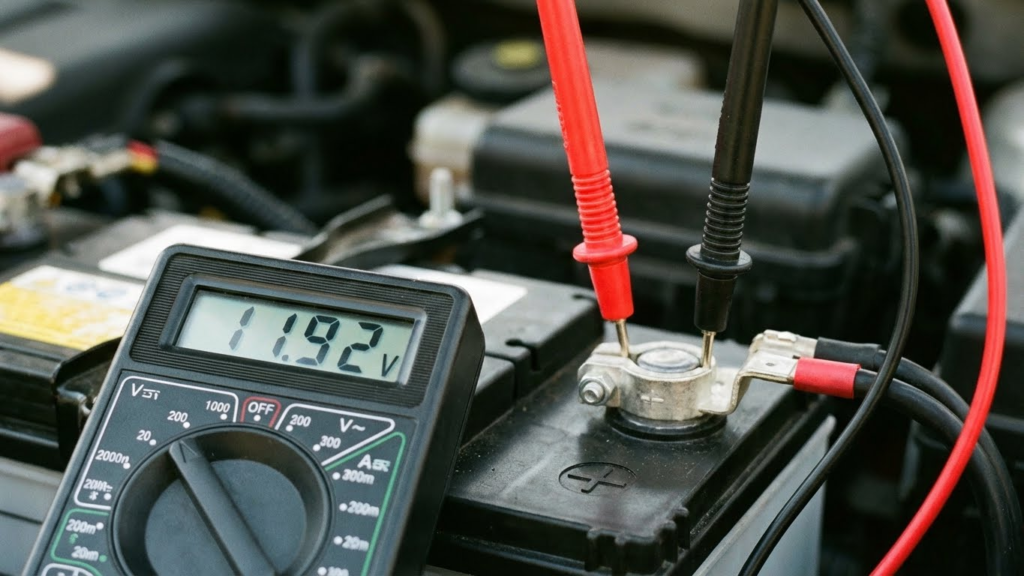
Set a digital multimeter to DC voltage (20V range). With the car off, touch the red lead to the positive terminal and the black lead to the negative terminal. A healthy, fully charged 12V battery reads about 12.6 volts or higher.
If the resting voltage is below ~12.2V, the battery is significantly discharged. Next, start the car (if it starts) and measure voltage again. You should see about 13.7–14.7V while the engine runs; that shows the alternator is charging. If running voltage stays below 13V, the alternator may not be charging.
For a better assessment, perform a cranking test: have someone crank the engine while you measure voltage. If voltage drops below ~10V during cranking, the battery likely can’t supply enough current and needs charging or replacement. The National Highway Traffic Safety Administration offers background info on vehicle electrical systems.
Performing a Headlight Test
Turn on your headlights with the engine off and observe brightness. Then try starting the car while watching the lights. If headlights dim heavily or go nearly out during cranking, the battery likely can’t deliver enough current.
With the engine running, headlights should brighten slightly as the alternator takes over. If they stay dim while running, the alternator or wiring may be at fault. Use this test along with a voltage check for a clearer picture.
Perform the test in a safe, level spot and avoid touching battery terminals. If you see sparks, corrosion, or a swollen battery case, stop and get professional help immediately.
Differentiating a Dead Battery from Other Car Issues
You can often tell what’s wrong by specific symptoms and a few quick checks. Look for engine cranking behavior, dashboard lights, and perform simple tests like checking voltage or trying a jump start.
Bad Alternator vs. Dead Battery
A bad alternator usually shows while the engine is running. If the car starts but the battery warning light is on, or the headlights dim when you rev the engine, the alternator may not be charging the battery. Measure voltage with the engine off and then running: expect about 12.4–12.7 V off and 13.8–14.6 V running. If voltage stays near 12 V with the engine running, the alternator is likely bad.
If the car won’t start at all, try a jump start. A dead battery will often accept a jump and then run if the alternator is healthy. If the car dies again shortly after the jump, suspect the alternator.
Starter Motor Issues
Starter problems create different sounds and failures than a dead battery. With a weak battery you’ll hear slow cranking or a single click. With a bad starter you may hear rapid clicking, grinding, or nothing at all when you turn the key, even if the lights are bright.
Check this: turn on the headlights and try to start the car. If headlights dim severely, that points to the battery. If headlights stay strong but the engine doesn’t turn, the starter or its relay/solenoid may be at fault. Tapping the starter lightly while someone cranks can sometimes free a stuck starter—do this only with caution.
Corroded or Loose Battery Connections
Corrosion or loose clamps mimic a dead battery by interrupting power flow. Look for white, green, or blue crust on the terminals and cables. Clean terminals with a wire brush and a baking soda solution, then tighten clamps to secure contact.
Also inspect cable condition and the ground strap to the chassis. A frayed or broken cable can stop current even if the battery is charged. After cleaning and tightening, try starting the car. If it starts reliably afterward, poor connections were the likely cause.
What to Do If Your Car Battery Is Dead
You can often fix a dead battery quickly or know when it needs replacing. Follow safe steps to jump start, decide if replacement is needed, and protect yourself while handling the battery.
How to Jump Start the Car
Find good jumper cables and a donor vehicle with a 12V battery. Park the donor car close enough so cables reach but do not let the cars touch. Turn off both ignitions, headlights, and accessories.
Connect cables in this order: red to dead battery positive (+), red to donor positive (+), black to donor negative (−), and black to an unpainted metal ground on the dead car away from the battery. Start the donor car and let it run 2–5 minutes. Then try starting your car. If it starts, keep it running for at least 20 minutes or drive around to let the alternator charge the battery.
If the car doesn’t start after a few tries, stop and check cable connections and clamps for corrosion. Repeated failure can mean the battery is beyond a jump start or the alternator/starting system has a fault. Disconnect cables in reverse order once finished.
When to Replace the Battery
Replace the battery if it won’t hold a charge after a successful jump or if voltage tests show under ~12.4 V at rest. Also replace if the battery is older than 3–5 years and you see corrosion, a swollen case, or leaking fluid.
Have a shop test the battery with a load tester or digital meter for a clear result. If the alternator is charging below about 13.5–14.5 V while running, fix the charging system before installing a new battery. When you buy a new battery, match group size, Cold Cranking Amps (CCA), and terminal layout to your vehicle’s specifications.
Safety Precautions While Handling Batteries
Wear safety glasses and gloves to protect against acid and sparks. Work in a well-ventilated area; batteries can emit hydrogen gas that may ignite.
Avoid smoking or open flames near the battery. Use insulated tools and don’t let metal touch both terminals at once. If acid contacts skin or eyes, flush with water for 15 minutes and seek medical help. Dispose of old batteries at a recycling center or auto parts store—do not throw them in the trash.
Preventative Measures to Avoid a Dead Battery
Keep terminals clean, test voltage regularly, and protect the battery from extreme temperatures. Charge or replace a battery that shows low voltage, and unplug accessories when the car is off.
Regular Battery Maintenance Tips
Check battery voltage with a multimeter monthly. A healthy, fully charged 12-volt battery reads about 12.6–12.8 V at rest. If you see below 12.4 V, charge the battery and test again.
Clean the terminals every few months. Use a wire brush and a 1:1 baking soda and water paste to remove corrosion, then tighten the clamps. Corrosion increases resistance and stops proper charging.
Secure the battery to cut down on vibration. Loose hold-downs can damage cells and shorten life. Also inspect for cracks or bulges; any physical damage means replace the battery immediately.
Keep jumper cables or a portable jump starter in your car. They give you a fast fix, but don’t rely on jump-starts as a long-term solution. Replace a battery older than three to five years, depending on climate and driving habits.
Recognizing Weather Impacts on Battery Life
Cold reduces a battery’s starting power. At 0°F, a battery can lose about 60% of its cranking amps. If you live in cold areas, test your battery before winter and consider a higher-capacity battery.
Heat speeds up chemical wear inside the battery. Temperatures above 90°F increase corrosion and fluid loss, cutting lifespan. Park in shade or a garage when possible to reduce heat stress.
Use a battery maintainer if you store the car or drive short distances often. Maintainers provide a slow charge that keeps the battery at proper voltage without overcharging. For winter storage, either disconnect the battery or connect a maintainer.
When to Seek Professional Assistance
If the battery fails repeated voltage tests after charging, have a technician run a load and charging-system test. That checks both the battery and the alternator for faults. A healthy alternator should charge at about 13.7–14.7 V while the engine runs.
Bring the car in if you notice frequent dimming lights, slow cranks, or a check-engine/charging warning. These signs could mean parasitic drains, bad wiring, or alternator issues that need diagnostic tools.
Ask a pro to test for parasitic draw when accessories drain the battery while the car is off. A technician can isolate the circuit and fix the cause, which prevents repeated battery replacements.
FAQs
What are the quick signs your car battery is dead?
If the engine won’t crank and lights are dim or don’t work, the battery may be dead. You might also hear a clicking noise when you turn the key.
Can you test the battery yourself?
Yes. Use a multimeter to check voltage; a healthy battery reads about 12.6 V when the car is off. You can also try a jump start to see if the car starts and stays running.
Will a jump start always fix the problem?
A jump start can get you going if the battery is simply discharged. If the car dies again soon after, the battery or the charging system (alternator) likely needs service.
How long do car batteries usually last?
Most car batteries last 3–5 years. Heat, short trips, and infrequent use can shorten that life.
When should you replace the battery instead of repairing it?
Replace it if it won’t hold charge, shows physical damage or swelling, or is over 5 years old. If tests show low capacity, replacement is safer than repeated repairs.
Can a bad alternator mimic a dead battery?
Yes. A failing alternator can fail to recharge the battery, causing the same symptoms. Test the charging system if the battery tests good but the car still dies.
What immediate steps should you take if you suspect a dead battery?
Turn off all accessories, try a jump start, and drive to a safe place or shop. If you can’t start the car, call roadside assistance.
Conclusion
You can spot a failing battery early by watching for dim lights, slow cranks, warning lights, and electronic glitches. These signs let you act before you get stranded.
Test the battery with a multimeter or have a shop run a load test if you’re unsure. Keep jumper cables or a portable jump starter in your car for quick fixes.
Replace batteries that are over 3–5 years old or that fail tests. Old batteries lose capacity and can leave you stuck at the worst time.
Simple habits cut risk: check terminals for corrosion, secure connections, and avoid leaving lights or devices on when the engine is off. Regular checks save time and money.
If the problem returns after a jump, have the charging system inspected. Alternator or wiring faults can mimic a dead battery and need repair.
Quick checklist:
- Visual: corrosion, cracks, leaks
- Performance: slow start, dim accessories
- Test: voltage <12.4V at rest or failing load test
Trust your observations and act early. A small check today prevents bigger hassles tomorrow.
