

You can spot a dead car battery by watching for weak or no engine cranks, dim or flickering lights, warning lights on the dash, and a slow or no response from electrical accessories. If your car won’t crank or the electronics act weak, the battery is likely dead or very low and needs testing or a jump start.
Walk around the car and check the headlights, interior lights, and dashboard for dimness, listen for a clicking sound when you try to start, and look for corrosion or damage on the battery terminals. A quick voltage check with a multimeter or a free test at an auto parts store will confirm whether the battery, the charging system, or something else is causing the problem.
Key Takeaways
- Watch for slow cranking, dim lights, or clicking when starting.
- Do a visual check for corrosion and a simple voltage or shop test.
- Jump-starts or battery replacement fix most dead battery issues.
Contents
Common Signs of a Dead Car Battery

You will usually see one clear starting problem, plus weak or failing electrical accessories and distinct noises when you try to start the car. These signs often appear before the battery fails completely.
Engine Won’t Start
If the engine doesn’t turn over at all when you turn the key or push the start button, the battery may have no usable charge. You might notice the dashboard lights go out immediately or don’t light at all. That means the starter motor isn’t getting enough current to crank the engine.
Sometimes the engine cranks very slowly or struggles to turn over. Slow cranking is a common early sign that the battery is weak even if the car eventually starts. Cold weather can make these symptoms worse because batteries deliver less current when they’re cold.
Check the battery terminals for corrosion or loose clamps before assuming replacement is needed. If terminals look clean and tight but the car still won’t start, get a battery test or try a jump start to confirm the battery is the issue.
Dim Headlights and Electrical Issues
If your headlights seem noticeably dim when idling and brighten when you rev the engine, the battery or charging system may be failing. Dim lights at startup usually point to low battery voltage rather than a bulb problem.
You may also see other electrical symptoms: slow power windows, weak interior lights, or the radio cutting out. Modern cars can show strange behavior too, such as warning lights flickering or the infotainment rebooting.
A simple check: turn the headlights on with the engine off and watch brightness while someone gently revs the engine. If lights get brighter when revved, the alternator might be charging intermittently or the battery may be weak.
Clicking Sound When Turning the Key
A rapid clicking or a single loud click when you try to start the car usually means the starter is getting some voltage but not enough to turn the engine. Rapid clicking often indicates low battery voltage and high resistance in the starting circuit.
A single heavy click can mean the starter solenoid engages but the battery can’t supply the current to spin the starter motor. If you hear clicks and see dim dash lights, that strengthens the case for a dead or dying battery.
Try a jump start: if the car starts and runs normally, the battery is likely the culprit. If you still hear clicks after a jump, the starter or wiring may be at fault and needs inspection.
Testing Your Car Battery
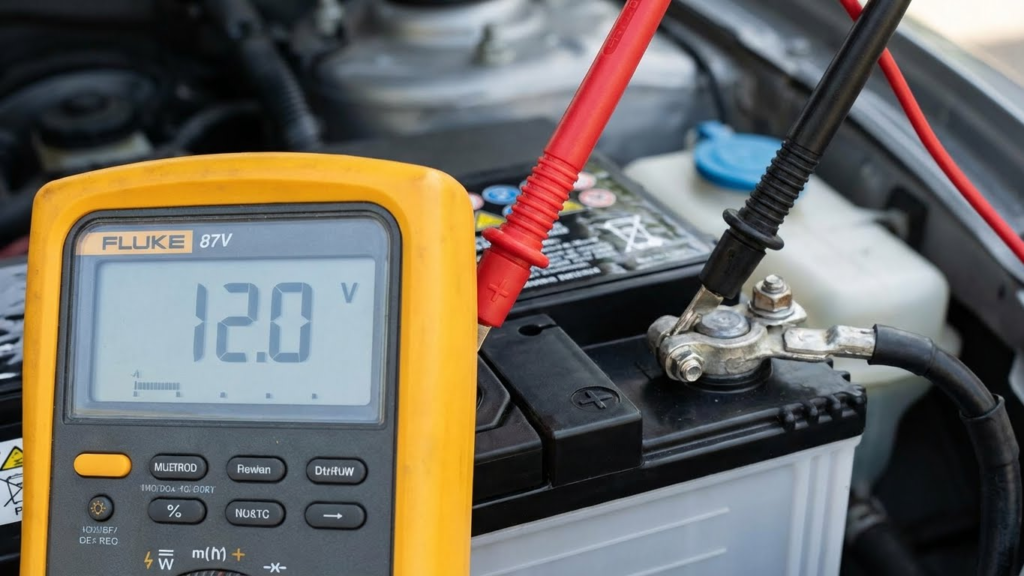
You can check a battery with a multimeter, a simple headlight test, or by reading the battery’s built-in indicator. Each method shows a different aspect of battery health: voltage, response under load, and state-of-charge.
Using a Multimeter
Set a digital multimeter to DC volts (20V range). With the engine off, touch the red probe to the positive terminal and the black to the negative terminal. A healthy, rested battery should read about 12.6 volts or higher. If it reads below 12.4V the battery is partially discharged; below 12.0V it’s likely too weak to start the car.
Start the engine and watch the voltage. With the alternator charging, the reading should rise to about 13.5–14.5V. If it stays below 13V, the charging system may be faulty even if the battery shows good resting voltage. For a deeper check, use a load tester or have a shop perform a load test. For more details on voltages and testing steps, check a manufacturer guide like those at AAA or an electronics reference such as SparkFun.
Performing a Headlight Test
Turn off the car and set headlights to low beam. Note their brightness, then have someone crank the engine while you watch the lights. If the lights dim only slightly when cranking, the battery likely has enough cranking power. If the lights dim heavily or go near off, the battery cannot deliver sufficient current.
This test gives a quick sense of the battery’s ability to supply high current under load. It’s not precise, but it helps when you lack tools. Combine this check with a multimeter reading for a clearer picture. If headlights dim and a multimeter shows low voltage, prepare for a jump start or replacement.
Checking the Battery Indicator
Some batteries have a built-in “eye” indicator that shows green, clear, or black. Green usually means the cell is charged; clear or black can mean low charge or a bad cell. Clean the area around the indicator before reading it—dirt or corrosion can hide the true color.
Remember the indicator does not always tell the full story. It reflects specific cell condition and charge, not overall capacity or cold-cranking amps. Use the indicator as a quick check, then confirm with a multimeter or professional test if the indicator shows a problem. Manufacturer pages like Interstate Batteries explain how to read these indicators and when to test further.
Visual Inspection for Battery Problems
Check the battery for obvious physical issues that can cause a weak or dead battery. Focus on the terminals, cable connections, and the battery case for visible damage or fluid leaks.
Corroded Battery Terminals
Corrosion looks like white, blue, or green powder or crust around the battery posts and clamp. It can block the electrical connection so the starter can’t draw enough current. If you see buildup, disconnect cables (negative first), then clean terminals with a wire brush or baking soda solution to remove the corrosion.
After cleaning, tighten the clamps so they sit snug on the posts. Loose clamps can mimic a dead battery by causing intermittent power loss. If clamps or cables are heavily damaged, replace them rather than just cleaning.
Wear gloves and eye protection while working. Reconnect the positive clamp first, then negative. If corrosion returns quickly, have the charging system and battery tested.
Swollen or Leaking Battery Case
A swollen or bulging battery case indicates internal damage from overcharging or heat. The plastic will look raised or rounded instead of flat. Never drive with a bulging battery; it can fail suddenly or leak acid.
Leaking shows as wet, crusty residue or a clear acidic smell near the battery. Acid can corrode nearby metal and wiring. If you find leakage, avoid skin contact and wash any exposed area with water immediately.
Do not attempt to charge a swollen or leaking battery. Replace it and clean any acid from the tray and cables. Dispose of the old battery at a recycling center or auto shop that accepts lead-acid batteries.
Other Causes of Starting Problems
Some starting problems come from parts other than the battery. You might hear a click, notice the engine cranks slowly, or the car dies while running. Check these items next to avoid misdiagnosing the issue.
Faulty Starter Motor
A bad starter will often make a single loud click when you turn the key, or multiple rapid clicks. You may also get no sound at all while the dash lights stay on. That tells you the battery has power but the starter gear or solenoid isn’t engaging.
Inspect the starter connections first. Look for loose, corroded, or frayed cables at the starter and battery. Tap the starter lightly with a wrench while someone turns the key — a short, gentle knock can sometimes free a stuck gear and help you confirm the starter is the problem.
If wiring and taps don’t fix it, the starter likely needs replacement. Typical signs that point to replacement: slow or no crank with good battery voltage, burning smell from under the hood, or smoke. Have a mechanic test starter draw and solenoid function to be sure.
Alternator Malfunction
An alternator that fails won’t keep the battery charged while the engine runs. You might start the car but then see the battery warning light come on, or the engine may stall after driving a short distance. Dim headlights while idling are another common sign.
Check belt condition and tension first; a slipping or broken belt stops the alternator from charging. Measure battery voltage with the engine running: you should read about 13.5–14.5 volts. Lower readings indicate the alternator is not producing enough charge.
Alternator problems can also come from a bad voltage regulator or worn brushes. If you find low charging voltage, have the alternator bench-tested or replaced. Also inspect for loose connectors or a blown fusible link in the charging circuit.
What to Do If Your Car Battery Is Dead
Act quickly and safely. You can either jump-start the car to get it moving right away or replace the battery if it’s old or damaged.
Jump Starting Your Car
Find a set of jumper cables and a working vehicle or a portable jump starter. Park the working car close enough so cables reach, but do not let the cars touch. Turn off both ignitions, set parking brakes, and remove metal jewelry.
Connect cables in this order: red to dead battery positive (+), red to donor battery positive, black to donor battery negative (-), then black to an unpainted metal ground on the dead car (not the battery). Start the donor car and run it for 3–5 minutes. Try starting the dead car. If it starts, leave it running for at least 20 minutes or drive to recharge the battery.
If the car doesn’t start after a few attempts, stop and call roadside assistance. Follow safety guidance from AAA on jump-starting and use a portable jump starter if you have one to avoid using another vehicle.
Replacing the Battery
First check the battery age and damage. Look for cracks, bulging, heavy corrosion, or a date code older than 3–5 years. If you see damage or the battery repeatedly fails, replace it.
Wear gloves and eye protection. Turn off the car and remove the negative (black) cable first, then the positive (red). Remove the hold-down clamp and lift out the old battery. Clean corrosion from cable ends with a baking soda solution and a wire brush. Install the new battery, secure the clamp, attach positive cable first, then negative. Tighten terminals but avoid over-torquing.
Dispose of the old battery at an auto parts store or recycling center; many stores accept old batteries and may offer core credits. For battery size and cold cranking amps (CCA) recommendations, consult your owner’s manual or a retailer like AutoZone.
How to Prevent Future Battery Failures
Keep the battery clean, fully charged, and replaced before it loses reliability. Watch for key signs so you can act early and avoid being stranded.
Regular Maintenance Tips
Check battery terminals once a month for white or green corrosion. If you see buildup, disconnect the negative cable first, clean terminals with a baking-soda-and-water paste, rinse, dry, and reconnect tightly.
Measure voltage with a multimeter: a healthy, resting battery should read about 12.6 volts. Anything below 12.4 volts after sitting indicates weaker charge and needs attention.
Drive the car at least 20–30 minutes occasionally to let the alternator recharge the battery, especially after short trips. If your vehicle sits for long periods, use a smart trickle charger to keep the battery at full charge without overcharging.
Secure the battery so it does not shift during driving. Vibration damages internal plates and shortens life.
Signs It’s Time for Replacement
Note slow engine cranks, dim headlights at idle, and dashboard lights that fade when you start the car. These are steady clues that battery capacity is dropping.
If the battery is older than three to five years, treat it as likely near end-of-life. Heat and short trips shorten that window, so reduce expectations in hot climates or stop-and-go driving.
Get a load test at a parts store or shop if you have recurring starting trouble. Also replace the battery if you see a swollen case, heavy corrosion that won’t clean, or if the battery fails to hold 12.4 volts after charging.
FAQs
What are the quickest signs your battery is dead?
If the engine only clicks or turns slowly, that’s a top sign. Dim interior or exterior lights with the engine off also point to low battery voltage.
Can a bad alternator mimic a dead battery?
Yes. If your car dies after being jump-started or the battery keeps losing charge, the alternator or charging system may be the problem. Have the charging system tested if problems return.
Will jump-starting fix a dead battery?
Jump-starting gets you going temporarily. It can charge the battery enough to drive to a repair shop, but it won’t fix a worn-out battery. Replace the battery if it won’t hold charge.
How long do car batteries last?
Most batteries last about 3–5 years, depending on climate and driving habits. Extreme heat and short trips shorten life.
How can you test the battery yourself?
Check for corrosion on terminals and tighten connections first. Use a multimeter: a healthy battery reads about 12.6 volts at rest. Under 12.4 volts suggests reduced capacity.
When should you call a mechanic or roadside service?
Call help if the car won’t start after a jump or if electrical systems act odd while driving. Also get professional testing if you notice swelling, leaking, or an obvious smell of rotten eggs.
Conclusion
You can catch a weak battery early by watching for slow cranks, dim lights, warning lights, and electronic glitches. Act quickly when you see these signs to avoid being stranded.
Keep simple tools in your car: jumper cables or a portable charger. Regularly check battery age and clean the terminals to reduce surprises.
If your car still won’t start after a jump, get a professional to test the battery and charging system. That tells you whether to replace the battery or fix the alternator.
When you replace the battery, choose one that fits your vehicle and climate. Proper installation and disposal matter for safety and the environment.
Quick checklist:
- Visual: corrosion, leaks, swelling
- Electrical: slow crank, warning light, low voltage
- Maintenance: age over 4–5 years, loose terminals
You control many small steps that extend battery life. Routine checks, conservative use of electronics when parked, and prompt service keep your car reliable.
