

Reducing SWR on your CB radio is key to clearer communication and extended range. By understanding what causes high SWR and using simple adjustment techniques, you can enhance your radio’s performance. This guide offers easy, practical tips to help you achieve a low SWR and enjoy better signal quality.
Contents
- 1 Key Takeaways
- 2 Quick Answers to Common Questions
- 3 📑 Table of Contents
- 4 Introduction
- 5 Understanding SWR and Its Impact on CB Radio
- 6 Causes of High SWR on CB Radios
- 7 Step-by-Step Guide to Reducing SWR on Your CB Radio
- 8 Practical Tips to Maintain Low SWR
- 9 When to Get Professional Help
- 10 Conclusion
- 11 Frequently Asked Questions
- 12 Author
Key Takeaways
- What is SWR: Standing Wave Ratio measures antenna efficiency and signal reflection on a CB radio.
- Why reduce SWR: Lower SWR improves transmission clarity and increases your CB radio’s effective range.
- Proper antenna installation: Correct mounting and grounding minimize SWR issues.
- Antenna tuning: Adjusting antenna length and position helps achieve optimal SWR.
- Use quality coax cables: High-quality, properly connected coaxial cables reduce signal loss and SWR.
- Regular SWR testing: Frequent checks with an SWR meter help maintain peak radio performance.
- Professional help: Don’t hesitate to seek expert assistance for complex SWR problems.
Quick Answers to Common Questions
What is SWR in CB radio?
SWR stands for Standing Wave Ratio, measuring how effectively your CB radio transmits power through the antenna.
Why is high SWR bad for my CB radio?
High SWR reduces signal strength, limits range, and can damage your radio’s transmitter.
How do I measure SWR?
Use an SWR meter connected between your radio and antenna to check the ratio during transmission.
Can antenna length affect SWR?
Yes, incorrect antenna length causes high SWR, so adjusting it helps optimize signal transmission.
When should I replace my coax cable?
If the cable is damaged, corroded, or old, replacing it can lower SWR and improve signal quality.
📑 Table of Contents
Introduction
If you’re a CB radio user, you’ve probably heard about SWR and how it affects your signal quality. SWR, or Standing Wave Ratio, plays a huge role in how well your CB radio communicates. When SWR is too high, your signal can become weak, distorted, or range can be limited. The good news? Reducing SWR is easier than you might think, and it can make a big difference in your radio experience.
In this article, we’ll explore what SWR is, why it matters, and most importantly, how to reduce SWR on your CB radio. You’ll get practical tips and clear steps to get your setup working efficiently, ensuring you get clearer signals and better range. Whether you’re a beginner or a seasoned user, this guide will help you optimize your CB radio system.
Understanding SWR and Its Impact on CB Radio
What is SWR?
SWR stands for Standing Wave Ratio. It measures the efficiency of power transmission from your CB radio through the antenna system. A perfect SWR is 1:1, meaning all the power goes out through the antenna without reflection. Higher SWR values indicate that some power is reflected back, causing inefficiency.
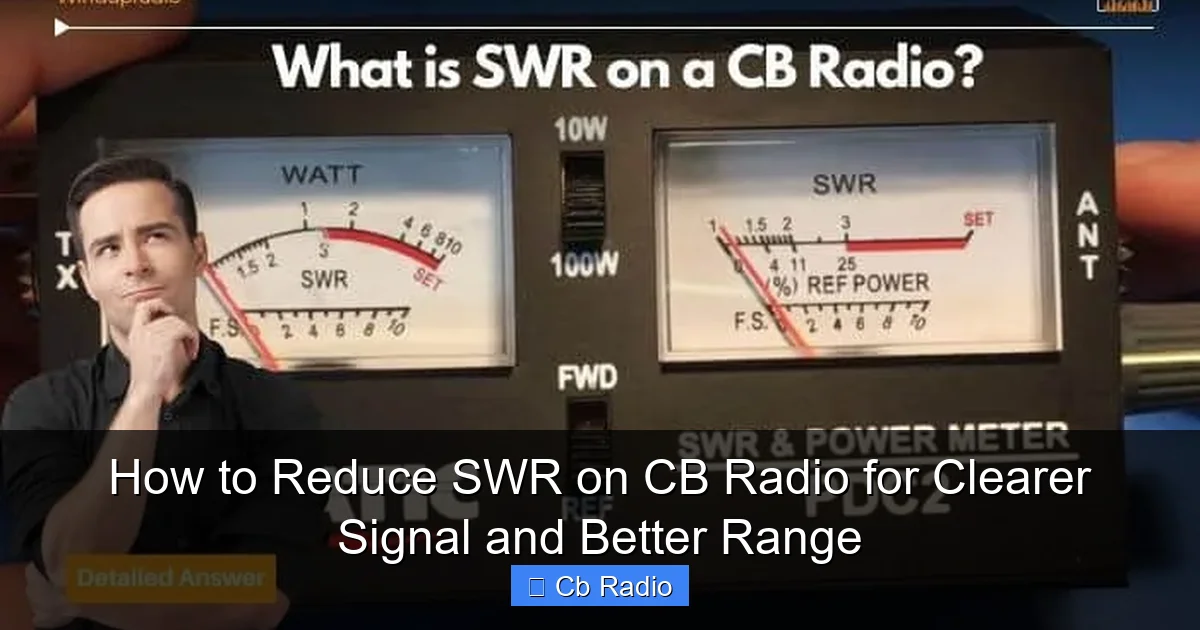
Visual guide about How to Reduce SWR on CB Radio for Clearer Signal and Better Range
Image source: windupradio.com
Why Does High SWR Matter?
High SWR can cause several issues. It reduces the effective power radiated by your antenna, resulting in weaker signals and reduced range. It can also damage your radio’s transmitter over time due to reflected energy. Keeping SWR low protects your equipment and improves communication clarity.
Causes of High SWR on CB Radios
Poor Antenna Installation
Incorrect mounting, wrong height, or poor ground connections can cause high SWR. The antenna needs to be installed securely and at an appropriate height to work well.
Wrong Antenna Length
Each frequency on the CB band corresponds to a specific antenna length. If your antenna is too long or too short, it won’t be tuned to the right frequency, causing high SWR.
Damaged or Low-Quality Coax Cable
Coax cables that are damaged, corroded, or of low quality can increase SWR by reflecting signals back towards the radio.
Environmental Factors
Nearby metal objects, trees, or buildings can interfere with the antenna’s performance and increase SWR.
Step-by-Step Guide to Reducing SWR on Your CB Radio
1. Use an SWR Meter
Start by purchasing an SWR meter if you don’t already have one. It’s an essential tool that measures your antenna system’s SWR. Connect it between your radio and antenna, then transmit a test signal to check your current SWR reading.
2. Inspect Your Antenna Setup
Check the antenna mount, making sure it’s secure and properly grounded. Inspect the coax cable for damage or corrosion. Replace any faulty components.
3. Adjust Antenna Length
If SWR is high, try trimming or extending your antenna. Most CB antennas have adjustable whip lengths or tips you can turn to fine-tune. Shortening the antenna usually lowers SWR for higher frequencies; lengthening helps for lower frequencies.
4. Reposition the Antenna
Move your antenna away from metal objects or other obstructions. Raising the antenna higher can also improve SWR and signal clarity.
5. Replace or Upgrade Your Coax Cable
Use quality coax cables like RG-58 or RG-8X with proper connectors. Ensure all cable connections are tight and waterproof if exposed to weather.
6. Test and Repeat
After each adjustment, use your SWR meter to test again. The goal is to get your SWR below 1.5:1 for optimal performance. If you can’t get below 2:1, consider professional help.
Practical Tips to Maintain Low SWR
Regular SWR Checks
Make it a habit to check your SWR every few months or after storms and rough weather. Antenna mounts can loosen, and cables can degrade over time.
Keep Antenna Clean and Rust-Free
Dirt and rust on antenna parts can affect conductivity. Clean your antenna regularly and apply anti-rust spray if needed.
Use an Antenna Tuner if Needed
Some users add an antenna tuner between the radio and antenna to help match impedance and lower SWR. This can be useful if you have a multi-band antenna or complex setup.
When to Get Professional Help
If you’ve tried all the usual steps and your SWR remains high, it might be time to consult a professional. Issues like faulty radio transmitters, complex grounding problems, or antenna damage can require expert diagnosis and repair. Local CB radio clubs or electronics shops often offer helpful advice and services.
Conclusion
Reducing SWR on your CB radio is essential for clearer signals, expanded range, and protecting your equipment. By understanding SWR basics, properly installing your antenna, using quality cables, and tuning your system, you can achieve low SWR levels with ease. Remember to test regularly and make adjustments as needed. With these tips, your CB radio will deliver better performance and more enjoyable communication experiences.
So grab your SWR meter, check your setup, and start optimizing today. Clearer signals and better range are just a few simple steps away!
Frequently Asked Questions
How often should I check my SWR?
It’s good practice to check your SWR every few months or after severe weather to ensure your system performs well.
Can I reduce SWR without an SWR meter?
It’s difficult to accurately reduce SWR without a meter, as it provides precise feedback needed for tuning.
What is an acceptable SWR level for CB radios?
An SWR below 1.5:1 is ideal, but anything under 2:1 is generally acceptable for good performance.
Will a higher antenna always reduce SWR?
Raising your antenna can improve signal quality but may not always reduce SWR if the antenna length or setup is incorrect.
Can weather affect SWR?
Yes, rain, snow, and humidity can affect antenna performance and cause temporary changes in SWR.
Is it safe to operate my CB radio with high SWR?
Operating with consistently high SWR can damage your radio’s transmitter, so it’s best to fix the issue promptly.