

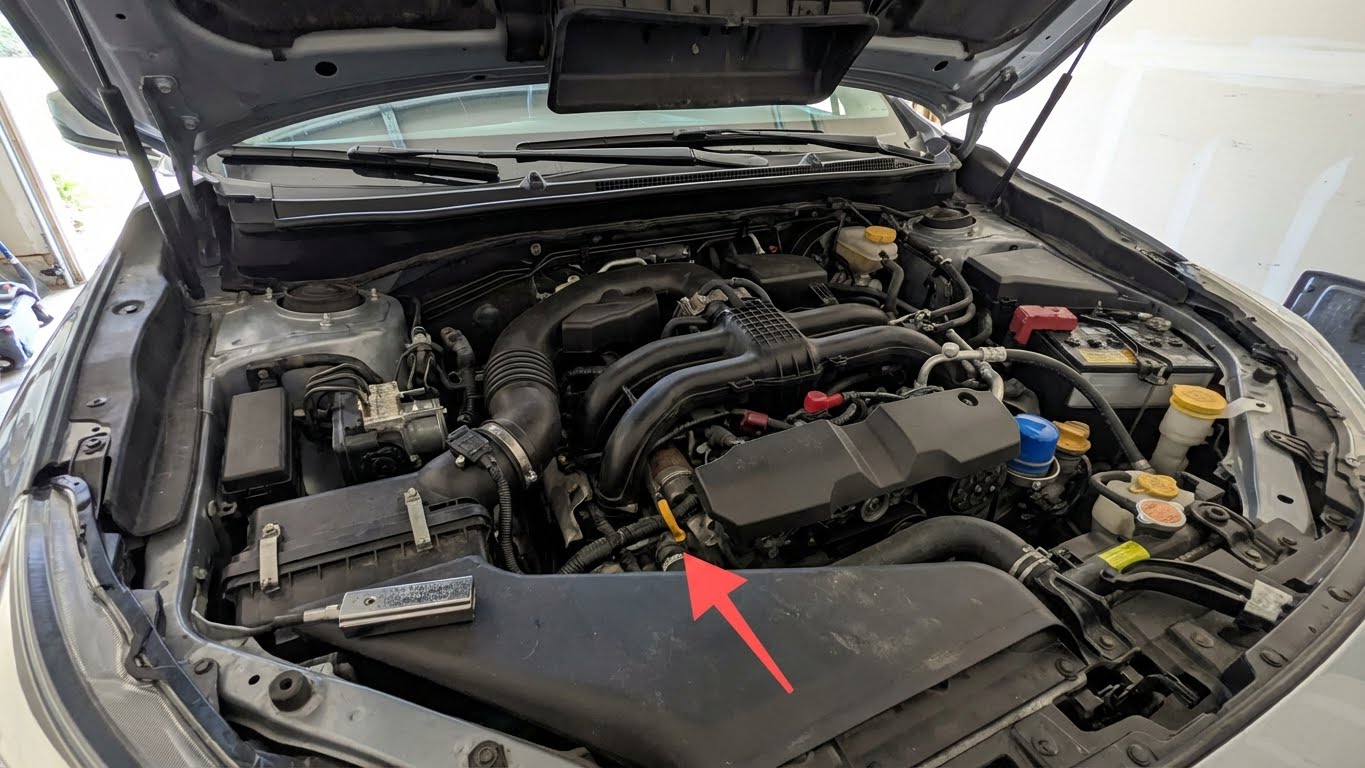
When a Subaru makes a clicking noise while starting, it usually means the engine is not turning over properly. This clicking sound often points to a weak battery, a problem with the starter motor, or poor electrical connections. Knowing this can help Subaru owners diagnose the issue quickly and decide what steps to take next.
The clicking noise happens because the starter motor’s solenoid is trying to engage but is not able to turn the engine fully. This can occur during cold starts or if the battery charge is low. Sometimes corrosion on battery terminals or a faulty starter can cause the same sound, making it important to check all related parts.
Understanding why this noise happens gives owners a clear path to fixing their car. Simple checks like testing the battery or inspecting the starter might solve the problem. This guide will help readers figure out what causes the clicking noise and how to fix it.
Key Takeways
- A weak battery is the most common cause of clicking noises in Subaru cars.
- Starter motor issues can also cause the engine not to turn over properly.
- Checking electrical connections and battery health is key to troubleshooting.
Contents
- 1 Understanding Subaru Clicking Noise When Starting
- 2 Main Causes of Clicking Noises in Subaru Vehicles
- 3 Diagnosing the Source of the Clicking Sound
- 4 Battery-Related Clicking Noises
- 5 Starter Motor Failure in Subaru Vehicles
- 6 Electrical System Issues
- 7 How Environmental Factors Affect Starting Noise
- 8 Steps to Troubleshoot Clicking Noise When Starting
- 9 Preventive Maintenance to Avoid Clicking Noises
- 10 Subaru Model-Specific Considerations
- 11 FAQs
- 12 Conclusion
Understanding Subaru Clicking Noise When Starting
Subaru vehicles can produce different sounds when starting, and some are signs of common issues. The clicking noise often points to problems with electrical components or engine parts. Recognizing these sounds and their patterns helps identify the cause quickly.
Common Sounds During Startup
A clicking noise when starting usually means the starter motor is trying to work but can’t fully engage the engine. This happens if the starter solenoid clicks but the motor doesn’t turn the engine.
Other startup sounds include:
- Squealing: A high-pitched shriek that often occurs during cold starts.
- Flapping or tapping: Sometimes heard near the engine, usually stopping after a short time.
- No sound or weak grunt: Could suggest a dead or weak battery.
Clicking noises often mean:
- Battery issues like low charge or poor connections.
- A failing starter motor or solenoid.
- Electrical problems such as blown fuses or defective alternators.
Differences Between Clicking and Other Noises
A clicking sound is sharp and repeated. It is different from grinding, squealing, or knocking noises. Grinding usually means starter gear problems. Squealing may relate to belts or pulleys, not the starter.
Clicking is usually quick and rhythmic, happening when the key turns. It stops if the engine doesn’t start.
Other noises may happen while driving, not just at startup. Recognizing clicking as separate helps focus on starter or battery issues.
Frequency and Patterns of Clicking
How often and when clicking occurs provides clues. A single click may mean a weak connection. Repeated clicking usually points to the starter solenoid attempting but failing to engage.
Common clicking patterns:
| Pattern | Possible Cause |
|---|---|
| Single click | Loose battery cable or weak battery |
| Rapid, repeated clicks | Starter motor or solenoid failure |
| Clicking with no start | Dead battery or electrical fault |
If clicking stops after a few attempts or changes in sound, it may indicate intermittent electrical contact. Consistent clicking without engine turnover often means the starter can’t turn the engine over.
Main Causes of Clicking Noises in Subaru Vehicles
Clicking noises when starting a Subaru often point to specific issues related to power delivery and electrical flow. These sounds usually mean something is preventing the engine from turning over fully. Identifying the exact cause helps avoid further damage.
Battery Issues
One of the most common reasons for a clicking sound during startup is a weak or dead battery. The battery provides the electrical power needed to turn the starter motor and start the engine. When the battery voltage drops too low, the starter does not get enough power to engage properly, causing a rapid clicking noise as the solenoid repeatedly tries to connect.
Battery problems can stem from corrosion on the terminals, a failing battery cell, or simply an old battery past its lifespan. Checking battery voltage and terminal connections can quickly confirm if the battery is the cause. Charging or replacing the battery often resolves this issue.
Starter Motor Problems
The starter motor is the part that physically turns the engine when the ignition key is turned. If the starter motor or its associated solenoid is malfunctioning, it can produce clicking noises. The solenoid acts as a switch to allow power from the battery to the starter motor.
Common starter issues include worn-out brushes, a damaged solenoid, or internal mechanical failure. When these happen, the starter may struggle to engage the flywheel, causing repeated clicking. Testing the starter motor separately can identify this problem, and repair or replacement will stop the noise.
Poor Electrical Connections
Loose, corroded, or damaged electrical connections can also cause clicking sounds when starting a Subaru. If the cable connections between the battery, starter motor, or grounding points have poor contact, the current flow is disrupted.
This leads to insufficient power reaching the starter motor, causing it to repeatedly attempt engagement in short bursts—heard as clicking. Inspecting and tightening cable terminals, cleaning corrosion, and replacing worn wiring usually fix this issue quickly. Proper connection ensures stable current flow for smooth starts.
Diagnosing the Source of the Clicking Sound
Diagnosing a clicking noise when starting a Subaru requires a careful look at different signs. The process includes checking parts visually, listening for when and how the noise happens, and using tools to find specific faults. Each step provides clues to narrow down the cause.
Visual Inspection Techniques
The first step is a close visual inspection. Check the battery terminals for corrosion or loose connections, as these can create clicking noises when starting. Look at the starter motor for any signs of damage or wear.
Inspect the wiring around the battery and starter to ensure there are no breaks or frayed wires. A damaged starter solenoid may also cause clicking, so it’s important to look for cracks or leaking fluid near this part.
Visual checks should include the condition of the battery itself. A swollen or damaged battery often struggles to deliver enough power, which can result in rapid clicking sounds during startup.
Listening for Specific Patterns
Pay attention to when the clicking noise happens. If it occurs right after turning the key but the engine does not crank, this usually points to electrical issues like a weak battery or a failing starter.
A rhythmic or repeated clicking sound may mean the starter motor’s gear is not engaging properly with the engine flywheel. In contrast, a single click often suggests a solenoid problem or a battery with low voltage.
Noticing if the clicking changes with temperature or after the car has been sitting for some time can help. For example, multiple clicks when cold but normal sound after warm-up may indicate a dying battery.
Diagnostic Tools for Subaru Models
Using diagnostic tools can accurately pinpoint the issue. A multimeter is essential for checking battery voltage; it should read at least 12.4 volts when the car is off.
A scan tool connected to the Subaru’s onboard diagnostics (OBD) port can identify starter or electrical faults by reading error codes. Mechanics sometimes use a stethoscope to listen closely to the starter and transmission area for abnormal sounds.
Battery testers, which apply a load to simulate starting conditions, help confirm if the battery can deliver enough power. These tools reduce guesswork by showing clear pass/fail results for key components.
Battery-Related Clicking Noises
Clicking noises from a Subaru when starting often point to battery issues. These problems usually involve either a battery that is losing power or electrical connections that are poor. Both can stop the car from starting properly.
Signs of a Failing Battery
A failing battery may make a rapid clicking noise when the ignition is turned. This happens because the battery has enough power to activate the starter solenoid but not enough to run the starter motor. Other signs include dim headlights, slow engine cranking, and warning lights on the dashboard.
If the battery is older than three to five years, it may be near the end of its life. Cold weather further weakens battery power. Testing battery voltage with a multimeter can help confirm if the battery is weak. A reading below 12.4 volts usually means the battery needs charging or replacing.
Corroded or Loose Battery Terminals
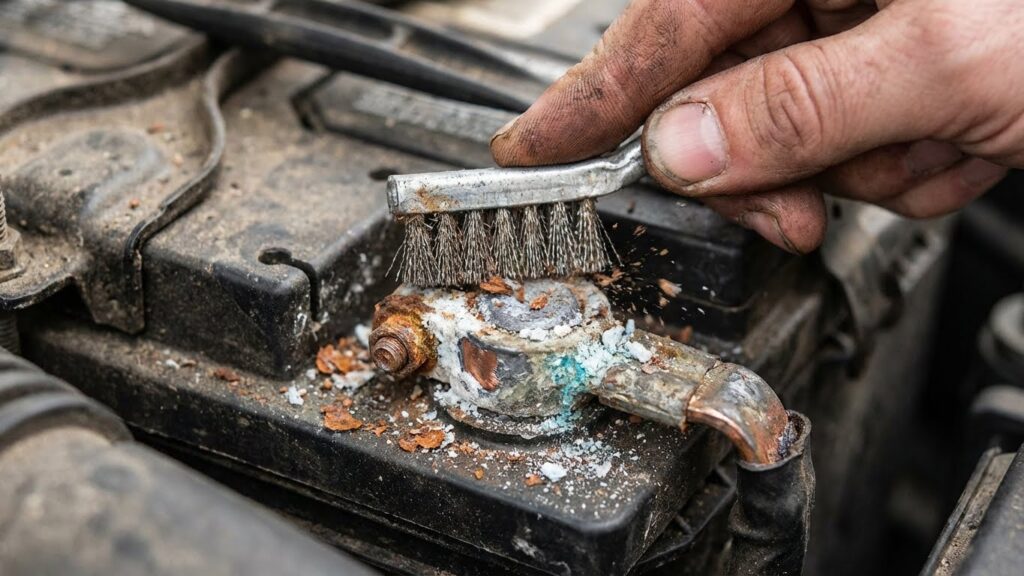
Corrosion or loose connections on battery terminals can also cause clicking noises. Corrosion looks like a white or greenish powder around the terminal posts. This buildup blocks electrical flow, making it hard for the car to start.
Loose terminals reduce the power reaching the starter. Even if the battery is good, poor contact can cause the starter to click without turning the engine. Cleaning terminals with a wire brush and tightening the clamps often fixes this issue quickly. Regular inspection helps prevent these electrical problems from causing starting failures.
Starter Motor Failure in Subaru Vehicles
A faulty starter motor in a Subaru can cause the engine not to turn over properly. This often leads to specific sounds and behaviors when trying to start the car. Identifying these signs and testing the starter can help confirm the problem.
Symptoms of a Malfunctioning Starter
Common signs of a bad starter motor include a distinct clicking noise when the key is turned. This click usually comes from the solenoid trying to engage but failing to turn the engine. Sometimes the starter produces repeated clicking sounds or a single loud click without engine crank.
Other symptoms are grinding or whirring noises during the start attempt and intermittent starting problems. The battery and electrical systems may appear normal because these components power lights and radio, but the engine will not crank. The starter motor may also work only after tapping it lightly, indicating worn internal parts.
How to Test the Starter Motor
Testing the starter motor begins by checking the battery voltage and ground connections. Both must be strong and secure for the starter to work correctly. A voltmeter can measure battery charge and starter voltage.
If power is good, tapping the starter body lightly with a hammer may make it engage temporarily. This shows the motor is weak or has stuck parts.
Another test is to listen for the solenoid click and check if the engine turns over. If the solenoid clicks but no crank happens, the starter motor is likely faulty. A professional can bench-test the starter off the car to confirm if it needs replacement.
Electrical System Issues
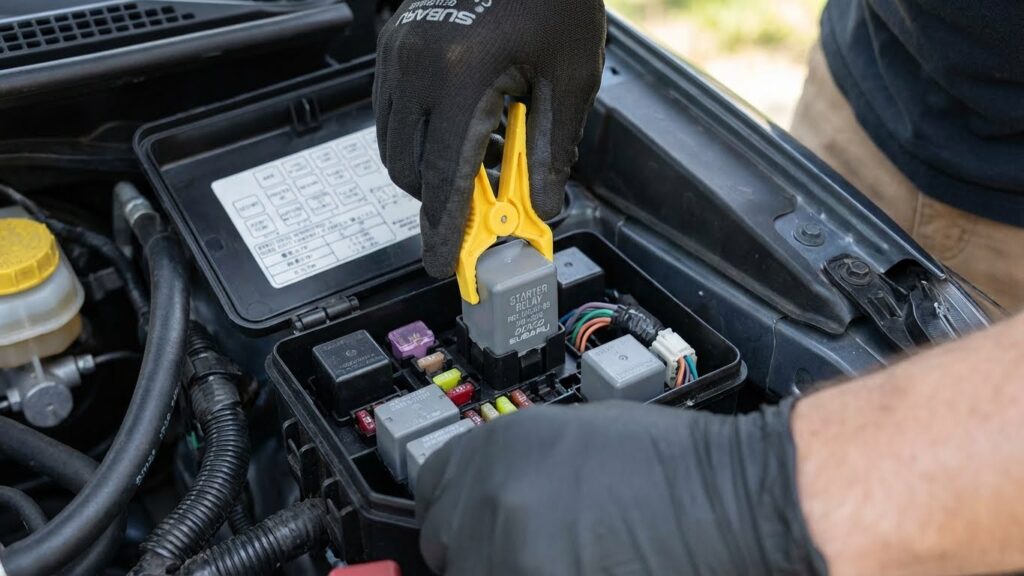
A faulty starter relay can prevent the proper signal from reaching the starter, causing a clicking sound despite a good battery.
Electrical problems often cause a clicking noise when starting a Subaru. These issues usually involve relays, fuses, or poor connections that stop the starter from getting power. Careful checks can identify the exact cause.
Checking Relays and Fuses
Relays and fuses control the flow of power to the starter and other systems. If a fuse is blown or a relay fails, the starter won’t get enough current, producing a clicking noise.
To test fuses, he or she should find the fuse box, often near the engine or under the dash, and look for any blown fuses marked by a broken filament. Using a multimeter confirms continuity.
Relays can be harder to test. Swapping a relay with a similar one from the fuse box may show if the relay is faulty. A bad relay stops current flow, triggering the clicking sound as the solenoid tries but fails to engage fully. Replacing faulty fuses or relays usually solves the problem.
Problems with Ground Connections
The battery and starter need a solid ground connection to complete the electrical circuit. Loose or corroded ground wires can cause voltage drops, resulting in weak signals to the starter.
He or she should inspect the ground wire between the battery and chassis and between the engine and frame. Look for looseness, rust, or dirt. Cleaning the contact points and tightening bolts ensures a strong connection.
A poor ground can cause the solenoid to click as power struggles to reach the starter. Fixing grounding issues often stops the clicking and allows the engine to crank normally.
How Environmental Factors Affect Starting Noise
Environmental conditions play a big role in the sounds a Subaru makes when starting. Cold temperatures and moisture can cause specific noises due to how they affect the engine and its components.
Cold Weather Impacts
Cold weather can cause a clicking noise when starting a Subaru because it makes the engine oil thicker. Thick oil slows down engine parts, putting extra strain on the starter motor. This strain can produce a rapid clicking sound as the starter struggles to turn the engine over.
Also, cold reduces battery power. A weak battery may not supply enough energy to the starter, which causes the clicking noise when it fails to engage fully. The noise is usually worst after the car has been sitting overnight or longer, when temperatures are at their lowest.
In cold weather, other parts like belts and pulleys may also stiffen, causing extra noises during startup. These noises often stop once the engine warms up and oil flows more easily.
Moisture and Corrosion
Moisture can build up on electrical contacts and parts in the starter system, causing corrosion. Corrosion reduces the flow of electricity, which can lead to clicking noises when the starter motor does not get enough power.
Water trapped in the engine area or battery terminals speeds up corrosion. This can cause poor connections, making the starter motor react with repeated clicks instead of turning the engine.
Keeping battery terminals clean and dry helps prevent corrosion. Using protective sprays or covers can also protect sensitive parts from moisture damage that leads to clicking noises during startup.
Steps to Troubleshoot Clicking Noise When Starting
A clicking noise during startup usually points to electrical or mechanical problems. Checking the battery, terminals, and starter motor carefully helps identify the root cause. If those checks don’t solve the issue, professional help might be needed.
Step-by-Step Troubleshooting Process
First, test the battery voltage with a multimeter. A weak or dead battery is the most common cause of clicking sounds. If the voltage is low, try charging or replacing the battery.
Next, inspect the battery terminals. Corrosion or loose connections can prevent proper current flow. Cleaning and tightening the terminals often fixes the problem.
If the battery and terminals check out, examine the starter motor and its solenoid. A faulty starter might produce the clicking noise but fail to turn the engine. Testing or swapping the starter motor can confirm if it needs replacement.
Also, review fuses, relays, and wiring related to the starting system. Blown fuses or damaged wires can cause similar symptoms. Ensure all components are intact and secure.
When to Seek Professional Help
If basic checks don’t solve the problem, it’s time to consult a mechanic. Complex issues in the starter motor, ignition switch, or electrical system require specialized tools and knowledge.
Persistent clicking that occurs after battery and terminal fixes can signal internal damage in the starter or alternator. Professionals can perform deeper diagnostics and repairs safely.
Also, if unusual noises continue during turning or engine cranking, experts can inspect the drivetrain or differential. These parts need careful testing beyond usual battery or starter checks.
Preventive Maintenance to Avoid Clicking Noises
Keeping a Subaru from making clicking noises when starting is often about caring for specific parts that affect the electrical flow. Proper attention to the battery and electrical system can reduce the chance of these sounds and help the car start reliably.
Regular Battery Care
The battery is the main power source for starting a Subaru, so its condition is key to avoiding clicking noises. A weak or old battery often causes the clicking sound because it can’t supply enough power to the starter motor. Checking the battery terminals regularly for corrosion or loose connections is important. Corrosion can block the flow of electricity, leading to insufficient power delivery.
It is also useful to test the battery’s voltage with a multimeter. Healthy batteries usually show around 12.6 volts or higher when the engine is off. If the voltage is low, the battery may need recharging or replacement. Seasonal checks are good practice, especially before winter, when batteries tend to lose charge faster.
Routine Electrical System Checks
Problems in the electrical system can also cause clicking noises during startup. Key parts to inspect include the starter motor, alternator, and fuse box connections. Loose or damaged wires can interrupt the flow of current, causing the starter to click but not engage fully.
Regular inspections by a qualified technician can spot issues like worn starter solenoids or faulty relays. These parts should be replaced promptly if found faulty. Keeping the alternator in good shape ensures the battery stays charged while driving, preventing weak starts later.
Simple maintenance like tightening loose wires and cleaning contacts keeps the electrical system working smoothly and prevents clicking noises when turning the key.
Subaru Model-Specific Considerations
Different Subaru models may have unique causes for clicking noises when starting. These issues often relate to the starter system, battery, or specific engine components.
Common Issues in Legacy and Outback
Legacy and Outback models often experience clicking noises due to starter motor problems. The clicking typically happens when the starter solenoid tries to engage but fails to turn the engine. Cold weather can worsen this issue, especially during the first start of the day.
Battery condition is also critical. A weak or dying battery can cause rapid clicking, as the starter doesn’t get enough power. In some cases, corrosion on battery terminals or loose connections may be the root cause.
Owners should pay attention to whether the noise occurs mainly during cold starts or at every attempt. Replacing the starter motor or ensuring the battery is strong and connections are clean usually solves the problem.
Forester and Impreza Starting Problems
Forester and Impreza models also show similar clicking noises, but users report additional electrical issues. These might include faulty relays or worn ignition switches contributing to the noise.
Another factor is the fuel system. A blocked fuel filter or malfunctioning fuel pump can sometimes cause the engine to fail to start, accompanied by a clicking sound as the starter motor struggles.
Regular maintenance like checking battery voltage and fuel system health can prevent many of these problems. Diagnosing the issue early helps avoid damage to the starter and related parts.
| Symptoms | Possible Causes | Suggested Action |
|---|---|---|
| Rapid clicking at start | Weak battery, corrosion | Test battery, clean terminals |
| Single clunk at start | Starter motor solenoid | Starter motor replacement |
| Clicking with no start | Fuel pump/filter issues | Inspect fuel system |
FAQs
Why does a Subaru make a clicking noise when starting?
A clicking noise often means the starter motor’s solenoid is working but the engine isn’t turning. This usually points to a weak battery, a faulty starter, or poor electrical connections. Checking the battery charge and terminals is a good first step.
Can a bad battery cause this clicking sound?
Yes. A low or dead battery is the most common cause. When the battery lacks enough power, the starter can’t fully engage, producing a clicking noise. Testing the battery with a multimeter can confirm if it needs replacement.
Is it safe to keep trying to start the car if it clicks?
Repeatedly trying to start a Subaru with this issue can strain the battery and starter. It’s best to diagnose the cause promptly to avoid further damage. If unsure, contacting a professional mechanic or visiting resources like the Subaru Owner’s Manual can help.
Could it be something else besides the battery or starter?
Yes, other reasons include blown fuses, a faulty alternator, or blocked fuel filters. These issues can also prevent the engine from starting while causing a clicking noise.
What should owners check before calling for help?
They should verify battery health, inspect terminals for corrosion, and listen for any changes in the clicking sound. Also, checking the fuses and fuel system may save time during repairs.
For more detailed advice, owners can visit websites like AutoMD for trusted troubleshooting guides.
Conclusion
A clicking noise when starting a Subaru often points to electrical or mechanical issues. The most common cause is a weak or dead battery, which can prevent the starter from getting enough power. Corrosion on battery terminals or loose connections can also lead to this problem.
If the battery and its connections are fine, the starter motor or solenoid may be the issue. A worn starter can make clicking or grinding sounds and may fail to crank the engine properly. Sometimes, debris or damage inside the starter can cause these noises.
Drivers should check these parts systematically:
| Possible Cause | Description | Action to Take |
|---|---|---|
| Weak Battery | Battery low or dead | Charge or replace battery |
| Corroded Terminals | Dirty or loose battery connections | Clean and tighten terminals |
| Faulty Starter | Worn or damaged starter motor | Repair or replace starter |
Addressing these problems early helps avoid getting stranded. If unsure, a mechanic can diagnose the clicks and recommend repairs. Understanding these common causes makes the issue easier to fix and keeps the Subaru reliable.