

Choosing the right antenna is key to getting the best reception on your CB radio. Whether you’re a beginner or an experienced user, understanding antenna types, placement, and features will help you communicate clearly and reliably every time.
Contents
- 1 Key Takeaways
- 2 Quick Answers to Common Questions
- 3 📑 Table of Contents
- 4 What Antenna Do I Need for a CB Radio to Get Best Reception
- 5 Understanding CB Radio Antennas
- 6 Types of CB Radio Antennas
- 7 How Antenna Length Affects CB Radio Reception
- 8 Where and How to Mount Your CB Antenna
- 9 Additional Factors for Best CB Radio Reception
- 10 Practical Tips and Recommendations
- 11 Conclusion
- 12 Frequently Asked Questions
- 13 Author
Key Takeaways
- Antenna Type Matters: Different antennas affect range and signal quality on a CB radio.
- Length and Frequency: A properly tuned antenna length improves reception and transmission.
- Mounting Location: Placement impacts signal clarity—higher and unobstructed is usually better.
- Quality Components: Good materials and connectors reduce signal loss and interference.
- Grounding and Installation: Correct grounding improves antenna performance and safety.
- Consider Your Needs: Mobile, base, or portable setups require different antenna solutions.
- Tuner Use: An antenna tuner can optimize your antenna for better results.
Quick Answers to Common Questions
What is the best length for a CB radio antenna?
The most common and effective length is a 1/4 wave antenna, about 4 feet long. A 5/8 wave antenna, around 5 feet long, offers even better range and signal strength.
Can I use any antenna for my CB radio?
No, CB radios operate on a specific frequency (around 27 MHz), so your antenna must be designed or tuned for CB use to perform well.
Where should I mount my CB antenna on my vehicle?
The best spot is the roof or trunk, where the antenna can have a clear, unobstructed view and a good ground plane for better reception.
Do magnetic mount antennas work well?
Yes, they are convenient and easy to install but may offer slightly less performance than permanent mounts due to grounding limitations.
Is an antenna tuner necessary for CB radios?
Not always, but an antenna tuner can help if your antenna’s SWR is high, improving signal quality and protecting your radio.
📑 Table of Contents
What Antenna Do I Need for a CB Radio to Get Best Reception
CB radios are great for communication on the road, at work sites, or just chatting with friends and family over short to medium distances. But the magic behind clear communication isn’t just in the radio itself—it’s in the antenna you use. If you’ve ever wondered, what antenna do I need for a CB radio? you’re in the right place. This guide will walk you through everything you need to know to pick the best antenna for your CB radio setup.
Understanding antennas might seem technical, but I’ll break it down in a way that’s easy to follow. We’ll cover antenna types, how length affects performance, where to mount your antenna, and practical tips for installation. By the end, you’ll have a solid grasp of how to boost your CB radio’s reception and enjoy clearer, longer-range conversations.
Understanding CB Radio Antennas
What Does an Antenna Do?
An antenna is the part of your CB radio system that sends and receives radio waves. It converts the electrical signals from your radio into radio waves that travel through the air and vice versa. Without a good antenna, your CB radio might struggle to reach or hear other radios.
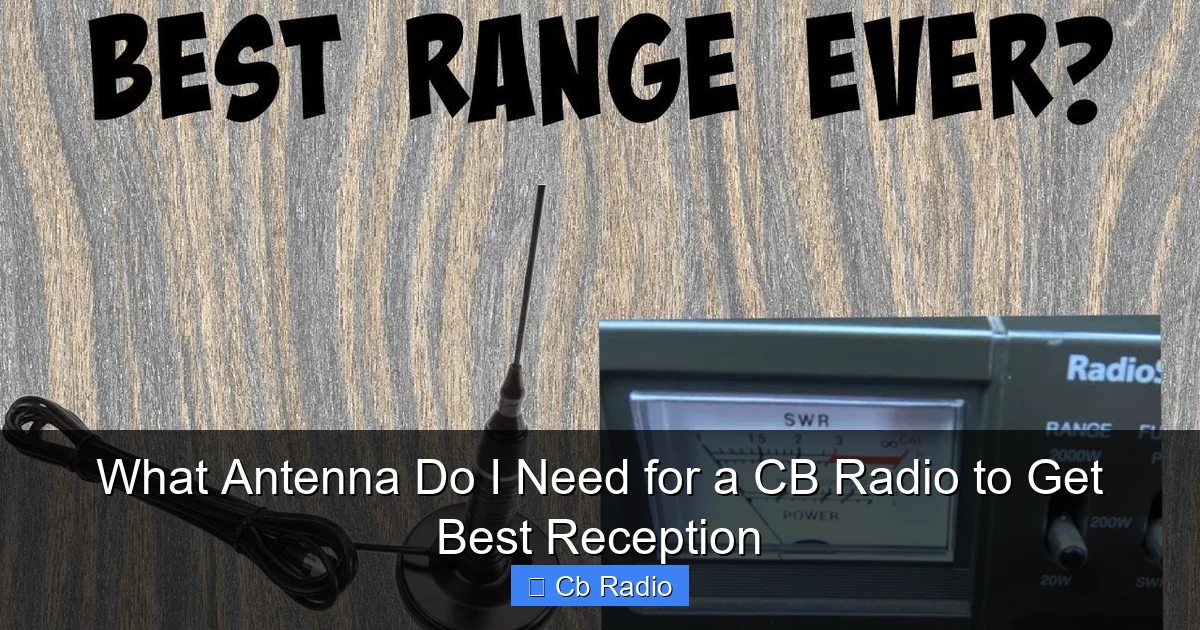
Visual guide about What Antenna Do I Need for a CB Radio to Get Best Reception
Image source: i.ytimg.com
The Importance of the Right Antenna
Not all antennas are created equal. The right antenna can make a big difference in how far and how clearly your CB radio communicates. Factors like antenna type, length, and mounting position all affect performance. Choosing the wrong antenna can limit your range or cause poor reception.
Types of CB Radio Antennas
1/4 Wave Whip Antennas
This is the most common and popular antenna for CB radios. It’s typically about 4 feet long and offers a good balance of range and ease of installation. Whip antennas are flexible and durable, great for mobile use on vehicles.
5/8 Wave Antennas
A 5/8 wave antenna is longer (around 5 feet) and provides better gain, which means a stronger signal and increased range. These antennas are often used for base stations or vehicles where maximum performance is desired.
Magnetic Mount Antennas
If you want a temporary or portable solution, magnetic mount antennas stick to your vehicle’s metal surface. They are easy to install and remove, ideal for renters or people who want to move their antenna between vehicles.
Base Station Antennas
For home or fixed locations, base station antennas are larger and meant to be mounted on rooftops or high poles. They usually offer the best range and reception due to their height and size.
How Antenna Length Affects CB Radio Reception
Why Length Matters
CB radios operate at 27 MHz, which means the antenna length must match the wavelength for optimal performance. An antenna that’s too short or too long will not resonate properly, leading to signal loss.
Common Lengths Explained
- 1/4 Wave (about 9 feet electrical length, ~4 ft physical): Best all-around choice for mobile use.
- 5/8 Wave (about 13.1 feet electrical length, ~5 ft physical): Offers more gain and a stronger signal.
- Shorter antennas: Easier to mount but may sacrifice range.
Many antennas include coils or loading coils that help “shorten” the physical length while keeping the electrical length correct. These are especially useful for vehicle installations where space is limited.
Where and How to Mount Your CB Antenna
Best Mounting Locations
Placement is key. The higher and more unobstructed your antenna is, the better your reception. On vehicles, the roof or trunk is ideal. For base stations, mounting on a tall mast or rooftop away from metal obstructions works best.
Mounting Tips
- Use a proper mount: Roof mounts, mirror mounts, or bumper mounts are common options.
- Ensure good grounding: A solid ground plane improves antenna performance.
- Avoid obstructions: Keep antennas away from other metal parts that can block signals.
Mag Mounts vs. Permanent Mounts
Magnetic mounts are easy and convenient but may provide slightly less performance due to ground plane limitations. Permanent mounts require drilling but often offer better performance and durability.
Additional Factors for Best CB Radio Reception
Using an Antenna Tuner
An antenna tuner matches the antenna to the radio’s output for maximum power transfer. This can reduce standing wave ratio (SWR) and improve signal quality.
Quality Coaxial Cable and Connectors
Use low-loss coaxial cable designed for CB radios. Poor quality cables or loose connectors can degrade your signal.
Regular Maintenance
Check your antenna and connections regularly for corrosion or damage. Clean connectors and tighten mounts to keep your system in top shape.
Practical Tips and Recommendations
- Start with a quality 1/4 wave whip antenna: It’s a reliable choice for most users.
- Upgrade to 5/8 wave if you want longer range: Especially for fixed or mobile base stations.
- Use a magnetic mount for temporary setups: Great for testing or rental vehicles.
- Keep your antenna high and away from obstructions: Even small changes in mount location can improve reception.
- Invest in an antenna tuner if you experience high SWR: This helps protect your radio and improve signal quality.
- Don’t forget grounding: A good ground plane is essential for mobile antennas.
Conclusion
So, what antenna do I need for a CB radio to get the best reception? The answer depends on your specific use case, but a quality 1/4 wave or 5/8 wave antenna mounted in an ideal location will dramatically improve your signal. Remember, antenna length, type, mounting, and maintenance all play vital roles in clear communication.
With the right antenna and setup, your CB radio will deliver the performance you expect—whether you’re on the road, at home, or out in the field. Take your time selecting and installing your antenna, and you’ll enjoy better conversations with less interference and more range. Happy communicating!
Frequently Asked Questions
How does antenna length affect CB radio range?
Antenna length affects resonance at the CB frequency. A properly sized antenna maximizes signal transmission and reception, increasing your effective range.
What is SWR and why is it important?
SWR (Standing Wave Ratio) measures how well your antenna is matched to your radio. Low SWR means less signal loss and less chance of damaging your radio.
Can I install a CB antenna myself?
Yes, most CB antennas are designed for easy installation. Just follow manufacturer instructions and ensure proper mounting and grounding.
Will a taller antenna always improve reception?
Generally, yes—higher antennas have fewer obstructions and better line-of-sight. But too tall or poorly installed antennas can cause issues, so balance height with stability.
Are all coax cables equal for CB antennas?
No, using low-loss coaxial cable designed for CB radios ensures minimal signal degradation and better overall performance.
What is a ground plane and why do I need one?
A ground plane is a conductive surface that helps your antenna radiate effectively. Vehicles usually provide this, but fixed installations may need a metal plate or mesh.