

CB radio channels are specific frequencies that allow users to communicate over short distances using Citizen Band radios. Each channel serves different purposes, making CB radio a versatile tool for personal and professional communication. Understanding how these channels work helps you connect better and use your CB radio effectively.
Contents
- 1 Key Takeaways
- 2 Quick Answers to Common Questions
- 3 📑 Table of Contents
- 4 Introduction to CB Radio Channels
- 5 What Are CB Radio Channels?
- 6 The 40 Standard CB Radio Channels Explained
- 7 How CB Radio Channels Work for Communication
- 8 Common Uses of CB Radio Channels
- 9 Tips for Using CB Radio Channels Effectively
- 10 The Future of CB Radio Channels
- 11 Conclusion
- 12 Frequently Asked Questions
- 13 Author
Key Takeaways
- CB radio channels are frequency slots: They divide the radio spectrum into specific channels for organized communication.
- There are 40 standard CB channels: Each channel has its own assigned frequency in the 27 MHz band.
- Different channels serve different functions: Some are for general chat, others for emergency or trucker communications.
- Channel 19 is popular among truckers: It’s commonly used for highway communication and travel updates.
- CB radios operate on shared channels: Users must follow etiquette to avoid interference and confusion.
- Understanding channel use boosts communication: Knowing which channels to use improves clarity and connection.
- CB radios are easy to use and require no license: Making them accessible for hobbies, work, and emergencies.
Quick Answers to Common Questions
What frequency range do CB radio channels use?
CB radio channels operate in the 27 MHz band, specifically from 26.965 MHz to 27.405 MHz.
How many channels are available on a standard CB radio?
There are 40 standard CB radio channels available for use.
Which CB channel is used for emergencies?
Channel 9 is designated for emergency communications and assistance.
Why is Channel 19 popular among truckers?
Channel 19 is popular because truckers use it to share traffic updates and road conditions while on highways.
Do I need a license to use a CB radio?
No license is needed to operate a CB radio in most countries, including the United States.
📑 Table of Contents
Introduction to CB Radio Channels
If you’ve ever seen a trucker chatting over a CB radio or heard about the old-school communication tool used by hobbyists, you might wonder, “What are CB radio channels exactly?” CB, or Citizen Band radio, is a simple, effective way to communicate over short distances without relying on cell phones or the internet. At the heart of this system are CB radio channels—specific frequencies that help organize conversations.
CB radios have been around since the 1940s and gained massive popularity among truck drivers, off-roaders, and emergency responders. The magic of CB radio lies in its channels, each assigned a unique frequency to keep communications clear and organized. Understanding how these channels work can open up a new world of instant, reliable communication.
In this article, we’ll explore what CB radio channels are, how they work, and practical tips for using them effectively. Whether you’re a beginner or just curious, this guide will help you navigate the CB radio spectrum like a pro.
What Are CB Radio Channels?
The Basics of CB Radio Frequencies
CB radio channels are specific segments of the radio frequency spectrum designated for communication using Citizen Band radios. The CB radio band operates around 27 MHz, and it is divided into 40 channels, each spaced 10 kHz apart.
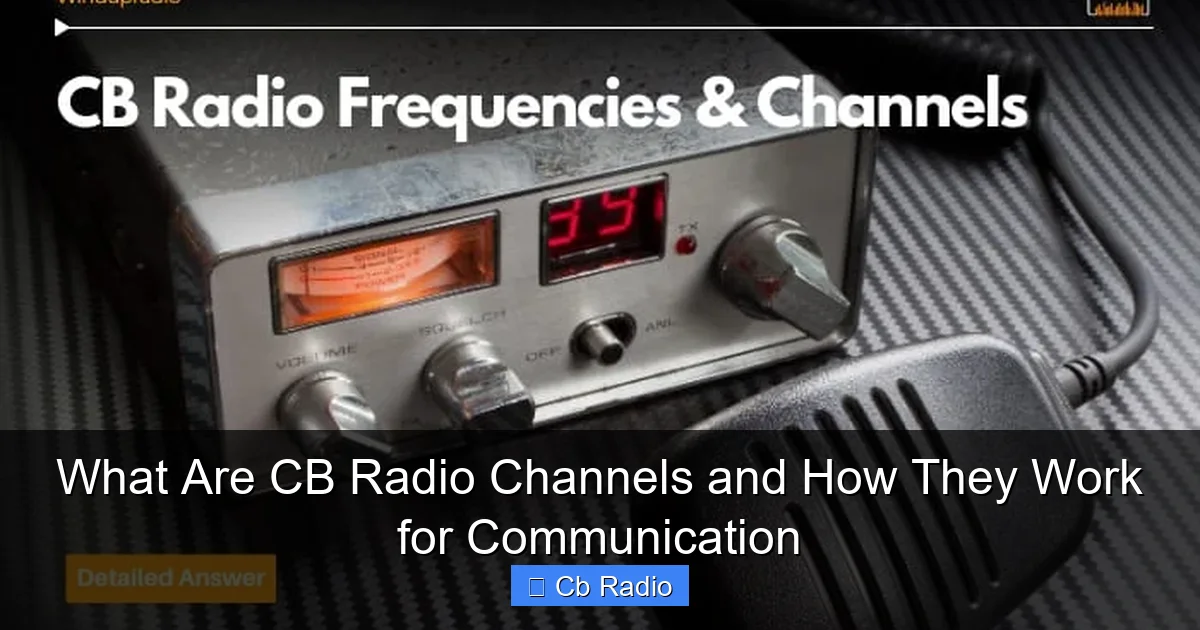
Visual guide about What Are CB Radio Channels and How They Work for Communication
Image source: windupradio.com
Each channel corresponds to a unique frequency. When you tune your CB radio to a particular channel, you transmit and receive signals on that frequency. This system prevents chaos by ensuring that conversations happen on separate channels without overlapping.
Why Are Channels Important?
Imagine a crowded room where everyone talks at once—that’s what would happen if all CB radios operated on the same frequency. Channels help organize communication by giving users dedicated frequencies or “lanes” to chat in, reducing interference and improving clarity.
The 40 Standard CB Radio Channels Explained
Overview of Channels 1 to 40
The 40 CB channels cover frequencies from 26.965 MHz (Channel 1) to 27.405 MHz (Channel 40). Each channel is spaced to allow clear communication without overlap. Here’s a brief overview of some important channels:
- Channel 1: Often used for calling or starting communication.
- Channel 9: Reserved for emergency communications and assistance.
- Channel 19: The most popular channel among truckers and highway travelers.
- Channel 20: Commonly used for general conversations and local chatter.
Special Channels and Their Uses
Some channels have specific traditional uses, especially among truckers and emergency personnel. For example, Channel 9 is monitored by emergency services or users needing help. Channel 19 is the go-to for highway information, traffic updates, and driver communication.
While any channel can technically be used for conversation, it’s best to follow these conventions to ensure clear, respectful communication.
How CB Radio Channels Work for Communication
Transmitting and Receiving on Channels
When you select a channel on your CB radio, you’re choosing which frequency to use for both transmitting and receiving messages. If two or more radios are tuned to the same channel within range, they can hear each other and communicate.
CB radios use amplitude modulation (AM) for voice communication, although some newer models also support single sideband (SSB), which extends range and clarity on certain channels.
Channel Sharing and Etiquette
Since CB channels are shared by all users in an area, it’s important to follow communication etiquette. This includes:
- Listening before transmitting to avoid interrupting ongoing conversations.
- Keeping transmissions brief and to the point.
- Using clear language and avoiding offensive terms.
- Yielding emergency channels (like Channel 9) for actual emergencies only.
Respecting these rules helps maintain a friendly and efficient communication environment.
Common Uses of CB Radio Channels
Trucker Communication
Truck drivers use CB radios extensively on Channel 19 to share traffic conditions, road hazards, and general information. This real-time communication helps improve safety and efficiency on highways.
Off-Roading and Recreation
Off-road enthusiasts often use CB radios to coordinate routes, warn about obstacles, and stay connected when out of cellphone range. Channels 20 to 23 are popular for these casual chats.
Emergency and Disaster Situations
Because CB radios don’t rely on cellular networks, they are valuable during emergencies or natural disasters when other communication methods fail. Channel 9 is reserved for emergency use and can be a lifeline during crises.
Workplace Communication
Some industries use CB radios for on-site communication, especially where cell service is poor. Construction sites, security teams, and event coordinators benefit from the instant connection CB radios provide.
Tips for Using CB Radio Channels Effectively
Choosing the Right Channel
Identify your purpose and select the appropriate channel. For highway travel, Channel 19 is best; for emergencies, use Channel 9. For local chatting or off-roading, try channels 20-23.
Clear and Concise Communication
Speak clearly, keep messages short, and avoid jargon unless understood by all participants. This ensures everyone gets the message without confusion.
Avoiding Interference
Listen before talking to avoid overlapping conversations. If a channel is busy, switch to a less crowded one or wait your turn.
Using Channel Scanners
Many CB radios have a scanning feature that cycles through channels to find active conversations. This helps you join ongoing chats or find a clear channel quickly.
The Future of CB Radio Channels
Modern Technology Meets Classic Communication
While smartphones dominate, CB radios remain relevant due to their simplicity and independence from cellular networks. Newer radios blend traditional channels with digital features, improving range and clarity.
Continued Popularity Among Communities
From truckers to hobbyists, CB radio channels continue to provide a reliable communication tool. Understanding these channels ensures you stay connected no matter where you are.
Conclusion
CB radio channels are the backbone of Citizen Band communication. They organize the airwaves into manageable, easy-to-use frequencies that enable a wide range of users to talk, share information, and help each other. Whether you’re a trucker, off-roader, or just curious about this classic communication method, knowing how CB radio channels work will help you get the most out of your CB radio.
Next time you tune into your CB radio, remember the channel you choose is more than just a number—it’s your gateway to clear, reliable conversations and a vibrant community of users. So grab your radio, pick a channel, and start talking!
Frequently Asked Questions
Can I use any CB channel for my conversations?
Technically, yes, but it’s best to use channels according to their common purposes to avoid interference and respect other users.
What is the range of communication on CB radio channels?
Typical range is 1 to 5 miles, but it can extend further with favorable conditions and SSB radios.
How do I avoid interference on CB channels?
Listen before transmitting, avoid crowded channels, and keep your messages brief to reduce interference.
What is Single Sideband (SSB) in CB radios?
SSB is a modulation mode that allows longer range and clearer communication but requires compatible radios on both ends.
Are CB radios still useful with smartphones available?
Yes, especially in remote areas, emergencies, or places with poor cellular coverage, CB radios provide reliable, instant communication.
Can multiple people use the same CB channel at once?
Yes, but only one person can transmit at a time. Others listen and take turns speaking to avoid confusion.