

CB radios are versatile communication devices used primarily for short-distance communication. From truckers and off-roaders to emergency responders, they serve critical roles in safety, coordination, and entertainment. This article dives into the main uses and benefits of CB radios in today’s world.
Contents
Key Takeaways
- Point 1: CB radios are mainly used for short-range, two-way communication.
- Point 2: Truck drivers rely on CB radios for road safety and real-time traffic updates.
- Point 3: Off-road enthusiasts use CB radios to stay connected in remote areas without cell service.
- Point 4: CB radios assist emergency responders and disaster teams during crises when other communication fails.
- Point 5: Recreational users enjoy CB radios for socializing and coordinating group activities.
- Point 6: CB radios are affordable, easy to use, and don’t require a license in most countries.
- Point 7: Despite new technology, CB radios remain relevant due to their reliability and simplicity.
Quick Answers to Common Questions
What are CB radios mainly used for?
CB radios are primarily used for short-range, two-way voice communication in vehicles, outdoor activities, and emergency situations.
Do you need a license to operate a CB radio?
In most countries, including the United States, you do not need a license to operate a CB radio.
How far can CB radios communicate?
CB radios typically communicate over distances of 1 to 20 miles, depending on terrain, antenna quality, and weather conditions.
Can CB radios be used during emergencies?
Yes, CB radios are often used by emergency responders and disaster relief teams when other communication networks fail.
Are CB radios still relevant with modern technology?
Yes, CB radios remain relevant due to their reliability, simplicity, and ability to operate independently of cellular networks.
📑 Table of Contents
Introduction
Have you ever wondered what are CB radios used for? These compact communication devices have been around for decades, yet they continue to play a vital role in various industries and hobbies. Unlike cell phones or internet-based communication, CB radios offer a simple, reliable way to talk to others over short distances without relying on networks.
From long-haul truckers cruising down highways to outdoor adventurers exploring rugged terrain, CB radios help people stay connected in situations where other communication tools might fail. In this article, we’ll explore the primary applications of CB radios today and explain why they are still a popular choice for many users.
What Is a CB Radio?
Understanding the Basics
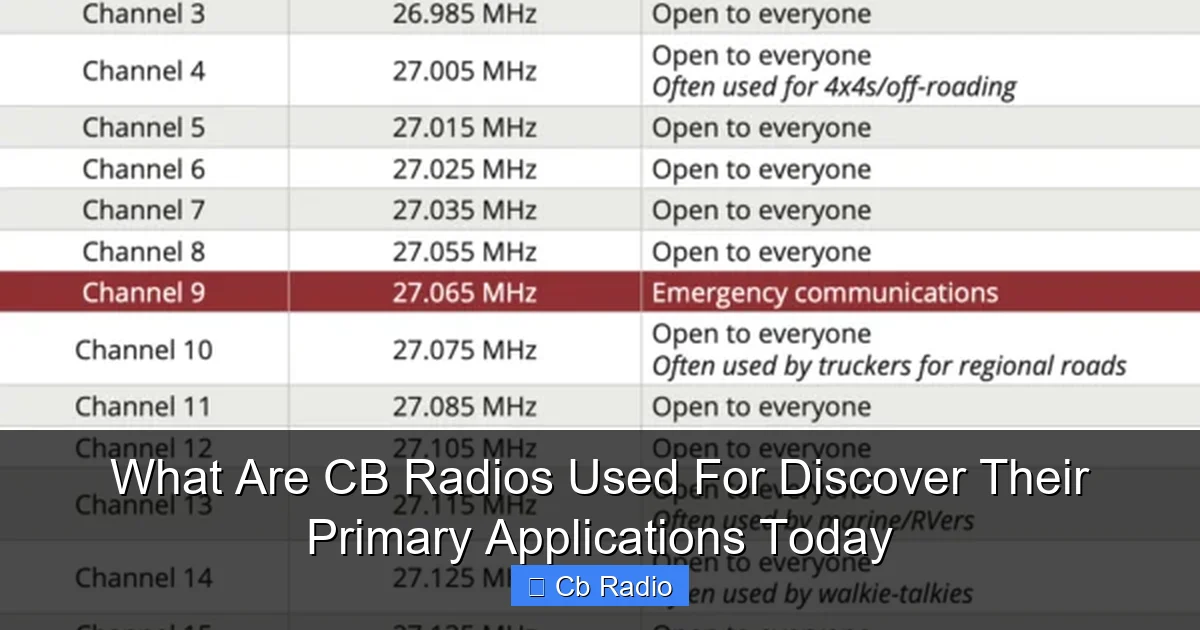
CB stands for Citizens Band, a portion of the radio spectrum reserved for public use. CB radios operate on 40 channels within the 27 MHz band, allowing users to communicate over distances typically ranging from a few miles up to 20 miles, depending on conditions.
Visual guide about What Are CB Radios Used For Discover Their Primary Applications Today
Image source: strykerradios.com
Accessibility and Ease of Use
One of the biggest advantages of CB radios is that they usually don’t require a license to operate. This makes them accessible to anyone who wants a straightforward communication tool. The radios are easy to install and use, often installed in vehicles or handheld units for portability.
Primary Uses of CB Radios
1. Communication for Truck Drivers
Truckers have long been the most iconic users of CB radios. On the road, CB radios are invaluable for:
- Getting real-time traffic updates and road conditions.
- Sharing information about speed traps or police presence.
- Coordinating with other drivers for assistance or convoy driving.
For example, if a truck driver encounters an accident blocking a lane, they can warn others coming behind. This instant communication enhances safety and efficiency on highways.
2. Off-Road and Outdoor Activities
Off-road enthusiasts, campers, and hunters often use CB radios to stay connected in remote areas where cell phones might not work. The radios help groups stay coordinated during activities such as:
- Trail riding in mountainous or forested terrain.
- Camping trips in areas with poor or no cellular coverage.
- Hunting expeditions where silent, reliable communication is crucial.
Having a CB radio allows these groups to maintain contact for safety, navigation, and social interaction without needing internet access.
3. Emergency and Disaster Communication
CB radios are a critical tool for emergency responders and disaster relief teams. In situations where cell towers are down or overloaded, CB radios provide a dependable fallback. Common uses include:
- Coordinating rescue efforts during natural disasters like hurricanes or wildfires.
- Providing communication in rural or isolated communities.
- Supporting volunteer emergency groups and amateur radio operators.
During emergencies, the ability to communicate instantly without relying on infrastructure can save lives.
4. Recreational and Social Use
Many people also use CB radios for fun and socializing. This includes:
- Chatting with friends or fellow drivers during long trips.
- Joining CB radio clubs and networks.
- Participating in convoy drives or car rallies.
CB radio channels often have lively conversations and can be a great way to meet people who share similar interests.
How CB Radios Work in Practice
Range and Signal Quality
The typical range of a CB radio varies based on terrain, antenna quality, and weather. In open areas, CB radios can reach up to 20 miles, but urban settings with buildings and interference can reduce this significantly.
Choosing the Right Channel
There are 40 channels available, with some reserved for specific uses. For example, channel 9 is traditionally used for emergency communications. Users often select channels based on their region or purpose to avoid interference.
Tips for Effective Use
- Use a good-quality antenna to maximize range.
- Keep your microphone close when speaking for clear audio.
- Listen before transmitting to avoid interrupting ongoing conversations.
- Respect CB radio etiquette and avoid using profanity or offensive language.
Advantages of Using CB Radios
Reliability and Independence
Unlike cell phones, CB radios don’t rely on towers or networks. This makes them extremely reliable, especially in remote or disaster-stricken areas.
Cost-Effectiveness
CB radios are relatively inexpensive compared to other communication devices. There are no monthly fees or subscription costs, making them economical for regular use.
User-Friendly Interface
Most CB radios are designed with simple controls. Even beginners can quickly learn how to operate them, making them accessible to a wide range of users.
Common Misconceptions About CB Radios
CB Radios Are Outdated
While technology has advanced, CB radios still offer unique benefits that newer devices can’t fully replace, especially in certain environments.
CB Radios Have Limited Range
Though the range is shorter than some modern communication tools, proper equipment and favorable conditions can extend the effective communication distance significantly.
Everyone Needs a License
In most countries, including the US, CB radios can be used without a license, making them more accessible than amateur (ham) radios.
Conclusion
CB radios remain a practical and trusted communication tool for a variety of users today. Whether you’re a trucker needing traffic updates, an off-roader navigating rugged terrain, or part of an emergency response team, CB radios provide reliable, instant communication without the need for cellular networks.
Their affordability, ease of use, and versatility make CB radios a valuable addition to many vehicles and outdoor setups. Understanding what are CB radios used for helps appreciate why this technology continues to thrive decades after its introduction.
If you’re considering a communication device for your vehicle or outdoor adventures, a CB radio might just be the perfect fit.
Frequently Asked Questions
What is the difference between a CB radio and a ham radio?
CB radios operate on specific frequencies within the 27 MHz band and typically don’t require a license. Ham radios cover a wider frequency range and require licensing and training but offer greater communication distances and capabilities.
Can CB radios be used in urban areas?
Yes, CB radios can be used in urban areas, but buildings and interference may reduce their effective range.
What types of vehicles commonly use CB radios?
CB radios are commonly used in trucks, off-road vehicles, RVs, and boats for communication and safety purposes.
Are CB radios affected by weather?
Weather can impact CB radio performance, with conditions like heavy rain or storms sometimes reducing signal quality and range.
How do I improve the range of my CB radio?
Improving your antenna quality, positioning it correctly, and using a higher power radio can extend your CB radio’s range.
Is it legal to use profanity on CB radios?
No, using profanity or offensive language on CB radios is illegal and against FCC regulations in many countries. Users should follow proper etiquette.