

Truckers primarily use channel 19 on CB radios to communicate on the road. This channel serves as the main highway frequency for sharing traffic updates, road hazards, and general chatter. Understanding this channel helps both truckers and drivers stay informed and connected.
Contents
- 1 Key Takeaways
- 2 Quick Answers to Common Questions
- 3 📑 Table of Contents
- 4 Introduction to CB Radios and Truckers
- 5 What Channel Do Truckers Use on CB Radio?
- 6 Other Channels and Their Uses
- 7 Practical Tips for Using CB Radio as a Trucker
- 8 Why Do Truckers Still Use CB Radios?
- 9 Understanding CB Radio Language and Codes
- 10 Conclusion
- 11 Frequently Asked Questions
- 12 Author
Key Takeaways
- Channel 19 is the standard trucker channel: Most truckers use CB radio channel 19 for highway communication.
- Channel 9 is reserved for emergencies: This channel is monitored for urgent help and distress calls.
- CB radios help truckers share road info: They relay traffic conditions, accidents, and weather updates.
- Different regions might have secondary channels: Some areas use other channels for local chatter or convoys.
- Proper etiquette is important: Truckers follow rules to keep communication clear and respectful.
- CB radios operate on 40 channels: But not all are commonly used by truckers.
- CB radios remain relevant despite modern tech: They provide quick, reliable communication without cell service.
Quick Answers to Common Questions
What channel do truckers usually use on CB radio?
Truckers primarily use channel 19 for highway communications and sharing road information.
Is channel 9 important for truckers?
Yes, channel 9 is reserved for emergencies and is monitored by law enforcement and emergency services.
Can anyone use channel 19 on a CB radio?
Yes, anyone with a CB radio can use channel 19, but it’s mainly used by truckers and drivers on highways.
Are there other CB channels truckers use besides 19 and 9?
Some truckers use channels like 6, 10, or 17 for local or convoy communication.
Why do truckers still rely on CB radios today?
CB radios don’t depend on cell towers, making them reliable in remote areas. They also foster a sense of community among truckers.
📑 Table of Contents
Introduction to CB Radios and Truckers
If you’ve ever driven on the highway and heard chatter on a CB radio, you might wonder, “What channel do truckers use on CB radio?” CB radios have been an essential tool for truckers for decades. They offer a simple way to communicate with other drivers, share vital road information, and stay connected during long hauls.
Even with the rise of smartphones and GPS technology, CB radios remain popular among truck drivers. They don’t rely on cell towers, which means truckers can stay in touch even in remote areas. Let’s explore which channels truckers use, why those channels matter, and how you can understand their CB conversations better.
What Channel Do Truckers Use on CB Radio?
Channel 19: The Highway Channel
The most common channel truckers use is channel 19. This channel is widely recognized as the “trucker’s channel” because it’s the go-to frequency for communication on highways and interstates. When truckers want to warn about traffic jams, accidents, or speed traps, they switch to channel 19.
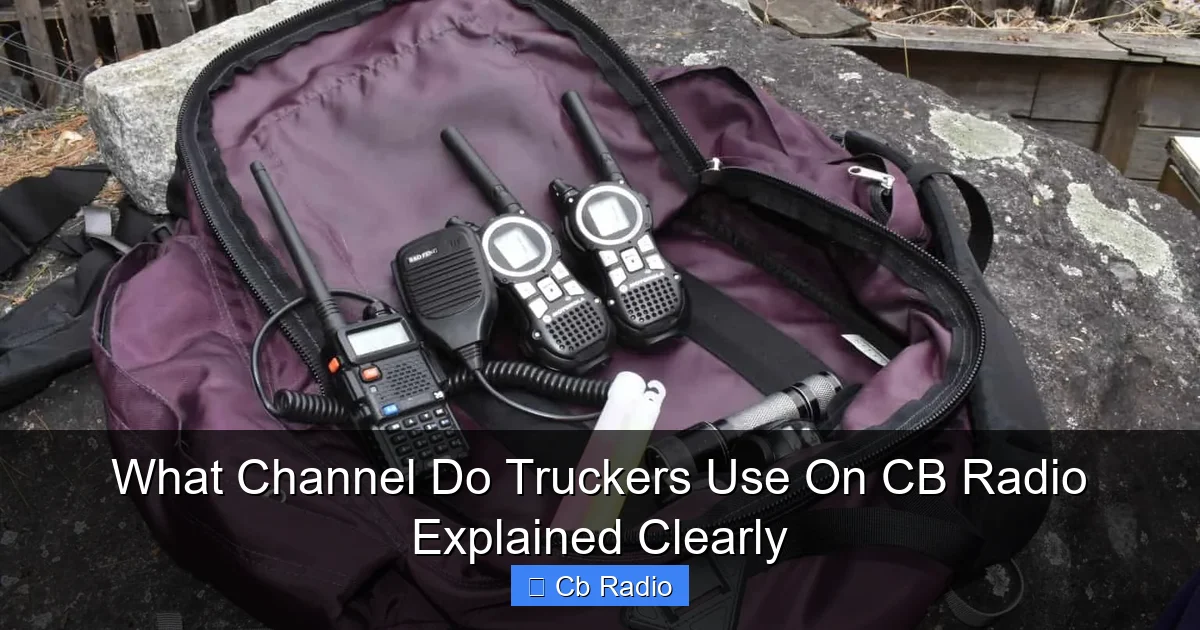
Visual guide about What Channel Do Truckers Use On CB Radio Explained Clearly
Image source: survivalsullivan.com
Since channel 19 is so popular, drivers who want to listen in on trucker chatter often tune their CB radios here. It’s the busiest channel on the road and the heart of CB communication for truckers.
Channel 9: The Emergency Channel
While channel 19 is for general communication, channel 9 is reserved specifically for emergencies. Police, fire departments, and highway patrol monitor channel 9 for distress calls. Truckers also use channel 9 to report accidents, breakdowns, or other urgent situations.
It’s important not to use channel 9 for casual conversations. Keeping it clear can save lives.
Other Channels and Their Uses
Channels for Local Communication
Besides channels 19 and 9, some truckers use other channels for local or specialized communication. For example, channel 17 is sometimes used for local traffic or convoy communication. In certain regions, truckers might use channels 15 or 13 to avoid crowding channel 19.
Channel 6 and Channel 10
Channel 6 and 10 are occasionally favored by truckers who want to chat without the heavy traffic on channel 19. These channels can serve as alternatives when the main highway channel is too busy. However, they are less standardized and might vary by region.
Practical Tips for Using CB Radio as a Trucker
How to Tune In
To start, set your CB radio to channel 19 to join most trucker conversations. Use a good quality antenna to improve your signal range. When listening, keep the volume at a comfortable level and avoid interrupting unless you have useful information to share.
Basic CB Radio Etiquette
- Keep messages short and clear.
- Use proper call signs or handles.
- Avoid profanity or offensive language.
- Don’t hog the channel; let others speak.
- Use channel 9 only for emergencies.
Sharing Useful Information
Truckers often use CB radios to alert others about speed traps, accidents, road closures, or weather hazards. If you have relevant info, announce it clearly on channel 19. This helps keep the road safer for everyone.
Why Do Truckers Still Use CB Radios?
Reliability Without Cell Service
CB radios don’t rely on cell towers or internet connections, making them invaluable in remote or rural areas. Truckers driving through mountains, deserts, or less populated regions can still communicate when cell phones fail.
Community and Camaraderie
Many truckers enjoy the sense of community CB radios foster. It’s a way to connect with fellow drivers, share stories, and stay alert. This camaraderie has kept CB radios alive despite new technology.
Understanding CB Radio Language and Codes
Common Truckers’ Slang
Truckers often use specific slang or 10-codes on CB radios. For example:
- 10-4: Message received or understood.
- Breaker: Used to request to join a conversation.
- Bear: Police officer or speed trap ahead.
- Smokey: Another term for police officer.
- Lot lizard: A derogatory term for prostitutes at truck stops.
How to Learn the Lingo
Listening to CB chatter regularly can help you get familiar with common terms. Many websites and CB user guides also list popular slang and etiquette tips.
Conclusion
So, what channel do truckers use on CB radio? The simple answer is channel 19. This channel is the lifeline for truckers on the road, helping them share vital information and stay connected. Channel 9 remains reserved for emergencies, ensuring critical messages get through.
Understanding these channels and the culture around CB radios can make your driving experience safer and more enjoyable. Whether you’re a trucker or just curious, tuning into channel 19 can open a window into the world of trucker communication.
Remember, CB radios are more than just gadgets—they’re trusted companions for millions of truckers nationwide.
Frequently Asked Questions
Can I talk to truckers if I don’t own a truck?
Yes, anyone with a CB radio can communicate on the same channels as truckers, especially channel 19.
Is it legal to use a CB radio while driving?
In most places, using a CB radio while driving is legal, but you should always follow local laws and avoid distractions.
How far can CB radio signals reach?
CB radios typically have a range of 1 to 5 miles, but this can vary based on terrain, antenna quality, and weather conditions.
What is a “handle” in CB radio talk?
A handle is a nickname or alias users adopt on CB radio to identify themselves during conversations.
Are CB radios still popular with new truck drivers?
Yes, many new truck drivers still use CB radios because they are reliable and useful for real-time communication on the road.
Do truckers use any special equipment with their CB radios?
Many truckers use high-quality antennas and amplifiers to improve their CB radio range and clarity.