

Getting started with CB radio requires the right equipment to ensure clear communication and reliable performance. From the CB radio unit itself to antennas and power sources, this guide covers all the essential gear you need to set up your CB radio station with ease and confidence.
Contents
- 1 Key Takeaways
- 2 Quick Answers to Common Questions
- 3 📑 Table of Contents
- 4 Introduction to CB Radio Equipment
- 5 CB Radio Unit: The Heart of Your Setup
- 6 Antenna: Your Link to the Airwaves
- 7 Power Supply: Keeping Your Radio Running
- 8 Microphone and Speaker: Clear Communication Tools
- 9 Mounting Hardware and Accessories
- 10 Practical Tips for Setting Up Your CB Radio
- 11 Conclusion
- 12 Frequently Asked Questions
- 13 Author
Key Takeaways
- CB Radio Unit: The core device needed for communication on CB frequencies.
- Antenna: Vital for transmitting and receiving signals effectively.
- Power Source: Typically a 12V DC supply, essential for mobile and base setups.
- Microphone and Speaker: For clear voice transmission and reception.
- Mounting Hardware: Ensures your equipment is securely installed.
- Accessories: Such as SWR meters and external speakers improve performance.
- Proper Cables: Quality coaxial cables maintain signal strength and clarity.
Quick Answers to Common Questions
What is the most important piece of equipment for a CB radio?
The CB radio unit itself is the most important piece, as it sends and receives signals on the CB channels.
Can I use any antenna with my CB radio?
Not all antennas are compatible. It’s best to choose an antenna designed for CB frequencies (around 27 MHz) for optimal performance.
Do I need a special power supply for a base station CB radio?
Yes, base stations require a 12V DC power supply capable of providing sufficient current, typically around 4-5 amps.
What is an SWR meter and why do I need one?
An SWR meter measures the standing wave ratio to ensure your antenna is properly tuned, preventing damage and improving range.
Can I use CB radio without an external antenna?
While some radios have built-in antennas, an external antenna is strongly recommended for better signal quality and range.
📑 Table of Contents
Introduction to CB Radio Equipment
Citizens Band (CB) radio remains a popular way for people to communicate over short distances without relying on cell phones or the internet. Whether you’re a trucker, hobbyist, or someone simply interested in emergency communications, knowing what equipment is needed for CB radio is the first step to getting on the air.
CB radios operate on a set of 40 channels within the 27 MHz (11-meter) band. To use this system effectively, a few key pieces of gear are essential. This guide will walk you through each component, explaining their purpose and how to choose the right one for your setup.
By the end, you’ll feel confident about assembling your own CB radio station, whether it’s for your vehicle or home base.
CB Radio Unit: The Heart of Your Setup
Choosing the Right CB Radio
The CB radio unit itself is the central piece of equipment. It’s the device that sends and receives radio signals. When selecting a CB radio, consider factors like power output (usually up to 4 watts for AM and 12 watts for SSB), channel display, and additional features such as noise reduction and weather alerts.
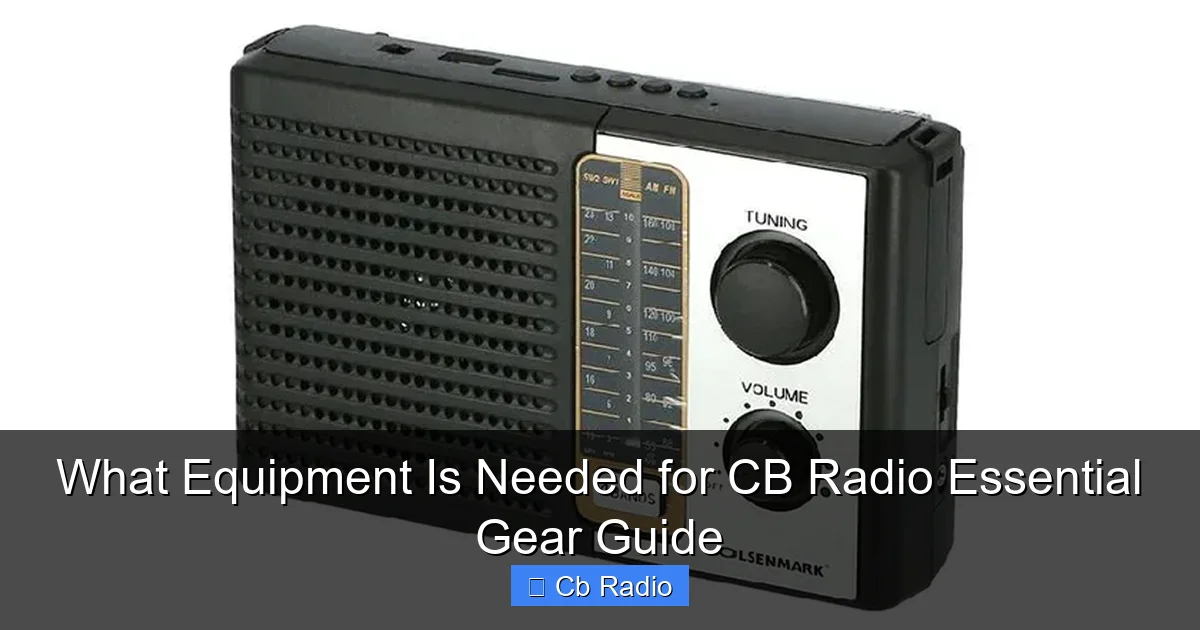
Visual guide about What Equipment Is Needed for CB Radio Essential Gear Guide
Image source: essential.mv
Popular brands like Cobra, Uniden, and Midland offer reliable models with varying price points. For beginners, a simple, easy-to-use radio with AM and SSB modes is often best.
Mobile vs. Base Units
Mobile CB radios are compact and designed for installation in vehicles. They usually come with mounting brackets and a microphone. Base units, on the other hand, are larger and used in fixed locations, offering better performance with larger antennas.
Antenna: Your Link to the Airwaves
Why Antenna Quality Matters
No matter how good your CB radio is, a poor antenna will limit your communication range. The antenna is what sends your voice out into the air and picks up incoming signals. Choosing the right antenna and installing it properly can make all the difference.
Types of CB Antennas
- Magnetic Mount Antennas: Easy to install on vehicles but can have limited range compared to fixed mounts.
- Whip Antennas: Flexible rods that offer good performance and durability.
- Base Station Antennas: Larger antennas designed for stationary use, providing extended range.
Tips for Antenna Installation
Position your antenna as high and as clear from obstructions as possible. For vehicle setups, the roof is often the best spot. Always use quality coaxial cable to connect the antenna to your radio to reduce signal loss.
Power Supply: Keeping Your Radio Running
Power Options for CB Radios
Most CB radios require a 12-volt DC power supply. In vehicles, this usually comes directly from the car battery or cigarette lighter socket. For home use, you’ll need a dedicated 12V DC power supply or a power converter.
Choosing the Right Power Supply
Make sure your power source can provide enough current (usually around 4-5 amps). Using a power supply with built-in voltage regulation will protect your radio from power surges and damage.
Microphone and Speaker: Clear Communication Tools
The Role of the Microphone
The microphone is how you speak into the CB radio. Most radios come with a handheld microphone featuring a push-to-talk button. Some models allow you to upgrade to microphones with noise-canceling features for clearer voice transmission.
External Speakers for Better Audio
Though radios have built-in speakers, adding an external speaker can improve sound quality, especially in noisy environments like trucks or workshops. Look for speakers with adjustable volume and good clarity.
Mounting Hardware and Accessories
Mounting Brackets and Kits
Proper mounting hardware ensures your CB radio and antenna stay secure. For vehicles, mounting brackets allow you to place the radio within easy reach. Antenna mounts vary depending on your vehicle type, including roof mounts, bumper mounts, and mirror mounts.
Additional Accessories to Enhance Your Setup
- SWR Meter: Used to tune your antenna for optimal performance and prevent damage to your radio.
- Coaxial Cables: High-quality cables with solid connectors reduce signal loss.
- Extension Cables: Useful if your antenna needs to be mounted far from your radio.
- Lightning Arrestor: Protects your equipment from electrical surges during storms.
Practical Tips for Setting Up Your CB Radio
Testing and Tuning Your Equipment
Once your equipment is set up, use an SWR meter to check antenna tuning. A low SWR (below 1.5:1) means your antenna is efficiently transmitting power. Adjust antenna length or position if SWR readings are too high.
Safety Considerations
When installing antennas on vehicles, avoid placing them near gas caps or fuel tanks. Make sure cables are routed safely and don’t interfere with driving controls.
Getting the Best Range
Clear line of sight improves communication range. Avoid metal obstructions and tall buildings when possible. Also, using Single Side Band (SSB) mode, if your radio supports it, can extend your reach significantly compared to AM mode.
Conclusion
Understanding what equipment is needed for CB radio is key to enjoying clear, reliable communication. From the radio unit to the antenna and power supply, each component plays an important role. By choosing quality gear and following best practices for installation and tuning, you’ll maximize your CB radio’s performance.
Whether you’re setting up a mobile system in your vehicle or a base station at home, having the right equipment makes all the difference. Now that you know what’s essential, you’re ready to get on the air and start connecting with other CB radio users near and far.
Frequently Asked Questions
What equipment do I need to start using CB radio?
You need a CB radio unit, an antenna, a power source (usually 12V DC), a microphone, and appropriate mounting hardware to get started.
Is it necessary to have a special license for CB radio?
No license is required for CB radio use in most countries, including the United States, as long as you follow FCC rules and power limits.
How do I choose the right antenna for my CB radio?
Consider your operating environment—mobile or base station—and pick an antenna designed for CB frequencies with good gain and durability.
Can I use my vehicle’s battery to power a CB radio?
Yes, most mobile CB radios run off a 12V DC vehicle battery, often connected through the cigarette lighter or directly to the battery.
What is the difference between AM and SSB modes on a CB radio?
AM (Amplitude Modulation) is standard CB mode, while SSB (Single Side Band) offers longer range and clearer audio but requires compatible radios on both ends.
Do I need to tune my antenna regularly?
Yes, tuning your antenna using an SWR meter helps maintain optimal performance and prevents damage to your radio over time.