

Choosing the right fuse size for your CB radio is essential to protect your equipment from electrical damage and ensure reliable operation. This article explains how to select the correct fuse size, why it matters, and offers practical advice to keep your CB radio safe and working optimally.
Contents
- 1 Key Takeaways
- 2 Quick Answers to Common Questions
- 3 📑 Table of Contents
- 4 Introduction
- 5 Understanding Fuse Basics for CB Radios
- 6 What Fuse Size Should You Use for Your CB Radio?
- 7 Choosing the Right Fuse Type for CB Radio
- 8 Proper Fuse Installation Techniques
- 9 Practical Examples and Tips
- 10 Conclusion
- 11 Frequently Asked Questions
- 12 Author
Key Takeaways
- Correct fuse sizing: Ensures your CB radio is protected from electrical faults without nuisance blowouts.
- Typical fuse ratings: Most CB radios require a fuse between 5A to 10A depending on power and installation.
- Location matters: Installing the fuse close to the battery or power source maximizes protection.
- Fuse types: Slow-blow fuses are often better for CB radios due to initial current surges.
- Manufacturer guidelines: Always check your CB radio’s manual for recommended fuse size.
- Upgrading power: Larger amplifiers or accessories may require higher fuse ratings.
- Regular inspection: Periodically check fuses for wear and replace if necessary to maintain safety.
Quick Answers to Common Questions
What fuse size is commonly used for a standard CB radio?
Most standard CB radios use a 5 to 10 amp fuse, with 5 amps being common for basic units.
Can I use a fast-blow fuse for my CB radio?
While possible, slow-blow fuses are generally better because they tolerate brief startup current surges without blowing unnecessarily.
Where should I install the fuse on my CB radio power line?
The fuse should be placed as close to the battery or power source as possible to protect the entire wiring circuit.
What happens if I use a fuse with a higher amp rating than recommended?
Using a fuse that’s too large may fail to protect your radio, allowing excessive current to damage components or cause wiring fires.
Should I adjust fuse size if I add an amplifier or accessories?
Yes, adding accessories increases current draw, so you may need a higher-rated fuse to handle the total load safely.
📑 Table of Contents
Introduction
If you’re a CB radio enthusiast, you know how important it is to protect your equipment from electrical damage. One of the simplest yet most effective ways to safeguard your radio is by installing the correct fuse. But what fuse size for CB radio is right for your setup? This question pops up often among both beginners and experienced users.
Choosing the wrong fuse size can lead to blown fuses that interrupt your communication or worse, damage your radio’s internal components. On the other hand, a fuse that’s too large might not blow when it should, risking electrical fires or component failure. In this article, we’ll break down everything you need to know about selecting the proper fuse size for your CB radio to keep it safe and running smoothly.
From understanding amperage ratings to fuse types and installation tips, we’ll guide you through the process in a straightforward way. Let’s dive in!
Understanding Fuse Basics for CB Radios
What Is a Fuse and Why Is It Important?
A fuse is a safety device designed to protect your CB radio’s electrical system. It acts like a gatekeeper that prevents too much current from flowing into your radio. If an electrical fault or short circuit occurs, the fuse “blows” or breaks the circuit, stopping current flow and preventing damage.
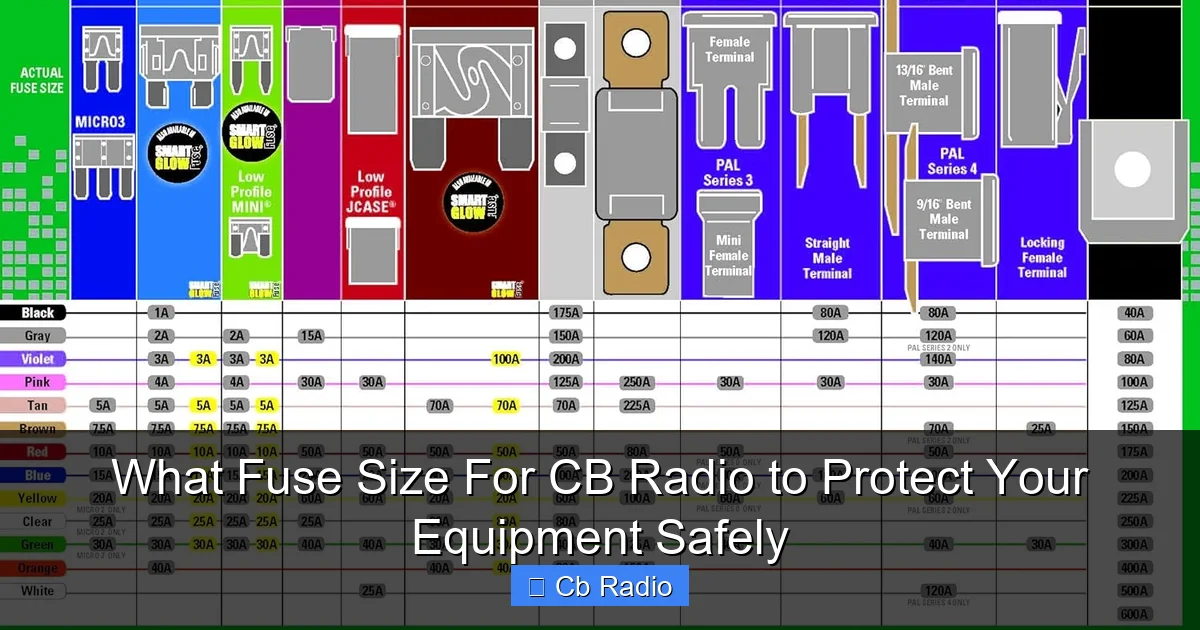
Visual guide about What Fuse Size For CB Radio to Protect Your Equipment Safely
Image source: images-na.ssl-images-amazon.com
How Does a Fuse Protect Your CB Radio?
Your CB radio operates on DC power, often 12 volts from your vehicle’s battery. If something goes wrong, like a short wire or faulty component, excessive current can flow. This overload can harm the radio’s sensitive electronics or even cause a fire. The fuse detects this excess current and quickly interrupts the power, saving your equipment and your vehicle.
Fuse Ratings Explained
Fuses are rated in amperes (amps), which is the maximum current they safely allow before blowing. For example, a 10-amp fuse will blow if current exceeds 10 amps. Choosing the right rating is crucial: too low, and the fuse will blow unnecessarily; too high, and it might not protect your device effectively.
What Fuse Size Should You Use for Your CB Radio?
Typical Fuse Sizes for CB Radios
Most standard CB radios draw between 3 to 5 amps in normal operation. Considering startup surges, many manufacturers recommend a fuse rated around 5 to 10 amps. For example:
- A basic 4-watt CB radio commonly requires a 5A fuse.
- Higher power units or those with external amplifiers may need a 10A fuse.
Consult Your Radio’s Owner Manual
Always check the manual that came with your CB radio. Manufacturers typically specify the recommended fuse size based on the radio’s power consumption and design. Following these guidelines ensures optimal protection and warranty compliance.
Considering Additional Accessories
If you have external amplifiers, lighting, or other electronics connected to your CB radio circuit, the fuse size may need to be adjusted. Adding accessories increases current draw, so a larger fuse might be necessary. Calculate the total current draw and choose a fuse rating slightly above that number.
Choosing the Right Fuse Type for CB Radio
Fast-Blow vs. Slow-Blow Fuses
There are two main types of fuses: fast-blow and slow-blow (also called time-delay). Fast-blow fuses blow immediately when current exceeds the rating. Slow-blow fuses tolerate brief surges without blowing.
Why Slow-Blow Fuses Are Usually Better
CB radios often experience momentary current surges when powering on. A slow-blow fuse can handle these brief spikes without interrupting power unnecessarily. This reduces nuisance fuse blowing while still protecting your equipment from sustained overloads.
Common Fuse Types for CB Radios
- Blade fuses (ATO/ATC style): Easy to replace and common in automotive CB radio installations.
- Glass tube fuses: Found in some older radios or specific setups.
- Inline fuse holders: Useful for adding fuses directly on power cables near the battery.
Proper Fuse Installation Techniques
Where to Place the Fuse
For maximum protection, place the fuse as close to the power source (battery positive terminal) as possible. This ensures that any short circuit downstream will blow the fuse before damaging wiring or the radio.
Wiring and Fuse Holder Tips
- Use appropriate gauge wiring to handle the current safely.
- Choose a quality fuse holder that fits the fuse snugly to prevent loose connections.
- Secure the fuse holder away from heat and vibration to avoid damage.
Testing and Maintenance
After installation, test the circuit by powering on the CB radio. If the fuse blows immediately, double-check wiring and fuse rating. Also, inspect fuses periodically for corrosion or wear and replace as needed.
Practical Examples and Tips
Example 1: Installing a Basic CB Radio
If you have a standard 4-watt CB radio without extra accessories, a 5-amp slow-blow blade fuse installed inline within 12 inches of the battery is ideal. Use 14 or 16-gauge wire to connect the radio, and secure all connections.
Example 2: CB Radio with External Amplifier
An amplifier can draw additional current, sometimes up to 15 amps. In this case, a 10-amp or even 15-amp fuse might be necessary. Always verify with the equipment specs and consider upgrading wiring gauge accordingly.
Tip: Keep Spare Fuses Handy
Fuses can blow unexpectedly due to faults or age. Carry spare fuses of the correct size and type in your vehicle so you can replace them quickly and avoid downtime.
Tip: Label Your Fuse Holder
Mark the fuse holder with the fuse rating and function. This helps with maintenance and prevents accidental use of the wrong fuse size.
Conclusion
Choosing the right fuse size for your CB radio is a small step that makes a big difference in protecting your gear and ensuring reliable communication. A fuse that matches your radio’s current requirements and is installed properly acts as a vital safeguard against electrical faults and damage.
Remember to check your radio’s manual for recommended fuse sizes, prefer slow-blow fuses to handle startup surges, and install the fuse close to the power source. With the right fuse and careful installation, your CB radio will stay safe and serve you well for years to come.
So next time you set up or upgrade your CB radio system, don’t overlook the fuse – it’s your first line of defense!
Frequently Asked Questions
Why is fuse protection necessary for CB radios?
Fuse protection prevents damage to your CB radio and wiring by breaking the circuit if current becomes too high due to faults or shorts. It safeguards equipment and reduces fire risk.
How do I know what fuse size my CB radio needs?
Check the manufacturer’s manual for recommended fuse size. If unavailable, estimate based on your radio’s current draw, typically 5 to 10 amps for most CB radios.
Can I use a fuse with a lower rating than recommended?
Using a fuse with a lower rating can cause it to blow frequently and interrupt your radio operation, even when there’s no real fault.
What type of fuse holder should I use?
Use a quality inline fuse holder or a blade fuse holder designed for automotive applications. Ensure it fits the fuse securely and protects it from environmental damage.
How often should I check or replace the fuse?
Inspect your fuse during regular vehicle maintenance or if your CB radio stops working unexpectedly. Replace fuses that show signs of wear or corrosion.
Are there alternatives to fuses for protecting CB radios?
Circuit breakers can be used but are less common in CB radio setups. Fuses are preferred due to their simplicity, reliability, and ease of replacement.