

What is a good OBD2 scanner depends on your needs. This guide shows key features, top types, and simple steps to pick the right tool. Read on to learn how to compare models and buy with confidence.
Contents
- 1 Key Takeaways
- 2 Introduction: What you will learn
- 3 Step 1: Understand OBD2 basics
- 4 Step 2: Define your needs
- 5 Step 3: Key features to look for
- 6 Step 4: Types of OBD2 scanners
- 7 Step 5: Compatibility and protocols
- 8 Step 6: Budget and value
- 9 Step 7: How to test a scanner before buying
- 10 Step 8: How to use your OBD2 scanner (step-by-step)
- 11 Practical tips and examples
- 12 Troubleshooting common scanner problems
- 13 Maintenance and care
- 14 How to compare models side-by-side
- 15 Shopping checklist
- 16 Conclusion: Final advice on choosing the best scanner
- 17 Author
Key Takeaways
- Point 1: A good OBD2 scanner reads and clears codes, and shows live data.
- Point 2: Choose features that match your needs: basic code reading, live data, ABS/SRS, or bi-directional control.
- Point 3: Compatibility matters: check vehicle year, make, and supported protocols.
- Point 4: Decide on form factor: handheld, Bluetooth/Wi‑Fi adapter, or professional shop tool.
- Point 5: Budget wisely: cheaper scanners are fine for basic checks; pay more for depth and updates.
- Point 6: Test a scanner before you buy when possible and read user reviews for real-world insights.
Introduction: What you will learn
If you have ever asked what is a good OBD2 scanner, this guide is for you. You will learn what features matter. You will learn how to compare models. You will get step-by-step help to choose the right scanner fast.
We keep it simple. Short steps. Clear tips. Examples you can use today.
Step 1: Understand OBD2 basics
Before answering what is a good OBD2 scanner, know the basics. OBD2 is a standard car interface. It gives trouble codes and live data. Most cars made after 1996 in the U.S. support OBD2.
Visual guide about What is a Good OBD2 Scanner Find the Best Options Now
Image source: digmyride.com
What OBD2 does
- Reads Diagnostic Trouble Codes (DTCs).
- Shows live sensor data (RPM, speed, temp).
- Clears check engine light codes.
- Provides freeze frame data and readiness monitors.
Why it matters
Knowing this helps you answer what is a good OBD2 scanner for your needs. If you only clear a check engine light, you need less. If you diagnose complex faults, you need more.
Step 2: Define your needs
The best answer to what is a good OBD2 scanner starts with your needs. Ask simple questions:
Visual guide about What is a Good OBD2 Scanner Find the Best Options Now
Image source: procarreviews.com
- Are you a DIY driver or a professional mechanic?
- Do you need live data or basic codes?
- Do you want wireless connection to a phone or a handheld device?
- Do you need ABS, SRS (airbag), or transmission codes?
DIY vs professional
For DIY use, a Bluetooth adapter and smartphone app often work. For a professional shop, pick a dedicated scanner with advanced functions. Think about long term use and updates.
Step 3: Key features to look for
When searching what is a good OBD2 scanner, check these core features. They separate basic tools from great ones.
Visual guide about What is a Good OBD2 Scanner Find the Best Options Now
Image source: officestuffs.in
Core features
- Code reading and clearing. Must-have.
- Live data stream. Helpful for diagnosis.
- Freeze frame data. Shows conditions when a fault happened.
- Readiness monitors. Needed for emissions testing.
- MIL status (check engine light state).
Advanced features
- ABS and SRS coverage. For brake and airbag systems.
- Transmission and engine module special functions.
- Graphing live data and recording logs.
- Bi-directional controls to command actuators.
- OEM-level coverage for full system access.
Step 4: Types of OBD2 scanners
Answering what is a good OBD2 scanner means picking the type that fits your style. Here are the main types.
Bluetooth/Wi‑Fi adapters
These plug into the OBD2 port and link to your phone or tablet. They are cheap. They are compact. They rely on an app for features. Good choice for basic users.
Handheld scanners
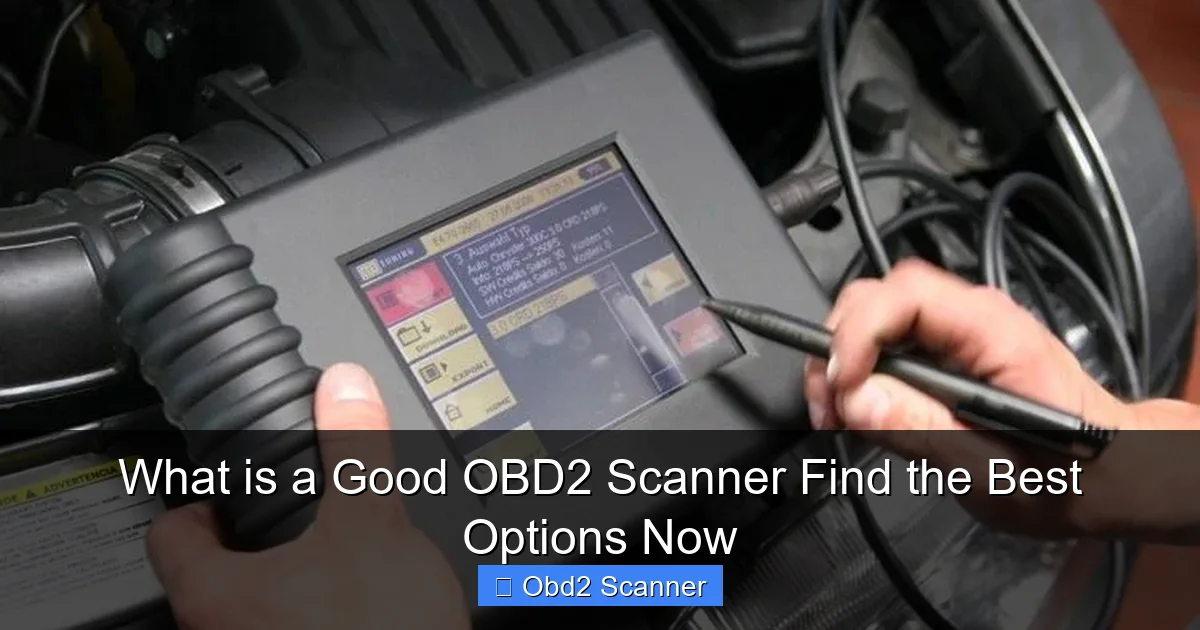
These are standalone devices. They have screens and buttons. They often include more built-in features than adapters. They are easy for quick checks in the garage.
Professional scan tools
These are expensive. They support many systems. They have updates and deep functions. They fit shops or serious enthusiasts.
Step 5: Compatibility and protocols
One top answer to what is a good OBD2 scanner is compatibility. A scanner must talk to your car. Check these points.
Vehicle year and make
Confirm your car supports standard OBD2. Most cars after 1996 in the U.S. do. For trucks or older cars, check manufacturer rules.
Protocols supported
Common protocols: ISO 9141, KWP2000, J1850, CAN. A good scanner supports all major protocols. This ensures it will connect to most vehicles.
Step 6: Budget and value
When people ask what is a good OBD2 scanner, cost matters. You can spend $20 or $2000. Here is a quick guide.
Under $50
Basic Bluetooth adapters and simple handhelds. Good for reading and clearing codes. Great for casual use.
$50–$200
Better handhelds and higher‑quality adapters. Live data, graphing, and more complete code descriptions. Best for DIYers who want reliable tools.
$200+
Advanced handhelds and professional tools. Full system coverage, updates, and advanced functions. Ideal for shops and advanced tinkerers.
Step 7: How to test a scanner before buying
To answer what is a good OBD2 scanner for you, test before you buy if possible. Here is how.
Check the user interface
Is the menu simple? Can you read codes easily? A good scanner is easy to use.
Test connection speed
Plug it in and start it. A good scanner connects fast and stays connected.
Read codes and live data
Verify it reads and clears codes. Check live data updates. Ensure values make sense.
Try extra features
If the scanner claims ABS or SRS support, test those features too. Confirm they work on your vehicle.
Step 8: How to use your OBD2 scanner (step-by-step)
Now you know what is a good OBD2 scanner. Here is how to use one in a few easy steps.
Step A: Locate the OBD2 port
The OBD2 port is under the dash. It is often near the steering column. It has a 16-pin shape.
Step B: Plug in the scanner
Turn the car key to the ON position. Do not start the engine. Plug the scanner into the port. For wireless adapters, plug and pair with your phone.
Step C: Power and connect
Turn on the scanner. If using an app, open the app and connect. Follow pairing steps if needed.
Step D: Read codes
Select “Read Codes” or “Scan.” The tool will fetch codes from the engine computer. Note the codes shown.
Step E: Interpret codes
Use the scanner’s description or an online database. Codes like P0300 mean misfire. Use the info to guide repairs.
Step F: Clear codes (if needed)
Choose “Clear Codes” to reset the check engine light. Only clear codes after you diagnose the issue. Clearing without fixing can hide real problems.
Step G: Use live data
Open live data to watch sensors in real time. This helps diagnose intermittent faults. Graphing is useful for trends.
Practical tips and examples
Here are real tips you can use when choosing and using a scanner. These help answer what is a good OBD2 scanner in real life.
Tip: Read reviews
Look for real user reviews. Seek devices with many positive reviews. Watch for complaints about updates or connectivity.
Tip: Pick an app-friendly adapter
If you use an adapter, choose a well-rated app. The app makes the scanner useful. Free apps may lack features found in paid apps.
Tip: Keep firmware updated
Update your scanner when manufacturers release updates. This adds compatibility and fixes bugs.
Example: Best pick for a DIYer
A Bluetooth adapter with a paid app that shows live data and graphs. It is cheap and easy to carry. It answers most DIY needs.
Example: Best pick for a hobbyist
A mid-range handheld with ABS and SRS coverage. It saves trips to the shop. It offers more depth for diagnosing complex issues.
Example: Best pick for a pro
A professional scan tool with full system access and bi-directional control. It supports updates and a wide car list. It pays for itself in a shop.
Troubleshooting common scanner problems
Even a good scanner can run into trouble. These tips help you fix common issues fast.
Problem: Scanner won’t connect
Check the OBD2 port power. Some cars cut power with the ignition off. Try cycling the key. Check the scanner’s fuse if it has one.
Problem: App won’t pair
Turn Bluetooth off and on. Forget the device and re-pair. Restart your phone and the adapter. Update the app.
Problem: Wrong or no codes
Verify the car supports OBD2. Check protocol compatibility. Try another scanner to confirm.
Problem: Codes return after clearing
That means the fault is still present. Diagnose and repair the underlying issue. Use live data to track the failing sensor or system.
Problem: Scanner reports unrelated codes
Some codes are pending or historical. Use freeze frame and live data to find the true cause. Clear and retest only after repair.
Maintenance and care
To keep your scanner working, follow simple care steps.
- Store in a dry place.
- Keep connectors clean and dry.
- Update firmware and app often.
- Handle cables and adapters gently.
How to compare models side-by-side
When choosing between two scanners, use this quick checklist. It helps answer what is a good OBD2 scanner among options.
- Does it read and clear codes? Yes/No
- Does it show live data? Yes/No
- Does it support ABS/SRS? Yes/No
- Is it compatible with your car? Yes/No
- How fast is the connection? Slow/OK/Fast
- Are updates free or paid?
- What is the warranty and support like?
Shopping checklist
Print or save this checklist when shopping. It will help you answer what is a good OBD2 scanner quickly.
- Make and model compatibility
- Supported systems (engine, ABS, SRS, transmission)
- Live data and graphing
- Ease of use and screen size
- App compatibility and reviews
- Price and warranty
Conclusion: Final advice on choosing the best scanner
If you still ask what is a good OBD2 scanner, start with your needs. A basic user needs a simple adapter. A hobbyist should pick a mid-range handheld. A professional needs a deep tool.
Choose a device with good compatibility, reliable updates, and clear user reviews. Test it when you can. Keep it updated and cared for. That is how you get the most value.
Now you know what to look for. You can compare models with confidence. You can pick the best OBD2 scanner for your budget and skill level.
🎥 Related Video: TOP 5 Best OBD2 Scanners 2025
📺 Product Guide
Best OBD2 Scanner 2025 | Links To Products ⤵️ 1. Innova 5610 ✓ ✓ Check Prices – https://geni.us/AHLI4Y 2. BlueDriver …
