

AM on CB radio stands for Amplitude Modulation, a fundamental method of transmitting voice signals over CB channels. Understanding AM is key to improving communication clarity and reliability in your CB radio conversations. This article explains how AM works and why it still matters in today’s CB radio use.
Contents
- 1 Key Takeaways
- 2 Quick Answers to Common Questions
- 3 📑 Table of Contents
- 4 Introduction: What Is AM on CB Radio?
- 5 What Is Amplitude Modulation (AM)?
- 6 Why AM Matters for CB Radio Communication
- 7 Practical Tips to Optimize AM on Your CB Radio
- 8 Common Issues with AM on CB Radios and How to Fix Them
- 9 The Future of AM in CB Radio Communication
- 10 Conclusion: Embrace AM for Better CB Radio Communication
- 11 Frequently Asked Questions
- 12 Author
Key Takeaways
- AM means Amplitude Modulation: It’s a method of encoding voice signals by varying the strength of the carrier wave.
- AM is the standard mode for CB radio: Most CB radios use AM for voice communication on the 40 channels.
- AM affects signal clarity and range: Proper use of AM can improve how well you hear and are heard.
- Understanding AM helps with troubleshooting: Knowing how AM works aids in fixing common CB radio issues.
- AM is different from other modes like FM and SSB: Each mode has unique pros and cons.
- AM is simple and compatible: It allows users from different radio models to communicate easily.
- Effective AM communication requires good equipment and technique: Using quality microphones and antennas helps optimize AM signals.
Quick Answers to Common Questions
What does AM stand for on CB radio?
AM stands for Amplitude Modulation, a way to send voice signals by varying the strength of the radio wave.
Why is AM used on CB radios?
AM is simple, compatible, and effective for voice communication on the standard 40 CB channels.
Can I use FM on CB radios instead of AM?
Most CB radios and users use AM. FM is not standard on CB and may not be compatible with other CB radios.
How do I improve AM signal clarity?
Use a quality microphone, maintain proper modulation levels, and ensure your antenna is well-tuned and positioned.
What causes static on AM CB radio signals?
Static often comes from electrical interference, poor antenna grounding, or environmental noise affecting the amplitude signal.
📑 Table of Contents
- Introduction: What Is AM on CB Radio?
- What Is Amplitude Modulation (AM)?
- Why AM Matters for CB Radio Communication
- Practical Tips to Optimize AM on Your CB Radio
- Common Issues with AM on CB Radios and How to Fix Them
- The Future of AM in CB Radio Communication
- Conclusion: Embrace AM for Better CB Radio Communication
Introduction: What Is AM on CB Radio?
If you’ve ever tuned into a CB radio channel, you might have heard the term “AM” and wondered what it actually means. AM, or Amplitude Modulation, is the primary way that voice information is sent over CB radios. It’s the technology behind how your voice is turned into radio waves and then back into sound on the other end.
Even though technology has advanced with many radio modes available today, AM remains the backbone of CB radio communication. Understanding AM can help you get clearer conversations, avoid interference, and troubleshoot common issues. Let’s explore what AM is, how it works, and why it matters for your CB radio experience.
What Is Amplitude Modulation (AM)?
The Basics of AM
Amplitude Modulation is a method of encoding information onto a radio wave by changing its amplitude, or strength, in line with the sound being transmitted. Think of it like turning the volume knob up and down on a radio signal. Your voice causes the radio wave’s strength to vary, and this variation carries the audio information.
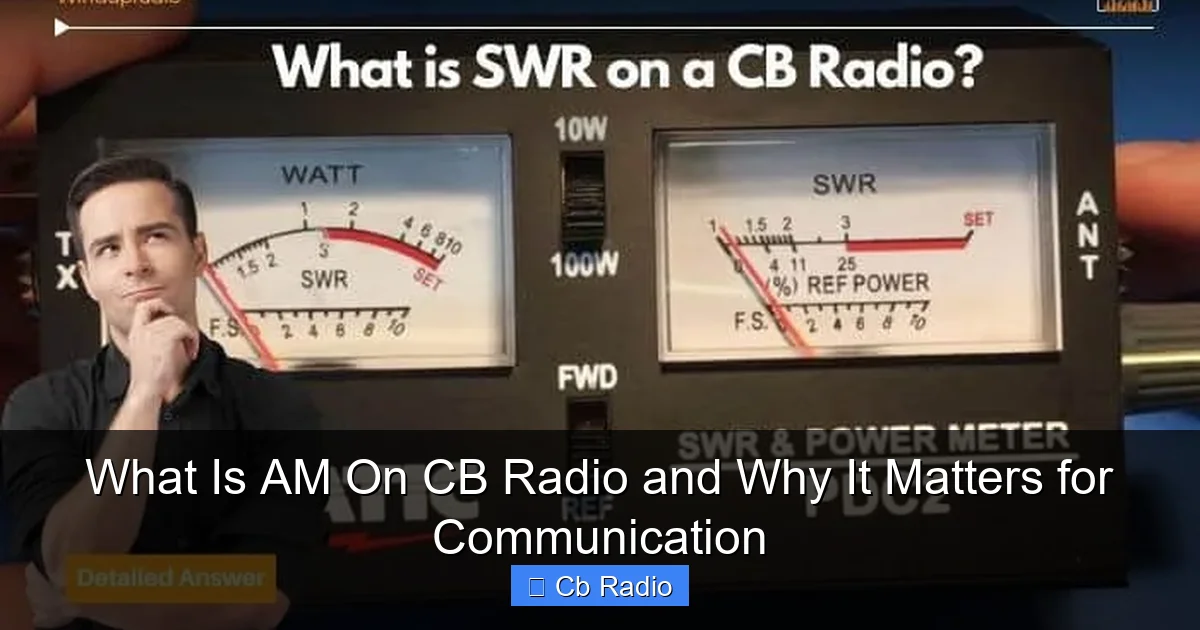
Visual guide about What Is AM On CB Radio and Why It Matters for Communication
Image source: windupradio.com
How AM Works in CB Radios
On CB radios, the transmitter creates a high-frequency carrier wave. When you speak into the microphone, the audio signal modulates the carrier’s amplitude. The receiver then detects these changes and converts them back into sound. This is how your voice travels over miles of airwaves to reach another CB user.
AM vs Other Modulation Types
While AM is common in CB radios, other modes like Frequency Modulation (FM) and Single Side Band (SSB) are used in different radio services. FM varies the frequency of the carrier, while AM varies the amplitude. Each has pros and cons, but AM’s simplicity and compatibility make it ideal for CB radio use.
Why AM Matters for CB Radio Communication
Standardization Across CB Radios
CB radios across different brands and models almost universally use AM. This standardization means anyone with a CB radio can communicate with anyone else, no matter the equipment. Without AM, compatibility issues would make communication difficult.
Signal Clarity and Range
AM signals are relatively simple to generate and receive, but they can be affected by noise and interference. Understanding AM helps operators improve their signal clarity by using good microphones, proper modulation levels, and quality antennas. Properly modulated AM signals travel well over distances and can be heard clearly when conditions are right.
Interference and Limitations
AM signals are more susceptible to static, electrical noise, and fading compared to FM or SSB. That means you might hear crackling or distortion during bad weather or near electrical equipment. Knowing these limitations helps you adjust your setup or switch channels when needed.
Practical Tips to Optimize AM on Your CB Radio
Use a Quality Microphone
A good microphone helps deliver clear audio to the transmitter. Speak naturally and avoid shouting, which can distort the AM signal. Ensure your mic gain isn’t set too high to prevent over-modulation.
Check Your Modulation Level
Proper modulation means the amplitude varies enough to carry your voice clearly but not so much that it distorts. Most CB radios have modulation meters or indicators—aim for a moderate level to keep your signal clean.
Optimize Your Antenna Setup
Your antenna plays a huge role in how well your AM signal travels. Use a properly tuned antenna with a good SWR (Standing Wave Ratio) to maximize transmission and reception. Place it in a clear, elevated spot away from obstructions.
Be Mindful of Interference Sources
Keep your CB radio away from devices that cause electrical noise, like fluorescent lights or engines running nearby. This reduces static and improves AM signal quality.
Common Issues with AM on CB Radios and How to Fix Them
Static and Noise Problems
Static is a common complaint with AM. It often comes from electrical interference or poor antenna grounding. Try moving your radio or antenna, checking connections, and using noise filters if needed.
Distorted Audio
If your transmitted voice sounds harsh or muffled, check your microphone and modulation settings. Avoid speaking too close to the mic or too loud. Adjust the mic gain to prevent over-modulation.
Weak Transmission
If others can’t hear you well, your antenna might be out of tune or damaged. Use an SWR meter to check antenna health and ensure your radio is set to the proper channel and power level.
The Future of AM in CB Radio Communication
Why AM Still Holds Strong
Despite newer modulation technologies, AM remains popular because of its simplicity and wide compatibility. Many CB users rely on AM for daily communication, especially truckers and hobbyists who value its straightforward operation.
Emerging Technologies and AM
Some modern CB radios offer additional modulation options like SSB for longer range and clearer communication. However, AM remains the default and fallback mode, ensuring everyone can stay connected.
Learning to Use AM Effectively
For new CB radio enthusiasts, mastering AM modulation basics is an excellent first step. It builds a solid foundation for understanding more advanced radio techniques and enjoying the full benefits of CB communication.
Conclusion: Embrace AM for Better CB Radio Communication
AM on CB radio is more than just a technical term—it’s the voice of millions of radio users worldwide. Understanding what AM is and how it works helps you communicate clearly, troubleshoot problems, and get the most out of your CB radio.
By optimizing your equipment and practicing good modulation habits, you can enjoy more reliable and enjoyable conversations on the CB bands. Whether you’re a seasoned operator or just starting out, appreciating the role of AM will enhance your CB radio experience immensely.
Frequently Asked Questions
Is AM the only modulation used on CB radios?
No, AM is the most common, but some CB radios also support Single Side Band (SSB), which offers longer range and clearer audio. However, AM remains the standard for most users.
How does AM modulation affect communication range?
AM signals typically have a decent range but can be limited by interference and environmental conditions. Proper antenna setup and modulation improve the effective communication range.
What equipment do I need to use AM on my CB radio?
You mainly need a CB radio capable of AM transmission, a good microphone, and a properly tuned antenna. Most standard CB radios come with AM as the default mode.
Can interference be reduced when using AM on CB radios?
Yes, interference can be minimized by using noise filters, grounding your system properly, and avoiding sources of electrical noise near your radio setup.
Why does my voice sound distorted on AM CB radio?
Distortion often results from speaking too loudly into the mic, incorrect mic gain settings, or poor microphone quality. Adjusting these can improve sound quality.
Is AM better than SSB for CB communication?
AM is simpler and more widely used, making it better for general communication. SSB offers longer range and clearer audio but requires more specialized equipment and knowledge.