

A CB radio antenna is a crucial component that transmits and receives radio signals for your CB radio. By choosing the right antenna and installing it correctly, you can significantly boost your signal quality and enjoy clearer communication over longer distances.
Contents
- 1 Key Takeaways
- 2 Quick Answers to Common Questions
- 3 📑 Table of Contents
- 4 What Is CB Radio Antenna and How It Boosts Your Signal Quality
- 5 Understanding the Basics: What Is a CB Radio Antenna?
- 6 Types of CB Radio Antennas
- 7 How a CB Radio Antenna Boosts Signal Quality
- 8 Tips for Choosing the Right CB Radio Antenna
- 9 Installing and Tuning Your CB Radio Antenna
- 10 Practical Examples and Tips to Boost Your CB Signal
- 11 Conclusion
- 12 Frequently Asked Questions
- 13 Author
Key Takeaways
- What is a CB radio antenna: A device that sends and receives radio waves for CB communication.
- Importance of antenna quality: Affects signal strength and clarity.
- Types of CB antennas: Mobile, base station, magnetic mount, fiberglass, and more.
- Proper installation: Essential for optimal performance and range.
- Tuning and maintenance: Fine-tuning the antenna improves transmission and reception.
- Practical tips: Position, height, and cable quality impact signal quality.
- Boosting signal: The right antenna setup can greatly enhance your CB radio experience.
Quick Answers to Common Questions
What is a CB radio antenna?
It’s a device that transmits and receives radio waves to help your CB radio communicate over distances.
Why is antenna length important?
The length affects how efficiently the antenna sends and receives signals at the CB radio frequency.
Can I use any antenna for my CB radio?
No, antennas designed specifically for CB frequencies work best to ensure clear communication.
How does tuning an antenna improve signal quality?
Tuning reduces signal reflection and maximizes power transmitted, leading to better range and clarity.
Where is the best place to mount a CB antenna on a vehicle?
The roof or trunk lid, as high and clear as possible, usually provides the best signal performance.
📑 Table of Contents
- What Is CB Radio Antenna and How It Boosts Your Signal Quality
- Understanding the Basics: What Is a CB Radio Antenna?
- Types of CB Radio Antennas
- How a CB Radio Antenna Boosts Signal Quality
- Tips for Choosing the Right CB Radio Antenna
- Installing and Tuning Your CB Radio Antenna
- Practical Examples and Tips to Boost Your CB Signal
- Conclusion
What Is CB Radio Antenna and How It Boosts Your Signal Quality
If you’ve ever used a CB radio, you know how important clear communication is. But have you ever wondered what makes your CB radio pick up and send signals effectively? The answer lies in the CB radio antenna. This simple yet powerful device plays a huge role in how well your radio performs.
In this article, we’ll explore what a CB radio antenna is, why it matters, and how you can use it to boost your signal quality. Whether you’re a trucker, hobbyist, or just curious, understanding your antenna can make a big difference in your CB radio experience.
Understanding the Basics: What Is a CB Radio Antenna?
The Role of the Antenna
A CB radio antenna is a specialized device designed to transmit and receive radio frequency signals. It converts electrical energy from your CB radio into radio waves that travel through the air. When someone else transmits, the antenna captures those waves and sends them back to your radio as electrical signals.
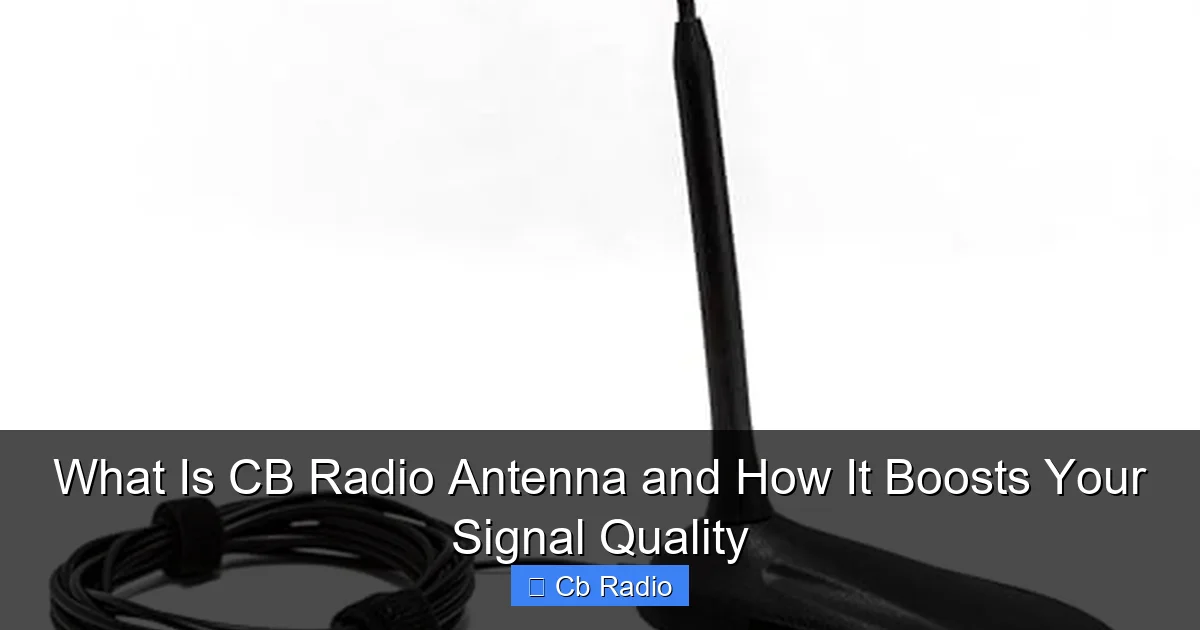
Visual guide about What Is CB Radio Antenna and How It Boosts Your Signal Quality
Image source: m.media-amazon.com
How It Works
Think of the antenna as the radio’s ears and mouth. Without it, your radio’s voice wouldn’t carry far, and you wouldn’t be able to hear others clearly. The antenna’s length, material, and placement all influence how well it can send and receive signals.
Types of CB Radio Antennas
Mobile Antennas
These antennas are designed to be mounted on vehicles such as trucks, cars, and SUVs. They are built to withstand movement, weather, and vibration. Examples include whip antennas and magnetic mount antennas.
Base Station Antennas
For stationary use, base station antennas are usually taller and more powerful. They offer better range and signal quality, perfect for home or office setups.
Popular Antenna Designs
- Whip Antennas: Straight rods, often made of steel or fiberglass.
- Magnetic Mount Antennas: Easily attach to metal surfaces, ideal for temporary setups.
- Fiberglass Antennas: Durable and weather-resistant, often used for base stations.
- Loaded Antennas: Include coils or capacitors to shorten physical length without losing performance.
How a CB Radio Antenna Boosts Signal Quality
Improving Transmission Distance
A good antenna maximizes the distance your signal can travel. A properly tuned antenna sends radio waves efficiently, allowing your voice to reach farther.
Enhancing Signal Clarity
Signal clarity depends on how well the antenna captures incoming signals. A high-quality antenna reduces noise and interference, making conversations easier to understand.
Reducing Signal Loss
Using the right antenna and cable minimizes signal loss between your radio and antenna. This ensures more power reaches the antenna and more signals are received clearly.
Tips for Choosing the Right CB Radio Antenna
Consider Your Usage
Are you driving a truck or setting up a base station? Mobile users might prefer magnetic mounts or whip antennas, while base stations benefit from taller fiberglass antennas.
Match Antenna Length to Frequency
CB radios operate around 27 MHz. Antennas are often 1/4 or 5/8 wavelength long to match this frequency. This matching helps in achieving better signal quality.
Think About Installation Location
Mount your antenna as high as possible and on a metal surface if available. For vehicles, the roof or trunk lid works well. For base stations, rooftops or tall poles are ideal.
Installing and Tuning Your CB Radio Antenna
Proper Installation Steps
- Securely mount the antenna using brackets or magnetic bases.
- Keep the coaxial cable short and avoid sharp bends.
- Ground the antenna if possible to reduce interference.
Tuning for Best Performance
Tuning your antenna using an SWR (Standing Wave Ratio) meter helps minimize signal reflection and maximize transmission efficiency. Aim for an SWR below 2:1 for optimal performance.
Maintenance Tips
Regularly check connections, clean the antenna, and inspect cables for wear. This upkeep prevents signal degradation over time.
Practical Examples and Tips to Boost Your CB Signal
Example 1: Truck Driver Setup
A trucker installs a 5/8 wave whip antenna on the roof with a quality coax cable and tunes it with an SWR meter. This setup increases communication range and reduces static.
Example 2: Home Base Station
A CB enthusiast mounts a fiberglass antenna on a rooftop pole, ensuring it’s clear of obstructions. This placement improves both sending and receiving signals significantly.
Additional Tips
- Use a high-quality coaxial cable to reduce signal loss.
- Keep cables away from other electrical wires to avoid interference.
- Regularly check SWR and adjust antenna length if needed.
Conclusion
Your CB radio antenna is more than just a metal rod—it’s the heart of your communication system. Choosing the right antenna, installing it properly, and maintaining it can dramatically boost your signal quality. Whether you’re on the road or at home, understanding and caring for your CB antenna ensures clear, reliable communication every time you key your mic.
So next time you tune in, remember: that antenna is working hard to keep you connected. Give it the attention it deserves, and your CB radio will reward you with stronger, clearer signals.
Frequently Asked Questions
What is the purpose of a CB radio antenna?
A CB radio antenna is essential for transmitting and receiving radio signals. It converts electrical signals into radio waves and vice versa, enabling communication.
How does antenna height affect CB radio performance?
Higher antenna placement usually improves signal range and clarity by reducing obstructions and increasing line-of-sight transmission.
What types of CB antennas are best for mobile use?
Magnetic mount and whip antennas are popular for mobile use due to their durability and ease of installation on vehicles.
Why should I use an SWR meter with my CB antenna?
An SWR meter helps tune the antenna to minimize signal reflection, ensuring maximum transmission power and reducing interference.
Can weather affect my CB radio antenna’s performance?
Yes, weather conditions like rain, snow, or ice can impact antenna efficiency. Using weather-resistant antennas and regular maintenance helps mitigate this.
Is it necessary to ground a CB radio antenna?
Grounding can improve signal quality and reduce electrical noise, making it a recommended practice, especially for base station antennas.