

CB radio band frequency range covers 26.965 to 27.405 MHz, offering 40 channels for short-distance communication. It’s widely used by truckers, hobbyists, and emergency responders for reliable, license-free communication.
Contents
- 1 Key Takeaways
- 2 Quick Answers to Common Questions
- 3 📑 Table of Contents
- 4 Understanding What Is CB Radio Band Frequency Range and Uses
- 5 What Is the CB Radio Band Frequency Range?
- 6 How Does the CB Radio Frequency Range Affect Communication?
- 7 Common Uses of CB Radio and Its Frequency Range
- 8 Technical Details and Regulations of CB Radio Frequencies
- 9 Tips for Getting the Most Out of Your CB Radio
- 10 The Future of CB Radio and Frequency Use
- 11 Conclusion
- 12 Frequently Asked Questions
- 13 Author
Key Takeaways
- CB Radio Frequency Range: Operates between 26.965 MHz and 27.405 MHz.
- Channel Allocation: Has 40 distinct channels for communication.
- Common Uses: Popular among truck drivers, off-roaders, and emergency users.
- No License Needed: CB radio is license-free in many countries, including the US.
- Range Factors: Range depends on terrain, antenna, and power.
- Communication Type: Primarily used for short-distance voice communication.
- Regulations: Power limits and channel rules apply for interference control.
Quick Answers to Common Questions
What is the frequency range of CB radio?
CB radio operates between 26.965 MHz and 27.405 MHz, covering 40 channels for communication.
Do I need a license to use a CB radio?
In most countries, including the US, CB radio use is license-free, making it accessible to everyone.
What channel is used for emergencies on CB radio?
Channel 9 (27.065 MHz) is designated as the emergency channel on CB radio.
Can CB radio signals travel long distances?
Typically, CB radios work best within a few miles, but atmospheric conditions can sometimes extend their range significantly.
What affects the range of CB radio communication?
Factors like terrain, antenna type, antenna height, and power output affect CB radio range.
📑 Table of Contents
- Understanding What Is CB Radio Band Frequency Range and Uses
- What Is the CB Radio Band Frequency Range?
- How Does the CB Radio Frequency Range Affect Communication?
- Common Uses of CB Radio and Its Frequency Range
- Technical Details and Regulations of CB Radio Frequencies
- Tips for Getting the Most Out of Your CB Radio
- The Future of CB Radio and Frequency Use
- Conclusion
Understanding What Is CB Radio Band Frequency Range and Uses
If you’ve ever heard truckers chatting on the road or seen off-road enthusiasts using walkie-talkies, you’ve likely come across CB radios. But what exactly is the CB radio band frequency range, and why does it matter? In this article, we’ll dive into the details of CB radio frequencies, their uses, and how they continue to serve many communities today.
CB, or Citizens Band radio, is a form of two-way radio communication designed for short-range use. It’s simple, effective, and doesn’t require a license in many countries. Understanding the frequency range it operates in helps users get the best performance out of their devices while staying compliant with regulations.
Let’s break down the CB radio band frequency range and explore its practical applications.
What Is the CB Radio Band Frequency Range?
The Frequency Spectrum Explained
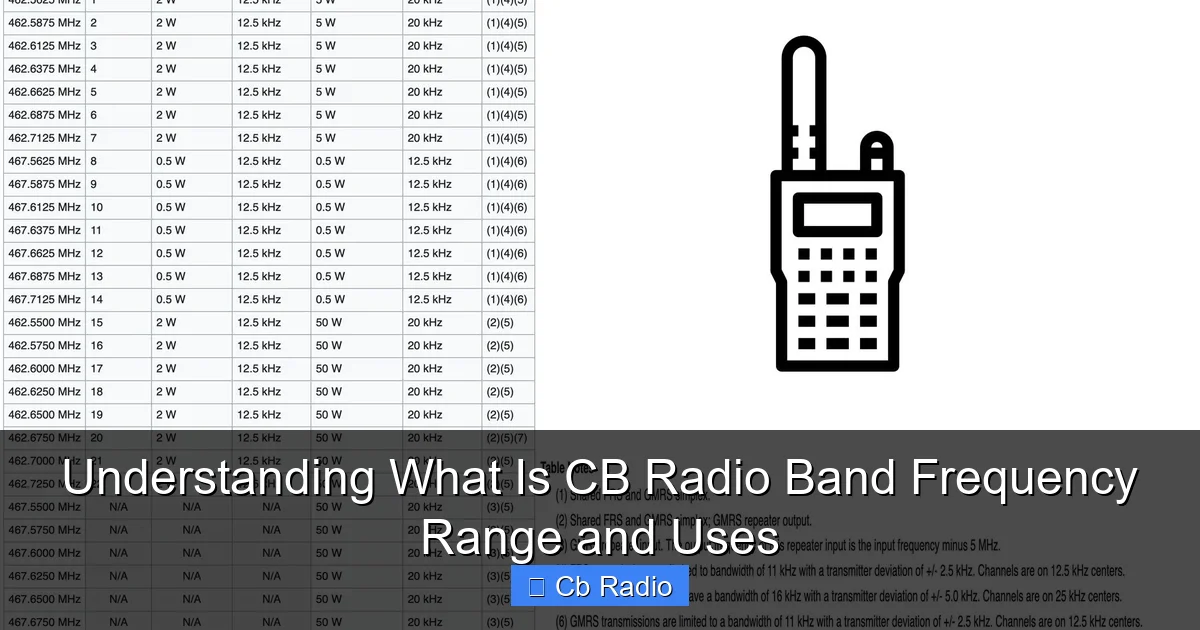
The CB radio band frequency range lies between 26.965 MHz and 27.405 MHz. This means CB radios transmit and receive signals in this segment of the radio spectrum. The entire band spans 40 channels, each separated by 10 kHz. These channels are designated with numbers from 1 to 40, making it easy to select and switch communications.
Visual guide about Understanding What Is CB Radio Band Frequency Range and Uses
Image source: i.pinimg.com
Why This Frequency Range?
This particular range was chosen because it offers a good balance between range and antenna size. Frequencies in the 27 MHz area are high enough to allow relatively small antennas but still low enough to travel moderate distances, especially over flat terrain. This range is also less crowded than popular FM or AM bands, which reduces interference.
Channel Breakdown
- Channel 1: 26.965 MHz
- Channel 9: 27.065 MHz (often reserved for emergencies)
- Channel 19: 27.185 MHz (popular with truckers)
- Channel 40: 27.405 MHz
Each channel allows users to communicate without overlapping signals from other channels, keeping conversations clear.
How Does the CB Radio Frequency Range Affect Communication?
Range and Signal Propagation
The CB radio frequency range enables communication typically up to a few miles in ideal conditions. However, the actual range can vary widely due to:
- Terrain: Hills, buildings, and trees can block or reflect signals.
- Antenna quality and height: Longer and properly mounted antennas improve reach.
- Power output: CB radios are limited to 4 watts of power output by law in the US, which restricts range.
Skip and Atmospheric Effects
At times, especially during solar activity, CB radio signals can “skip” off the ionosphere, allowing communication hundreds or even thousands of miles away. While this is rare, it’s a fascinating feature that can surprise users with unexpectedly long-range contacts.
Common Uses of CB Radio and Its Frequency Range
Truckers and Road Communication
CB radios have been a staple for truck drivers for decades. Channel 19 is often the go-to channel for highway communication. Drivers use CB radios to share traffic updates, weather conditions, and warnings about police speed traps. The frequency range allows reliable communication over highways and rural areas.
Off-Road and Outdoor Enthusiasts
Off-roaders, campers, and hunters use CB radios to stay in touch when cell signals are weak or nonexistent. The frequency range is perfect for communication within a few miles, making it safer and more fun during outdoor adventures.
Emergency and Disaster Use
Since CB radios do not depend on cellular networks, they’re valuable during emergencies or natural disasters. Channel 9 is designated as an emergency channel to allow quick access to help and coordination among users.
Hobbyists and General Communication
Many people enjoy CB radio as a hobby. The frequency range allows for casual chatting, local event coordination, and experimenting with radio equipment.
Technical Details and Regulations of CB Radio Frequencies
Power Limits and Licensing
In the United States, CB radios are limited to 4 watts of power output on AM (Amplitude Modulation) and 12 watts on SSB (Single Side Band). These limits help prevent interference with other radio services. Fortunately, no license is required to operate a CB radio, making it accessible for most users.
Modulation Types
CB radios generally use AM, but many modern units support SSB. SSB uses less power and can extend communication range within the same frequency range, making it popular among serious CB operators.
Frequency Stability and Interference
CB radios must maintain frequency stability within a tight tolerance to avoid interfering with adjacent channels. Interference can come from other radio devices, electrical equipment, or even weather conditions.
Tips for Getting the Most Out of Your CB Radio
Choosing the Right Antenna
Your antenna greatly influences how far your CB radio can reach. A longer, well-tuned antenna placed higher on your vehicle or property will improve reception and transmission.
Selecting the Best Channel
While channel 19 is popular, it can get crowded. Try other channels like 6, 8, or 11 for clearer conversations. Always keep channel 9 clear for emergencies.
Proper Radio Setup
Use an SWR (Standing Wave Ratio) meter to tune your antenna for optimal performance. Avoid using illegal amplifiers that exceed power limits, as they can cause interference and legal issues.
Practice Good Radio Etiquette
Keep your messages brief, avoid profanity, and respect other users. This keeps the CB community friendly and functional.
The Future of CB Radio and Frequency Use
Despite advances in mobile phones and internet communication, CB radio remains relevant, especially in remote areas and among specific groups like truckers and emergency responders. The frequency range of 26.965 to 27.405 MHz continues to serve as a reliable, license-free communication method.
New technologies and hybrid systems may integrate CB frequencies with digital communication, but the core principles of CB radio will likely remain unchanged for years.
Conclusion
Understanding the CB radio band frequency range is key to appreciating why this simple technology endures. Operating between 26.965 MHz and 27.405 MHz with 40 channels, CB radio provides a practical, easy-to-use means of communication. Whether you’re a trucker, outdoor adventurer, or someone preparing for emergencies, knowing how this frequency band works helps you use your CB radio effectively.
With proper equipment, good antenna setup, and respect for regulations, CB radio offers a versatile way to stay connected. So next time you tune into channel 19 or 9, you’ll know the science behind the signal and the wide range of uses this frequency band supports.
Frequently Asked Questions
What is Citizens Band (CB) radio?
CB radio is a short-range communication system that allows users to talk over 40 channels within a specific frequency range without needing a license.
Why is Channel 19 popular among truckers?
Channel 19 is widely used by truck drivers to share road conditions, traffic updates, and safety information along highways.
How powerful can CB radios legally be?
In the US, CB radios are limited to 4 watts for AM and 12 watts for SSB transmissions to prevent interference.
Can I use CB radio on my smartphone?
While smartphones do not have CB radio functions, some apps can simulate radio communication, but they do not use CB frequencies.
What is the difference between AM and SSB on CB radios?
AM (Amplitude Modulation) is the standard mode, while SSB (Single Side Band) is more efficient, allows longer range, and uses less power.
Is CB radio still relevant with modern communication technology?
Yes, CB radio remains relevant for areas with poor cell coverage, in emergencies, and among communities like truckers and off-road enthusiasts.