

CB radio frequency refers to the specific radio waves used by citizens band radios for short-distance communication. Understanding these frequencies helps users communicate clearly, whether for hobby, work, or emergencies.
Contents
- 1 Key Takeaways
- 2 Quick Answers to Common Questions
- 3 📑 Table of Contents
- 4 Introduction to CB Radio Frequency
- 5 What Is CB Radio Frequency?
- 6 How CB Radio Frequency Works for Communication
- 7 Factors Affecting CB Radio Frequency Range
- 8 Common Uses of CB Radio Frequencies
- 9 Legal Regulations and Frequency Management
- 10 Tips for Better CB Radio Communication
- 11 Conclusion
- 12 Frequently Asked Questions
- 13 Author
Key Takeaways
- CB Radio Frequency Basics: CB radios operate on 40 channels within the 27 MHz band.
- Frequency Allocation: Each channel corresponds to a specific frequency for clear communication.
- How CB Works: Radios transmit and receive signals on these frequencies to connect users.
- Range Factors: Distance depends on terrain, antenna, and power output.
- Common Uses: CB radios are popular among truckers, hobbyists, and emergency responders.
- Legal Regulations: CB radio use is regulated to avoid interference and ensure safety.
- Tips for Better Communication: Proper channel selection and good antenna setup improve clarity.
Quick Answers to Common Questions
What frequency range do CB radios use?
CB radios operate in the 27 MHz band, specifically from 26.965 MHz to 27.405 MHz.
How many channels are available on CB radios?
There are 40 channels available, each assigned a specific frequency within the CB band.
Do I need a license to use a CB radio?
No, in the United States, CB radio use does not require a license, but users must follow FCC rules.
What affects the range of a CB radio?
Range depends on factors like power output, antenna quality, terrain, and weather conditions.
Which CB channel is used for emergencies?
Channel 9 is designated for emergency communications on CB radios.
📑 Table of Contents
Introduction to CB Radio Frequency
If you’ve ever wondered what CB radio frequency means or how CB radios actually work, you’re in the right place. CB, or citizens band radio, has been a popular communication tool for decades. It’s especially loved by truck drivers, outdoor enthusiasts, and even emergency workers for its simplicity and reliability.
At its core, CB radio frequency refers to the specific radio waves that CB radios use to send and receive messages. These frequencies make it possible for two or more radios to “talk” to each other without the need for a cellphone or internet connection. Let’s dive deeper into how this works and why it still matters today.
What Is CB Radio Frequency?
The Frequency Band
CB radios operate within a set frequency range allocated specifically for citizen use. This range is centered around 27 megahertz (MHz), spanning from 26.965 MHz to 27.405 MHz. Within this band, there are 40 designated channels, each spaced 10 kHz apart. Each channel corresponds to a unique frequency on which communication happens.
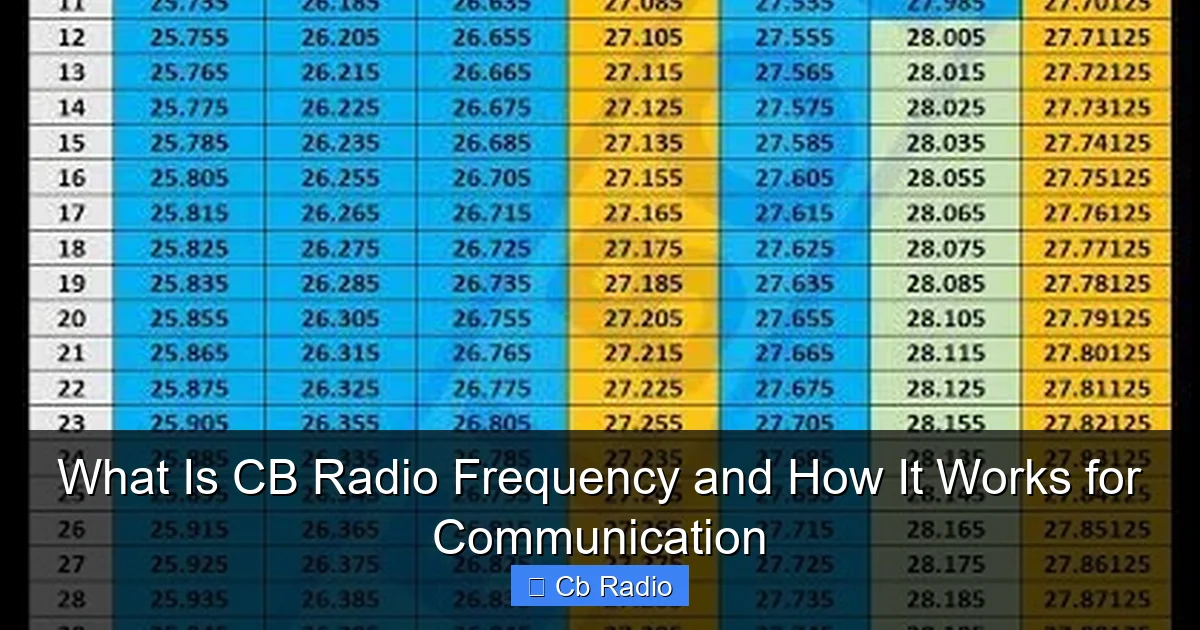
Visual guide about What Is CB Radio Frequency and How It Works for Communication
Image source: i.pinimg.com
Channel Breakdown
For example, Channel 1 is 26.965 MHz, Channel 2 is 26.975 MHz, and so on up to Channel 40 at 27.405 MHz. When you tune your CB radio to a channel, you’re essentially selecting the frequency on which your radio will listen and transmit signals.
How CB Radio Frequency Works for Communication
Transmission and Reception
When you talk into a CB radio microphone, your voice is converted into radio waves that are sent out on the selected frequency. Other radios tuned to the same frequency pick up these waves and convert them back into sound. This two-way communication is what makes CB radios effective for quick, local conversations.
Simple Technology, Effective Results
Unlike complex cellular systems, CB radios use direct radio wave transmission. This means communication happens in real-time between radios within range, without relying on towers or satellites. It’s like having a walkie-talkie but with longer reach and multiple channels to choose from.
Factors Affecting CB Radio Frequency Range
Power Output
CB radios are legally limited to a maximum of 4 watts of power for AM transmission and 12 watts for SSB (Single Side Band). This power limit affects how far your signal can travel.
Terrain and Obstacles
Hills, buildings, and trees can block or weaken radio waves. Flat, open areas allow signals to travel further, sometimes up to 20 miles or more. In cities or mountainous regions, the range may be much shorter.
Antenna Quality and Placement
A good antenna can significantly improve your radio’s performance. Taller antennas placed higher and away from metal objects usually provide better range and clearer reception.
Weather Conditions
Weather can also impact CB radio frequencies. For example, atmospheric conditions like solar flares or thunderstorms may cause interference or fading of signals.
Common Uses of CB Radio Frequencies
Trucking and Transportation
Truck drivers use CB radios extensively to share road conditions, traffic updates, and coordinate logistics. Channel 19 is famously known as the “trucker’s channel.”
Outdoor and Recreational Activities
Hikers, campers, and off-road enthusiasts rely on CB radios for group communication where cell signals are weak or nonexistent.
Emergency Communication
During emergencies or natural disasters, CB radios can serve as reliable communication tools when other networks fail.
Legal Regulations and Frequency Management
FCC Rules
In the United States, the Federal Communications Commission (FCC) regulates CB radio use. Operators don’t need a license, but must follow rules about power limits, channel use, and prohibited transmissions.
Channel Usage Etiquette
Some channels have specific purposes or informal etiquette. For instance, Channel 9 is reserved for emergency communications. Respecting these conventions ensures smooth operation and avoids interference.
Tips for Better CB Radio Communication
Choose the Right Channel
Use popular channels like 19 for general conversation or switch to less busy channels to avoid noise.
Use a Good Antenna
Invest in a quality antenna and place it correctly for better range and signal clarity.
Speak Clearly and Concisely
Good communication is about clarity. Speak slowly and avoid unnecessary chatter.
Keep Your Radio Maintained
Regularly check your radio and antenna connections to ensure optimal performance.
Conclusion
Understanding what CB radio frequency is and how it works can open up a world of simple, reliable communication. Whether you’re a trucker navigating highways, a hobbyist chatting with friends, or someone preparing for emergencies, knowing how to use CB radio frequencies effectively is a valuable skill.
Remember, CB radios operate on a shared frequency band with specific channels designed to keep communication clear and organized. By choosing the right channel, maintaining your equipment, and respecting regulations, you can make the most of your CB radio experience.
Frequently Asked Questions
What is the difference between AM and SSB on CB radios?
AM (Amplitude Modulation) is the standard mode for CB communication, while SSB (Single Side Band) offers clearer signals and longer range but requires compatible radios.
Can CB radios communicate over long distances?
Typically, CB radios have a range of 3 to 20 miles depending on conditions, but atmospheric factors can occasionally extend this range.
Are CB radios still relevant with modern technology?
Yes, CB radios remain useful for local communication, especially in areas without cell coverage or during emergencies.
How can I improve my CB radio’s signal?
Use a high-quality antenna, position it properly, and operate on less crowded channels for better signal clarity.
Is CB radio communication private?
No, CB radio transmissions are open and can be heard by anyone tuned to the same channel.
What are the common uses of CB radios today?
CB radios are popular among truckers, off-roaders, emergency responders, and hobbyists for short-range communication.