

CB radio skip is a natural atmospheric phenomenon that allows CB signals to travel much farther than usual by bouncing off the ionosphere. This skip can dramatically increase your CB radio’s range, but it can also cause unpredictable signal interruptions. Understanding how CB radio skip works helps you make the most of your communication setup.
Contents
- 1 Key Takeaways
- 2 Quick Answers to Common Questions
- 3 📑 Table of Contents
- 4 What Is CB Radio Skip and How It Affects Your Signal Range
- 5 Understanding CB Radio Skip: The Basics
- 6 Factors That Influence CB Radio Skip
- 7 How CB Radio Skip Affects Your Signal Range
- 8 Practical Tips for Making the Most of CB Radio Skip
- 9 Common Misconceptions About CB Radio Skip
- 10 The Future of CB Radio and Skip Communication
- 11 Conclusion
- 12 Frequently Asked Questions
- 13 Author
Key Takeaways
- CB radio skip is caused by the ionosphere: Radio waves bounce off charged particles high in the atmosphere, extending their travel distance.
- Skip can increase CB signal range: Signals can travel hundreds or even thousands of miles beyond normal limits.
- Skip conditions vary by time and solar activity: Day/night cycles and sunspots impact the ionosphere’s behavior.
- Skip can cause signal fading and interference: Signals may weaken or overlap, affecting communication clarity.
- Not all CB radios experience skip equally: Antenna type, location, and weather influence skip effects.
- Understanding skip helps optimize CB use: Timing your transmissions during skip conditions can improve long-distance contacts.
- Skip is mostly unpredictable but fascinating: It’s part science, part natural wonder of radio communications.
Quick Answers to Common Questions
What causes CB radio skip?
CB radio skip is caused by radio waves bouncing off the ionosphere, a charged layer of the atmosphere, allowing signals to travel farther than usual.
When is CB radio skip most likely to happen?
Skip is most common at night and during periods of high solar activity, such as during sunspot peaks.
How far can CB radio skip extend your signal?
Skip can increase your CB radio’s range from a few miles to hundreds or even thousands of miles.
Does skip affect all CB radio users the same way?
No, factors like antenna type, location, and atmospheric conditions cause skip to affect users differently.
Can skip cause interference on CB radios?
Yes, skip can cause signal fading and overlapping transmissions, which may result in interference and unclear communication.
📑 Table of Contents
- What Is CB Radio Skip and How It Affects Your Signal Range
- Understanding CB Radio Skip: The Basics
- Factors That Influence CB Radio Skip
- How CB Radio Skip Affects Your Signal Range
- Practical Tips for Making the Most of CB Radio Skip
- Common Misconceptions About CB Radio Skip
- The Future of CB Radio and Skip Communication
- Conclusion
What Is CB Radio Skip and How It Affects Your Signal Range
Have you ever been chatting on your CB radio and suddenly picked up someone hundreds of miles away, far beyond your usual range? Or noticed your signal fading in and out unpredictably? This intriguing phenomenon is called CB radio skip. It’s a natural atmospheric effect that can dramatically change how far your CB signals travel.
In this article, we’ll dive into what CB radio skip really is, how it happens, and how it affects your communication. Whether you’re a casual CB user or a dedicated hobbyist, understanding skip can help you make the most of your radio setup and improve your experience.
Understanding CB Radio Skip: The Basics
What Is CB Radio Skip?
CB radio skip is a term used to describe the way radio signals bounce or “skip” off layers of the Earth’s atmosphere, specifically the ionosphere, enabling them to travel much farther than their normal line-of-sight range. Instead of signals traveling just a few miles, skip can let them hop hundreds or even thousands of miles.
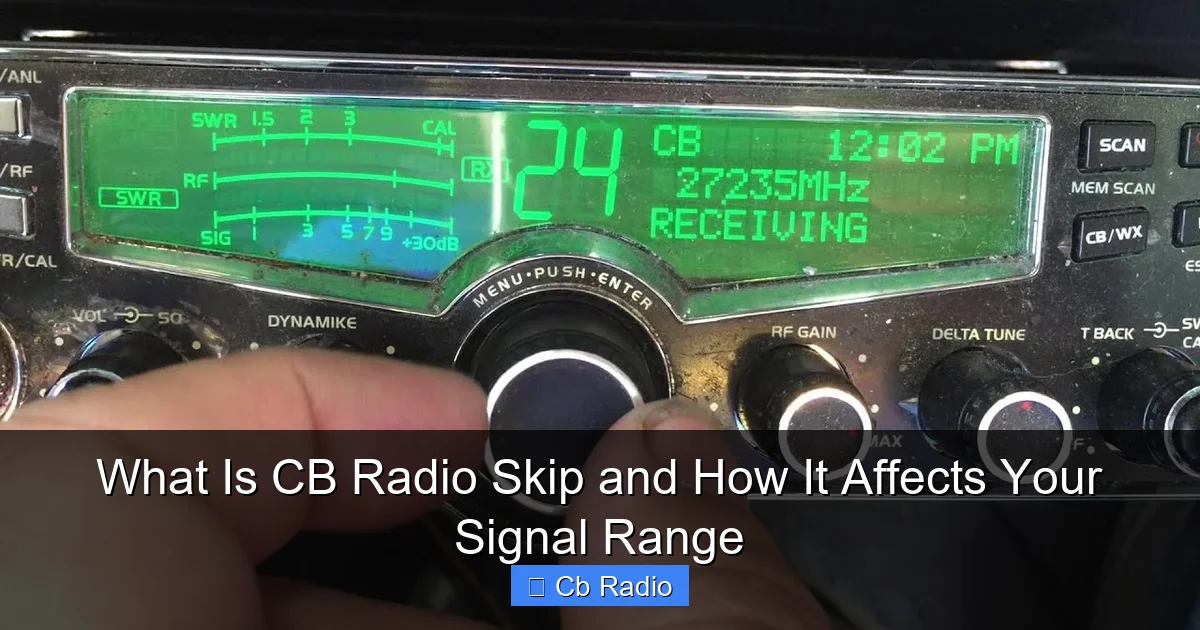
Visual guide about What Is CB Radio Skip and How It Affects Your Signal Range
Image source: i.ytimg.com
The Role of the Ionosphere
The ionosphere is a layer of the atmosphere filled with charged particles (ions) created by the sun’s radiation. This layer can reflect or refract certain radio waves back toward Earth. When CB radio waves hit this ionized layer at the right angle, they bounce back down far beyond the horizon, creating the “skip” effect.
Why It’s Called “Skip”
The term “skip” comes from the way the radio wave seems to leap or bounce between the Earth and the ionosphere. It’s as if the signal is skipping over the atmosphere instead of traveling straight through it.
Factors That Influence CB Radio Skip
Time of Day
Skip conditions are heavily influenced by the time of day. During the daytime, the sun’s radiation ionizes the lower layers of the ionosphere, which can absorb CB frequencies and reduce skip. At night, the ionosphere’s layers change, making skip more likely and often more powerful.
Solar Activity and Sunspots
Solar flares and sunspot cycles affect the amount of ionization in the ionosphere. During periods of high solar activity, skip conditions can become more intense and frequent, allowing for longer-distance communication.
Frequency and Angle of Transmission
The frequency of your CB radio (around 27 MHz) is just right for skip to occur under favorable conditions. Also, the angle at which your antenna sends signals into the sky can affect whether those signals bounce back or escape into space.
Geographical Location
Your location on Earth can influence skip. Areas closer to the poles or near the equator experience different ionospheric conditions. Terrain and local interference can also impact how well skip works for you.
How CB Radio Skip Affects Your Signal Range
Extended Range
Skip can extend your CB radio’s range dramatically. Instead of the typical 3 to 20 miles, skip can allow communication over hundreds or even thousands of miles. This opens up opportunities to connect with distant stations you usually couldn’t reach.
Signal Fading and Distortion
While skip can boost range, it can also cause signals to fade in and out or become distorted. This happens because the ionosphere is constantly changing, and multiple signal paths can interfere with each other.
Interference and Overlapping Signals
Skip can cause signals from distant stations to overlap with local transmissions, leading to interference. This can make it harder to hear or be heard clearly, especially during peak skip conditions.
Practical Tips for Making the Most of CB Radio Skip
Best Times to Use CB Radio for Skip
Try using your CB radio during early evening or nighttime hours when skip is more likely. Also, keep an eye on solar activity reports to identify periods of intense skip conditions.
Optimizing Your Antenna Setup
A good antenna setup is crucial. Use a high-quality, properly tuned antenna that can direct signals upward at the right angle. Experiment with antenna height and orientation to improve skip performance.
Monitor Weather and Solar Reports
Weather conditions and solar activity affect the ionosphere. Use apps or websites that provide real-time solar data and ionospheric forecasts to plan your CB radio sessions.
Use Clear Channels and Frequencies
To avoid interference, try to find less crowded channels. When skip is active, signals from far away can crowd popular frequencies. Scanning for open channels can help maintain clear communication.
Common Misconceptions About CB Radio Skip
Skip Is Not Always Reliable
Skip can be unpredictable. It depends on many factors outside your control, so don’t expect it to work every time you turn on your radio.
Skip Isn’t Magic, It’s Science
While it might feel mysterious, skip is a natural and well-understood phenomenon. Knowing the science behind it can help you use it effectively.
Skip Affects Only Certain Frequencies
Skip primarily affects frequencies in the HF (high frequency) range, including CB radio frequencies around 27 MHz. Lower or higher frequency radios experience skip differently or not at all.
The Future of CB Radio and Skip Communication
Technological Advances
New antenna designs and digital signal processing can help users better leverage skip conditions and reduce interference.
Community and Hobbyist Interest
CB radio remains popular among hobbyists who love experimenting with skip and long-distance communication. Online communities share tips and real-time skip reports.
Environmental Changes
As solar cycles progress, skip conditions will vary. Staying informed helps users adapt and continue enjoying CB radio communications.
Conclusion
CB radio skip is an exciting natural phenomenon that can dramatically extend your communication range by bouncing signals off the ionosphere. While it can sometimes cause interference or fading, understanding how and when skip occurs lets you take advantage of this unique atmospheric effect.
By optimizing your equipment, monitoring solar activity, and choosing the right times to transmit, you can enjoy long-distance CB radio contacts that would otherwise be impossible. So next time you hear a distant voice on your CB radio, you’ll know it’s the magic of skip at work!
Frequently Asked Questions
What is the ionosphere, and why is it important for CB radio skip?
The ionosphere is a layer of Earth’s atmosphere filled with charged particles. It reflects certain radio waves back to Earth, enabling the skip effect that extends CB radio range.
Can weather affect CB radio skip?
While weather near the ground has limited impact, atmospheric conditions higher up can influence the ionosphere and thus affect skip conditions.
Is CB radio skip the same as long-distance ham radio communication?
Both use ionospheric reflection, but ham radios operate on different frequencies and often have more powerful equipment, making their long-distance communication more consistent.
How can I improve my chances of experiencing CB radio skip?
Use a high-quality antenna, transmit during nighttime or high solar activity, and monitor ionospheric conditions to maximize skip opportunities.
Does CB radio skip occur every day?
No, skip conditions vary daily depending on solar activity and time of day, so it doesn’t happen consistently every day.
Will skip improve my local CB radio communication?
Skip mainly affects long-distance signals and doesn’t usually improve short-range, local communication, which depends more on line-of-sight and antenna quality.