

CB radio range varies based on several factors like terrain, antenna, and power. Typically, CB radios work best within 1 to 15 miles, but with the right setup, you can boost your signal to reach farther. This article explains the range of CB radios and shares easy ways to maximize it for better communication.
Contents
- 1 Key Takeaways
- 2 Quick Answers to Common Questions
- 3 📑 Table of Contents
- 4 Introduction
- 5 Understanding CB Radio Range Basics
- 6 How Terrain and Environment Affect CB Radio Range
- 7 Maximizing Your CB Radio Range
- 8 Examples of Real-World Range Scenarios
- 9 Legal Considerations and Safety Tips
- 10 Conclusion
- 11 Frequently Asked Questions
- 12 Author
Key Takeaways
- Typical Range: Most CB radios have an effective range between 1 and 15 miles depending on conditions.
- Line of Sight is Key: Obstacles like buildings and hills can reduce your CB radio range significantly.
- Antenna Quality Matters: A taller and well-tuned antenna improves transmission and reception.
- Power and Frequency: Standard CB radios are limited to 4 watts, but proper tuning can optimize signal strength.
- Environmental Factors: Weather and surrounding terrain affect how far your CB radio signals travel.
- Maximizing Range: Use external antennas, elevate your radio, and avoid interference for best results.
- Legal Limits: Adhere to FCC regulations on power and equipment to stay compliant.
Quick Answers to Common Questions
What is the typical range of a CB radio?
Most CB radios have an effective range of 1 to 15 miles, depending on terrain and antenna setup.
Can I increase my CB radio power output?
Legally, CB radios are limited to 4 watts AM power, so increasing power beyond this is not allowed.
How does the antenna affect CB radio range?
A taller, well-tuned antenna greatly improves signal strength and range by enhancing transmission and reception.
Does weather affect CB radio communication?
Yes, weather like rain or fog can reduce signal quality, while some atmospheric conditions may extend range temporarily.
Can obstacles block CB radio signals?
Yes, hills, buildings, and trees can block or weaken CB radio signals, reducing effective communication distance.
📑 Table of Contents
Introduction
If you’ve ever wondered, “What is the range of a CB radio?”, you’re not alone. CB radios have been a trusted tool for decades, used by truckers, outdoor enthusiasts, and hobbyists alike. They offer a simple, reliable way to communicate over short distances without relying on cell phones or internet connections.
But how far can you actually talk on a CB radio? The answer might surprise you because it depends on many factors — from the antenna you use to the terrain around you. In this article, we’ll break down what determines CB radio range and share practical tips to help you get the most out of your device.
Whether you’re a beginner or a seasoned user, understanding the range of your CB radio will help you communicate more effectively and avoid frustration.
Understanding CB Radio Range Basics
What Determines CB Radio Range?
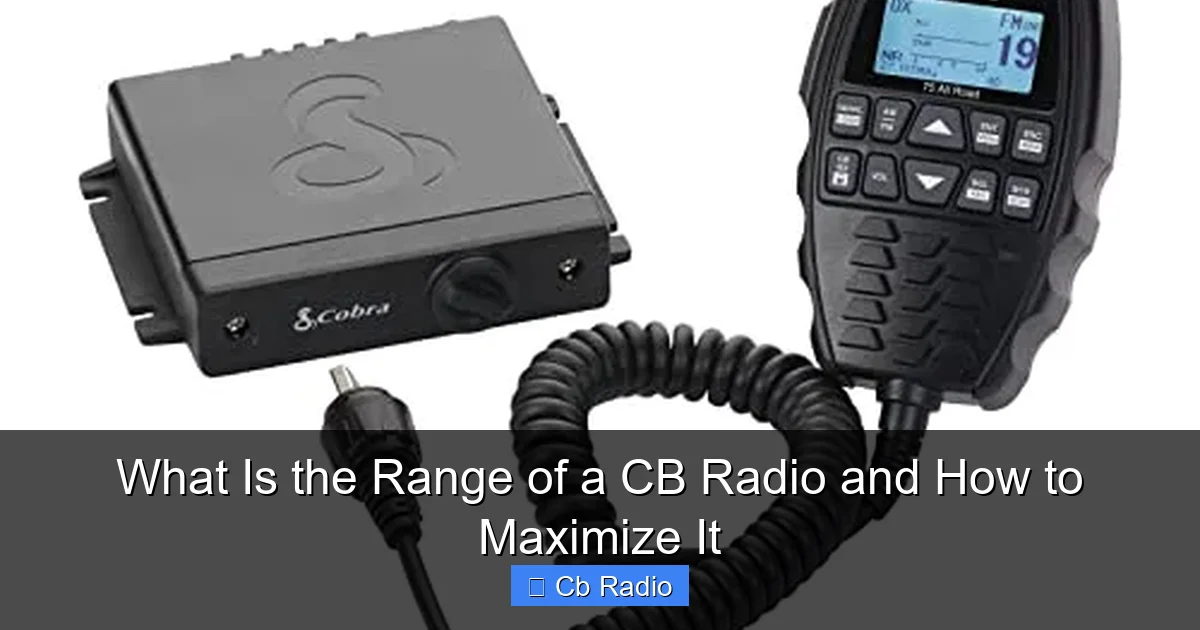
CB radios operate on the 27 MHz frequency band with a maximum power output of 4 watts for AM mode. Because of this, their range is naturally limited compared to other communication devices. The key factors affecting range include:
Visual guide about What Is the Range of a CB Radio and How to Maximize It
Image source: m.media-amazon.com
- Power Output: Limited to 4 watts by law, so you can’t just boost power to increase range.
- Antenna Type and Height: A well-tuned, taller antenna can dramatically improve performance.
- Terrain and Obstacles: Hills, buildings, forests, and other obstacles reduce signal travel.
- Atmospheric Conditions: Weather and atmospheric layers can sometimes enhance or degrade signals.
Typical Range You Can Expect
On average, CB radios have a range of about 1 to 5 miles in urban or obstructed environments. In open rural areas or flat terrain, you might reach 10 to 15 miles or more. Some users report even greater distances under perfect conditions, but this is not common.
Because CB radios communicate using radio waves that travel best in a clear line of sight, anything blocking the path will reduce your range.
How Terrain and Environment Affect CB Radio Range
Urban vs. Rural Settings
In cities or densely populated areas, buildings, metal structures, and electrical interference all limit CB radio signals. You might only get a mile or two of effective communication. On the other hand, in open country, fields, or highways, signals can travel much farther — sometimes up to 15 miles.
Hills, Mountains, and Forests
Natural obstacles like hills and trees block radio waves. If you’re in a valley or surrounded by dense woods, your CB radio’s signal will weaken and range will shrink. Elevating your antenna or moving to higher ground can help overcome these barriers.
Atmospheric Conditions
Weather plays a subtle role. Rain, fog, and humidity can absorb or scatter radio waves, reducing range. Sometimes atmospheric layers can reflect signals and cause “skip” communication, where your signal travels hundreds of miles, but this is rare and unpredictable.
Maximizing Your CB Radio Range
Choose a Quality Antenna
The antenna is the most important part of your CB setup. To maximize range:
- Use a high-quality antenna designed for CB frequencies.
- Mount it as high as possible — ideally on the roof of your vehicle or on a pole.
- Make sure the antenna is properly tuned (using a SWR meter) to your radio to reduce signal loss.
Optimize Antenna Placement
Placement matters just as much as quality. Avoid placing your antenna near metal obstructions or low points. For vehicles, the center of the roof is usually best. For base stations, a rooftop mast or tall pole gives better line of sight.
Use External Amplifiers (Within Legal Limits)
While the FCC restricts CB radios to 4 watts of power, some users add legal external amplifiers to improve signal strength. Be cautious — using illegal power levels can cause interference and fines.
Minimize Interference and Noise
Electrical devices, engine noise, and other radios can cause interference. Use ferrite beads on cables, shield your radio wiring, and keep your CB away from noisy electronics.
Practice Good Operating Habits
Speak clearly and use proper microphone technique. Also, avoid talking over other users and choose less crowded channels if possible to improve communication clarity.
Examples of Real-World Range Scenarios
Truckers on the Highway
Truck drivers often achieve 5 to 10 miles of communication with their CB radios while driving on flat highways. The high vehicle-mounted antennas and lack of tall buildings help improve range.
Campers in the Forest
In a dense forest, CB radios might only work within a mile or less due to trees and terrain. Campers often use walkie-talkies or satellite phones for longer-range communication in these settings.
Off-Roaders and Outdoor Enthusiasts
Off-road vehicle users mount antennas on roll bars or roofs to maximize line of sight. In open desert or flat terrain, they can communicate up to 10 miles or more.
Legal Considerations and Safety Tips
FCC Regulations
CB radios in the US are regulated by the FCC. They must operate at or below 4 watts AM and 12 watts SSB power levels. Using unauthorized power or equipment can lead to fines and interference with other services.
Safe Use Practices
Always follow safety guidelines when installing antennas and using your radio. Avoid distractions while driving and keep your CB radio controls within easy reach.
Conclusion
So, what is the range of a CB radio? It depends on many factors, but generally, you can expect between 1 and 15 miles of clear communication. By understanding the role of antennas, terrain, and power, and by applying practical tips like proper antenna placement and tuning, you can maximize your CB radio’s range significantly.
CB radios remain a powerful tool for short-range communication, especially when cell service is unreliable. With the right setup and knowledge, you can stay connected with friends, family, or fellow travelers no matter where you are.
Frequently Asked Questions
What frequency do CB radios operate on?
CB radios operate on the 27 MHz frequency band, specifically within 40 channels designated for citizen band use.
Is it necessary to have a license to use a CB radio?
No, in the United States, CB radios can be used without a license as long as you follow FCC rules and power limits.
What types of antennas work best for CB radios?
Quarter-wave vertical antennas are common and effective. Longer or base-loaded antennas can improve range if properly installed.
Can I use a CB radio inside my home?
Yes, you can use a CB radio indoors, but range may be limited due to walls and interference. External antennas help improve indoor use.
How do I tune my CB antenna for best performance?
Use an SWR (Standing Wave Ratio) meter to adjust the antenna length until the SWR reading is as low as possible, indicating efficient transmission.
What channels are best for long-distance CB communication?
Channel 19 is popular for highway communication, but channels 1, 20, and 40 are also used for longer-range or less crowded transmissions.