

Choosing the right power supply for your CB radio is essential for reliable communication and device longevity. This guide covers everything you need to know about power requirements, types of power supplies, and practical tips to pick the best one for your CB radio setup.
Contents
- 1 Key Takeaways
- 2 Quick Answers to Common Questions
- 3 📑 Table of Contents
- 4 What Power Supply Do I Need for CB Radio? Choosing the Right One
- 5 Understanding CB Radio Power Requirements
- 6 Types of Power Supplies for CB Radios
- 7 How to Choose the Right Power Supply
- 8 Practical Tips for Using Your Power Supply Safely
- 9 Examples of Popular Power Supplies for CB Radios
- 10 Conclusion
- 11 Frequently Asked Questions
- 12 Author
Key Takeaways
- Understanding voltage and amperage: CB radios typically require a 12V DC power supply with sufficient amperage to operate safely.
- Power supply types: Options include battery power, AC-to-DC adapters, and regulated power supplies.
- Regulated vs unregulated supplies: Regulated power supplies provide stable voltage, protecting your radio from damage.
- Amperage rating matters: Always choose a power supply with an amperage rating higher than your CB radio’s maximum current draw.
- Consider portability: Your choice may depend on whether you need a stationary or mobile power solution.
- Safety features: Look for power supplies with short circuit, overload, and thermal protection.
- Proper wiring and connectors: Ensure correct polarity and secure connections for optimal performance.
Quick Answers to Common Questions
What voltage power supply do CB radios need?
CB radios typically require a 12-volt DC power supply to operate correctly.
Can I use a car battery to power my CB radio?
Yes, most mobile CB radios are designed to run directly off a 12V car battery.
Why is a regulated power supply recommended?
Regulated power supplies provide stable voltage output, protecting your CB radio from voltage fluctuations that can cause damage.
How much amperage should my power supply provide?
Your power supply should offer at least 20-30% more amperage than your radio’s maximum current draw for safe operation.
Can I use a regular AC adapter for my CB radio?
You can use an AC to DC adapter, but make sure it converts to 12V DC and has enough amperage and regulation for your radio.
📑 Table of Contents
What Power Supply Do I Need for CB Radio? Choosing the Right One
If you’re setting up a CB radio, one of the most important questions you’ll face is: what power supply do I need for CB radio? It might seem simple at first — just plug it in, right? But choosing the wrong power supply can lead to poor performance, unstable signals, or even damage to your radio.
CB radios typically run on 12 volts DC power, but not all power supplies are created equal. Knowing the voltage, amperage, and type of power supply that fits your radio’s needs is crucial. Whether you’re installing a CB radio in your vehicle or at home, this guide will walk you through everything you need to know to pick the right power source.
Let’s dive in and get your radio powered up the right way!
Understanding CB Radio Power Requirements
Voltage Needs
Most CB radios require a 12-volt DC power source. This voltage is standard because CB radios are designed to work in vehicles that typically run on 12V batteries. If you’re powering a CB radio from a home outlet, you’ll need an adapter that converts AC power (120V or 240V depending on your location) down to 12V DC.
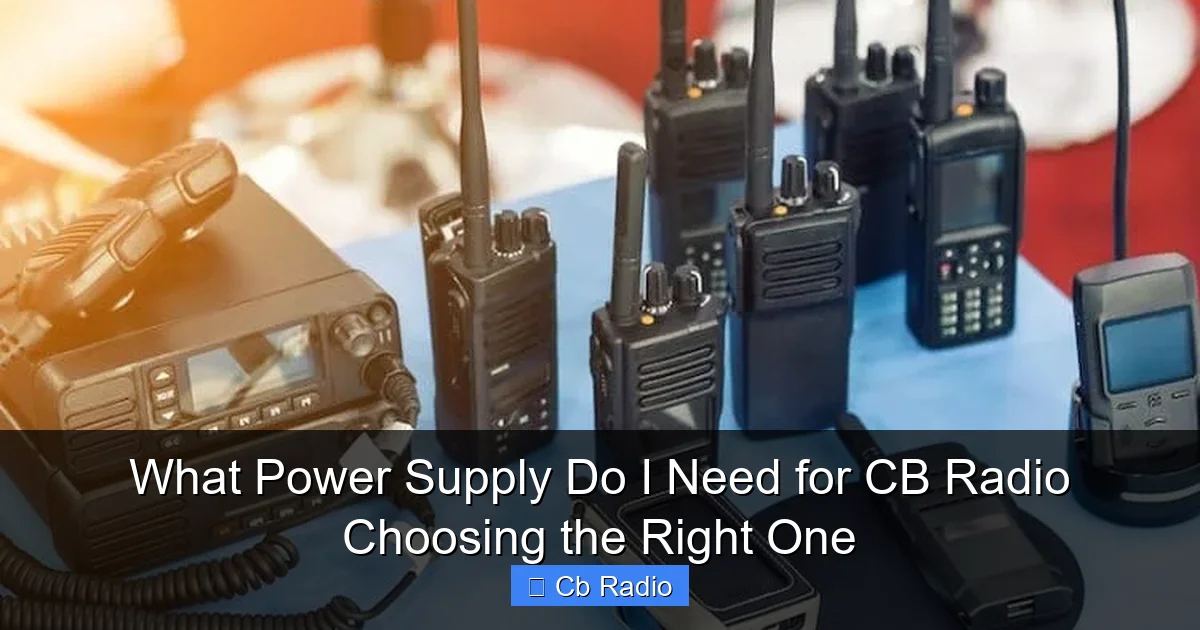
Visual guide about What Power Supply Do I Need for CB Radio Choosing the Right One
Image source: toptwowayradio.com
Amperage and Current Draw
Amperage is just as important as voltage. CB radios can draw anywhere from 2 to 10 amps depending on the model and the transmission power. For example, a typical 4-watt CB radio might draw about 3-4 amps while transmitting. Make sure your power supply can provide enough current without overheating or shutting down.
Why Voltage and Amperage Matter
Supplying too low voltage can cause your radio to function poorly or not at all. Too little amperage means the power supply struggles under load, possibly causing voltage drops that affect radio performance. On the other hand, a power supply with too high voltage risks damaging the radio’s internal circuits.
Types of Power Supplies for CB Radios
Car Battery or Vehicle Power
This is the most common power source for mobile CB radios. The 12V car battery provides ample current and is designed to handle the demands of the radio. Just make sure your connections are solid and that you use proper fuse protection to prevent electrical issues.
AC to DC Power Adapters
If you want to use your CB radio indoors or away from a vehicle, an AC to DC adapter is the way to go. These plug into a wall outlet and convert AC power to 12V DC. It’s important to use one rated for the radio’s amperage needs and preferably one that is regulated to maintain a steady voltage.
Regulated vs Unregulated Power Supplies
- Regulated Supplies: Provide a constant 12V output regardless of load changes. This stability protects your radio and ensures optimal performance.
- Unregulated Supplies: Voltage can fluctuate under load, potentially damaging the radio or causing intermittent performance issues.
Battery Packs and Portable Options
For portable or emergency setups, rechargeable battery packs designed for 12V devices can be used. These provide mobility but require monitoring and recharging. Choose packs with sufficient amp-hour ratings to keep your radio running for your expected usage duration.
How to Choose the Right Power Supply
Check Your Radio’s Specifications
Start by reading the user manual or technical specs for your CB radio. Look for the voltage and current (amperage) ratings. This information tells you the minimum power supply requirements.
Choose a Power Supply with Higher Amperage Capacity
It’s a good practice to pick a power supply rated for at least 20-30% more amperage than your radio needs. This headroom prevents overheating and ensures stable operation when the radio transmits at full power.
Prioritize Regulated Power Supplies
To protect your investment, go with a regulated power supply. It keeps voltage within tight limits, reducing the risk of damage and improving radio performance.
Consider Portability and Usage Environment
Will your CB radio stay in your vehicle, or do you plan to use it indoors or on the go? For fixed setups, a bench power supply or AC adapter is ideal. For mobile use, vehicle power or portable battery packs are better choices.
Look for Safety Features
Short circuit protection, overload protection, and thermal shutdown are important features that help prevent accidents and equipment damage.
Practical Tips for Using Your Power Supply Safely
Use Proper Wiring and Connectors
Ensure you use the correct gauge wire for your current load to avoid voltage drops. Use connectors that fit tightly and avoid loose or corroded contacts.
Maintain Correct Polarity
CB radios are polarity sensitive. Connect the positive (+) to positive and negative (-) to negative. Reversing polarity can cause permanent damage.
Install a Fuse
Always add a fuse close to the power source to protect your wiring and radio from electrical faults.
Keep the Power Supply Ventilated
Power supplies can generate heat. Make sure they have proper ventilation to avoid overheating.
Examples of Popular Power Supplies for CB Radios
MFJ-4230MV Power Supply
This is a regulated 13.8V DC power supply capable of delivering up to 30 amps. It’s ideal for home or base station use, providing clean and stable power for most CB radios.
Pyramid PS30KX Power Supply
Another solid option, this regulated power supply delivers 13.8V at 30 amps. It features built-in protection and is great for high-power CB radios.
AC to 12V DC Wall Adapters
For portable or occasional use, a 12V 5-10 amp regulated adapter can work well for lower power CB radios. Just verify the amperage matches your radio’s needs.
Conclusion
So, what power supply do I need for CB radio? The answer boils down to matching your radio’s voltage and amperage requirements with a reliable, preferably regulated, 12V DC power supply. Whether you’re running your CB radio in your vehicle, at home, or on the go, choosing the right power source ensures your radio performs at its best and lasts longer.
Remember to check your radio’s specs, pick a power supply with ample amperage, and prioritize safety features. With the right power supply, your CB radio will be ready to keep you connected whenever you need it.
Frequently Asked Questions
What happens if I use a power supply with too low amperage?
Using a power supply with insufficient amperage can cause voltage drops, poor radio performance, and potential damage to the power supply or radio.
Is polarity important when connecting my power supply?
Yes, reversing polarity can damage your CB radio. Always connect positive to positive and negative to negative.
Can I power multiple radios from one power supply?
Only if the power supply can handle the combined amperage draw of all radios. Otherwise, it’s best to use separate supplies.
Do I need a fuse between my power supply and CB radio?
Yes, a fuse protects your radio and wiring from electrical faults and short circuits.
Are all 12V power supplies compatible with CB radios?
Not necessarily. The power supply must provide regulated 12V DC and adequate amperage to match your radio’s requirements.
Can I use rechargeable battery packs for my CB radio?
Yes, rechargeable 12V battery packs can power CB radios, especially for portable use, but ensure they have enough capacity for your operating time.