

Choosing the right wire gauge for your CB radio is crucial for clear communication and reliable power supply. This guide explains how wire size affects performance and helps you pick the perfect cable for your setup.
Contents
- 1 Key Takeaways
- 2 Quick Answers to Common Questions
- 3 📑 Table of Contents
- 4 Introduction
- 5 Understanding Wire Gauge and Why It Matters
- 6 Common Wire Gauges Used for CB Radio Installations
- 7 How to Choose the Right Wire Gauge for Your Setup
- 8 Difference Between Power Wire and Coax Cable for CB Radios
- 9 Practical Examples and Tips for Installation
- 10 Conclusion
- 11 Frequently Asked Questions
- 12 Author
Key Takeaways
- Wire gauge impacts signal quality: Too thin a wire causes voltage drop and affects radio performance.
- Distance matters: Longer cable runs require thicker wire to maintain power efficiency.
- Common gauges for CB radios: 12, 14, and 16 gauge wires are often used depending on installation size.
- Battery to radio wiring: Use heavier gauge wires (like 12 or 14) to ensure stable power.
- Coax cable differs: Power wires and coax cables have different standards and purposes.
- Safety first: Proper gauge helps prevent overheating and potential fire hazards.
- Consult manufacturer specs: Always check your CB radio’s manual for recommended wire gauge.
Quick Answers to Common Questions
What wire gauge is best for a 12-volt CB radio?
Typically, 12 or 14 gauge wire works best depending on the cable length. Use 14 gauge for shorter runs (under 10 feet) and 12 gauge for longer distances.
Can I use 16 gauge wire for my CB radio?
It’s not recommended because 16 gauge wire may cause voltage drop and overheating if your radio draws more current or the cable run is long.
Does the coax cable size affect CB radio power supply?
No, coax cables carry RF signals to the antenna, not power. Power wires and coax cables serve different purposes and have different specifications.
How do I protect my CB radio wiring from damage?
Use automotive-grade wire with good insulation, secure cables away from moving parts, and install a fuse close to the power source for safety.
Why is voltage drop important when choosing wire gauge?
Voltage drop reduces the power reaching your CB radio, which can weaken transmission and reception. Thicker wires minimize this drop for better performance.
📑 Table of Contents
Introduction
When setting up a CB radio, one of the most overlooked yet important details is the wire gauge you use. Many enthusiasts focus on the radio or antenna but forget that the cable carrying power to the radio plays a crucial role in how well it performs. Using the wrong wire size can lead to issues like weak transmission, poor reception, or even damage to your equipment.
Choosing the right wire gauge for your CB radio means balancing power efficiency, safety, and installation convenience. In this article, we’ll walk you through everything you need to know about wire gauges, why they matter, and how to select the best size cable for your CB radio setup.
Understanding Wire Gauge and Why It Matters
What Is Wire Gauge?
Wire gauge refers to the thickness of an electrical wire. It’s measured using the American Wire Gauge (AWG) standard, where a smaller number means a thicker wire. For example, 12 gauge wire is thicker than 16 gauge wire. The thickness affects how much current the wire can safely carry and how much voltage will drop over distance.
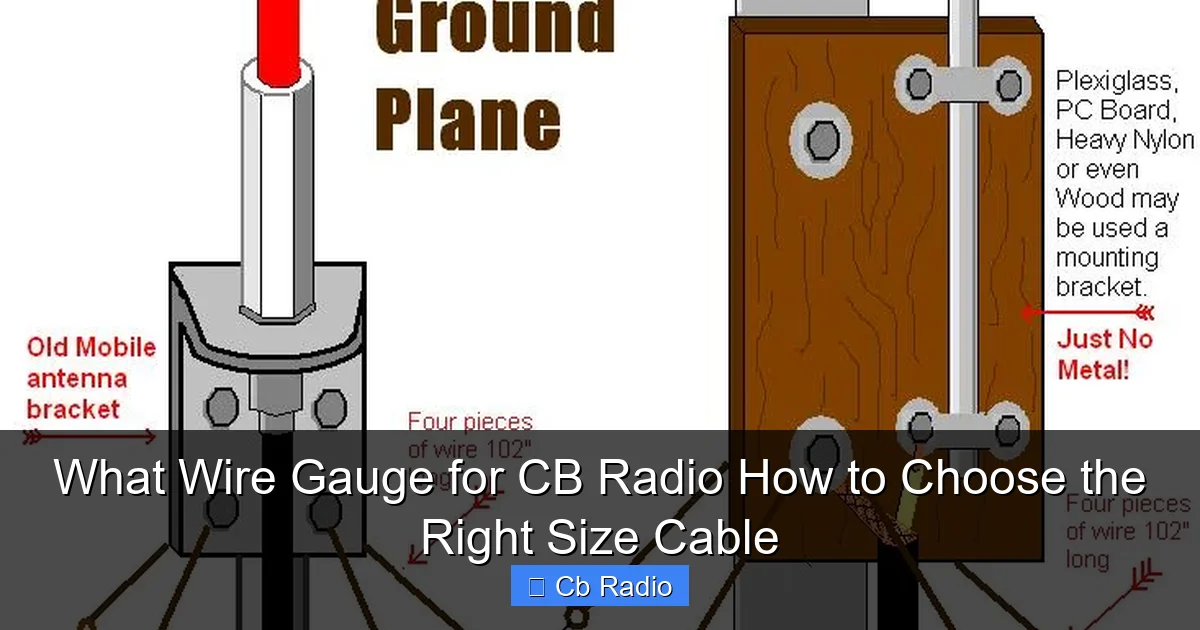
Visual guide about What Wire Gauge for CB Radio How to Choose the Right Size Cable
Image source: lh3.googleusercontent.com
Why Wire Gauge Is Important for CB Radios
CB radios typically run on 12-volt DC power supplied from a vehicle’s battery or other power source. If the wire is too thin, it can’t carry enough current without losing voltage along the way. This voltage drop can weaken your radio’s transmission and cause poor reception. Additionally, thin wires can heat up under load, creating safety hazards.
Voltage Drop and Signal Quality
Voltage drop happens when electrical resistance inside the wire reduces the voltage reaching your radio. A thicker wire reduces resistance, which means more power stays with your radio. This translates to clearer audio and stronger signals. In practical terms, using the right gauge wire ensures your CB radio works efficiently and lasts longer.
Common Wire Gauges Used for CB Radio Installations
12 Gauge Wire
12 gauge wire is a popular choice for CB radios, especially when the power cable runs are longer than 10 feet. It handles higher current loads with minimal voltage drop. It’s thick enough to be durable but still flexible enough for vehicle installations.
14 Gauge Wire
14 gauge wire is suitable for shorter runs, typically under 10 feet. It’s thinner than 12 gauge, which makes it easier to route through tight spaces. However, it has slightly more voltage drop, so it’s ideal when the radio is close to the power source.
16 Gauge Wire
16 gauge wire is sometimes used for very short cable runs or low-power accessories, but it’s generally not recommended for powering CB radios. The risk of voltage drop and overheating is higher, especially if your radio draws more current.
How to Choose the Right Wire Gauge for Your Setup
Calculate Cable Length and Current Draw
Start by measuring the distance from your power source (usually the battery) to the CB radio. Include any extra length needed for routing. Then, check your radio’s current draw, which is often listed in the manual or on the device itself. Most CB radios draw between 3 and 5 amps during transmission.
Use a Wire Gauge Chart or Calculator
Wire gauge charts match current and cable length to the ideal wire size to keep voltage drop under 3%. For example, a 5-amp load over 10 feet usually calls for a 14 gauge wire. If your run is longer, 12 gauge may be necessary to maintain proper voltage.
Consider Environmental Factors
If your wire will be exposed to heat, moisture, or vibration, choose a wire with a durable insulation rating. Marine-grade or automotive-grade wires often have thicker insulation and are more resistant to damage.
Practical Tip: Use Fuses and Proper Connectors
Always install a fuse close to the battery to protect your wiring. Use quality connectors and crimp or solder them properly to avoid resistance points. These details help maintain signal quality and safety.
Difference Between Power Wire and Coax Cable for CB Radios
What Is Coax Cable?
Coax cable is used to connect your CB radio to its antenna. It carries radio frequency signals, not power. The thickness and quality of coax cable affect signal loss over distance but are measured differently than power wires.
Why Not Use Coax as Power Wire?
Coax cables are not designed to handle DC power loads. Their internal conductors and insulation are optimized for RF signals, not current carrying capacity. Using coax as a power wire can cause overheating and damage.
Choosing the Right Coax Cable
For the antenna connection, RG-58 or RG-8X coax cables are common choices. Pick a cable with low loss and proper connectors for your setup. This ensures the best transmission and reception quality.
Practical Examples and Tips for Installation
Example 1: Installing CB Radio in a Truck
If you’re installing a CB radio in a large truck, you might have a 15-foot power cable run from the battery to the radio. In this case, 12 gauge wire is a safe choice to minimize voltage drop and ensure reliable power. Use a fuse rated around 10 amps near the battery for protection.
Example 2: Compact Car Setup
For a shorter run of about 6 feet inside a car, 14 gauge wire can be sufficient. It’s easier to route under dashboard panels and through tight spaces. Just make sure the wire is automotive-grade with good insulation.
Installation Tips
- Keep power wires away from moving parts and sharp edges.
- Secure cables with zip ties or clamps to prevent vibration damage.
- Avoid splicing wires when possible, but if needed, use quality connectors and waterproofing.
- Test voltage at the radio before finalizing installation to confirm minimal voltage drop.
Conclusion
Choosing the right wire gauge for your CB radio is essential for clear communication and safe operation. The wire size affects voltage drop, signal quality, and overall reliability. By understanding your radio’s power needs and cable run length, you can select the perfect gauge—usually between 12 and 14 AWG—that fits your setup.
Always prioritize safety by using proper fuses and good installation practices. Remember, the best wire gauge helps your CB radio perform at its best, so take the time to consider this vital detail before you start wiring. With the right cable, you’ll enjoy clear conversations and dependable service on the road or in the field.
Frequently Asked Questions
What happens if I use too thin a wire for my CB radio?
Using a wire that’s too thin can cause excessive voltage drop, leading to poor radio performance and possible overheating of the wire, which is a safety hazard.
Is there a difference between wire gauge for power and antenna cables?
Yes, power wires supply DC current to the radio and require proper gauge for current capacity. Antenna cables (coax) carry RF signals and have different thickness and shielding requirements.
How do I know what wire gauge my CB radio needs?
Check your radio’s manual for current draw and recommended wire gauge. Also, consider the distance from the power source—longer runs need thicker wire to avoid voltage drop.
Can I extend my CB radio power cable with a different gauge wire?
It’s best to use the same gauge or thicker wire when extending cables. Using thinner wire on an extension can increase voltage drop and reduce performance.
What type of insulation should the wire have for CB radios in vehicles?
Use automotive-grade wire with insulation rated for heat, oil, and vibration resistance to ensure durability in vehicle environments.
Do I need a fuse on my CB radio power wire?
Yes, installing a fuse close to the battery protects your wiring and equipment from short circuits and overheating, enhancing safety.