

CB radios became widely popular in the 1970s, transforming communication for truckers, hobbyists, and everyday people. This technology started as a niche tool but quickly grew into a cultural phenomenon, influencing music, movies, and social trends across America.
Contents
- 1 Key Takeaways
- 2 Quick Answers to Common Questions
- 3 📑 Table of Contents
- 4 When Did CB Radios Become Popular? A Look Back in History
- 5 The Origins of CB Radios: Early Beginnings
- 6 The 1970s: The Decade CB Radios Became a Phenomenon
- 7 The Language and Culture of CB Radio Users
- 8 Technological Advances and Changes Over Time
- 9 Tips for Getting Started with CB Radios Today
- 10 Conclusion: The Enduring Legacy of CB Radios
- 11 Frequently Asked Questions
- 12 Author
Key Takeaways
- Origins in the 1940s: CB radios were first introduced for personal and business communication after World War II.
- 1970s boom: CB radios surged in popularity during the 1970s due to changes in regulations and the oil crisis.
- Trucker culture: CB radios became essential tools for truck drivers, creating a unique slang and community.
- Pop culture impact: CB radios influenced music, movies, and TV shows, boosting their mainstream appeal.
- Technological evolution: Over time, CB radios have adapted but remain popular among hobbyists and off-roaders.
- Regulatory changes: The FCC’s relaxed rules in the 1970s made CB radios accessible to the general public.
- Current relevance: Despite new tech, CB radios still have practical uses in certain professions and communities.
Quick Answers to Common Questions
When were CB radios first introduced?
CB radios were introduced in the 1940s and 1950s after World War II, primarily for business and personal communication.
What made CB radios popular in the 1970s?
The FCC relaxed regulations in 1975, allowing easier access, combined with the 1973 oil crisis that increased truckers’ reliance on CB radios.
Who mainly used CB radios during their peak popularity?
Truck drivers were the primary users, but hobbyists and the general public also embraced CB radios during their peak.
What is “10-4” in CB radio slang?
“10-4” means “message received” or “understood” in CB radio communication.
Are CB radios still relevant today?
Yes, CB radios are still used by off-roaders, rural communities, and emergency responders for reliable communication.
📑 Table of Contents
- When Did CB Radios Become Popular? A Look Back in History
- The Origins of CB Radios: Early Beginnings
- The 1970s: The Decade CB Radios Became a Phenomenon
- The Language and Culture of CB Radio Users
- Technological Advances and Changes Over Time
- Tips for Getting Started with CB Radios Today
- Conclusion: The Enduring Legacy of CB Radios
When Did CB Radios Become Popular? A Look Back in History
If you grew up in the 1970s or have an interest in communication technology, you’ve probably heard about CB radios. But when did CB radios become popular, and how did they go from a niche gadget to a cultural icon? In this article, we’ll take a step back in time to explore the fascinating journey of CB radios — from their early beginnings to their heyday and beyond.
CB, or Citizens Band, radios have a long and colorful history. They have been a vital tool for truckers, hobbyists, and emergency responders alike. Their rise in popularity not only brought new ways to communicate but also shaped a unique subculture complete with its own language and style. Let’s dive into the story and discover why CB radios captured the imagination of millions.
The Origins of CB Radios: Early Beginnings
What is CB Radio?
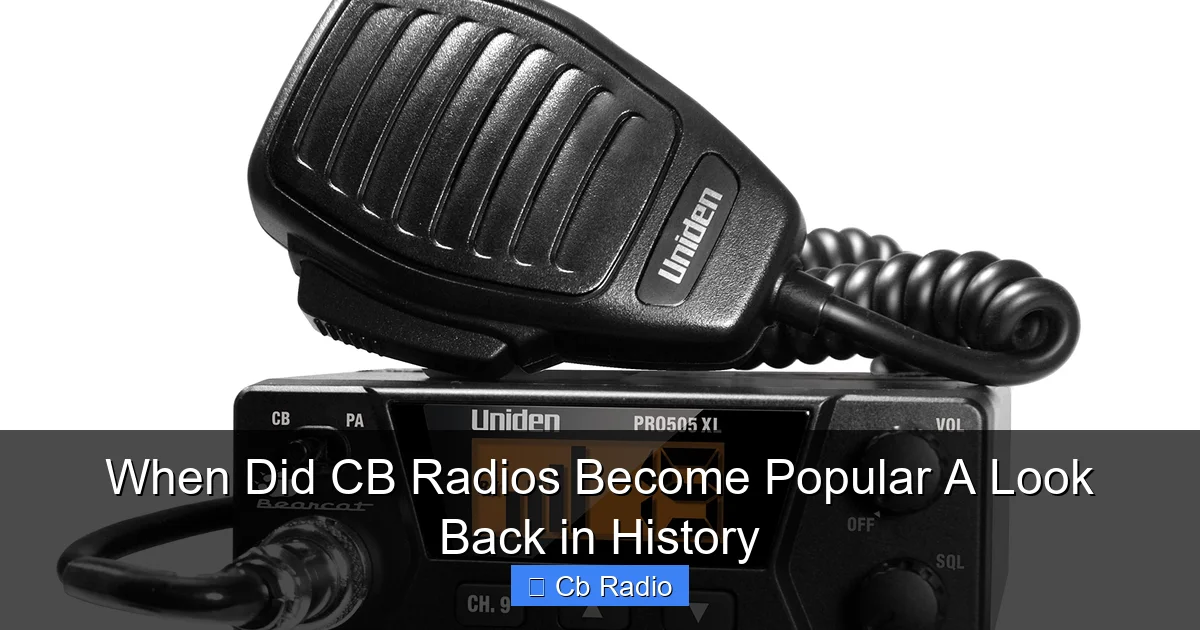
Citizens Band radio is a short-distance radio communication system that allows individuals to talk on 40 shared channels. Initially designed for personal and business use, CB radios operate on frequencies set aside by the Federal Communications Commission (FCC) for civilian use.
Visual guide about When Did CB Radios Become Popular A Look Back in History
Image source: ico-optics.org
Early Development in the 1940s and 1950s
The concept of CB radio began during World War II when the military used similar radio systems for communication. After the war, the FCC allocated specific frequencies for public use, aiming to create a radio service accessible to the average person. Early CB radios were bulky and expensive, limiting their appeal.
Limited Popularity at First
Throughout the 1950s and early 1960s, CB radios were mostly used by businesses like taxi companies and delivery services. Their limited range and technical complexity kept them out of the mainstream. However, hobbyists and radio enthusiasts began to experiment with the technology, laying the groundwork for a broader audience.
The 1970s: The Decade CB Radios Became a Phenomenon
The FCC’s Role in CB Radio Popularity
The biggest turning point came in 1975 when the FCC relaxed regulations, allowing for more channels and easier access to CB radios. This deregulation made it simpler for everyday people to buy and operate CB devices without a license.
The Oil Crisis and the Rise of Truckers
The 1973 oil crisis led to gas shortages and speed limits on highways. Truck drivers began relying heavily on CB radios to share road information, warn about police speed traps, and coordinate routes. This practical use helped CB radios become essential tools for thousands.
CB Radios in Popular Culture
Movies like Smokey and the Bandit and songs like C.W. McCall’s “Convoy” celebrated CB radio culture. The slang, the humor, and the camaraderie captured the public’s imagination, turning CB radios into a trendy gadget for people beyond the trucking industry.
The Language and Culture of CB Radio Users
CB Slang and Codes
One of the most fun parts of CB radio culture was the creation of a unique language. Terms like “10-4” (message received), “breaker breaker” (request to speak), and “good buddy” (friend or contact) became part of everyday lingo among users. These codes helped users communicate quickly and clearly over the radios.
Community and Social Connection
CB radio created a sense of community among users. Whether it was truckers sharing road tips or hobbyists chatting about interests, the radios fostered connections across distances. Many users fondly remember the friendships and support networks built through CB radio channels.
Technological Advances and Changes Over Time
From Analog to Digital
While CB radios started with analog technology, advances over the years brought improvements in clarity, range, and ease of use. Despite the rise of cell phones and the internet, CB radios remain valuable for certain uses, especially in areas without reliable mobile coverage.
Modern Uses of CB Radios
Today, CB radios are popular with off-road enthusiasts, rural communities, and emergency responders. They provide a reliable, low-cost form of communication that doesn’t depend on cellular networks. Many hobbyists also enjoy collecting vintage CB radios and preserving their history.
Tips for Getting Started with CB Radios Today
Choosing the Right Radio
For beginners, it’s best to select a user-friendly CB radio with basic features like channel scanning and noise reduction. Popular models often come with easy-to-read displays and simple controls.
Learning the Lingo
Getting familiar with common CB slang enhances the experience and helps you connect with other users. Many online resources and forums offer guides on the most popular codes and phrases.
Legal Considerations
While the FCC no longer requires licenses for CB radios, users should still follow regulations regarding power limits and avoid using prohibited channels. Staying informed ensures a positive and lawful CB experience.
Conclusion: The Enduring Legacy of CB Radios
CB radios became popular in the 1970s thanks to a perfect storm of regulatory changes, cultural shifts, and practical needs. From their origins as a business tool to their rise as a nationwide craze, CB radios have left a lasting mark on communication history. Even today, these radios continue to serve important roles and remain beloved by many.
Whether you’re a curious newcomer or a seasoned CB enthusiast, understanding when and why CB radios became popular helps appreciate their unique place in our technological and cultural landscape. So next time you hear someone say “10-4,” you’ll know the rich history behind that simple phrase!
Frequently Asked Questions
What does CB stand for?
CB stands for Citizens Band, referring to a type of radio frequency band designated for public use.
Do you need a license to operate a CB radio?
No, since 1975, the FCC no longer requires a license for CB radio use in the United States.
How far can CB radios communicate?
CB radios typically have a range of 1 to 20 miles, depending on terrain, antenna quality, and weather conditions.
Why did CB radios become popular with truckers?
Truckers used CB radios to share real-time road information, avoid speed traps, and coordinate logistics, which was especially useful during fuel shortages.
Can anyone buy a CB radio?
Yes, CB radios are widely available for purchase by the general public without restrictions.
What are some common CB radio channels?
Channel 19 is commonly used by truckers, while channel 9 is reserved for emergency communications.