

Why Car Fan Not Working Troubleshooting and Fixes Now shows simple steps to find and fix fan faults. You’ll learn how to check fuses, relays, wiring, motors, and portable car fan issues with easy tests and clear fixes.
Contents
- 1 Key Takeaways
- 2 Introduction
- 3 What you will need
- 4 Understand the types of fans
- 5 Step 1: Safety first
- 6 Step 2: Quick checks that solve many problems
- 7 Step 3: Diagnose the cabin blower fan
- 8 Step 4: Diagnose the engine cooling fan
- 9 Step 5: Wiring and connector checks
- 10 Step 6: Portable car fan specific checks
- 11 Troubleshooting: symptom-based fixes
- 12 Step 7: How to replace common parts
- 13 Practical tips and examples
- 14 When to see a professional
- 15 Maintenance tips to prevent fan failure
- 16 Cost and time estimates
- 17 Troubleshooting checklist
- 18 Common mistakes to avoid
- 19 Conclusion
- 20 Author
Key Takeaways
- Point 1: Most fan failures are caused by blown fuses, faulty relays, or bad resistors. These are often quick fixes.
- Point 2: Simple tools like a multimeter and basic safety gear let you test power and continuity fast.
- Point 3: Distinguish between engine cooling fan and cabin blower problems to focus your diagnosis.
- Point 4: Portable car fan issues often come from bad USB/power leads or worn motors; cleaning or replacing parts can restore function.
- Point 5: If tests show no power or complex wiring faults, seek a professional to avoid damage.
- Point 6: Regular maintenance like cleaning, securing wiring, and checking mounts prevents many failures.
Introduction
This guide helps you find out why car fan not working. You will learn step-by-step checks. You will learn safe tests. You will learn fixes for common faults. This guide covers both engine cooling fans and cabin blower fans. It also covers portable car fan issues.
What you will need
Use these tools and parts to diagnose and fix most problems:
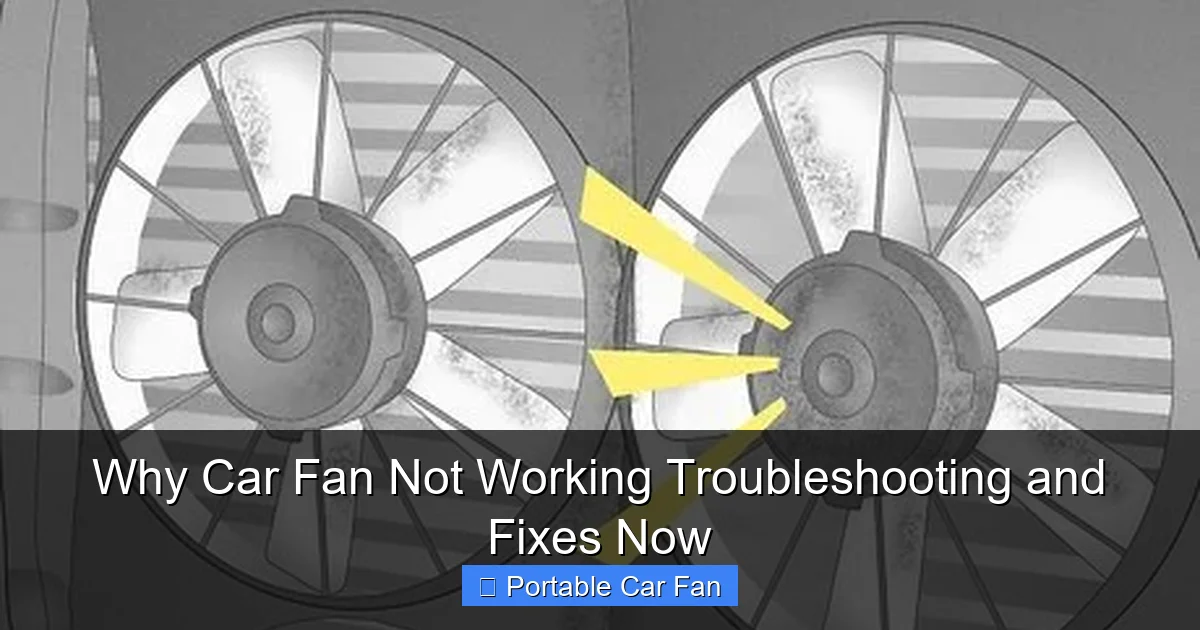
Visual guide about Why Car Fan Not Working Troubleshooting and Fixes Now
Image source: wikihow.com
- Multimeter (voltage and continuity)
- Screwdrivers and pliers
- Socket set for motor and relay removal
- Replacement fuses, relays, resistors, or fan motor
- Contact cleaner and small brush
- Gloves and safety glasses
- Service manual or fuse box diagram
Understand the types of fans
First, know which fan you have trouble with. This helps narrow the cause of why car fan not working.
Visual guide about Why Car Fan Not Working Troubleshooting and Fixes Now
Image source: i.ytimg.com
- Engine cooling fan: Cools the radiator. Usually electric or belt-driven.
- Cabin blower fan: Pushes air through vents for heat and A/C.
- Portable car fan: Small fans powered by 12V socket or USB for extra airflow.
Step 1: Safety first
Always start with safety. You will test electrical parts and moving fans. Simple safety stops accidents and damage.
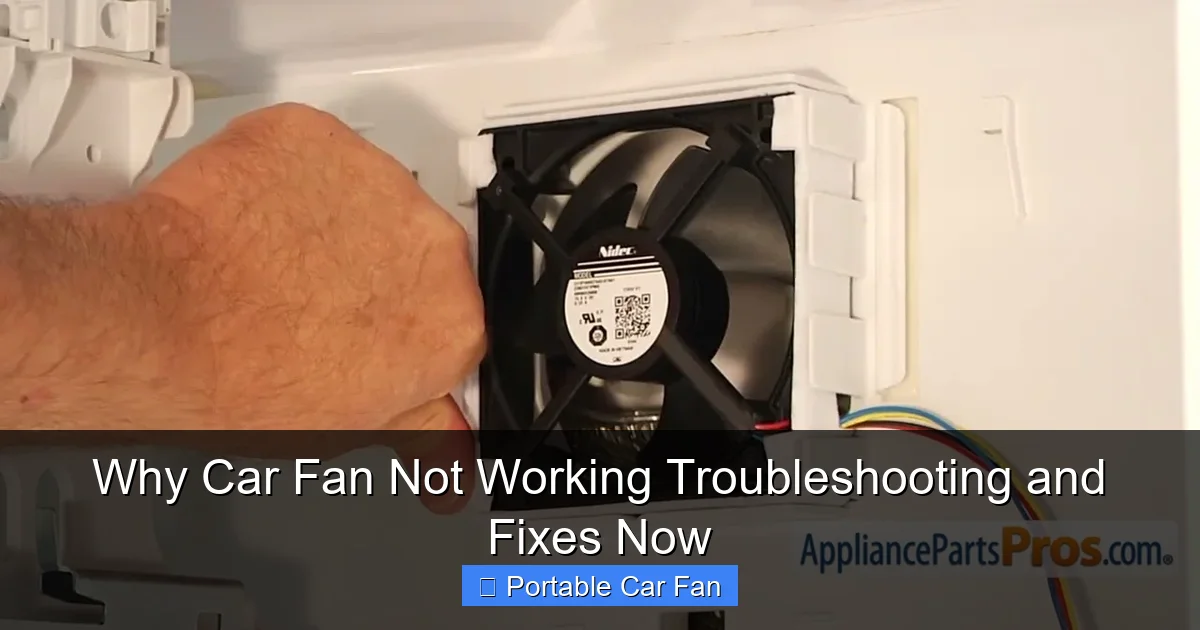
Visual guide about Why Car Fan Not Working Troubleshooting and Fixes Now
Image source: i.ytimg.com
1.1 Park and shut down
Turn off engine. Set the parking brake. Remove keys.
1.2 Disconnect battery for major work
When you touch wiring or replace parts, disconnect the negative battery terminal. This prevents shorts and shocks.
1.3 Use gloves and eye protection
Small blades and hot parts can hurt. Wear gloves and eye protection.
Step 2: Quick checks that solve many problems
These checks are fast. They explain most reasons for why car fan not working.
2.1 Check fuses
Find the fuse box. Use the diagram in the cover or manual. Look for blower, fan, or radiator fan fuses. A blown fuse is often the cause. Replace with the same amp fuse. Test the fan again.
2.2 Inspect relays
Relay packs often fail. Swap the fan relay with a similar relay in the box. If the fan runs after the swap, the original relay is bad. Replace it.
2.3 Test the switch and controls
Turn the fan speed switch or A/C controls. Do any positions give power? If only some speeds work, the resistor pack may be faulty. If no positions work, the switch or wiring may be bad.
Step 3: Diagnose the cabin blower fan
Follow these steps when your heater or A/C fan inside the car does not run. These steps help find out why car fan not working in the cabin.
3.1 Locate the blower motor
The blower motor sits under the dashboard on the passenger side or behind the glove box. Remove panels to reach it.
3.2 Check for power at the motor
Reconnect the battery. Turn the fan on. Use a multimeter on the motor power plug. You should see 12V when the fan is commanded on. If you see voltage but the motor does not spin, the motor is bad.
3.3 Test the blower motor directly
Remove the motor plug. Apply 12V directly to the motor terminals from the battery using jumper leads. If the fan runs, the motor is good. Your problem is wiring, switch, or resistor.
3.4 Inspect and replace the blower motor resistor
Many cars use a resistor to control fan speed. If only one speed works or speeds are intermittent, the resistor may be bad. Locate and inspect for burn marks. Replace if needed.
Step 4: Diagnose the engine cooling fan
Engine cooling fans stop the engine from overheating. If the cooling fan fails, the engine can run hot. These steps explain why car fan not working for the radiator fan.
4.1 Check coolant temperature and fan triggers
The fan runs when the engine is hot or A/C is on. Run the engine to normal temp. Listen and watch the fan. Use a scan tool or thermometer at the thermostat housing to see if the fan should run.
4.2 Test the fan relay and fuse
Swap the fan relay with a similar one. Check the fuse. Replace if needed. If the fan runs after swapping, the relay was faulty.
4.3 Check the fan motor directly
Access the fan motor plug. With the engine off, supply 12V directly to the fan. If the fan runs, the motor is fine. The fault is the control circuit or sensor.
4.4 Test the coolant temperature sensor and fan control module
If the fan does not get the signal to start, the coolant temp sensor or fan control module may be bad. Use a multimeter or scan tool. Replace parts that read outside the expected range.
Step 5: Wiring and connector checks
Bad connectors and wiring cause many faults. These steps help you find wiring issues that explain why car fan not working.
5.1 Visual inspection
Look for frayed wires, melted insulation, or corrosion. Check harnesses near heat or moving parts.
5.2 Wiggle test
With the fan on, wiggle wires and connectors. If the fan cuts in and out, you found a loose or broken wire. Repair or replace the connector.
5.3 Use a multimeter
Check for voltage and continuity along the circuit. Test at the relay, switches, and motor plug. Trace where voltage stops. That point is likely the fault.
Step 6: Portable car fan specific checks
If you use a portable car fan, the fixes are often simpler. These steps explain common portable fan problems and fixes for why car fan not working in portable fans.
6.1 Power source checks
Check the 12V socket or USB power. Test the socket with another device. Some sockets turn off with the ignition.
6.2 Inspect the power lead
Look for cuts, loose plugs, and frayed wires. Replace the lead if damaged. A weak connection can stop the fan.
6.3 Test the portable fan motor
Apply power directly to the fan. If it runs, the problem is the lead or switch. If not, replace the fan motor or the unit.
6.4 Clean and lubricate
Small portable fan motors may seize from dust. Clean fan blades and motor housing. Use a drop of light oil on the shaft if safe to do so.
Troubleshooting: symptom-based fixes
Here are quick fixes by symptom. Use these when you ask yourself why car fan not working based on what you see or hear.
- No fan at all: Check fuses, relays, battery, and wiring. Test for 12V at the motor connector.
- Fan runs only on high speed: Likely a bad resistor pack for the blower. Replace resistor.
- Fan works intermittently: Check switches, loose wiring, or relays. Use wiggle tests to find loose connectors.
- Fan runs constantly: Could be a stuck relay, bad temperature sensor, or a short in the control circuit.
- Portable fan no power: Check socket, power lead, and internal switch or fuse if present.
- Fan noisy or vibrating: Inspect fan blades, mounts, and motor bearings. Replace or balance blades and lubricate motor bearings if possible.
Step 7: How to replace common parts
Replacing parts often solves why car fan not working. Here are simple replacement steps for common parts.
7.1 Replace a fan fuse
Turn off the car. Pull the fuse using pliers or a fuse puller. Insert the correct amp fuse. Test the fan.
7.2 Replace a relay
Find the relay in the fuse box. Pull it straight out. Push a new relay in. Test the fan. If unsure, use the vehicle manual for the relay location.
7.3 Replace blower motor
Remove the glove box or lower dash cover. Unscrew mounting bolts and unplug the motor. Install the new motor and reassemble. Test fan speeds.
7.4 Replace blower motor resistor
Locate the resistor on the duct or heater housing. Unplug it and remove screws. Install new resistor and reconnect. Test speeds.
7.5 Replace portable fan
If the motor is not serviceable, replace the entire portable unit. Use a fan rated for automotive use and the correct power draw.
Practical tips and examples
Here are real-world tips you can use right now to find out why car fan not working and fix it fast.
- Tip: Keep spare fuses and a small relay kit in your car. They fix many issues quickly.
- Example: A driver noticed no cabin air. The fuse was fine. Swapping the relay fixed it. Time to repair: 10 minutes.
- Tip: Use a test light for quick 12V checks if you don’t have a multimeter.
- Example: Portable fan not working. The USB plug was loose. A new USB cable fixed it in 5 minutes.
- Tip: Record what you test and the readings. This saves time when you seek help.
When to see a professional
Some faults need a pro. See a mechanic if:
- The wiring is damaged deep in the harness.
- You suspect a control module or ECU issue.
- The engine overheats despite fan tests.
- You can’t access parts safely under the vehicle.
A pro has advanced tools like scan tools and wiring diagrams. They can test sensors and modules properly.
Maintenance tips to prevent fan failure
Regular care keeps fans working and answers future why car fan not working questions before they happen.
- Check fuses and relays every year.
- Clean fan blades and housings of dust and leaves.
- Inspect wiring during oil changes.
- Replace worn belts on belt-driven fans.
- Use quality replacement parts and OEM specs.
Cost and time estimates
Here are general costs and time you can expect when you fix fan problems related to why car fan not working.
- Fuse or relay: $5–$50, 10–30 minutes.
- Blower motor resistor: $20–$100, 30–60 minutes.
- Blower motor replacement: $75–$300, 1–2 hours.
- Engine cooling fan motor: $100–$800, 1–3 hours depending on vehicle.
- Professional diagnosis: $80–$150 per hour.
Troubleshooting checklist
Use this checklist to quickly find why car fan not working:
- Is the fuse intact?
- Is the relay working?
- Is there 12V at the motor when on?
- Does the fan run when powered directly?
- Are control switches and resistors working?
- Is wiring and connector condition good?
- Does the cooling sensor or module send a signal?
Common mistakes to avoid
Watch out for these errors when you troubleshoot why car fan not working:
- Replacing parts without testing first.
- Using the wrong fuse rating.
- Not disconnecting the battery for major work.
- Over-tightening plastic parts and cracking housings.
- Ignoring intermittent faults — they get worse.
Conclusion
Finding out why car fan not working is easy with a clear plan. Start with fuses and relays. Move to power tests, then resistors and motors. Check wiring and connectors. Portable car fans often fail due to power leads or dust. Many fixes are simple and low cost. If you hit complex wiring or module problems, get a pro. With these steps, you can diagnose most fan faults fast and safely. Stay safe and keep your car cool.
🎥 Related Video: Radiator fan not working problem solve in 5 second (emergency) #automobile #engine #fans #radiator
📺 DKZMOTORGARGE
