

Will OBD2 scanner work on OBD1? Short answer: not directly. This guide explains why OBD2 scanners usually won’t read OBD1 systems and shows practical ways to diagnose older cars. Learn adapters, wiring checks, and simple workarounds to get useful data from OBD1 vehicles.
Contents
- 1 Key Takeaways
- 2 Will OBD2 Scanner Work on OBD1 Vehicles Explained Now
- 3 Introduction: What you will learn
- 4 Step 1: Learn the basics — OBD1 vs OBD2
- 5 Step 2: Identify the vehicle and its port
- 6 Step 3: Try a direct OBD2 scan (when applicable)
- 7 Step 4: Use an adapter or protocol bridge
- 8 Step 5: Use an OBD1 scanner or jumper method
- 9 Step 6: Build a DIY bridge with a microcontroller (advanced)
- 10 Step 7: Practical tips for success
- 11 Troubleshooting: If things go wrong
- 12 Examples and real cases
- 13 Safety and best practices
- 14 When to call a professional
- 15 Conclusion
- 16 Final checklist before you start
- 17 Author
Key Takeaways
- Point 1: OBD2 scanners generally will not work on OBD1 ports because the protocols and connectors differ.
- Point 2: Some OBD2 tools can talk to OBD1 systems with the right adapter and wiring knowledge.
- Point 3: You can read OBD1 codes using a dedicated OBD1 scanner, jumper tools, or a microcontroller solution.
- Point 4: Identify the vehicle’s year, manufacturer, and ECU type before attempting any scan or adapter use.
- Point 5: Always check pinouts, voltage, and ground before connecting devices to avoid ECU damage.
- Point 6: Practical troubleshooting steps can fix most common connection and communication failures.
Will OBD2 Scanner Work on OBD1 Vehicles Explained Now
In this guide you will learn why will obd2 scanner work on obd1 is a common question. You will learn the differences between OBD1 and OBD2. You will see step-by-step ways to try a scan. You will get safe wiring tips. You will find troubleshooting steps if things fail. The goal is simple. Help you get data from older cars without guessing.
Introduction: What you will learn
This guide shows clear, actionable steps to answer will obd2 scanner work on obd1. We explain the tech differences. We cover adapters and direct methods. We share examples, tips, and safety steps. After reading, you will know when to use an OBD2 scanner, when to use an OBD1 tool, and how to bridge the gap safely.
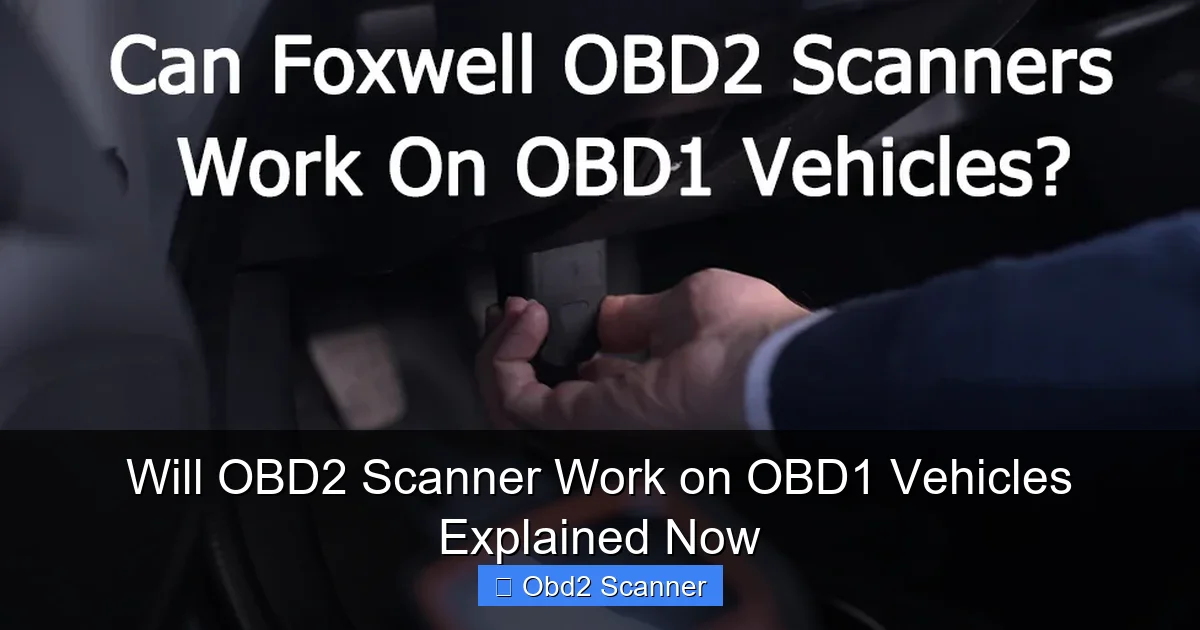
Visual guide about Will OBD2 Scanner Work on OBD1 Vehicles Explained Now
Image source: foxwelldiag.com
Step 1: Learn the basics — OBD1 vs OBD2
Start simple. Know the difference. This helps answer will obd2 scanner work on obd1 in most cases.
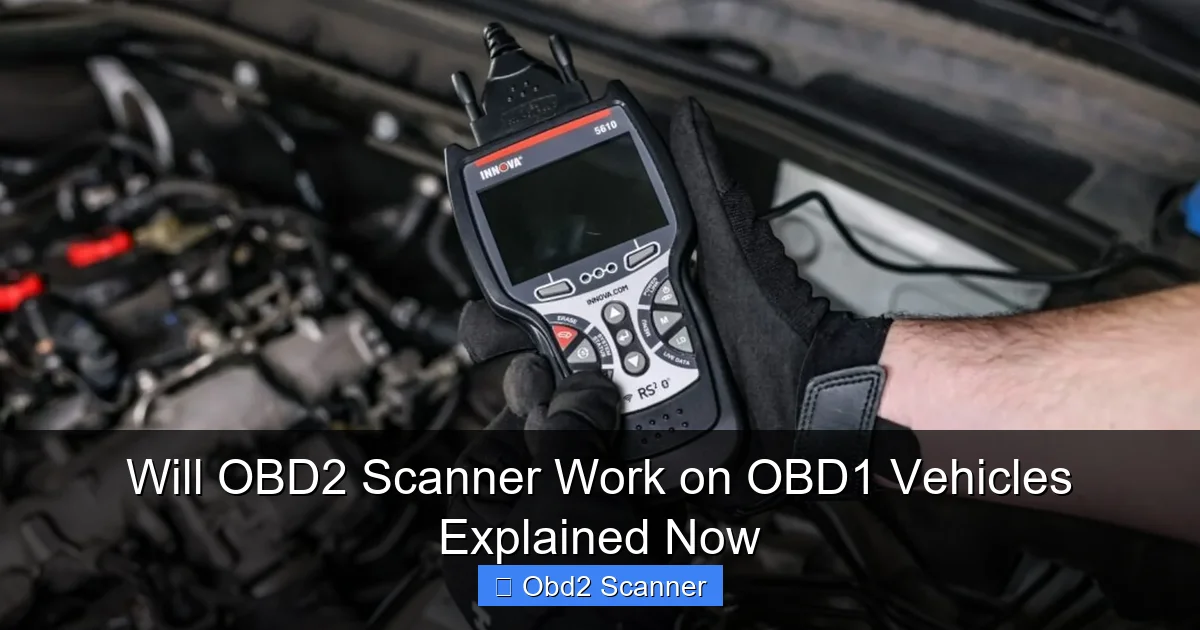
Visual guide about Will OBD2 Scanner Work on OBD1 Vehicles Explained Now
Image source: cdn.shopify.com
What is OBD1?
OBD1 is an early onboard diagnostics system. It uses manufacturer-specific protocols. Connectors vary by make and model. Codes were often read by flashing dash lights or with a proprietary tool.
What is OBD2?
OBD2 is a standard. It started in the mid-1990s in the US. It uses a 16-pin connector and standard protocols like ISO 9141, ISO 14230 (KWP2000), and CAN. OBD2 gives standardized trouble codes and real-time data.
Why the difference matters
The answer to will obd2 scanner work on obd1 rests on protocol and connector mismatch. OBD2 scanners expect a standard pin layout and messages. OBD1 ECUs speak different languages. That makes direct communication unlikely.
Step 2: Identify the vehicle and its port
Before you try anything, identify the vehicle year and port type. This step often solves the mystery behind will obd2 scanner work on obd1.
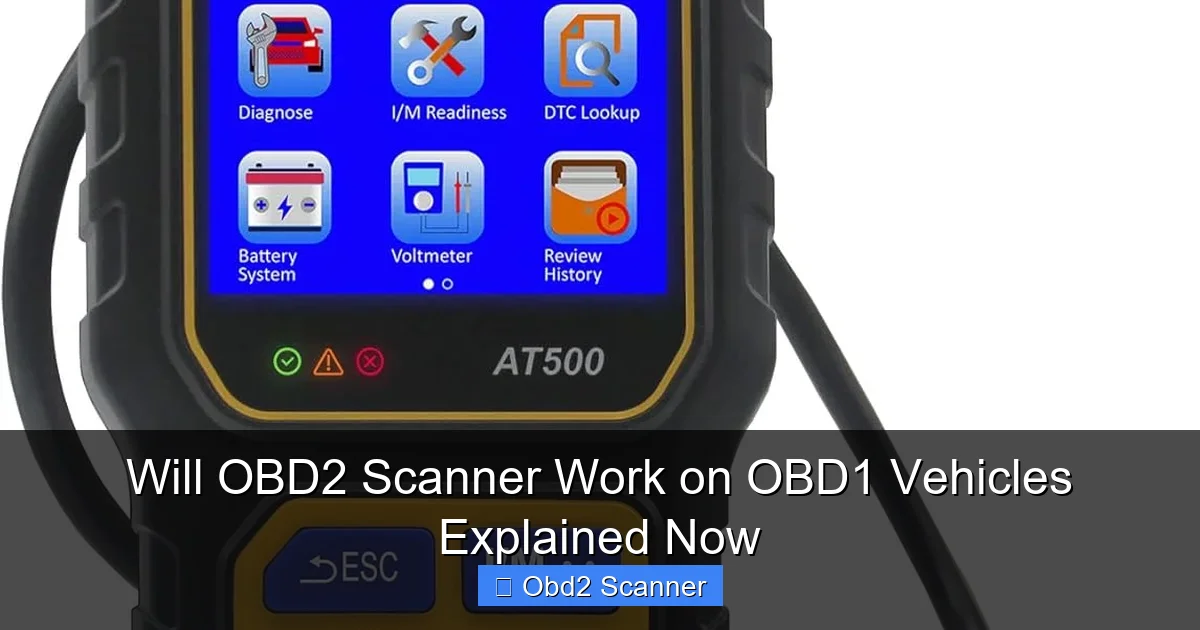
Visual guide about Will OBD2 Scanner Work on OBD1 Vehicles Explained Now
Image source: m.media-amazon.com
Check the vehicle year and manufacturer
Look up the model year. Many cars before 1996 in the US used OBD1. Some late models used transitional systems. Some foreign markets had different timing. Write the year down.
Locate and inspect the port
Open the driver side area and find the diagnostic connector. Count pins and note shape. Does it match a 16-pin OBD2 connector? Or is it a smaller, odd-shaped plug? That helps you decide your next step.
Step 3: Try a direct OBD2 scan (when applicable)
Sometimes the car uses a hybrid or early OBD2. This is when the question will obd2 scanner work on obd1 can be answered with a quick try.
What to try
- Plug a basic OBD2 scanner into the port if it fits.
- Turn the ignition to the ON position. Do not start the engine.
- Watch the scanner for a connection or error message.
Possible outcomes
If the scanner connects, great. You can read codes and live data. If it fails, do not panic. The failure shows the car likely uses OBD1 or a non-standard protocol.
Step 4: Use an adapter or protocol bridge
If the port differs, an adapter may help. This is a common route for the question will obd2 scanner work on obd1. Adapters can map pins and translate signals.
Types of adapters
- Pin adapters — match connector shapes and pinouts.
- Protocol bridges — translate messages between OBD2 and OBD1 systems.
- Manufacturer-specific adapters — made for a brand like Honda or GM.
How to use adapters
Step 1: Get the correct adapter for make and model. Step 2: Connect the adapter between the car and the OBD2 scanner. Step 3: Power the ignition to ON. Step 4: Attempt connection with the scanner.
Limitations to expect
Some adapters only provide power and pin mapping. They do not translate protocol. This means the scanner may see the ECU but not understand its messages. True bridges that convert protocol are rarer and cost more.
Step 5: Use an OBD1 scanner or jumper method
Often the best and safest choice is to use an OBD1 tool. The guide answers will obd2 scanner work on obd1 by showing that OBD1 tools are usually the right tool for the job.
Dedicated OBD1 scanners
Many shops sell OBD1 readers for specific brands. These read codes and sometimes show real-time data. They are made to match the car’s ECU type.
Jumper and flash code method
Some OBD1 cars flash error codes on the check engine light. To read them you may need a jumper wire. Steps:
- Locate the service connector or the ECU pin labeled for diagnostics.
- Use a short wire to connect the service terminal and ground or another terminal as the manual instructs.
- Turn the ignition on and watch the check engine light. Count flashes and read the code chart.
Safety note
Always disconnect the battery if you will probe ECU pins deeply or open connectors. Use basic ESD precautions. A wrong jumper can damage the ECU.
Step 6: Build a DIY bridge with a microcontroller (advanced)
If you like DIY, you can build a bridge. This answers will obd2 scanner work on obd1 for hobbyists who want to read OBD1 data with modern tools.
What you need
- A microcontroller like an Arduino or ESP32.
- Level shifters to match voltage levels.
- Knowledge of the OBD1 protocol for your ECU.
- Wiring harness and a serial link to a PC or phone.
Basic steps
1. Research the OBD1 protocol used by the car. 2. Wire the microcontroller to the ECU pins using proper voltage translation. 3. Write or use a library to speak the OBD1 protocol. 4. Convert messages to OBD2-style PIDs or plain text. 5. Send data to a phone or PC app.
Example
Some hobbyists have built tools that request OBD1 data and relay it to a laptop via USB. This can let you log RPM, throttle, and error codes. It takes time. But it works well for learning and for classic car owners.
Step 7: Practical tips for success
Follow these tips to increase your chance of success when testing if will obd2 scanner work on obd1.
- Read the service manual for diagnostic connector pinouts.
- Use a multimeter to verify 12V and ground before connecting any scanner.
- Start with basic visual checks: corroded pins block communication.
- Try multiple scanners. Some cheap scanners handle more protocols than others.
- Search forums for your car model. Many owners document the pinout and jumper method.
Troubleshooting: If things go wrong
It is common to hit a snag. Here are common problems and fixes when testing will obd2 scanner work on obd1.
Scanner shows no connection
Check power. Ensure the ignition is ON. Verify the connector has 12V and a good ground. If power is missing, check fuses for the ECU.
Connector fits but no data
If the scanner powers up but shows no ECU data, the protocol may be unsupported. Try a different scanner or an adapter. Confirm the car’s ECU uses a supported protocol.
Car ECU messages are garbled
Bad grounding, interference, or wrong voltage levels can garble data. Re-check wiring. Use short shielded wires for long runs. Add a proper voltage level shifter if needed.
Scanner gives wrong or strange codes
Some adapters map pins incorrectly. Recheck pinouts and wiring. Confirm that any pin translation is correct for signals, not just power pins.
Examples and real cases
Here are short examples that show typical answers to the question will obd2 scanner work on obd1.
Example 1: 1994 Honda Civic
This Civic uses an early Honda system. An OBD2 scanner that physically fits will not read codes. The car needs a Honda-specific adapter or a jumper method to flash codes. Using a dedicated OBD1 Honda reader worked best.
Example 2: 1996 Ford with hybrid port
Some 1996 Fords used a hybrid port. An OBD2 scanner connected and read codes only after selecting a non-CAN protocol. This car shows that some late OBD1/early OBD2 vehicles can sometimes be read by OBD2 scanners.
Example 3: DIY Arduino bridge on a Toyota
A hobbyist built a simple bridge to read Toyota OBD1 data. The Arduino translated Toyota pulses to readable serial text. This took research, but it proved that with effort you can answer will obd2 scanner work on obd1 by building a converter.
Safety and best practices
Protect the ECU. Disconnect the battery when making permanent modifications. Use the right tools. Do not hot-swap connectors while the ignition is on. If unsure, ask a pro.
When to call a professional
If your goal is fast, reliable diagnostics, a shop with the right OBD1 tools can save time. They have brand-specific scanners and knowledge. If the ECU might be damaged, stop and consult a pro.
Conclusion
The simple answer to will obd2 scanner work on obd1 is: usually not directly. The protocols and connectors differ. But you have options. You can try a compatible scanner. You can use adapters. You can use a dedicated OBD1 tool or build a bridge. Follow the steps in this guide, check pinouts, and test safely. With the right approach you can read codes on older cars and keep them running.
Final checklist before you start
- Confirm vehicle year and model.
- Inspect the diagnostic connector and pin layout.
- Check power and ground at the connector.
- Decide whether to use an OBD2 scanner, an adapter, or a dedicated OBD1 tool.
- Follow safe wiring and ESD practices.
🎥 Related Video: How to Use an OBD2 Scan Tool
📺 EasyAutoFix
OBD2 Scanner: https://amzn.to/4jdzrUc ▶︎ Check Out ALLDATA Manuals: …
